AHD Guest Speaker Series: Expanding Patient Partnerships: Better Experiences For All

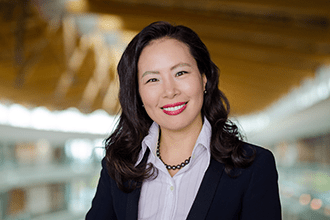
Join Carolyn to explore “relationship-based care” for better patient experiences and outcomes, and to provide a more rewarding professional life. Understanding your patient’s care goals, expectations, fears, values and social landscape can build greater patient self-efficacy and initiative, and also daily opportunities to see how you are making a difference in lives. She will draw on her own experiences in uncovering new dimensions to patient harm, strategies for greater patient safety and developing systems resilience from an ecosystem perspective of care. Co-design and co-delivery with patients and family members as your improvement partners offers refreshing innovation and collaboration as a regular part of the workday. We’ll describe small practices that can deliver big rewards for everyone.

Academic Half Day
Thursday, April 25, 2019
ARHCC Baker 103 Conference Room
9:30 a.m. – 11:30 a.m.
Preceptors and Clinical Educators are welcome to attend!

Carolyn Canfield works as a citizen-patient across Canada and internationally to expand opportunities for patients, carers and communities to partner with healthcare professionals. Following personal tragedy in 2008, her full-time volunteering has earned her recognition as Canada’s first Patient Safety Champion in 2014, appointment at UBC as Adjunct Professor in the Department of Family Practice, and membership on UBC’s MD Admissions Subcommittee member. She co-founded BC’s Patients in Education(PIE) and the national Patient Advisors Network (PAN) to develop capacity and leadership in citizen-patients.

The recent “patient engagement” issue of Longwoods’ Healthcare Quarterly, featured Carolyn’s commentary: “The Capacity for Patient Engagement: What Patient Experiences Tell Us About What’s Ahead.”

Sleep & Learning

Sleep makes us better at everything. “The disruption of deep sleep is contributing to cognitive decline,” Walker says—in aging patients at risk of or already experiencing dementia, and even in healthy people. “You need sleep after learning, to essentially hit the save button on those new memories so you don’t forget. But recently we’ve discovered that you also need sleep before learning. Almost like a dry sponge to suck up new information. Without sleep, the brain becomes essentially water logged.”

More on You’re Not Getting Enough Sleep—And It’s Killing You by Emily Dreyfuss who attended neuroscientist Dr. Matthew Walker’s TED 2019 talk on Why We Sleep.

500 Women in Medicine

women.jpeg

“Women have represented roughly half of medical school matriculants for the last 20 years but account for only 22 percent of full professors, and 16 percent of deans and department chairs in U.S. medical schools.

Research across science and medicine shows that women continue to be underrepresented in visible roles. Robyn Klein questioned this discrepancy when she saw that only 13 women were chosen out of 85 invited conference speakers at a neuroimmunology conference. She was told there just weren’t enough highly qualified women in the field. In response, Klein gathered data showing that men and women in neuroimmunology publish at equal rates in high impact journals.

The mission of 500 Women in Medicine is to serve society by making medical knowledge and expertise more collaborative, accessible and inclusive. We strive to unite and connect women physicians across the country and around the world, empower women physicians to grow to their full potential in the field of medicine, and to create a platform promoting visibility for women physicians.”

More on Amplifying the Voices of Women in MedicineThe field has plenty of talented women, but to reach leadership roles they must have visible and recognizable roles within medicine and in the public (2018) by Dr. Kate Gerull via Scientific American.

“Sometimes you gotta create what you want to be a part of.”
Geri Weitzman, PhD

UBC Earth Day 2019

On April 22, 1970, millions of people across the United States took to the streets to protest the negative impacts of 150 years of industrial development. Earth Day is now a global event each year, with more than 1 billion people in 192 countries taking part. Earth Day Network, the organization that leads Earth Day worldwide, has chosen the theme for 2019 of ‘Protect our Species‘.

Campaign goals

The Protect our Species campaign is designed to:

  • Educate and raise awareness about the accelerating rate of extinction of millions of species and the causes and consequences of this phenomenon.
  • Achieve major policy victories that protect broad groups of species as well as individual species and their habitats.
  • Build and activate a global movement that embraces nature and its values.
  • Encourage individual actions such as adopting plant-based diet and stopping pesticide and herbicide use.

How much do you know about the accelerating rate of extinction of millions of species and the causes and consequences of this phenomenon? Take the Earth Day quiz and find out.

Visit UBC Sustainability to learn more about the UBC Earth Week events!

#UBCSustainability #UBCClimateActionPlan

Addressing Children’s Complex Needs

“In British Columbia the current system of care for children with neurodevelopmental disorders does not appear to recognize there are two distinct patient populations: in one the children have few comorbidities and need limited specialized intervention and support, while in the other the children have significant mental health comorbidities and sometimes extremely challenging behaviors that require intervention for which funding is not readily available. Where this second population is concerned, vigorous family advocacy is required to access services and family breakdown can result. The Child and Youth with Special Needs division of the MCFD operates on an underlying assumption that parents are able and willing to take on a case manager role to access appropriate resources. This role is usually not appropriate for parents whose children have a dual diagnosis and require guidance and additional support to access specialized services.

BC needs policies and practices that recognize and address the complex needs of children with a dual diagnosis.”

Falling Through the Cracks: How Service Gaps Leave Children with Neurodevelopmental Disorders and Mental Health Difficulties Without the Care they Need by Erika Ono, MSW, RSW Robin Friedlander, MD, FRCPC Tamara Salih, MD, FRCPC via BCMJ.

ICRE 2019: Call for Resident Survival Stories

Share your Resident Survival Stories at ICRE 2019

Are you a resident with an interesting story to share about surviving and thriving through training? Does your experience lend itself to a unique learning opportunity for fellow residents? If so, we want to hear from you!

International Conference on Residency Education (ICRE) 2019 planning committee is currently looking for participants to lead a practical discussion during this year’s Resident Survival Stories panel session, which will highlight both the challenges and triumphs experienced by residents.

The session will serve as an opportunity to share best practices and hear examples of successful navigation in the area of Diversity – Training in a world of differences: How it affects Residency Training

Deadline for submissions is May 20, 2019.

Candidates with stand-out stories will be invited to Ottawa to serve as panelists during the September 26-28 conference.

Click here for more information, and to access the submission site.

Pub & Papers 2019: Scholar & Preceptor Appreciation

Join our UBC Abbotsford-Mission Family Practice Residency Program as we recognize our Residents’ scholarly achievements and celebrate our Preceptors who have contributed to our Residents’ journey! This informal evening is an opportunity for our Residents to share their research with our surrounding community and for our program to continue to network, collaborate, and build upon the ideas and insights emerging from our Residents’ work.

Date: Thursday, June 6, 2019
Location: Abbotsford Regional Hospital & Cancer Centre
Learning Centre Conference Rooms 3A & 3B
32900 Marshall Road, Abbotsford
Time: Dinner (alcohol-free) begins at 7:00 p.m. / Presentations from 7:30 to 9:00 p.m.
RSVP here!
Peruse the Agenda & Scholar Project Summaries here
If you have any questions, please feel free to contact me at jacqueline.ashby@ubc.ca.

Meet Dr. Leslie Meloche

26 b&w.jpgMeet Dr. Leslie Meloche! She works as a family doctor in Abbotsford and is one of the 1500+ valued preceptors across the province who dedicate time, energy, and thought to supporting UBC Family Practice residents. She’s also a graduate of the UBC Abbotsford-Mission Family Practice Residency program! This week she shares with us her insights on teaching and learning as one of our new community preceptors.

Who do you teach?
I currently “teach” one family practice resident. This is my first year being a co-preceptor for the family practice residents. As I am fairly new to practice, I had little experience with teaching residents or medical students in the past. I emphasize “teach” as that implies that I am the only one imparting knowledge. However, I feel that most days teaching is reciprocal and occurs on many more levels than just preceptor to resident. I am constantly learning as well, not only from the residents, but also from my patients, colleagues, staff and my family.

What inspired you to teach?
Honestly, I had not yet reached a point in my medicine career where I felt inspired to teach (probably because I felt I was still learning and had little wisdom to share with others). I was given a gentle nudge to become a preceptor in the program.

Who was the educator that had the most impact on you and why?
I have had so many great educators that it is hard to name just one. But I do remember a rural family doc in Alberta that I encountered in medical school. He was so excited about family medicine. He would share cases of all the interesting pathology that he would see, but then put it in the context of the patient’s life. You could tell he really valued the relationships he had with his patients and how much more interesting his work was because of this. I think this really highlighted the reason I chose family medicine as a career over other specialties.

As a new preceptor, what’s your best piece of advice to those making the transition from practice to preceptorship?
Just do it and don’t be afraid. You actually do have wisdom and experience to share, despite what you might think.

If you could change one thing in our healthcare system overnight, what would it be and why?
A universal provincial electronic medical! So that we could all communicate effectively with one another to improve efficiency and provide better care.

Thank you Dr. Meloche! Meet Dr. Jeff Kornelsen next!

#MeetOurPreceptors