Last night I attended the “From Hype to Hospital: How AI is being used in Healthcare and Research” hosted in British Columbia, Canada.
We’re surrounded by data in our healthcare system, but our ability to convert it into timely, trustworthy decisions is still limited by workflow, infrastructure, and governance. Provincial data collection continues to be labour intensive, often manual, and delayed.
As it was reported this evening, in trauma care, there can be a 12-18 month lag between what happens in the Emergency Department and Trauma Service, and what ultimately lands in registries, dashboards, and system-level reports. Check out the article “iROBOT: Implementing Real-time Operational dashBOards for Trauma care” to learn more: https://lnkd.in/gvBQKMgs
Other interesting points from presenters include:
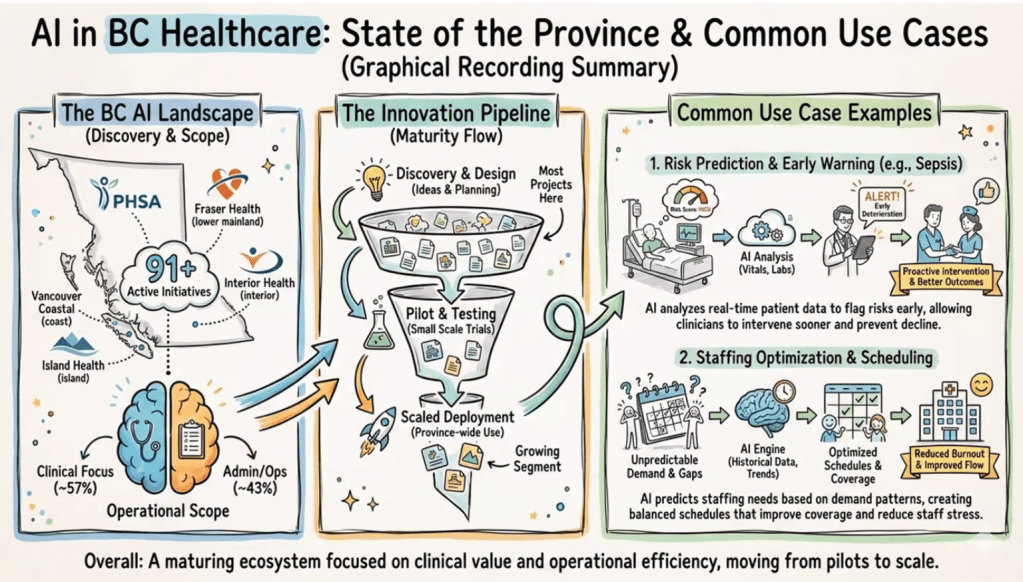
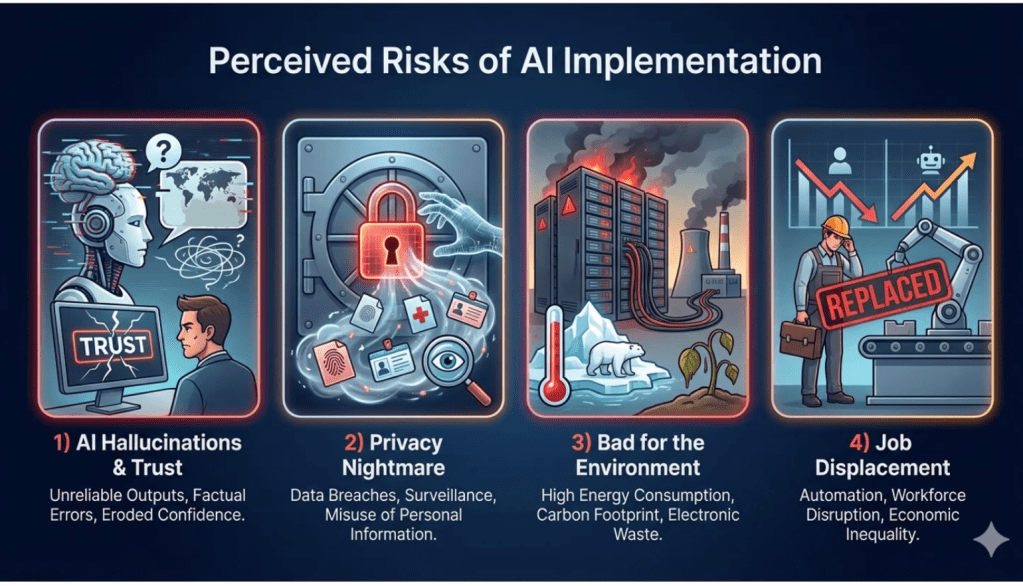
+ Structured data is easy to analyze, narrative data holds the nuance that can change risk and interpretation. + AI can speed screening and reporting, reduce false positives, and support real-time dashboards, if evaluated honestly. + In BC, common use cases are emerging: early warning (sepsis, deterioration), staffing and scheduling, operational intelligence. + The hard part is the pipeline: discovery to pilot to scaled deployment, many projects stall before impact. + Implementation risks are real: trust (confabulation, over-reliance), privacy, environmental cost, workforce disruption.
My takeaway: We have a responsibility to educate and train healthcare practitioners in the use of AI, and to start asking critical questions about how it will affect patient care.
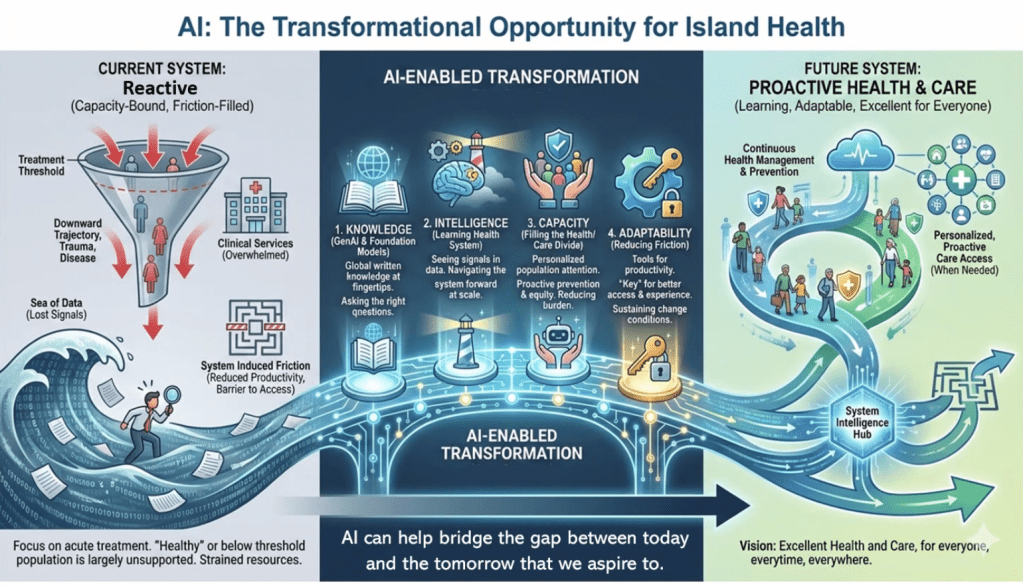
Slides attached are from Graham Payette’s AI BC briefing.
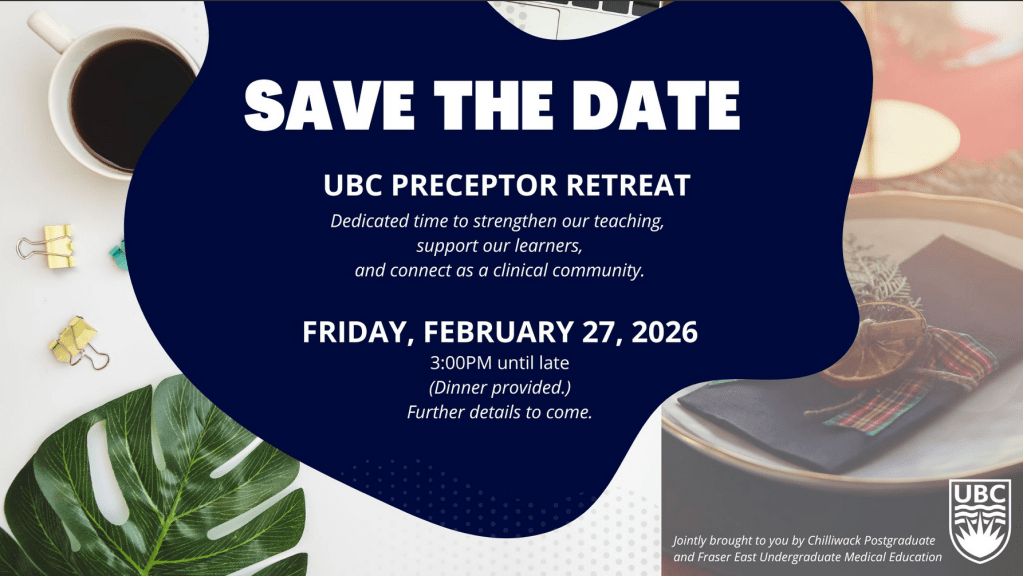
The UBC FP Chilliwack program has invited the Abbotsford-Mission team to join them for their upcoming Preceptor Retreat on Friday, February 27, 2026. I will be leading a session on AI in Faculty Development: Coaching Better Thinking, Strengthening Assessment, and Evaluating the Evaluators. I look forward to seeing you all there!
Please find the “Save the Date” details below and attached for your reference:
Date: Friday, February 27, 2026 Location: Chilliwack (CGH) Participants: Chilliwack & Abbotsford-Mission Postgraduate and Undergraduate Preceptors Schedule:3:00 PM – 6:00 PM: Faculty Development Sessions at CGH 6:00 PM – Late: Dinner and Evening Learning Panels
When Disaster Hits, Family Medicine Is Still the Front Door
Disasters and major trauma can feel like “someone else’s job” until the day your clinic, urgent care, or community hospital becomes the first place people arrive. In those moments, what matters most is not just clinical knowledge, it is teamwork, role clarity, and a shared plan.
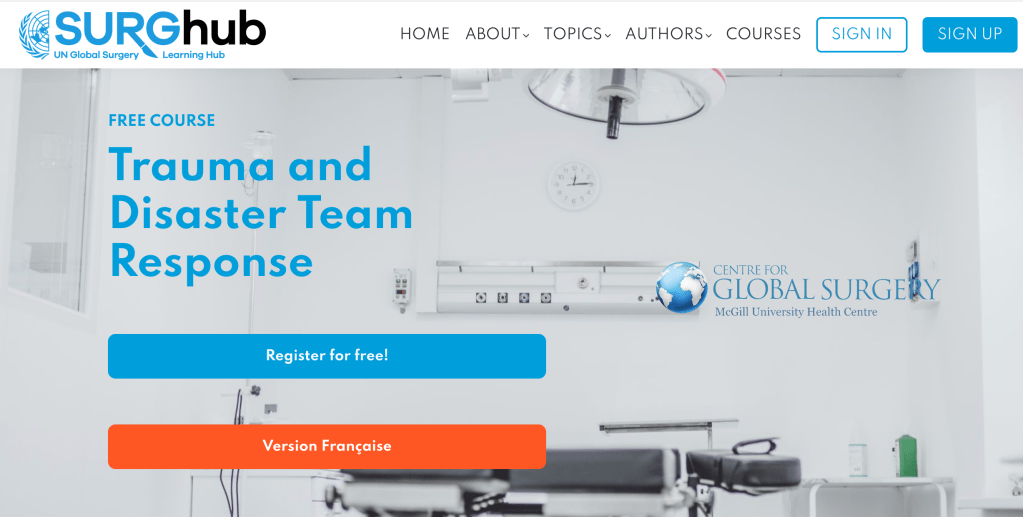
A useful option is Trauma and Disaster Team Response, a free online course on SURGhub, offered through the McGill University Health Centre, Centre for Global Surgery. It is built around multidisciplinary trauma and disaster response, with lectures and quizzes, and it is designed to strengthen how teams function under pressure.
Why it matters for family medicine
Family physicians are often central to stabilization, triage, transfer decisions, and supporting staff and communities in the aftermath. This training can help build a common language for response, especially in rural and community settings where resources and staffing can shift quickly.
What you can take back to your team
Clearer roles during urgent resuscitation and surge situations
More confidence with transfer readiness and escalation
A framework for thinking about disaster response as a system, not just a single patient
A nudge to turn preparedness into practical clinic improvements (call trees, checklists, short drills)
Experts from UVic and Island Health discuss safety, evidence, and patient impact of artificial intelligence (AI) in healthcare and research. Learn more and register here.
To kick off our 2026 Dawn Patrol Faculty Development Series, we’re starting with a topic that hits every exam room, every day. I’ve invited Sean McKelvey, BSc(Pharm) to share practical, evidence-informed insights on how food and lifestyle can meaningfully shift metabolic health, including the big question: can Type 2 diabetes remission be achieved through diet and lifestyle?
I had the opportunity to connect with Sean last year at our Curriculum Retreat, and I thought his presentation was fantastic and incredibly timely given how we’re trying to move in a direction that educates patients on the role of food and nutrients in their overall health.
This faculty development session explores the science and practice of therapeutic nutrition in primary care. Learn evidence-based strategies to support patients in reversing chronic disease through sustainable, food-first approaches.
Session Title: Reversing Chronic Disease in Primary Care: A Food-First Prescription
Speaker: Sean McKelvey, BSc(Pharm), Chief Executive Officer, Institute for Personalized Therapeutic Nutrition (IPTN)
Learning Objectives:
Understand the therapeutic nutrition model and remission criteria
Review evidence and guidelines from Diabetes Canada and ADA/EASD
Explore how interprofessional teams can safely support medication de-escalation
Identify practical resources for patients and health professionals
Event Details:
📅 Friday, January 30, 2026 🕖 07:00–07:45 AM (Pacific Time) 📍 Virtual via Zoom: Email jacqueline.ashby@ubc.ca for link
Who Should Attend: Family physicians, preceptors, residents, nurse practitioners, and allied health professionals interested in integrating therapeutic nutrition into clinical teaching and patient care.
Hosted by: Dr. Jacqueline Ashby, UBC Faculty Development, Team-Based Primary Care Learning Centres (TPCLC)
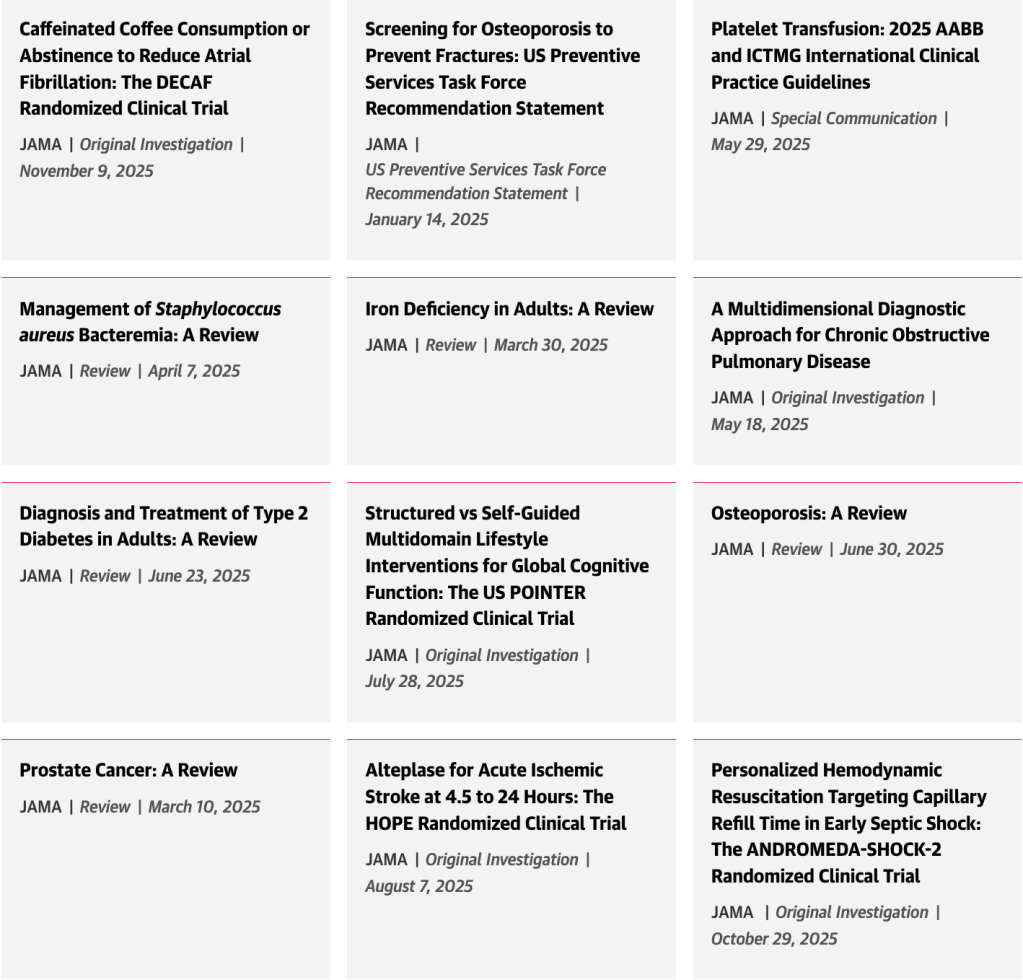
Read the most popular JAMA articles in 2025 including coffee and AFib, osteoporosis, platelet transfusion, type 2 diabetes, S aureus bacteremia, septic shock, and more.
“Delivered through the Nova Scotia Health Authority, the program aims to break down systemic barriers that Black women often face when navigating the health-care system, according to Natalie Johnson, the program’s team lead and registered dietitian.
‘They’re able to come here and let some of those walls down, [be] able to open up about things that they may not be able to open up with a health-care provider who doesn’t get their experience as a Black woman,’ she said.
MacKinnon said she’s working on healing both physically and psychologically from experiences of racism and discrimination she’s endured throughout her life. But within the traditional health-care system, she said clinicians rarely acknowledged how those experiences affected her overall health.”
Read more on How this team is transforming health care for African Nova Scotian women via CBC News.
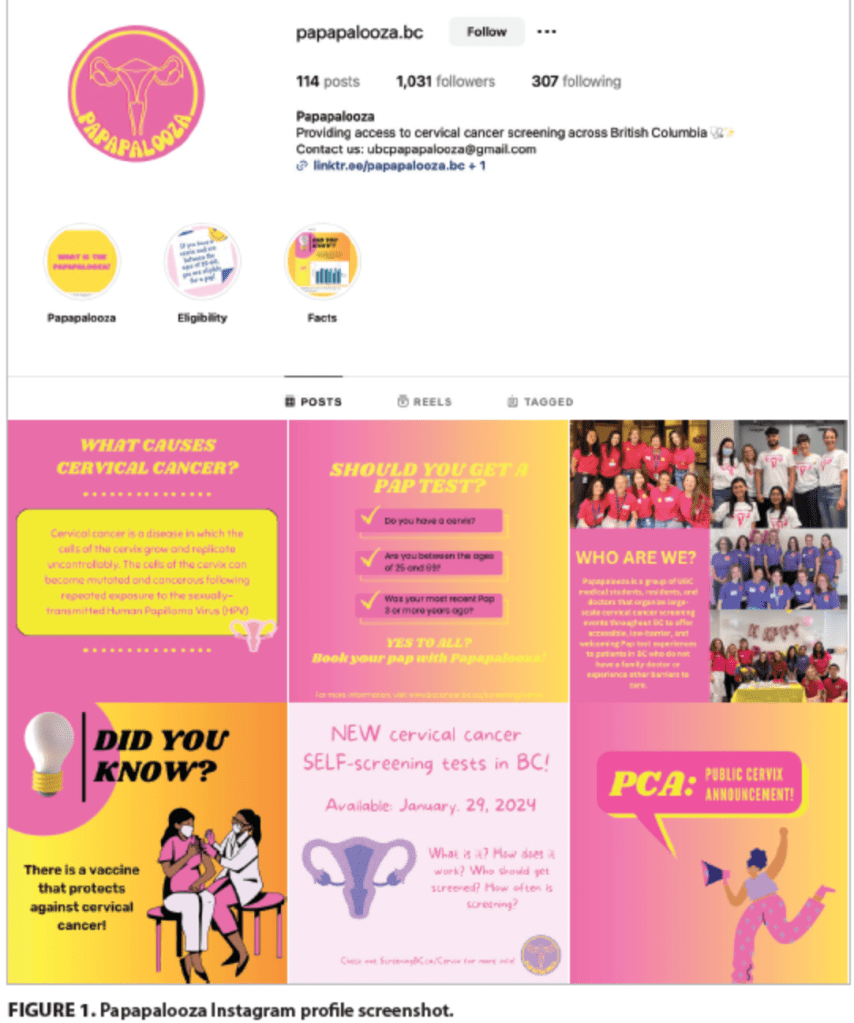
ABSTRACT: Addressing barriers to cervical cancer screening as a public health priority in British Columbia requires innovative approaches. Community-based health promotion initiatives like Papapalooza connect the public with low-barrier cervical cancer screening and accessible health education, offering inclusive, celebratory, and trauma-informed Pap test experiences through pop-up events.
To determine whether patients support Papapalooza as a strategy to reduce screening barriers, we administered 354 pre-Pap surveys and 309 post-Pap surveys to 533 Papapalooza attendees at five events held between March and June 2023. Identified barriers included inaccessible primary care, provider-related factors, and personal factors. Surveys showed increased knowledge and comfort accessing and understanding the importance of screening, with 93.8% of post-Pap survey participants “very likely” to attend another Papapalooza.
Community-based health promotion is an acceptable means of connecting patients with important screening, while creating meaningful opportunities to enhance health literacy.
“This is not about a minor lapse in safety, it’s about a company that gives pedophiles powerful tools to prey on innocent and unsuspecting kids. The trauma that results is horrific, from grooming, to exploitation, to actual assault. In this case, a child lost her life. This needs to stop.” ~ Alexandra Walsh, Partner at Anapol Weiss via Anapol Weiss
Roblox looks like digital LEGO, but the risks are now big enough that attorneys general, researchers, and child protection advocates are sounding alarms.
Investigators using child avatars have repeatedly found sexualised content, grooming behavior, and harassment inside Roblox experiences, even with safety tools turned on (Revealing Reality, reported in The Guardian, 2025). The report also found the avatar belonging to the 10-year-old’s account could access ‘highly suggestive environments’ and another “test avatar registered to an adult was able to ask for the five-year-old test avatar’s Snapchat details using barely coded language”
Screen shows the user’s correspondence pressuring the victim to complete a series of self-harming challenges. Note: “Messages are from ‘anonymous’ in Shapchat.” Media segment clip via WLBT.
Parents and several US states have sued Roblox for safety issues and making it too easy for predators to contact children (Kentucky Attorney General, 2025; Louisiana Attorney General, 2025; Texas Attorney General, 2025). A single plaintiffs’ firm (Anapol Weiss) reports it has filed 12wrongful-death suits against Roblox, one explicitly involving a 13-year-old girl’s suicide after alleged extremist grooming; other suits involve different forms of exploitation. NSPCC and other child protection groups now list Roblox alongside social media when they brief parents about online risk (NSPCC, 2022).
So this is no longer a niche concern. For clinicians and parents, Roblox belongs in routine conversations about mood, sleep, and safety.
The warning signs and suggestions below are adapted from WHO and APA criteria for problematic gaming, systematic reviews on cyberbullying and adolescent mental health, and media-use guidance from the American Academy of Pediatrics, Canadian Paediatric Society, and NSPCC.
Children: Changes in Behaviour & Stress
These behavioural changes may appear in a child who is heavily engaged on gaming platforms:
More irritable or tearful, especially when asked to log off
Staying up late to play, trouble falling asleep, or nightmares
Slipping grades, incomplete homework, loss of interest in offline activities
Withdrawing from in person friends, relying mainly on gaming “friends”
Hiding screens, constant headphones, refusal to play in shared spaces
Learn more in these symptoms via the American Psychiatric Association, via the WHO, and via The Canadian Centre for Child Protection.
Ideas for Parents & Guardians
Play once, then set rules together. Ask your child to show you their favourite games and who they play with.
Use the safety tools. Turn on parental controls, restrict chat and friend requests, limit spending, and keep devices in shared spaces when possible (Roblox Trust and Safety, 2025; NSPCC, 2022).
Anchor Roblox inside a family media plan. Protect time for sleep, schoolwork, exercise, and offline friends. The American Academy of Pediatrics has simple family media plan tools that can be adapted to any home you can access here.
Make disclosure safe. Explain to your child that If something weird or scary happens on their gaming platform to inform you because this information can help you keep them safe.
Three Questions Every Trainee Can Ask
You can integrate a digital media use conversation into a psychosocial history in under a minute:
“What games or apps do you use most, is Roblox one of them?”
“Who do you usually play with, people you know in real life or mostly people you only know online”
“Has anyone ever said or done something while playing the game that felt uncomfortable or scary”
A “yes” to that third question is your signal to slow down, explore, document, and involve safeguarding if needed.
It’s important to understand that these platforms, such as Roblox, are social environments that can shape a child’s mood, sleep, sense of safety, and self-worth. As the NSPCC has highlighted, many parents underestimate what actually happens in these online spaces, while children often struggle to talk about what they see and experience. Our job, as clinicians and caregivers, is to stay curious, ask specific questions about gaming, and notice changes in behaviour, sleep, appetite, or school engagement. When we pair open conversations with early mental health support, we provide children a reliable, attuned adult who is watching out for them.







 Family Medicine Residency Site: Abbotsford-Mission