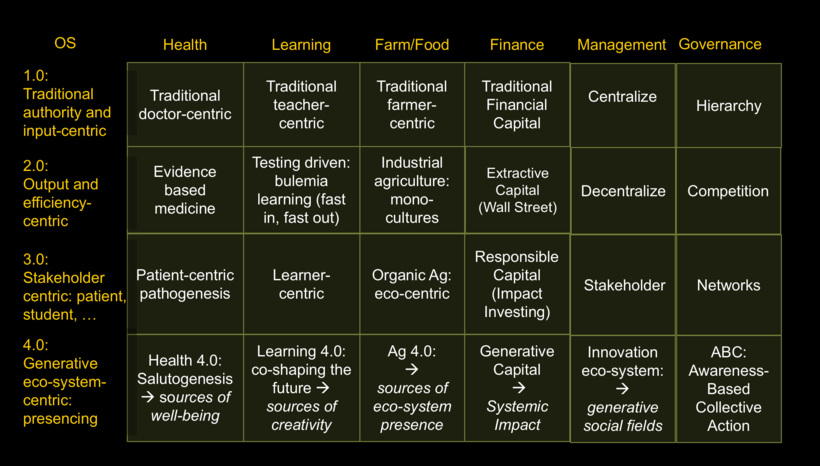
Four Stages of Systems Evolution: Four Operating Systems by Otto Scharmer
“In health we saw a shift from traditional doctor-centric to managed care and evidence based medicine. Realizing that only 20% of health depends on health care services, while 60% depends on social, environmental and behavioral factors, major health system innovators like Kaiser Permanente have begun to refocus from pathogenesis (focusing on the 20%) to salutogenesis (to also focus on the 60%) by strengthening the sources of health and well-being in communities. As the mainstream health organizations have been moving into 2.0 (evidence-, standards-, and science-centric), we have seen the more innovative health care providers shift to organize around the actual patient journey (3.0). While that patient-centric way of delivering health care services is moving more mainstream, we see yet another frontier of health innovation at the horizon: a system that strengthens the sources of well-being both individually and collectively (4.0).”
The Relevance of Positive Approaches to Health for Patient-Centered Care Medicine.
Salutogenesis: The Defining Concept for a New Healthcare System.
What will Health 4.0, 5.0, and 6.0 look like in British Columbia? How can we utilize technology to support the 60% (social, environmental, and behavioural factors)? How can our medical education system prepare learners to contribute to the design and implementation of the models that they will work and live in?
Off the top of my head, it would be interesting to install a university-community health liaison office that bridges the social and intellectual capital in both spheres and initiates partnerships to specifically address the vitality, health, and wellness of our shared ecology.
What a year! We successfully graduated our R2s and welcomed a stunning, brilliant bunch of new learners and Primary Preceptors! We launched a series of new initiatives aimed at recognizing the fantastic work of our Preceptors, Specialists, and Residents. Our crew also won some serious hardware!
Our Team! Thank you to all our Preceptors including Drs. Vaish, Bhargavan, Liu, Loewen, Husband, De Klerk, Dau, Barnsdale, Hughes, Moodley, Rahal, Ross, Patel, Kornelsen, Danescu, Smith, Pomeroy, Chow, Meloche, Gosal, Ching, Egolf, Sidhu, Boparai, Cook, Culkin, and Purewal. A big thank you to our Faculty & Specialty Rotation Leads including Drs. Fernandez, Leung, Liu, Luu, Elmayergi, Chang, Yao, Chum, Wong, Cooper, Driedger, Mitchinson, Sinha, Khan, Khattak, Walker, Brown, Gill, Markanday, Chang, Hewes, McLean, Golshan, Meylnchuk, Tuffnell, Poon, Peters, Grant, Tregoning, Goswami, Shone, Hartl, Punanbolam, and Watt! Big shout out to our Preceptors’ office staff that help us in coordinating our learners. We appreciate all you invest in us!
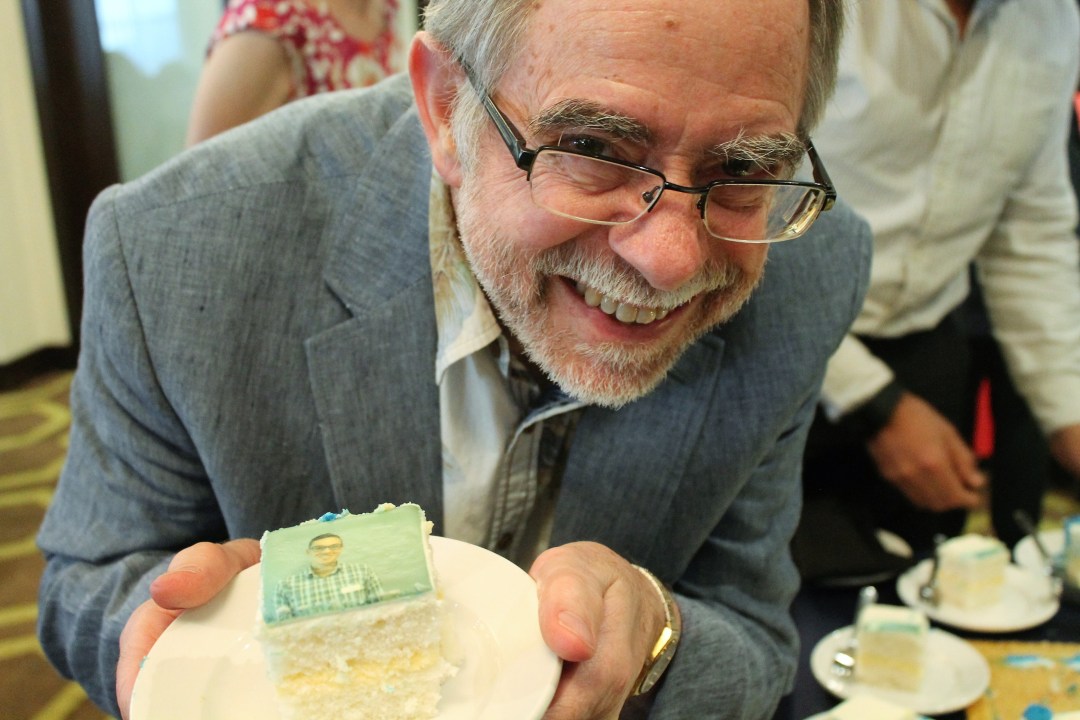
Thank you to our recently retired Primary Preceptor, Dr. Don Ross, for supporting our program and Residents! We will miss you!
Primary Preceptor Dr. Don Ross with his slice of R2 Dr. Brian Baker. 2016.
On Curriculum! ARHCC Cardiologist and UBC Preceptor Dr. Nader Elmayergi, and contributing authors Dr. Perminder Bains (Medical Director, Heart Failure) and Dr. Osama Gusbi (Medical Director, Cardiodiagnostics), released Cardiology Primer 2.0! This primer is one of the top downloads on our site in 2018!
On Recognition! In October, our Site Director Dr. Chow and Program Staff Ann Douglas & Susan Hart, designed and hosted our first “Lunch with Us!” to acknowledge our hospital-based Physicians and Preceptors that support our Residents throughout their two-year journey. Thank you to everyone that attended!
On Research! Facilitated by Dr. Iris Liu and her office staff Sherry Ehrenberg, the UBC crew hosted our first Resident Research Evening designed to disseminate and share our Residents’ research with the broader community. It also provides an opportunity for Faculty, Preceptors, Specialists, Medical Office Staff, and Fraser Health members to network, collaborate, and build upon the ideas and insights emerging from our Residents’ work. It was such a success that UBC’s Family Practice Program has adopted the model site-wide! We thank all that participated in the event and look forward to you joining us next year!
On Awards! Dr. Chelsea Wiksyk won the 2018 Coach’s Award, Lloyd Jones Collins Research Award, and the BC College of Family Physicians Award: Favourite Presentation for her scholar project “Poems from Across the Room: Viewing the Patient and Physician Side-by-Side”. Dr. Daniel Metcalf took home the Peter Grantham Resident Teaching Award for our Abbotsford-Mission site! Dr. Alex Enns won the Coach’s Award for her leadership and creativity. Our Dr. Elizabeth Watt was nominated for the YWCA’s 2018 Women of Distinction Award! Drs. Ryan Punambolam (Neurology) and Miguel Fernandez (Anesthesia) won the Preceptor Teaching Awards! And finally, our Site Director, Dr. Holden Chow won the 2018 Coach’s Award and was honoured by the BC College of Family Physicians with the College Coin!
On Design! This year, we test piloted Design Thinking and took our Residents on a field trip to Holmberg House Hospice to expose them to end-of-life care that is both patient and family-centred. We invited celebrity Chef Michael Smith and IKONA CEO Tim Fitzpatrick to share their experiences and thoughts on physicians’ roles in educating and empowering patients. We also dug a little deeper into Preceptors’ perspectives on Residents’ transition to practice (Part I and Part 2).
Academic Half Day with Chef Michael Smith & our UBC Residents
On Events! Although Dr. Bruce Griffioen’s R2s were unable to clinch the Third Annual R1 vs R2 Volleyball Tourney (second year in a row R2s were defeated…yikes!), he did win the 2018 Field Note Limerick Contest! I gotta tell you, my arms and ego are still recovering from Dr. Metcalf’s 150km serve. Puttin’ my money on the R2s this year!
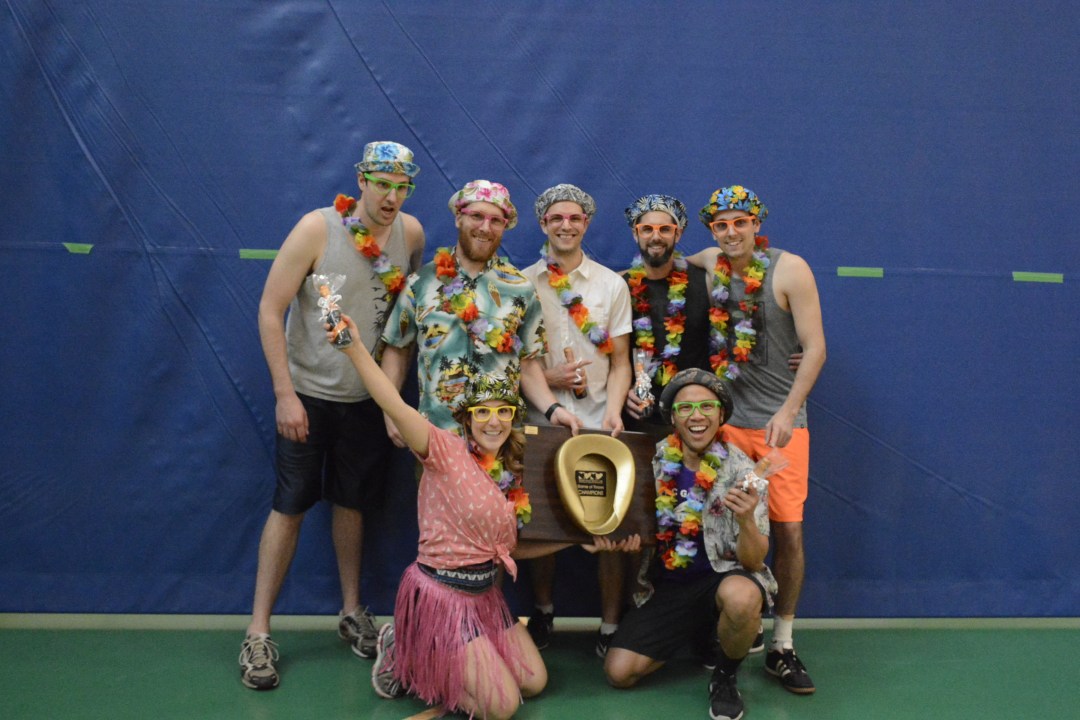
Game of Throws 2nd Annual Dodgeball Tourney 2018 was captured by the UBC Family Practice Chilliwack Residents Team “You Dodge Hard, We Dodge Ken Harder”?! What?!
UBC Family Practice Chilliwack Residents win the coveted Golden Bedpan Award
Chilliwack’s win, in part, was due to Drs. Chow & Ashby’s required presence at Stanford University’s MedX. Next year, we will lei you to rest and reclaim what is rightfully ours. Thank you to Dr. Aaron Shokar for joining the ARHCC ER team and representing the Abbotsford Residents! Register soon for next year’s event.
Lastly, we welcomed three little additions to the team including Jane (Dr. Friderichs), Colby (Dr. Enns), and Leo (Dr. Parton)! Congratulations!
We look forward to 2019! On rotation and on the court!
“There is risk in taking a new, creative approach — not everything pays off, and some prototypes will fail along the way, but that’s the way the process is supposed to work. To get good results you have to veer from the known path. If you want to get to new places, you have to dive into the unknown. ” —Coe Leta Stafford, Co-Managing Director of IDEO U
Listen to the podcast on tips for sparking creativity at work!
Hartman (2016) suggests we need a radical transformation of medical education to better prepare learners for the 21st century and to help them transition from the age of information to the age of artificial intelligence. If you veered medical education from its known path what would it look like? What would you add or subtract to the learning journey? Leave your comments below!
In my Blue Sky reboot, I’d add the topics of creativity & innovation; climate change & health (Harvard’s on it!); digital health literacy; gamification & multimedia; nutrition & culinary medicine, and technologies such as artificial intelligence & virtual/augmented reality. I’d also condense all the CanMed Roles to “Educator” and divert 1/2 the Faculty of Medicine’s research funds to faculty development and teaching. Physicians trained as educators would empower both the profession as well as the patient that seeks treatment and counsel (read: Teaching Physicians to Teach: The Underappreciated Path to Improving Patient Outcomes).
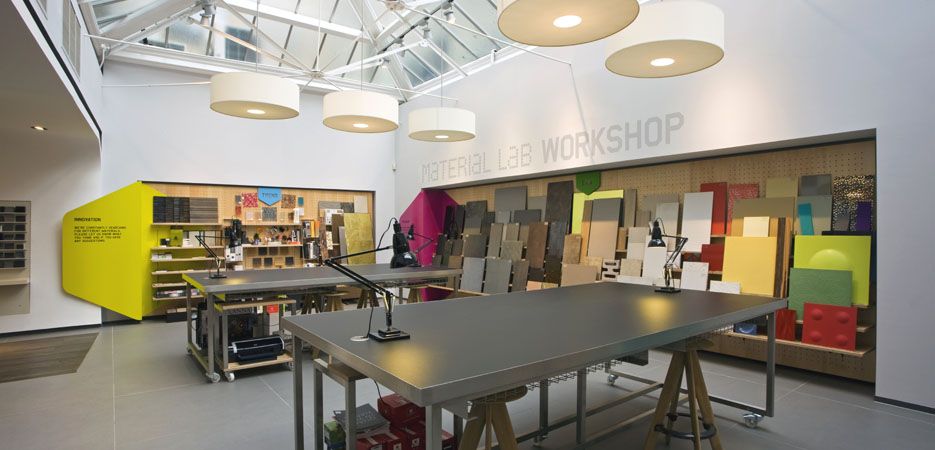
Finally, I’d completely revamp Journal Club from a roundtable dialogue on scholarship to a Tinker Space where learners would tackle the research article by attempting to solve the issue via product design, prototyping, and testing. In my mind, the space would look something like below (add a test kitchen for our Dinner Club! because teaching subjects such as nutrition and the culinary arts are key to promoting good health. It’s also a great excuse to invite Chef Michael Smith back to Abbotsford!) Culinary medicine is that perfect intersection that “blends the art of food and cooking with the science of medicine”:
Blue Sky Thinking: If I could revamp Journal Club space it would look like this with a test kitchen! See below!Final touches to my Blue Sky revamp of Journal Club: The “Dinner Club’s” Culinary Medicine & Nutrition Test Kitchen
More on Creativity and Medicine:
Creativity in Management in Family Medicine. (In this Canadian study, “the results showed that more creative residents had a higher quality of management score, a higher number of high-quality options, more options of an interpersonal nature, and a higher proportion of original options”). Would make for a great Resident Scholar Project!
On Creativity and Innovation: Getting into the Minds of Creative Giants at Family Medicine Forum
Creativity in Medical Education: The Value of Having Medical Students Make Stuff.
Creativity in Medicine: A Burned Out Physician Turns to Art.
Neurology and the Humanities: Creativity in Medicine.
Research on Creativity and Aging: The Positive Impact of the Arts on Health and Illness.
How Arts Education Can Help Create Better Doctors.
Creative Art and Medical Student Development: Department of Family Practice.
What are your thoughts? Am I completely off? Are you mildly entertained? Or are you as excited as I am to reinvent the path of medical education? If you’re interested in pursuing any of these ideas, please feel free to reach out!
For those Residents interested in sharing their narrative, Resident Doctors of Canada has a call for submissions:
Resident Doctors of Canada is publishing Inside the Lives of Canada’s Resident Doctors, the first anthology of stories about residents’ experiences in medical training. Our goal is to increase our mutual understanding and respect for each other as individuals and colleagues, as well as to enhance public awareness of resident doctors’ important roles in the healthcare system. Sharing personal reflections and narratives will enrich our shared experiences as resident doctors.
Do you have a story to tell? We would love to hear from you! Please view our submission guidelines in more detail.
The deadline for all submissions is February 28, 2019.
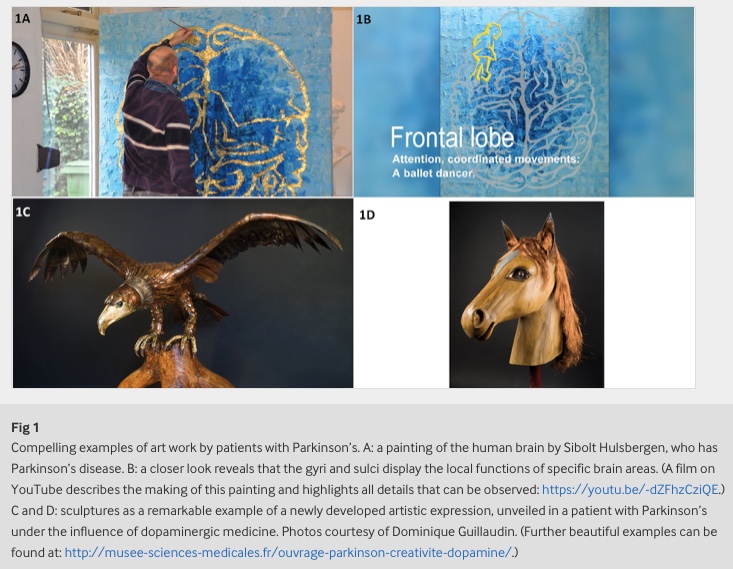
“The recognition that art can serve as treatment for patients is growing. Dance and music can help patients with Parkinson’s to overcome their characteristic loss of automated movements. We’ve seen compelling examples of patients using artistic expression—paintings, drawings, books, poetry, music—to provide positive connotations to their disease (fig 1). These include the creativity unleashed by dopaminergic medicine which, if not excessive, can improve the patient’s wellbeing, allowing physicians to exploit this as part of their therapeutic repertoire.”
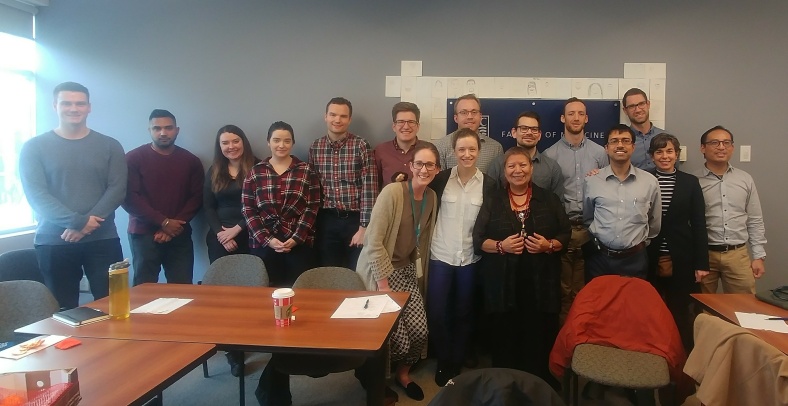
Kwéleches, hello and welcome! A big thank you to our Elder Roberta Price for joining us today. Through her narrative, we learned of her resilience, empathy, and healing. We learned that our journey is what binds us and that through our exchange of stories we traverse similar paths and new terrain. She gifted us with her insight and experience and asked that we lead with compassion.
We would like to express our sincere gratitude to Elder Roberta, our Preceptors, our Residents, and all that touch our program for dedicating the time and resources to teach and guide us through the stormy seas and clear skies.
We send our warmest wishes to you and yours this holiday!
Catch you in 2019!
The Abbotsford-Mission Family Practice Residency Program
“When a population becomes distracted by trivia, when cultural life is redefined as a perpetual round of entertainments, when serious public conversation becomes a form of baby-talk, when, in short, a people become an audience, and their public business a vaudeville act, then a nation finds itself at risk; culture-death is a clear possibility.”
― From Neil Postman’s prophetic book Amusing Ourselves to Death: Public Discourse in the Age of Show Business
Nominations are now open for the 2019 UBC Medical Alumni Association Awards. The UBC MAA needs you to nominate a deserving individual(s) for a Wallace Wilson Leadership or Honorary Medical Alumni Award! This is a fantastic opportunity to recognize your colleagues in the medical community.
Nominations can come from any MD alumnus of the UBC medical program and cannot be awarded posthumously. Deadline for 2019 nominations is Friday, January 11, 2019.

 From our team to yours,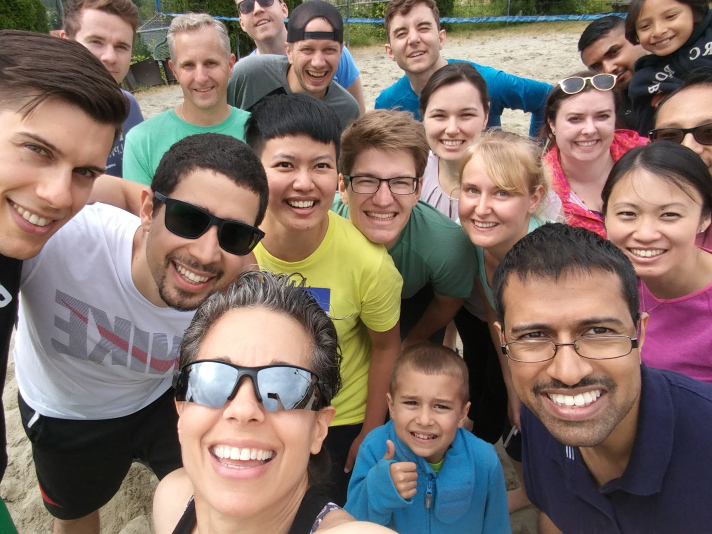



 Kwéleches, hello and welcome! A big thank you to our Elder Roberta Price for joining us today. Through her narrative, we learned of her resilience, empathy, and healing. We learned that our journey is what binds us and that through our exchange of stories we traverse similar paths and new terrain. She gifted us with her insight and experience and asked that we lead with compassion.
 Family Medicine Residency Site: Abbotsford-Mission