Equity, Diversity, & Inclusion Resources

The UBC Faculty of Medicine’s Office of Faculty Development offers a wide range of EDI resources. Here are a few below for those wanting to learn more on designing safe and inclusive learning environments.

  1. PGME Learning Environment modules:  https://postgrad.med.ubc.ca/faculty-staff/learning-environment-modules/
  1. The following resources can be found here: https://facdev.med.ubc.ca/home-page/resources/#learner
  • Inclusivity module 
  • Language Guide 
  • Safe and Supportive LE module 
  1. Land Acknowledgement PPT: https://facdev.med.ubc.ca/home-page/resources/#territorialacknowledgement
  1. Teaching Scenario Library and Pilot: https://facdev.med.ubc.ca/scenario-library/
  1. Community of Practice of facilitators who want to practice skills for leading discussions on sensitive topics (includes workshops and opportunities to practice). Email the program manager Erica Amari at Erica.a@ubc.ca for information or to join. 
  1. Support from Office of Faculty Development to facilitate sessions. The Office supports facilitators who would like lead a session on learning environment and EDI. Please email fac.dev@ubc.ca to discuss your needs. 
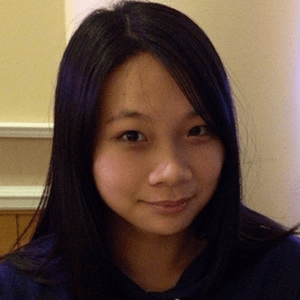
Artificial Intelligence Healthcare Project

“Minnie Teng is among the 2021 awardees of a 2021 Compassion and Artificial Intelligence Grant from AMS Healthcare. Nine remarkable individuals, and their multidisciplinary teams, were selected by an external expert review panel. Their work will help transform healthcare by ensuring that technologies are enabling of healthcare’s compassionate purpose.

Minnie Teng, UBC Clinical Instructor & Medical Student

Teng, a second-year medical student at UBC who is also a clinical instructor with the department of occupational science and occupational therapy, received the grant for her project entitled, ‘Optimizing interactions between humans and artificial intelligence when administering remote cognitive assessments.’

Her team is collaborating with people with disabilities to pilot remote assessments to evaluate how the design of human-computer-environment interactions can be optimized for compassionate care.

‘We are honoured to be the recipients of this award that will allow us to explore how software, hardware, environment, and people interact and impact healthcare in virtual settings,’ Teng said. ‘The study will contribute significantly to the scarce literature on how design of the environment and tasks can influence perception and delivery of compassionate care.'”

More on Minnie Teng awarded grant for artificial intelligence healthcare project via UBC Faculty of Medicine.

Racism in Medicine

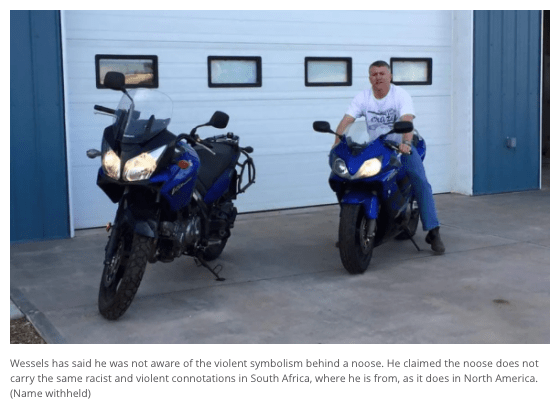
“In July 2020, CBC News first revealed Wessels tied a noose and then taped it to the door of an operating room at the Queen Elizabeth II Hospital in Grande Prairie, Alta, a city 450 kilometres north of Edmonton.

A colleague, surgeon Dr. Scott Wiens, said Wessels told him the noose was for a Black, Nigerian-born surgical assistant, Dr. Oduche Onwuanyi. The incident was reported to hospital administration minutes after it happened. Over the next four years, at least three doctors reported it to the hospital’s administration, Alberta Health Services, the college and then-health minister Tyler Shandro.

Wessels was never suspended and faced no discipline. The college subsequently admitted it had failed to investigate the incident in a timely manner. Alberta Health Services (AHS), which manages the province’s health-care system, said it believed the matter had been dealt with. The college announced a hearing for Wessels shortly after CBC News revealed the noose incident.”

Read more here on Surgeon handed 4-month suspension for noose incident at Alberta hospital via CBC.

Courageous Conversations: Experiential Learning for Planetary Health

On Tuesday, December 7, 12:00 p.m. to 1:00 p.m. (ET), the Section of Teachers (SOT) invites you to a free-flowing Q & A–style webinar on incorporating planetary health education in family medicine training. Given the realities of climate change affecting different parts of Canada, there are startling revelations on the importance of planetary health as a key area of focus for family physicians and for family medicine education. In this interactive webinar, hear from family physicians and learners who have been advocating for planetary health education and share practical examples on our collective opportunities to increase awareness and foster learning innovations. Planetary health comes at a time when we are all called to reflect on our ways of knowing and doing, challenging us to do better. Linked to curriculum enhancements needed in Indigenous health, anti-racism, and anti-oppression education in medical education, reform is possible.

Date & time: December 7, 12pm-1pm ET
Event Link: https://www.youtube.com/watch?v=4Kh8-JdlWbA

Learning objectives. Participants will:

  1. Become aware of the Guide to Integrating Planetary Health in Family Medicine Training.  
  2. Explore practical experiential learning opportunities for awakening educator interest in planetary health. 
  3. Share who across the country is advocating and advancing planetary health education in medicine. 
  4. Catalyze a community of interest among teachers/learners to advance planetary health education in family medicine.  
  5. Recognize the opportunities of advancing planetary health education stimulating curriculum change while supporting a medical education culture that values Indigenous health, anti-racism, and anti-oppression in service of fostering a culture of diversity, equity, and inclusion.  

Panelists: Dr. Warren Bell, Dr. Aimée Bouka, Dr. Ojistoh Horn, Dr. Celia Walker, Dr. Edward Xie, and Dr. Jean Zigby.

UBC Medical Student Pitches in During Devastating Flood

“Wanting to make the most of my educational experience, I headed to the local hospital on Tuesday morning and offered to help wherever I could.”
Brayden Fishbook

“UBC Southern Medical Program student Brayden Fishbook was en route to Chilliwack for a family practice elective when he found himself stranded due to the province’s catastrophic atmospheric river event.

When he arrived in Hope four hours later, traffic crawled through town as torrential rain poured down.

‘I came across a hotel that was completely dark and quickly realized the entire town was without power,’ says Fishbook. ‘Cars were parked at gas stations waiting for power to return and traffic was being diverted across the Fraser River as Highway 1 was now closed.’

Fishbook followed rerouted traffic towards Highway 7 and eventually came to a standstill due to another landslide. With Highway 3 also blocked, all routes in and out of the small rural community were closed indefinitely.

Exhausted and resigned to his situation, Fishbook pulled over to the side of the road and spent the night in his car. ‘Fortunately, I had my sleeping bag, a pillow and some food I had packed for my stay in Chilliwack,’ he says. ‘It wasn’t too cold overnight and I actually managed to get some sleep.'”

Read more about Brayden’s experience via UBC Faculty of Medicine.

Engaging Medical Education Scholars with a Twitter Conference

Interested in hosting your own medical education event but limited in resources? A Twitter Conference may be an alternative to the traditional gathering.

“The Education Innovation Institute (EII) of Medical College of Georgia, Augusta University, hosted a conference on Twitter about Professional Identity Formation (PIF), #MCGConf2021PIF, on February 25, 2021. The conference featured five presentations by 15 authors from Canada and the U.S.A Twitter conference is a versatile, affordable, and accessible digital option for medical education groups interested in diversifying conference offerings and reaching a broader audience. It was low-cost, organized in six months, and garnered over 9,000 Twitter impressions. Small networks and interest groups can organize Twitter conferences for their constituencies and larger conference organizations can host online mini-conferences to supplement in-person events.”

More on Engaging medical education scholars with a Twitter conference on professionalism and professional identity formation via CMEJ.

Sleep & Healthy Aging

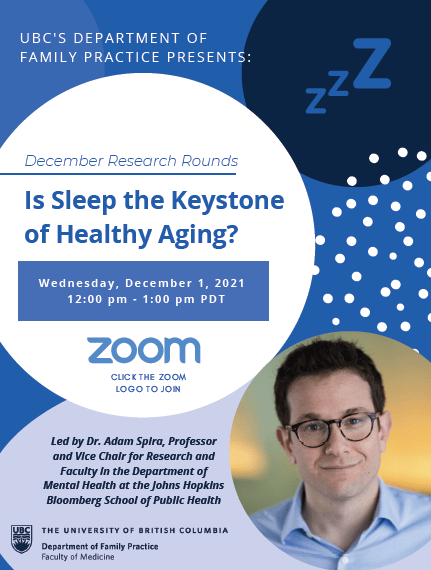
You are invited to the UBC’s Department of Family Practice December Research Rounds!

Presentation Title: Is Sleep the Keystone of Healthy Aging?
Presenter: Dr Adam Spira, Professor, Johns Hopkins Bloomberg School of Public Health
When: December 1, 2021 at 12:00pm – 1:00pm Pacific (Vancouver) Time
Where: Zoom: https://ubc.zoom.us/j/64039045523?pwd=bXJuWUhyZ05xS0tMSXpKdWNsRmtKQT09

Talk Abstract: In this presentation, Dr. Adam Spira will highlight research tying disturbed sleep to cognitive and functional decline and Alzheimer’s disease biomarkers in later life, and discuss implications of sleep health for older adults’ overall health and well-being. 

Speaker Biography: Dr Adam Spira is Professor and Vice Chair for Research and Faculty in the Department of Mental Health at the Johns Hopkins Bloomberg School of Public Health. He studies links of sleep with health outcomes in later life, including cognitive and functional decline, and Alzheimer’s disease pathology. 

COP26: Meet the Scientists

“While politicians negotiated climate pledges at the 26th United Nations Climate Change Conference of the Parties (COP26) in Glasgow, UK, scientists of all stripes provided advice and presented the latest climate data. Nature spoke to a range of them about their research, their participation in the meeting, and what solutions they think the world needs.”

Learn more about COP26 and the scientists behind the crucial climate summit via Nature.

Frequency and Duration of Boarding for Pediatric Mental Health Conditions

“Emergency department (ED) visits for pediatric mental health conditions increased by 60% from 2007 to 2016.1 A shortage of psychiatric beds for youths requiring hospitalization may result in boarding, defined by the Joint Commission as “the practice of holding patients in the ED or another temporary location after the decision to admit or transfer has been made.”2 The Joint Commission has recommended a boarding duration of less than 4 hours to support patient safety and health care quality.2 However, no national studies have quantified the extent of pediatric mental health boarding.3 This study estimates the frequency and duration of boarding for pediatric mental health conditions at US acute care hospitals and describes hospital resources available to support youths during the boarding period.”

Read more about their findings on Frequency and Duration of Boarding for Pediatric Mental Health Conditions at Acute Care Hospitals in the US via JAMA.