“In order for the promise of digital health to be realized, companies will need to ensure their patients’ data is safe, secure and error-free. Beyond security, healthcare companies operating as providers must also maintain the confidentiality and privacy of that data. Doing so isn’t simply good practice; it’s an existential requirement for companies operating in this space. There is a baseline expectation — from users, and from employers and health plans working with digital health companies — of privacy being maintained.”
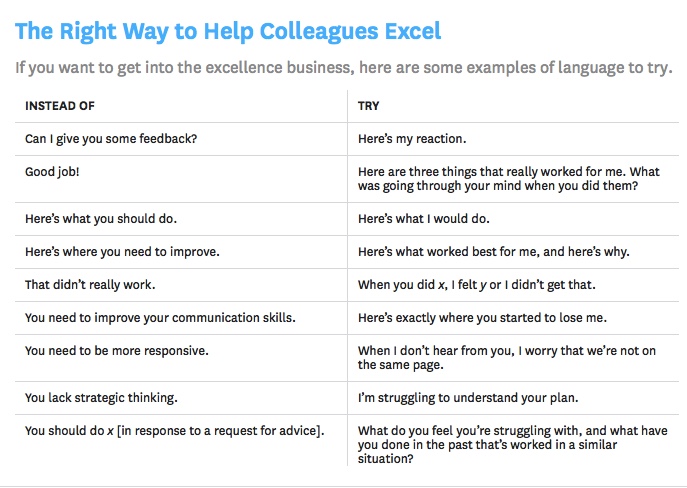
“We humans do not do well when someone whose intentions are unclear tells us where we stand, how good we ‘really’ are, and what we must do to fix ourselves. We excel only when people who know us and care about us tell us what they experience and what they feel, and in particular when they see something within us that really works.”
More on The Feedback Fallacy (March-April 2019) by Marcus Buckingham & Ashley Goodall via Harvard Business Review.
“The guideline, which is structured using a clinical reasoning pathway, includes 11 evidence-based recommendations and, where clear evidence is not available, 19 consensus-based recommendations. The guideline provides tools to assist assessment and diagnosis, and includes recommendations on the work-relatedness of mental health conditions, patient management including decisions about return to work, comorbid or secondary mental health conditions, conveying a diagnosis to a patient and communication with others in the workplace. It promotes collaboration, communication, cultural sensitivity and appropriate care, highlighting the important role that can be played by family physicians, and the members of their teams, in each person’s personal recovery and return to work.”
The next International Association for Medical Education (AMEE) webinar hosted by the AMEE Simulation Committee will be presented by Walter Eppich – “Learning through talk: exploring synergies between simulation and workplace learning” on Friday 29th of March at 2:00 pm (GMT/UK) / 7:00 a.m. (PST) .
Talk as joint social activity impacts communication practices, learning, and patient care. This session will explore the important role of talk in both simulation and workplace settings.
Lessons learned from healthcare debriefing will help us identify ways to address the ‘process’ and ‘content’ of talk of clinical practice to promote learning and patient care.
As of 2019, the AMEE webinar series will be entirely free you can access the webinars by joining here when the webinar begins.
Due to limited space it is advisable to join on time as AMEE cannot guarantee entry to webinars.
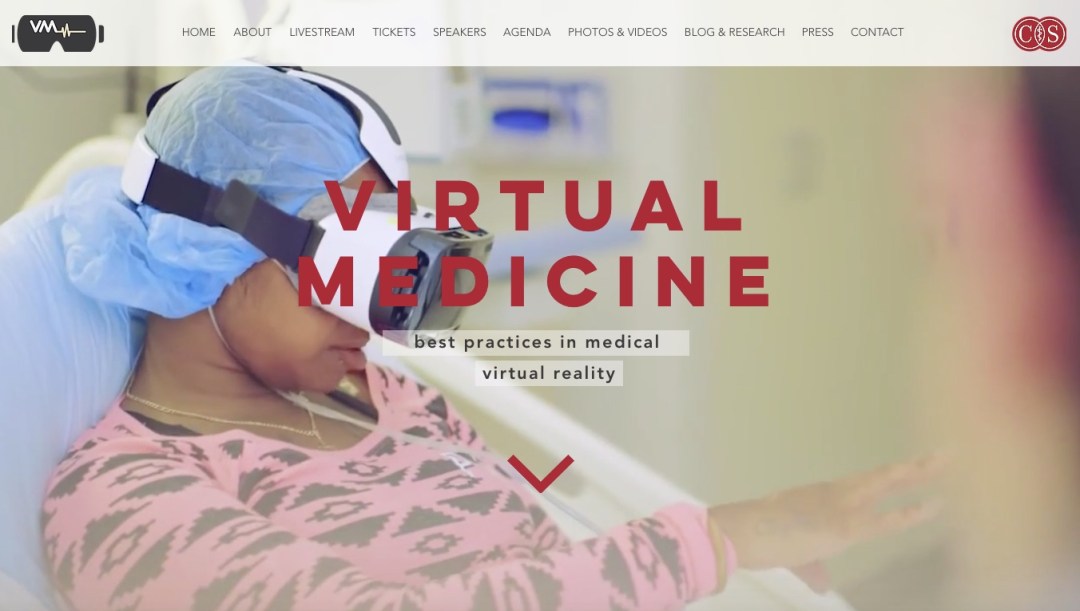
Greetings! This week I’m headed down to the Virtual Medicine Conference at Cedars-Sinai Hospital in Los Angeles. I recently learned that organizers will livestream the event for free. This means you can join me! Access the conference agenda and livestream here. Conference starts on Wednesday, March 27 at 9:00 a.m. Hope to catch you there!
Emergency physicians are frequent providers of Indigenous health. Emerging evidence suggest implicit bias to be a contributor to health disparities affecting Indigenous Canadians. This presentation explores the impact of implicit bias as well as strategies to mitigate its adverse effects in the Emergency Department.
A big thank you to our former UBC Abbotsford-Mission Family Medicine resident, Dr. James Liu, for posting your presentation and sharing your work! And thank you to Dr. John Pawlovich for forwarding the link!
Jeff Kornelsen works as a family doctor in Mission and is one of the 1500+ valued preceptors across the province who dedicate time, energy, and thought to supporting UBC Family Practice residents. What keeps Dr. Kornelsen inspired?
Who do you teach?
Anyone who will listen! I would teach my kids more but they’re adults now and are sometimes less inclined to listen…actually I have learned that it’s not much good to teach all the time. I do enjoy teaching residents, colleagues, and coworkers, and most of all I teach patients, all day, every day at work.
What inspired you to teach?
My profession has taught me a lot. I think, like most people who have a fair bit of experience, I have something to give. Teaching one patient can make a big difference to that person but teaching a resident could have generations of impact!
Who is one educator that had a significant impact on you? What did s/he do that was so effective?
My dad was a teacher. I think I caught his passion for teaching. Dr. Ed Korchinski was my favorite preceptor. Nothing phased him. He was always steady, wise, and supportive.
How do you establish and maintain a good working relationship with your resident?
Definitely the most important thing is to be interested in who they are. Respecting them should follow naturally. Of course you will uncover learning needs, but find out what their felt needs are, and address those.
What do you predict will be our biggest medical advancement in the year 3000?
I have no idea what that year will entail! But long before then, we will be treating conditions genetically. I’m pretty sure most traces of today’s medicine will be unrecognizable. Somehow patients will still need to be known and cared for; I don’t think you can have genuine movement toward health without that.
“The provision of care in alternative locations or after hours, and participation in on-call rota declined in BC from 2006 through 2012. The decline of care provided in patient homes and long-term care facilities is of particular concern given that an increasing proportion of the population will be moving into age groups where visits in these locations is important for quality primary care. It is also of note that these declines occurred in the context of substantial financial incentives.”
BCCFP offers financial awards to residents in the UBC Family Practice Residency Program and fourth-year medical students entering the program.
Nomination Process
Residents
To be eligible for one of the resident awards, please note that a nominator is required – this may be a family physician, fellow resident or student. Submissions for 2019 are due by March 31.
These awards include:
$5,000 BCCFP Resident Leadership Award to a UBC Family Medicine R2 graduating from the UBC Family Practice Residency Program
$1,500 Dr. Manoo and Jean Gurjar Award, BCCFP Family Medicine Resident Scholarship – to a male and a female resident in the UBC Family Practice Residency Program
$1,000 BCCFP Medical Student Scholarship to two fourth-year medical students entering the UBC Family Practice Residency Program
To be eligible for one of the medical student awards, please note that a nominator is required – this may be a family physician, fellow student or resident. Submissions for 2019 are due by July 31. Please use our online form to nominate.
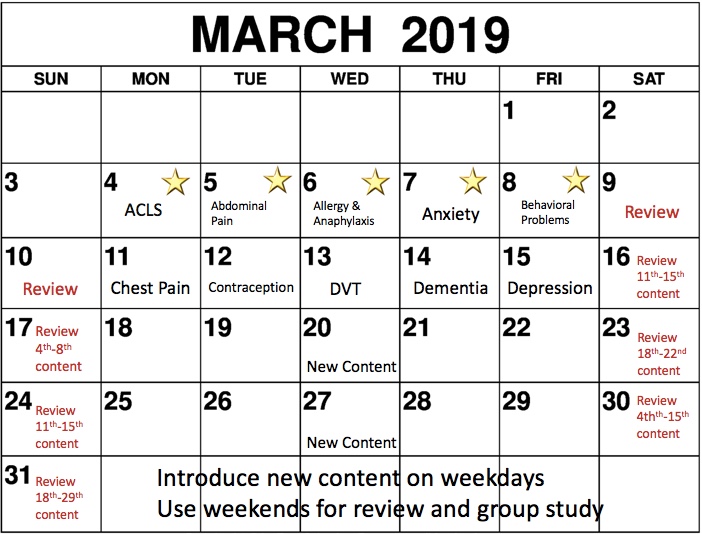
Hope you are well! I know many of you are in the midst of preparing and practicing for your exams. The strategy I used to successfully tackle tests involved planning and distributing content over a series of months in digestible, bite-size chunks. I used my weekdays to introduce new content and my weekends for reviewing topics that week and the week before. At the end of the month, I addressed the gaps and questions that emerged.
These monthly calendars were posted on my refrigerator to remind me of what I needed to cover and to provide my family with a sense of my journey. Gold stars were put on the days that I achieved my goal and this helped me in visually tracking my progress.
Group study was particularly important as it gave my team the opportunity to discuss conflicts in information, rehearse our oral exam responses, test our knowledge, and share additional resources. Working in a team also provided a source of motivation and encouragement.
When I think about your content, such as the 99 topics, I might approach it like this:
Learning scientists refer to these strategies as spaced learning, microlearning, and spaced repetition and they’ve been fairly successful methods for medical students (see The New Way Doctors Learn). Research indicates that people retain information, score better on exams, and modify behaviour using spaced learning/repetition. For more on the concept, watch the 5-minute video below:
What we know about the brain is that it’s hardwired to forget. Spaced repetition, in conjunction with testing/active retrieval, appears to work best in addressing the cognitive, behavioural, and emotional components of learning. In addition, it helps in developing one’s situational awareness. The brain is poor at self-assessment and testing provides that external feedback mechanism that informs us of our gaps and strengths.
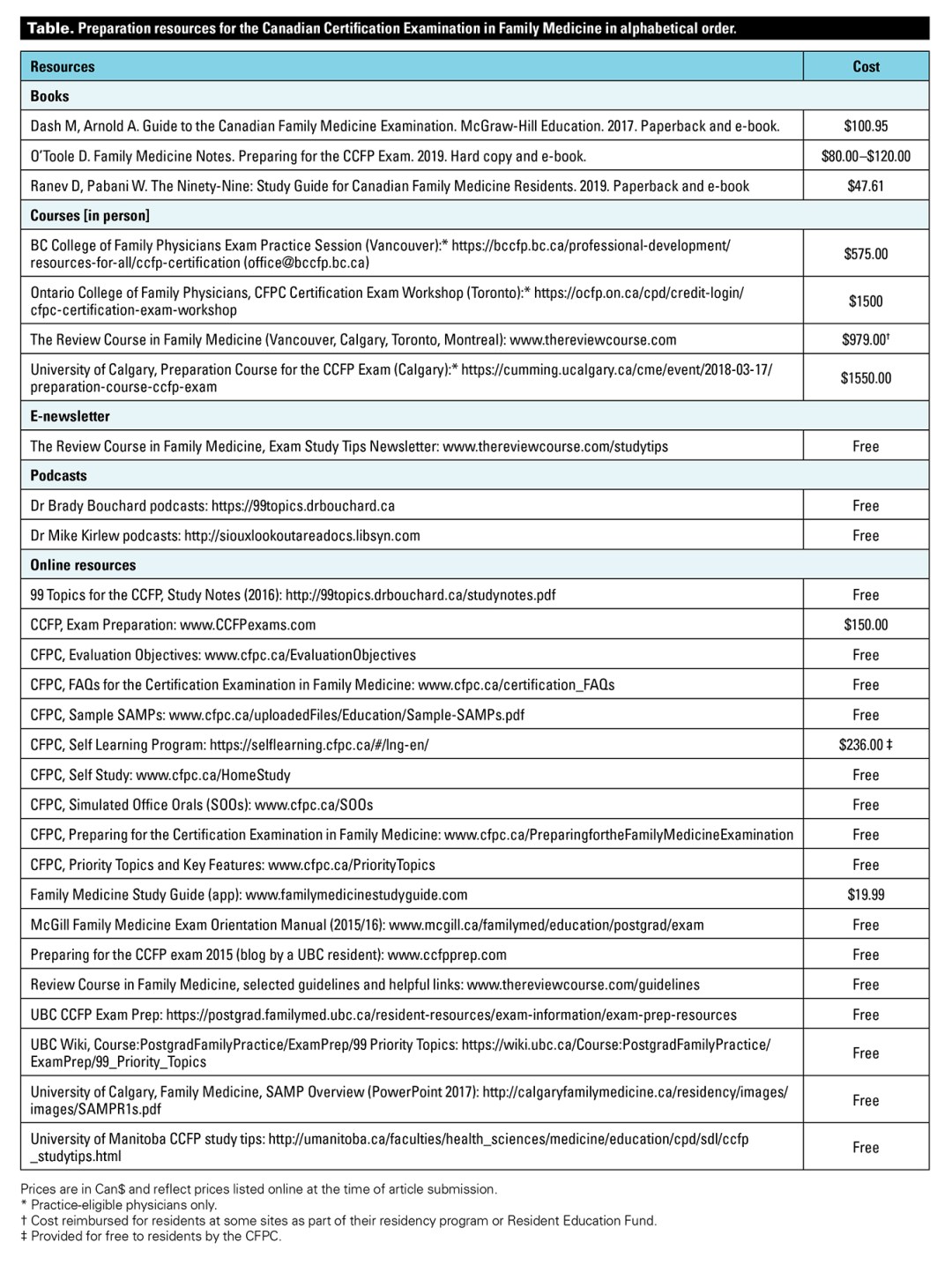
Regarding your material…The Review Course in Family Medicine recently updated their CCFP free study resources for the SOO and SAMP. You may also want to read the BCMJ’s Ready of Not for the CCFP Exam by Drs. Paul Dillon and Simon Moore. Listed below are resources they’ve identified:
Finally, consider using Honnold’s method for your exam preparation: surround yourself with the right people; practice, repeat, and test yourself until you’re comfortable with the material; mentally rehearse the experience; focus on what you need to do for success; find a confidence builder; work through your fear; and then on exam day release the stress and anxiety and immerse yourself in the experience.
You got this! If you need to talk, call me. I’m here for you. Always.


 Family Medicine Residency Site: Abbotsford-Mission