AMEE: Developing a Teacher Identity

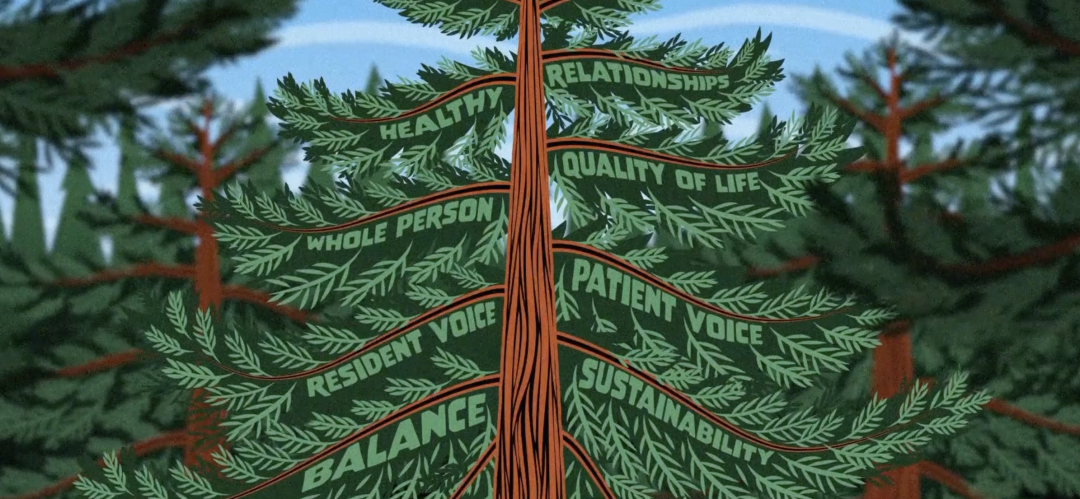
This journal club explores the area of developing a teacher identity in the university and hospital context. Which factors and processes support or hinder developing a teacher identity in this context? How does a teacher identity develop in the context of the norms and values of institutions in which teachers work?

When? Friday Oct 8th, 2021 from 3 pm until 4 pm UK time (GMT+1)
Who is presenting?  Prof Diana Dolmans & Prof Lia Fluit 
Who should attend? Anyone with a passion for and/or interest in Faculty Development

Theme: We will explore the area of developing a teacher identity in the university or hospital context which is not a smooth process given that teachers often struggle with many pressures related to teaching, clinical duties and research. How can we as faculty developers empower teachers to develop a teacher identity aimed at professional growth of teachers? 

Articles:  We have selected two open source articles for you to read prior to the event:

  1. SVan Lankveld, T., Schoonenboom, J., Volman, M., Croiset, G., & Beishuizen, J. (2017). Developing a teacher identity in the university context: A systematic review of the literature. Higher Education Research & Development, 36(2), 325-342. https://doi.org/10.1080/07294360.2016.1208154 
  2. Cantillon, P., D’Eath, M., De Grave, W., & Dornan, T. (2016). How do clinicians become teachers? A communities of practice perspective. Advances in Health Sciences Education, 21(5), 991-1008. https://doi.org/10.1007/s10459-016-9674-9

TO REGISTER: Click here: https://services.amee.org. Select ‘Communities’, then Faculty Development, and then follow the instructions to register for the 3rd Journal Club for 2021.

Although this event is free you will still be required to go through the checkout. 

WHRI Wellness Exchange

Join us September 23rd at 5pm PST for the next @WomensResearch Wellness Exchange! This is a FREE event, delivering the latest in research and resources to you virtually.

Our event will feature presentations led by Drs. Sarah Munro, Roopan Gill, Astrid Christoffersen-Deb, and Patti Janssen, and will be emceed by the amazing Shirley Weir. You don’t want to miss out on this fun and informative evening!

To attend the event, please register via Eventbrite. Zoom details will be sent to all registered guests on the day of the event, and will allow you to engage directly with the presenters. Register now.

How to ease back-to-school stress for school-age kids

“Heading back to school can be stressful for children even when there’s no global pandemic to worry about.

Now, this ‘return to normalcy’ after COVID-19 lockdowns makes it more important than ever to pay attention to children’s mental health, says Dr. Tyler Black, assistant clinical professor at UBC faculty of medicine’s department of psychiatry.

Dr. Black explains why parents of school-aged children and educators need to consider a gentle approach to easing kids back to class, or as he advises: “less homework and more leeway.”

Many have looked forward to the start of a full-time, in-person school year as something of a return to normalcy. What do you think it’s likely to do for children’s mental health?

It’s hard to say one thing because it’s different for everyone. The unconventional schooling of the past year and a half worked well for some children and not for others. Some kids and families benefited from less in-person school during the pandemic—working well with technology and avoiding things like bullying and those types of things—while others really struggled with the changes, missing socializing, sporting events and more.”

Read more of Dr. Black’s interview on How to Ease Back-to-School Stress for School-Age Kids at UBC’s Faculty of Medicine.

Launching UBC’s COVID-19 Rapid Testing Program

As you know, UBC is requiring COVID-19 rapid testing for all students, faculty and staff, with exemptions provided for those who are fully vaccinated against COVID-19.

Starting today, September 7, all students, faculty and staff must complete an online, confidential declaration of your vaccination status. As part of the process, you are asked to disclose your vaccination status as follows:

  1. Visit https://rapidtesting.covid19.ubc.ca, log in to the disclosure site and complete the process as outlined. It includes questions about your COVID-19 vaccination status. Please note: you will require your CWL.
  2. If you indicate that you are fully vaccinated, you will receive further communication outlining how to verify your vaccination status with the appropriate documentation.
  3. If you indicate that you are not fully vaccinated, or you choose not to disclose your status, you will receive further communication about UBC’s Rapid Testing Program and the next steps you need to follow.

All UBC students, faculty and staff are asked to complete the Vaccination Status Declaration by September 10, 2021. A series of FAQs have been posted to help answer any questions you may have about the program.

To be exempt from UBC’s Rapid Testing Program, you will need to disclose your status (as per the process above) and verify your vaccination status at a later date. Audits will be conducted as part of the program, and students, faculty and staff will need to provide additional information if requested.

Those students, faculty and staff who disclose that they are not fully vaccinated, or who choose not to disclose their status, are required to take part in COVID-19 rapid testing. The details and frequency of the testing program are currently being finalized. More details will be shared as they become available.

We are happy to welcome you to campus and wish you a successful start to the new academic year.

Santa J. Ono
President and Vice-Chancellor

Blocking CMA Diversity

“Debate over diversity and democratic processes dominated the Canadian Medical Association (CMA) annual general meeting held virtually on August 22.

A small group of doctors defeated two motions aimed at boosting the inclusion of underrepresented groups in CMA leadership, and disputes cast a shadow over the ratification of the organization’s first Indigenous president-elect, Dr. Alika Lafontaine.

The first motion proposed to allow all members to vote to select the CMA president-elect nominee. Historically, doctors in each Canadian jurisdiction have taken turns selecting a nominee in a local vote.

The second motion proposed to replace elections for CMA board and committee positions with a search committee that would recommend candidates based on an ‘evolving set of skills and diversity attributes.’ CMA had planned to appoint an inaugural search committee comprised of three board members, three physician ‘members-at-large,’ and one non-physician with experience in governance for an initial one-year term.

While most physicians at the meeting supported the leadership overhaul, the motions failed to win the two-thirds majority required to pass.

CMA Vice-Chair Dr. Carl Nohr presented the motions as part of an ‘intentional plan to diversify our leadership.’ To date, most CMA presidents have been white men, notably including the late Prince Philip, Duke of Edinburgh.

‘While diversity and equity may happen by chance, they usually do not,’ Nohr explained. ‘Democracy always allows the majority to rule but… if we wish to reflect diversity in leadership, we must design a governance model that intentionally lifts up minorities.'”

Read more via Minority of doctors block CMA diversity overhaul via CMAJ.

National Day for Truth and Reconciliation

In June of this year, the federal government passed legislation to mark September 30, 2021 as a National Day for Truth and Reconciliation. Earlier this month, the Province of BC followed suit recognizing this as a day of commemoration in the public sector. UBC will be observing this day as a holiday on both campuses and our distributed learning sites. Classes will be cancelled and university employees who are normally entitled to provincial and federal holidays will receive this day off.

The National Day for Truth and Reconciliation is designated as an opportunity to ‘recognize and commemorate the legacy of residential schools.’ It was originally proposed in 2015 by the Truth and Reconciliation Commission of Canada, which under Action 80 called upon the federal government, in collaboration with Aboriginal peoples, to establish a statutory holiday “to honour Survivors, their families, and communities, and ensure that public commemoration of the history and legacy of residential schools remains a vital component of the reconciliation process.” 

You may already be aware that September 30 has been observed since 2013 as Orange Shirt Day, a movement to recognize the colonial legacy of residential schools and commit to the ongoing process of reconciliation. Orange Shirt Day recalls the experience of residential school Survivor Phyllis Webstad, who at six was stripped of her shiny new orange shirt on her first day attending the St. Joseph Mission Residential School near Williams Lake, BC. The date of September 30 was chosen because it was the time of year when Indigenous children were removed from their families and forced to attend residential schools. 

UBC is committed to advancing Indigenous human rights through truth and reconciliation. The 2020 Indigenous Strategic Plan represents a university-wide response to the United Nations Declaration on the Rights of Indigenous Peoples and the National Inquiry into Missing and Murdered Indigenous Women and Girls’ Calls for Justice. It also represents the UBC Vancouver campus’ response to the Truth and Reconciliation Commission’s Calls to Action. In 2019, UBC Okanagan published a public declaration of five commitments in response to the Truth and Reconciliation Commission’s Calls to Action.

I want to encourage all members of the UBC community to honour the National Day for Truth and Reconciliation, whether through personal reflection, education and awareness activities, or by participating in Orange Shirt Day or other events within your communities.

Santa J. Ono
President and Vice-Chancellor

Virtual-First to Patient-Directed

“In July 2020, I wrote a post on this blog to guide family doctors on how to ramp up in-person visits in their practices. A year later, the topic is still timely although the context is different: we are now fifteen months into the COVID-19 pandemic, a large proportion of the population is vaccinated against SARS-CoV-2 . How should primary care operate going forward?

Great question! Read Dr. Kiran’s response “From virtual-first to patient-directed: A new normal for primary care” via CMAJ.