Congratulations to our Abbotsford-Mission Family Practice Residents who won the Lloyd Jones Collins Award for their scholar projects!
Uprooting Mood Disorders in the Fraser Valley: Community gardening as a non-pharmacologic treatment for outpatient anxiety and depression
Drs. Michelle Hanbidge & John Stimson
Food as medicine: An analysis of the health impact of ketogenic diet educational seminars on participants in a community-based family medicine practice
Dr. Rylan Duivestein
You can learn more about Michelle and John’s project here.
“The BMJ‘s special issue on racism in medicine reflects the working lives of doctors from ethnic minority backgrounds and the healthcare experiences of ethnic minority patients. This edition focuses on race and its impact on health. It is a timely reflection, as we in the UK try to make sense of the societal upheavals which have convulsed the country in recent times, and in which race, racism, and power have come under close scrutiny.”
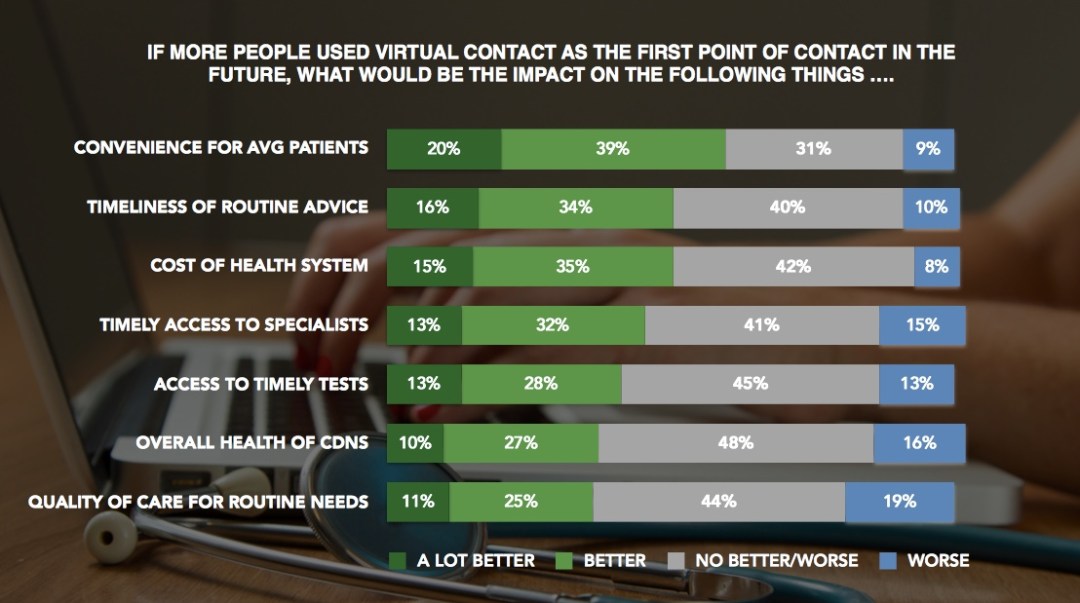
“The national poll conducted by Abacus Data between the 14th and 17th of May 2020 found that almost half of all Canadians have now accessed a physician using virtual care options and they are highly satisfied with the results. Those who connected with their doctor virtually during COVID-19 report a 91% satisfaction rate – 17 points higher than in-person emergency room visits. Moving forward, almost half (46%) of Canadians who had the opportunity to use virtual care since the pandemic outbreak would prefer a virtual method as a first point of contact with their doctor.”
More here on Virtual care is real care: National poll shows Canadians are overwhelmingly satisfied with virtual healthcare via CISION.
I want to strongly encourage that you also check out the CMA survey itself. The data is quite interesting and I think urges us to reimagine a system that supports multiple modes of delivering care.
“The problem with race medicine extends far beyond misdiagnosing patients. Its focus on innate racial differences in disease diverts attention and resources from the social determinants that cause appalling racial gaps in health: lack of access to high-quality medical care; food deserts in poor neighborhoods; exposure to environmental toxins; high rates of incarceration; and experiencing the stress of racial discrimination.
You see, race is not a biological category that naturally produces these health disparities because of genetic difference. Race is a social category that has staggering biological consequences, but because of the impact of social inequality on people’s health. Yet race medicine pretends the answer to these gaps in health can be found in a race-specific pill. It’s much easier and more lucrative to market a technological fix for these gaps in health than to deal with the structural inequities that produce them.”
More on Dr. Dorothy Roberts TEDTalk on “The Problem with Race-Based Medicine” here.
“’Long-term care facilities are home to some of society’s most vulnerable—often frail seniors with pre-existing health conditions, including dementia and Alzheimer’s. These seniors depend on their loved ones for social companionship, and right now those usual ways of connection are gone,’ says UBC’s Dr. Roger Wong, clinical professor of geriatric medicine in the faculty of medicine, who is helping lead the new initiative.
….
Over the coming months, the Connecting with Compassion team will deliver new iPads to long-term care homes across the province in hopes of facilitating virtual visits and connections among family and friends. The iPads will arrive pre-loaded with videoconferencing programs, like FaceTime, Zoom and Skype, as well as a host of other apps designed to keep seniors engaged. The iPads will also come complete with recorded performances by students from UBC’s School of Music—including harpist Hayley Farenholtz.
….
As part of the initiative, UBC medical students based in communities across the province will be playing an active role, volunteering their time to virtually visit and connect with residents in long-term care homes every week.”
Learn more here on “Helping seniors in long-term care combat social isolation during COVID-19” via UBC News.

 Congratulations to our Abbotsford-Mission Family Practice Residents who won the Lloyd Jones Collins Award for their scholar projects!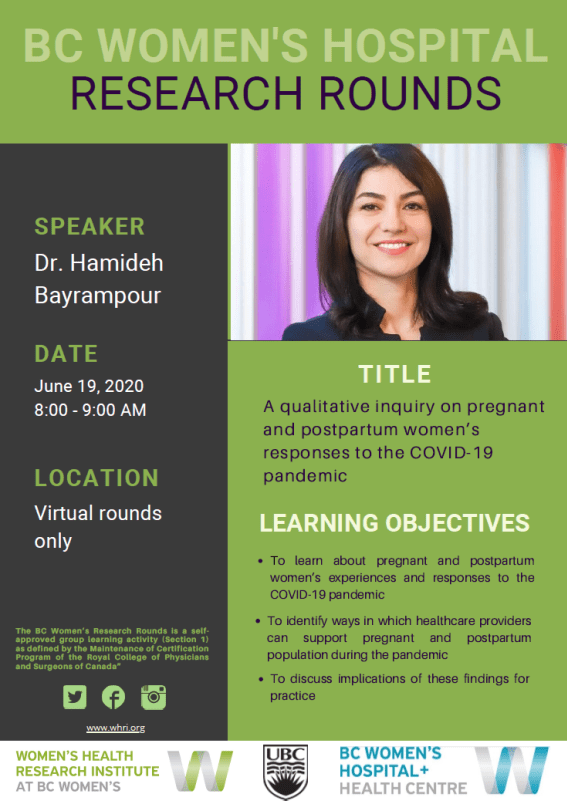
 “The BMJ‘s special issue on racism in medicine reflects the working lives of doctors from ethnic minority backgrounds and the healthcare experiences of ethnic minority patients. This edition focuses on race and its impact on health. It is a timely reflection, as we in the UK try to make sense of the societal upheavals which have convulsed the country in recent times, and in which race, racism, and power have come under close scrutiny.”
 We stand in support of our #UBC faculties, programs, and departments that are observing
  “The national poll conducted by Abacus Data between the 14th and 17th of
 Family Medicine Residency Site: Abbotsford-Mission