
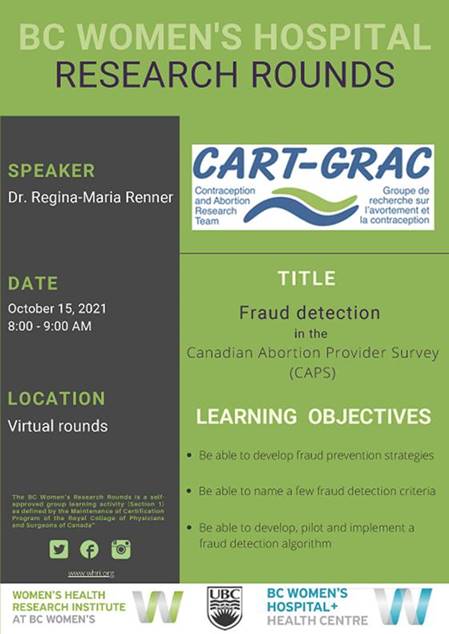
Register at www.whri.org.
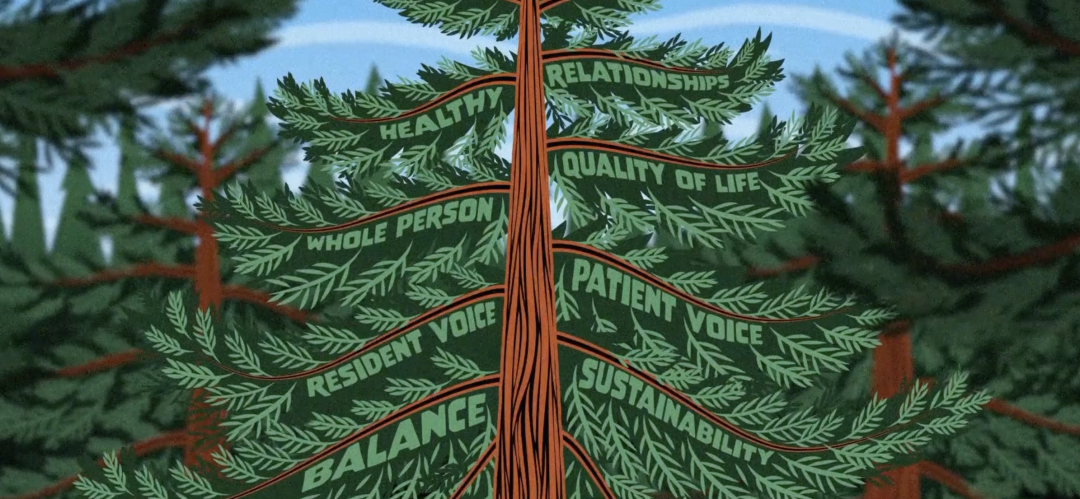
Welcome to the Team
Register at www.whri.org.
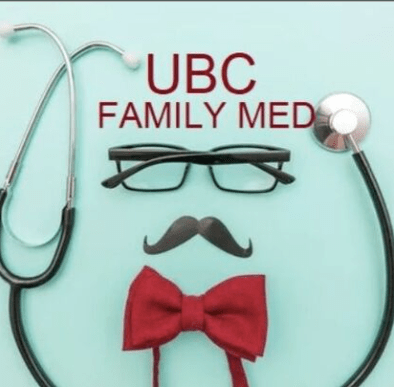
What is Movember? The aim of the Movember initiative is to raise funds and awareness for mental health, suicide prevention, prostate cancer, and testicular cancer. Since 2003, Movember has funded more than 1,250 men’s health projects around the world. They are a transparent organization and have plenty more information available on their website.
How do I get involved? Sign up using the link below, and get your co-residents and preceptors to do the same! Then, throughout the month of November commit to moving (“Move”mber) by walking or running 60km. As another option, you can commit to growing a moustache for the 30 days of November. The idea behind the increase in physical activity and/or the moustache is that they provide opportunities to engage in important conversations about men’s health with those around you, and thus help you raise funds!
Use this link to donate or to join our team. You can also search “UBC Family Medicine” on the Movember website!
Warm regards,
Dr. Justin Dhinsa
Abbotsford-Mission Family Practice Residency Program
“As an educator, I want to believe that knowledge equals actions for a more just society, but has our understanding of the deadly impacts of structural oppression translated into the structural change needed?
In this talk, I will talk about what it means to move from episodic reactions that garner largescale attention (e.g. the murder of George Floyd) to a long-term commitment to addressing systemic oppression. The latter requires understanding of different historical, geopolitical and economic forms of structural oppression and how they are both dissimilar and interconnected (e.g. the role of eugenics in reinforcing racism and ableism). What does it mean to go beyond a checklist to transforming what and who we value and based on this how we structure and govern health care? Throughout the presentation, I will introduce examples of organizations that have stimulated structural change grounded in anti-oppressive practices. I will then open up a conversation about ways we can think about and galvanize structural change in health professions education.”
Speaker: Dr. Michelle Stack
Department of Educational Studies, UBC
Title: We Just Didn’t Know! Going Beyond Reactive Calls for Justice to Structural Transformation
Date: October 12, 2021
Time: 12:00pm to 1:30pm
Registration is free. Learn more here.
“I think we have a primary obligation to care and be present for our patients, or any other professional works that we’re engaged in, and we have an ethical responsibility to…be altruistic, to put the needs of those we serve ahead of our own needs” (Chami, 2017).
“It has been eighteen months since COVID-19 emerged in Canada. The trajectory of the pandemic has placed a strain on our citizens’ mental health, particularly our frontline workers. While physician well-being has been a longstanding concern, the global pandemic has magnified the daily challenges that clinicians so bravely navigate to safeguard the health of their patients.
Expectedly, there has been ample conversation about how physicians can take care of themselves during this unprecedented time in medicine. This piece will discuss burnout and moral injury, and highlight the resources and tools available for supporting healthcare workers through these experiences.”
More on Physician Well-being During COVID-19 — Burnout and Moral Injury via UBC CPD.
The College of Family Physicians of Canada announced that the simulated office oral (SOO) component of the Certification Examination in Family Medicine will be administered virtually beginning in November 2021 for those repeating the SOO and in spring 2022 for those taking it for the first time.
For more information about that announcement please visit the full information release and refer to the frequently asked questions section on their website.
| Participate in Orange Shirt Day and National Day for Truth and Reconciliation |
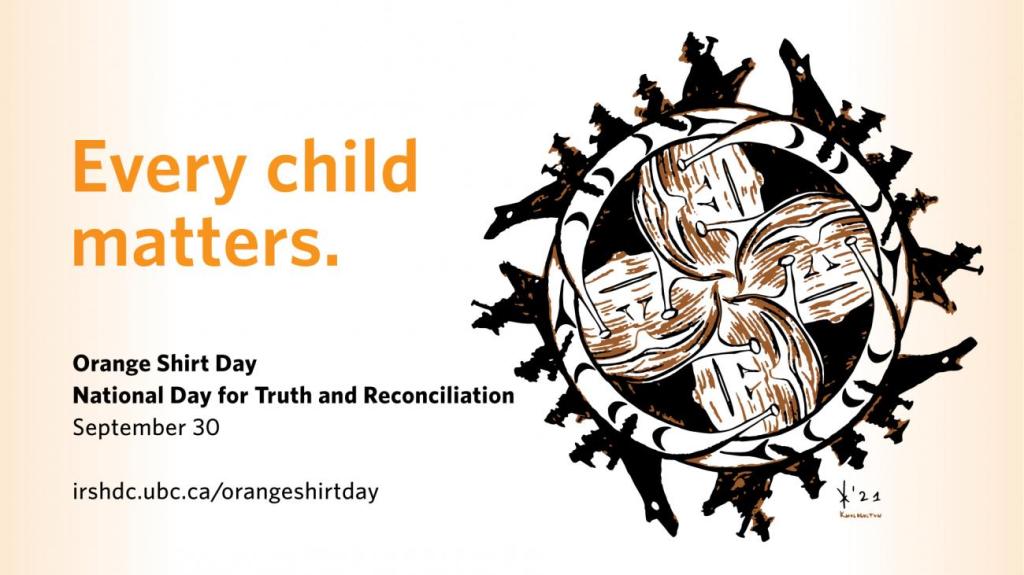
| This year, September 30 will also mark the first National Day for Truth and Reconciliation – an opportunity to recognize and commemorate the legacy of residential schools. As President Ono stated in the August 18 broadcast, all members of the UBC community are encouraged to honour the National Day for Truth and Reconciliation, whether through personal reflection, education and awareness activities or by participating in events within your communities. To help each of us advance our understanding of residential school history, consider exploring or participating in the following: Tour the Indian Residential School History and Dialogue Centre website, which provides access to various educational materials, including a page focused on raising awareness about Orange Shirt Day. Immerse yourself in a new website from the team at the Office of Indigenous Strategic Initiatives featuring several new items, including impact stories, implementation updates, and funding opportunities. Complete Respect, Sincerity & Responsibility: Land Acknowledgements at UBC, a sixty-minute self-paced course exploring what land acknowledgements are, their importance and addressing barriers in making an acknowledgement. Read the UBC Beyond story 6 ways to deepen your understanding of Indian residential school history. ATTEND AN UPCOMING EVENT: Tuesday, Sept. 21: “Picking up the Pieces: The Making of the Witness Blanket” Film Screening and conversation with Kwagiulth master carver Carey Newman and his sisters Marion and Ellen Tuesday, Sept. 21: Welcoming Students Back to Campus: Supporting Classroom Climate with UBC Indigenous Resources Monday, Sept. 27: “Returning Home and Pathways to Reconciliation” Film screening and conversation with Orange Shirt Day originator Phyllis Webstad Tuesday, Sept. 28: Join the Faculty of Medicine: Truth Telling: A first step toward reconciliation Wednesday, Sept. 29: The 94 TRC Calls to Action: A Participatory Reading – Joint STEM faculty event Thursday, Sept. 30: Intergenerational March for Orange Shirt Day – Joint STEM faculty event |
This journal club explores the area of developing a teacher identity in the university and hospital context. Which factors and processes support or hinder developing a teacher identity in this context? How does a teacher identity develop in the context of the norms and values of institutions in which teachers work?
When? Friday Oct 8th, 2021 from 3 pm until 4 pm UK time (GMT+1)
Who is presenting? Prof Diana Dolmans & Prof Lia Fluit
Who should attend? Anyone with a passion for and/or interest in Faculty Development
Theme: We will explore the area of developing a teacher identity in the university or hospital context which is not a smooth process given that teachers often struggle with many pressures related to teaching, clinical duties and research. How can we as faculty developers empower teachers to develop a teacher identity aimed at professional growth of teachers?
TO REGISTER: Click here: https://services.amee.org. Select ‘Communities’, then Faculty Development, and then follow the instructions to register for the 3rd Journal Club for 2021.
Articles: We have selected two open source articles for you to read prior to the event:
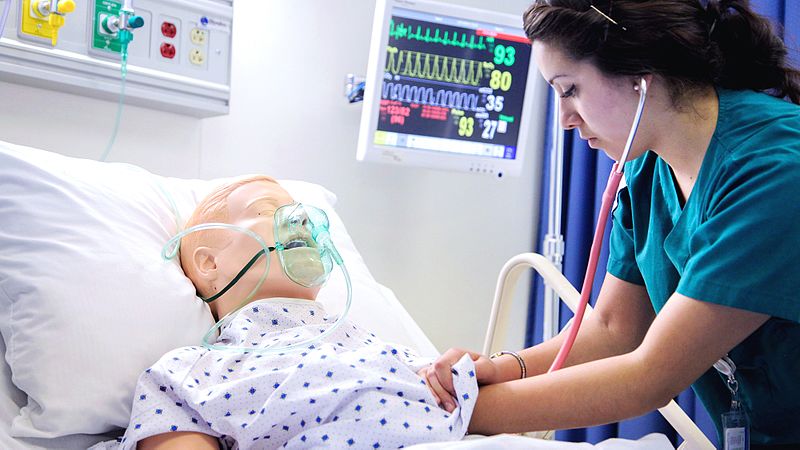
“Since inception, there have been concerns regarding the validity and appropriate utilization of clinical or healthcare simulation. The purpose of healthcare simulation is to replicate realistic environments and situations to expose and better prepare learners for the true healthcare setting. According to Agha and Fowler, clinical simulation training has become essential in maintaining teaching strategies, technical skills, and patient safety. Over the past three decades, the need for and importance of healthcare simulation, as well as the utilization of healthcare simulation, has steadily increased.
A recent study by Schaffer et al entitled ‘Association of Simulation Training With Rates of Medical Malpractice Claims Among Obstetrician-Gynecologists’ found a ‘significant reduction in malpractice claim rates after simulation training’. The primary goal of the study was to analyze malpractice claims rates and have the participating Ob-Gyns participate in a healthcare simulation or series of clinical simulations. After the healthcare simulation(s), the malpractice claim rates would be compared to the malpractice claim rates documented earlier, along with an analysis of the correlation of how many healthcare simulation training sessions were attended by the physicians.”
Learn more on the “Significant Reduction in Malpractice Claims After Medical Simulation Training” via HealthySimulation.
“Regional health restrictions will be introduced in the eastern Fraser Valley as the area deals with a spike in cases of COVID-19 and low vaccination rates, health officials announced Tuesday.
The province said private gatherings are now limited to five additional people or one additional household, while outdoor gatherings are limited to 10 people — unless ‘all of the participants are fully vaccinated.’
The new regional public health order covers Abbotsford, Chilliwack, Hope, Mission and Agassiz-Harrison.
Anyone who is eligible for immunization and has not yet received their first and/or second dose can do so by booking an appointment online, calling 1-833-838-2323, or registering in person at a Service B.C. location.”
Learn more about “New health restrictions announced for eastern Fraser Valley amid low vaccination rates” via CBC.

“Cisplatin is a life-saving treatment for many children with cancer, but the study published today in Cancer shows that the hearing of very young children is impacted early during treatment and is affected to a greater extent than that of older children.
‘This is significant as even a moderate loss of hearing can impact social development in children, particularly when it occurs during a peak time of language acquisition,’ said the study’s senior author Dr. Bruce Carleton, professor at UBC’s faculty of medicine’s department of pediatrics and an investigator and director of the Pharmaceutical Outcomes Programme at BC Children’s Hospital.
Previous studies have shown up to 60 per cent of children treated with cisplatin suffer from hearing loss and 40 per cent of those children will need hearing aids.”
Learn more on “Chemotherapy drug puts young children with cancer at high risk of hearing loss” via UBC Medicine.
 Family Medicine Residency Site: Abbotsford-Mission