
Diabetes: Management & Remission

Diabetes Painting via Artist Agne Kisonaite

“The typical impact on morbidity and mortality for those with type 2 diabetes is rather grim and in excess of many cancers. The average 10-year survival rates for breast cancer and non-Hodgkin lymphoma are 84% and 55%, respectively; the average 10-year lifespan for type 2 diabetes is 50%.[2] While the goal for most patients with cancer is remission, the patient with type 2 diabetes is taught that they need to live with this incurable disease. This need not be the case.

Increasing evidence points to the ability of patients to not only halt the onset of type 2 diabetes, but also to enter remission after a type 2 diabetes diagnosis. Bariatric surgery (RYGB, BPD) has been shown to result in durable remission in the majority of patients with type 2 diabetes,[3] and research has demonstrated that counseling patients to engage in modest caloric reduction using portion control and limited use of meal replacements resulted in roughly 10% of patients experiencing remission after 2 years.[4]

The Diabetes Remission Clinical Trial (DiRECT) in particular provides compelling evidence for the efficacy of structured, diet-induced weight loss on type 2 diabetes remission outcomes.[5] The randomized controlled trial’s intervention consisted of withdrawal of antidiabetic/antihypertensive drugs, total diet replacement for 12 to 20 weeks, stepped food reintroduction (2 to 8 weeks), and then structured support for weight-loss maintenance. At 24 months, 36% of intervention group participants had remission of diabetes, lower weight (average 8 kg), lower blood pressure, a 50% reduction in cardiovascular disease risk, lower health care costs, and better quality of life. Post-hoc analysis of patients experiencing remission found a return to normal pancreas volume, morphology, and beta cell capacity.[6] Importantly, the trial was conducted entirely in primary care practices, assisted by nurses and dietitians.”

Read more on Type 2 diabetes: Turning management into remission via BCMJ.
Also view Roundup: 25 Artists Sweetening Their Works With Diabetes Illustrations via DesignMantic.

CPD: Incorporating Virtual Musculoskeletal Examinations during a Pandemic

Join our highly experienced and knowledgeable panelists as they answer your questions and share best practices in managing virtual musculoskeletal examinations (specifically, wrist/hand and shoulder) in the context of the COVID-19 pandemic.

Feb 10 (Thu) | 1830–2000 PST
Target Audience: Physicians and other health care providers.
Meet our panel:

  • Dr. Fay Leung, Orthopedic Surgeon, Clinical Associate Professor, UBC Department of Orthopaedics
  • Dr. Rod French, Plastic Surgeon, Clinical Assistant Professor, UBC Division of Plastic Surgery
  • Moderator: Dr. Brenda Hardie, Family Physician

Learn More & Register

Holographic Technology

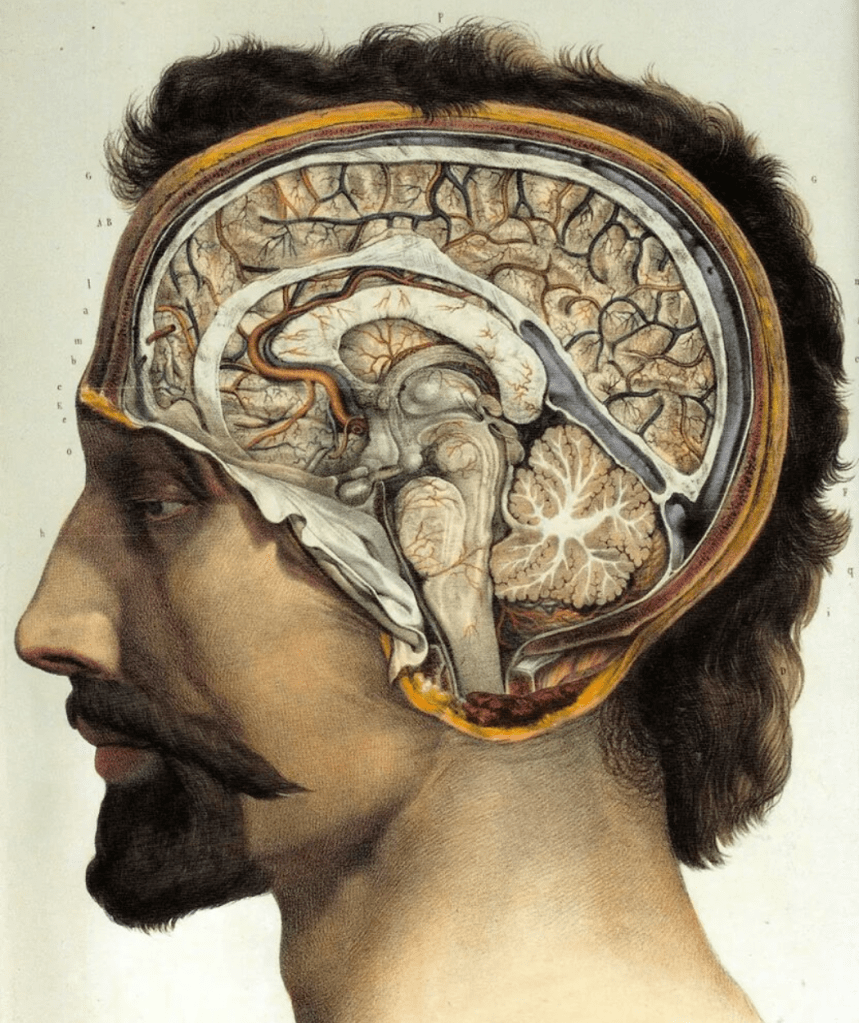
Jean-Baptiste Marc Bourgery, 1831-1854.

“The National University Health System in Singapore has started a research and development programme to explore the use of mixed reality technology in clinical care. 

In a press statement, the healthcare group said a team of neurosurgeons from the National University Hospital has studied the potential of holographic technology to locate brain tumours during surgeries.

WHAT IT DOES

In a proof of concept demonstration, a holographic visor was used to create a 3D hologram of a patient’s brain scan that was projected into space and superimposed onto a patient’s head during surgery.

The hologram was generated using a 3D medical software called Virtual Surgery Intelligence by German medical MR platform developer apoQlar. 

The MR technology enables surgeons to identify tumours ‘quickly and precisely’ and know their exact location and which angle to make an incision. Surgeons can also view the holographic image from different angles, as well as interact with and control it by gesture and speech recognition.” 

Read more on NUHS demonstrates use of holographic tech in brain surgery: The healthcare group has started exploring the use of mixed-reality tech in clinical care via HIMSS.

Association of E-Cigarettes With Erectile Dysfunction

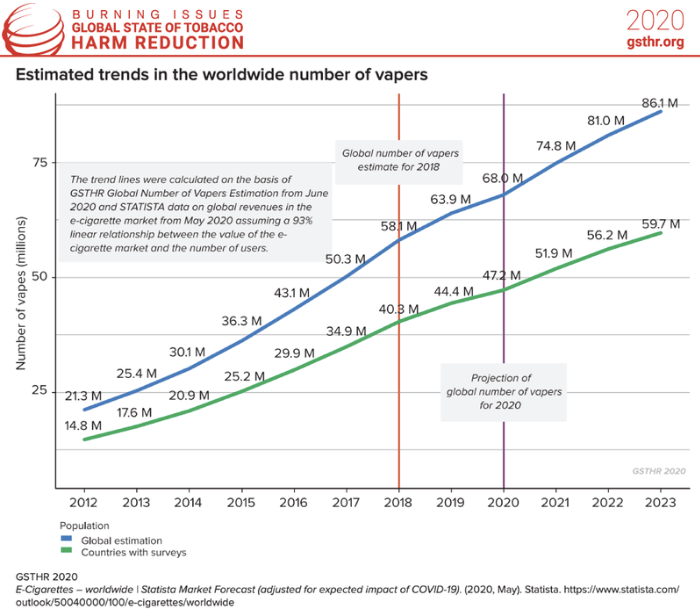
Estimated trends in the global number of vapers via Electronic Cigarette via Wikipedia

“Association of E-Cigarettes With Erectile Dysfunction: The Population Assessment of Tobacco and Health is the first population-based study reporting the association between electronic nicotine delivery systems (ENDS) use and erectile dysfunction (ED). Approximately 1 in 6 adult men in the U.S. reported suffering from moderate-to-severe erectile dysfunction, which is consistent with the findings of previous studies.4 Current ENDS use was associated with higher odds of ED among U.S. adults, adjusting for age, other risk factors, and CVD history overall and also when evaluating the association among adult men aged 20–65 years with no history of CVD. In addition, daily ENDS use was significantly associated with higher odds for ED in all adjusted models in this study, whereas current ENDS users who are also former smokers seemed to consistently experience a higher risk of ED.”

More on Association of E-Cigarettes With Erectile Dysfunction: The Population Assessment of Tobacco and Health Study via American Journal of Preventive Medicine
Additional data on the topic may be found here on Population Assessment of Tobacco and Health (PATH) via NIH.

Collateral Damage of COVID-19

“Dr. Sheila Singh is used to explaining complex medical situations in simple terms. The pediatric neurosurgeon at McMaster Children’s Hospital in Hamilton says that lately, she’s seeing too many oranges and grapefruits and fewer ping pong balls.

That’s not good, and it could signal that the COVID-19 pandemic has delayed the diagnosis of many pediatric diseases, sometimes with devastating results.

‘You can imagine a tumour that’s the size of a ping pong ball, it’s easier for me to work around and remove it,’ she said. ‘But if that ping pong ball-sized tumour grows to the size of an orange or a grapefruit, the tumour has grown to a size where it’s much more difficult now to deal with.’

Singh told Dr. Brian Goldman, host of White Coat Black Art, that she is now seeing two to three times more oranges and grapefruits than before the pandemic. In other words, the tumours have been left to grow much longer due to delays in diagnosis.

Singh says she believes the delays in diagnosis have been caused by patients staying away from hospitals because:

  • They are afraid of catching COVID-19.
  • There is a lack of in-person visits with their family doctor.
  • There is an anchor bias to look for COVID-19 symptoms to the detriment of flagging other serious diseases.

‘There’s no doubt there will be collateral damage,’ she said, ‘and some of that will be death and poor outcomes from diseases that could have had better outcomes.’

More on Late diagnosis of tumours in children collateral damage of COVID-19, doctors say via CBC Radio.

Equity, Diversity, & Inclusion Resources

The UBC Faculty of Medicine’s Office of Faculty Development offers a wide range of EDI resources. Here are a few below for those wanting to learn more on designing safe and inclusive learning environments.

  1. PGME Learning Environment modules:  https://postgrad.med.ubc.ca/faculty-staff/learning-environment-modules/
  1. The following resources can be found here: https://facdev.med.ubc.ca/home-page/resources/#learner
  • Inclusivity module 
  • Language Guide 
  • Safe and Supportive LE module 
  1. Land Acknowledgement PPT: https://facdev.med.ubc.ca/home-page/resources/#territorialacknowledgement
  1. Teaching Scenario Library and Pilot: https://facdev.med.ubc.ca/scenario-library/
  1. Community of Practice of facilitators who want to practice skills for leading discussions on sensitive topics (includes workshops and opportunities to practice). Email the program manager Erica Amari at Erica.a@ubc.ca for information or to join. 
  1. Support from Office of Faculty Development to facilitate sessions. The Office supports facilitators who would like lead a session on learning environment and EDI. Please email fac.dev@ubc.ca to discuss your needs. 

Artificial Intelligence Healthcare Project

“Minnie Teng is among the 2021 awardees of a 2021 Compassion and Artificial Intelligence Grant from AMS Healthcare. Nine remarkable individuals, and their multidisciplinary teams, were selected by an external expert review panel. Their work will help transform healthcare by ensuring that technologies are enabling of healthcare’s compassionate purpose.

Minnie Teng, UBC Clinical Instructor & Medical Student

Teng, a second-year medical student at UBC who is also a clinical instructor with the department of occupational science and occupational therapy, received the grant for her project entitled, ‘Optimizing interactions between humans and artificial intelligence when administering remote cognitive assessments.’

Her team is collaborating with people with disabilities to pilot remote assessments to evaluate how the design of human-computer-environment interactions can be optimized for compassionate care.

‘We are honoured to be the recipients of this award that will allow us to explore how software, hardware, environment, and people interact and impact healthcare in virtual settings,’ Teng said. ‘The study will contribute significantly to the scarce literature on how design of the environment and tasks can influence perception and delivery of compassionate care.'”

More on Minnie Teng awarded grant for artificial intelligence healthcare project via UBC Faculty of Medicine.

Racism in Medicine

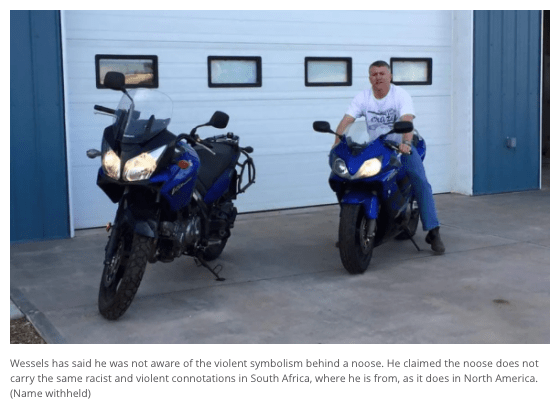
“In July 2020, CBC News first revealed Wessels tied a noose and then taped it to the door of an operating room at the Queen Elizabeth II Hospital in Grande Prairie, Alta, a city 450 kilometres north of Edmonton.

A colleague, surgeon Dr. Scott Wiens, said Wessels told him the noose was for a Black, Nigerian-born surgical assistant, Dr. Oduche Onwuanyi. The incident was reported to hospital administration minutes after it happened. Over the next four years, at least three doctors reported it to the hospital’s administration, Alberta Health Services, the college and then-health minister Tyler Shandro.

Wessels was never suspended and faced no discipline. The college subsequently admitted it had failed to investigate the incident in a timely manner. Alberta Health Services (AHS), which manages the province’s health-care system, said it believed the matter had been dealt with. The college announced a hearing for Wessels shortly after CBC News revealed the noose incident.”

Read more here on Surgeon handed 4-month suspension for noose incident at Alberta hospital via CBC.