“Rather than delivering patients serially to one exam room after another, each owned by a different provider, we made the patients the owner of their own rooms, and instead, circulated the providers to the patients.”
Informed by the Integrated Practice Unit structure, Stacey Chang and his Design Institute team completely revitalized the patient and healthcare provider’s experience in their new clinics and physically eliminated the waiting room (yes, you read that correctly). Kudos to the courageous and collaborative efforts of @DellMedSchool + @FineArtsUT. #GoLonghorns #MustRead #GameChanger
Last night I watched Alex Honnold’s Free Solo. Wow. So many pearls from this movie. What stood out for me is that we all, probably on some level, have a wall we’d like to climb. I took note of Honnold’s methods that helped him accomplish one of the greatest athletic achievements in our time. Here’s what I gathered:
Surround Yourself with the Right People. A team comprised of trusted experts can offer specific and constructive feedback and provide emotional support.
Practice. Practice. Practice. Prior to free soloing a route, Honnold repeatedly climbs it with ropes and a companion. He plans every move and takes meticulous notes describing everything from the feel of the granite to where he’ll place his fingers and toes.
Mental Rehearsal. He visualizes the experience of climbing the wall and how he needs to move through each pitch.
Attitude Towards Risk. Honnold invests his energy in what is required of him to achieve success as opposed to focusing on failure.
Find a Confidence Builder. For Honnold, it was testing himself on other walls that were challenging and achievable.
Work Through Your Fear. Honnold’s approach to fear is to use practice as a comfort and confidence builder.
Sink Into the Experience. On game day, his attitude is to release the anxiety and fear and immerse himself in goal attainment.
Interesting to note, Honnold’s brain, specifically his amygdala, functions differently and as a result he doesn’t experience fear as most of us do.
Now, here’s what I found on my route:
Preparing for exams? Try spaced learning as a method to increase retention.
Tarana Burke’s A Movement that Empowers
A new website illuminating the Heiltsuk Nation. Húy̓at: Our Voices, Our Land
Chicago hit 50 below and Candace Payne responded.
New voices at patients’ bedsides.
Wonder how a songbird learns?
UBC’s Celebrate Storytelling in Medicine event.
Age discrimination in the workforce.
Society of Teachers of Family Medicine (STFM) conference.
If you’re working on medically and scientifically validated technologies supporting mental health, emotional wellbeing, and human thriving, check this out.
Design abilities of problem solvers.
Tuition-free Stanford course: Partnering with the Public and Patients in Medical Research
Swearing reduces physical pain (I’m not condoning it).
How to change your mind.
We may see some sunshine on Sunday! Enjoy the mountains!
For all you cardiology buffs! Shortly after Chopin’s death in 1849, his heart was pickled in a jar of cognac and smuggled by his sister past Russian guards and brought to Warsaw’s Holy Cross Church where it remains today. After 170 years, scientists have finally come to some agreement (or have they?) as to what took this young composer’s life. Read more on Frederic Chopin’s heart.
Canadian Association for Medical Education (CAME) Webinar Series (Feb 2019)
Diagnosing students/residents in difficulty and providing appropriate pedagogical interventions
Dr. Miriam Lacasse
Feb 12, 2019 | 1200-1300 PM
Diamond Health Care Centre, 4th Floor Room 4115 & UBC Campus, Life Sciences Centre, Room 1312CMR
Overview: Why do clinical teachers have such difficulty acknowledging that a student is in difficulty? One underlying reason is a lack of information about remediation options.
In this webinar, participants will use the analogy of a clinical reasoning process to analyze and take an organized approach to dealing with the daily problems facing learners in difficulty. They will learn how to recognize the signs and symptoms of students in difficulty, how to make a pedagogical diagnosis that takes into account the various dimensions of learning, and how to use a list of relevant pedagogical interventions generated by a BEME systematic review to help learners in difficulty advance in their learning (https://bemecollaboration.org/Reviews+In+Progress/Remediation+interventions/ ).
You can also attend from your office or home by completing the following simple steps:
Once you’ve received your confirmation, send it along with a request to Faculty Development at: fac.dev@ubc.ca asking for a link to attend from your personal computer. You will need a webcam and microphone.
If you happen to be more centrally located, you or your site can request a link, particularly for Victoria, Prince George, Kelowna – please email Fac Dev at the address in step 2 to have your venue set up.
“If you try to distill a human being into a series of checkboxes, you don’t know the person, you know the checkboxes. So you don’t know what they’re missing on the spiritual or the social or the economic levels. All you know is the physical level — and people are way more than the total of a physical checklist. We need to actually understand mind, body and spirit to understand health, and that is the frightening part that we distill away when we try to make us all ones and zeroes and sets of numbers.”
More on “Platforming” healthcare: A conversation with Dr. Amy Compton-Phillips
Also, check out Matter’s community of innovators and disruptors in healthcare.
(Thank you Tim)
Course Description: This is a highly interactive course on common and new therapeutic issues from an evidence based perspective. The scope of information is broad, practical and often controversial, appealing to physicians, nurse practitioners and pharmacists.
This Group Learning program has been certified by the College of Family Physicians of Canada and the British Columbia Chapter for up to 12 Mainpro+ credits.
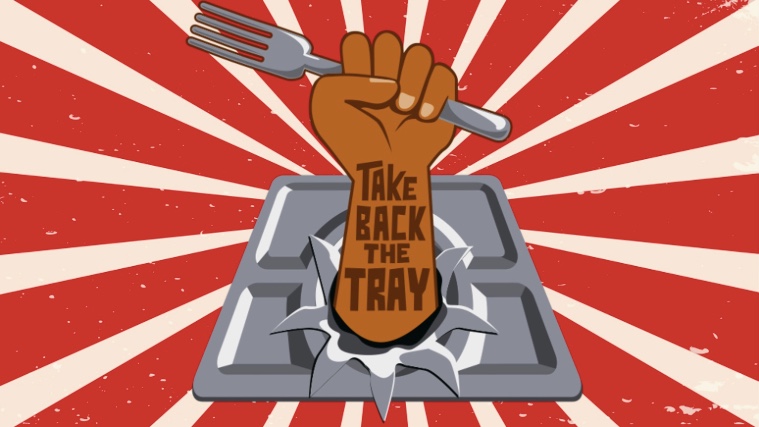
Food activist and chef Joshna Maharaj launches a movement to Take Back the Tray.
“Patients in hospital need to eat nutritious food to heal. Yet research suggests that 51 per cent of young children admitted to hospital in one study lost weight, as did nearly 45 per cent of adult patients. Some are too sick to eat. Many others leave the food tray untouched, leading to about 1.3 kilograms of food per bed to be thrown out each day. By one Canadian estimate, about half of the food placed at patients’ bedsides went to waste.”
UBC’s Preceptor Role Description is available! Download here.
Hat tip to brain scientist and fellow mountain climber, Dr. Todd Maddox, for his fantastic article on the learning science of expertise. Thank you Todd for sharing your work and brilliance! More here on Building Healthcare Expertise with Virtual Reality.
Great piece out of the New Yorker. The personal toll of whistle blowing: Why one physician took the risk of becoming an F.B.I. informant to expose alleged Medicare fraud by Sheelah Kolhatkar.
Good news! As of 2019, the AMEE CPD Webinar Series will be entirely free!
Next session is on “Physician assessment: What strategies do physicians use to assess themselves? How effective are these strategies in facilitating change?”
Facilitator: Jocelyn Lockyer, Cumming School of Medicine
Date: Monday, February 4, 2019
Time: 6:00 a.m. Pacific Time Register here.
This webinar will review the research and theory related to self-assessment, the assessment methods that physicians use, the outcomes physicians typically achieve, and propose approaches that may increase the outcomes from assessment activities. Participants will describe how they have increased the viability and uptake of assessment data.




 Family Medicine Residency Site: Abbotsford-Mission