Improving Access to Contraception

“In BC in 2015, 828 babies were born to mothers under age 20.[9] There are social, educational, and physical risks associated with unintended pregnancy in adolescence.[10] Unintended teen pregnancies are associated with poorer educational achievement and lower income for the mother. Babies born to teen mothers are more likely to be born preterm and small for gestational age, which increases the risk for a stay in a neonatal intensive care unit.[11]

At sexual health clinics across the province, oral contraceptives are often the only contraception choice available for free, despite evidence that LARC is more effective and cost-efficient.[12] While it is laudable that a hormonal IUD is on the Fair Pharmacare formulary, there remain potential barriers for teens whose families may qualify for Fair Pharmacare—the family may not be signed up, or they may not have met their annual deductible yet. For teens from families who do not qualify for Fair Pharmacare, the burden is on the teen to either buy the IUD or ask for financial assistance from their family. Because confidentiality is a foundational aspect of adolescent care,[13] and sexual health care in particular, it is problematic to rely on adolescents to communicate with their parents about covering the cost of an IUD in order to receive the protection.

LARC is now the first-line recommended option for contraception among teens. It is time for the province to follow evidence-based practice by removing barriers to LARC and funding it for youth under age 25 across the province.”

Learn more at It is Time to Improve Access to First-Line Contraception for BC’s Youth (2019) by Kelly Anne Cox, MD, MPH Eva Moore, MD, MSPH via BCMJ, 61(4), pp. 178-179 Premise
Nature & Reducing Anxiety

nature.jpeg

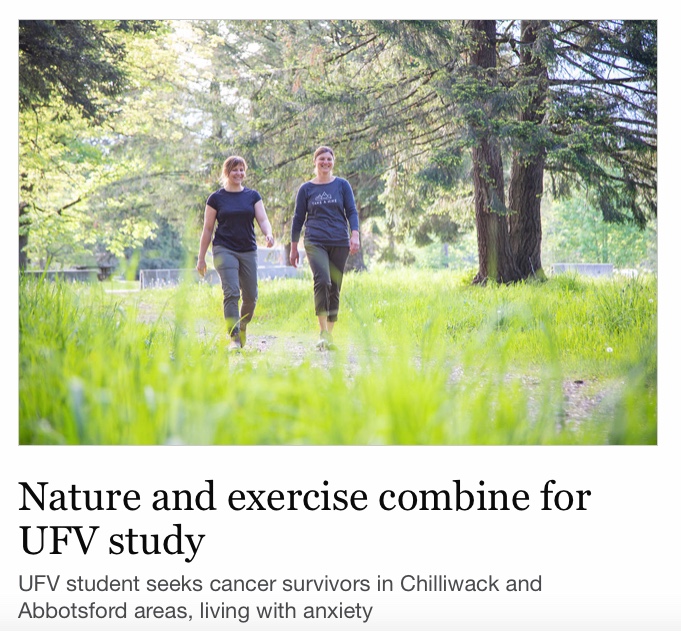
“Joleen Prystupa is conducting the research as part of her final credits toward her degree in kinesiology. And there is no better way to study the mind than with a few willing participants.

Prystupa will be focusing in on a very specific target group — cancer survivors struggling with anxiety — and is putting the call out for a spring start-up. The group will head out with her twice a week for eight weeks, to get into nature through trail walking together.

‘We are hypothesizing that being outside will reduce anxiety in cancer survivors,’ she says. Cancer survivors are susceptible to anxiety following treatment, worrying about recurrences while physically and mentally recovering from surgeries, chemotherapy and/or radiation. ‘It’s almost a PTSD from the negative experience,’ she says.”

Learn more about Joleen’s study and how you can participate here!

#UFVResearch #Abbotsford #Chilliwack #CancerSurvivors #NatureTrails

Park Rx

Photo credit: Stephen Hui. Copyright (c) 2018 Stephen Hui. All rights reserved.

“At his office in Washington, D.C., Dr. Robert Zarr, a pediatrician, writes prescriptions for parks. He pulls out a prescription pad and scribbles instructions—which park his obese, diabetic, anxious or depressed patient should visit, on which days, and for how long—just as though he were prescribing medication.

Zarr says it’s important to give concrete advice instead of repeating the vague admonitions (Exercise more! Get outside!) that people are used to hearing. Zarr is part of a small but growing group of healthcare professionals who are essentially medicalizing nature. He relies on a compendium of 382 local parks—the product of meticulous mapping and rating of green spaces, based on accessibility, safety, and amenities—that he helped create for DC Park Rx, a community health initiative. The Washington program was one of the first in the United States; there are now at least 150 others. ‘We work with the doctors, nurses and health care providers around the country and show them why it’s so relevant to prescribe parks and how easy it is to do so that they can make it a part of their daily routine.’ The group refers to this program as Ecotherapy.”

More on Prescribing Nature (2019) By Jennifer Walsh with Beth McGroarty via the The Global Wellness Summit.

*Photo taken in the woods of Lookout Mountain Forest Preserve, Bellingham, Washington.

#PrescribingNature #ParkRx

Pub & Papers 2019!

UBC FAMILY PRACTICE bpw_template_3inch_round_coaster_bleed copy.jpg

This is going to be fun! Join our UBC Abbotsford-Mission Family Practice Residency Program as we recognize our Residents’ scholarly achievements and celebrate our Preceptors who have contributed to our Residents’ journey! This informal evening is an opportunity for our Residents to share their research with our surrounding community and for our program to continue to network, collaborate, and build upon the ideas and insights emerging from our Residents’ work.

Date: Thursday, June 6, 2019
Location: Abbotsford Regional Hospital & Cancer Centre
Learning Centre Conference Rooms 3A & 3B
32900 Marshall Road, Abbotsford
Time: Dinner (alcohol-free) begins at 7:00 p.m. / Presentations from 7:30 to 9:00 p.m.
RSVP here!

Peruse the Agenda & Scholar Project Summaries here. If you have any questions, please feel free to contact me at jacqueline.ashby@ubc.ca.

Timing May Mean Everything

“Among a network of 33 primary care practices, ordering of breast and colorectal cancer screening rates decreased as the clinic day progressed, most notably toward the end of the morning and afternoon shifts. A 1-year follow-up found that completion of these cancer screening tests had similar patterns. To our knowledge, this is the first study of its kind to demonstrate that primary care clinic appointment time is associated with both ordering and completion of screening for breast and colorectal cancer.”

Learn more on Association of Primary Care Clinic Appointment Time With Clinician Ordering and Patient Completion of Breast and Colorectal Cancer Screening (2019) by Hsiang, Mehta, & Small via JAMA. Listen to the CBC 8-minute podcast Goldman Column: Time of Day and Treatment.

#WhatTimeIsIt #EarlyBirds #CancerScreening #FatigueBias #TakeABreakAndRejuvenate

Meaningful Connections Through Giving

“We’re used to thinking about giving as something we should do. And it is. But in thinking about it this way, we’re missing out on one of the best parts of being human: that we have evolved to find joy in helping others. Let’s stop thinking about giving as just this moral obligation and start thinking of it as a source of pleasure.”

Congratulations to UBC’s Dr. Elizabeth Dunn on her inspiring TEDTalk. (Already hit 1,000,000 views 🙂
Learn more about the Canadian programs she highlights including Group of Five and Plenty of Plates!
#UBCWomen #ElizabethDunn #GoCanada

Becoming Homeless: A Human Experience

“There is a growing body of evidence on the efficacy of VR for empathy. Fernanda Herrera just published a large-scale, longitudinal set of studies. People who went through ‘Becoming Homeless’ in immersive VR were more likely to sign a petition supporting affordable housing compared to control conditions. Moreover, effectiveness of VR outpaced controls even when looking two months after the experience.” Interview with Jeremy Bailenson, Director of Stanford University’s Virtual Human Interaction Lab.

In the midst of conducting research on the topic of simulation and empathy, I came across Stanford University’s Becoming Homeless: A Human Experience. This immersive virtual reality experience engages the participant in better understanding some of the challenges and choices one is confronted with when addressing unemployment, eviction, and finding a safe shelter. What moved me most were the narratives and voices of my surrounding bus riders.

For those who don’t have a VR headset, watch the video posted above to get a sense of “Becoming Homeless” via desktop.

To learn more, listen to the podcast ‘Becoming Homeless’: Stanford’s Empathy Experiment in Embodied Perspective-Taking and check out Building long-term empathy: A large-scale comparison of traditional and virtual reality perspective-taking (2018) by Fernanda Herrera, Jeremy Bailenson, Erika Weisz, Elise Ogle, & Jamil Zaki.

Warm regards,

Jacqueline

#StanfordUniversity #VirtualHumanInteractionLab #BecomingHomeless #BuildingEmpathyAndAdvocacy

This Changed My Practice

“It’s not survival of the fittest, but survival of the nurtured.” 

Attachment Researcher, Dr. Louis Cozolino

Have you taken a peek at the UBC FoM’s This Changed My Practice Series on “The Myth of the ‘Manipulative Personality Disorder’: Taking the Blame Out of the Illness” (May 8, 2019) by Dr. Joanna Cheek? Many pearls embedded in that piece about targeting specific symptoms, exploring the patient’s psychosocial story, focusing on collaborative problem solving, setting healthy boundaries, as well as seeking to understand your own emotional reaction as a clinician. “Not only is compassion and empathy central to providing effective care for the patient (Gilbert, 2010), it is also central to the well-being of the doctor.” Learn more here.

#UBCFacultyOfMedicine #ThisChangedMyPractice #Nurture #RethinkingDarwin

Developing Competency & Confidence in Care

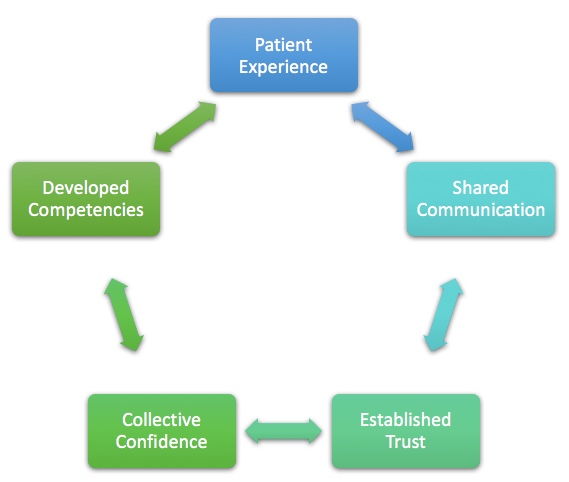
“Confidence is recognized as one of the most influential factors to affect performance. Individual, leader, and team confidence play essential roles in achieving success and the absence of confidence has been connected with failure. While confidence is not a substitute for competency, it creates trusting relationships, empowerment, and resiliency to persevere when challenges arise.

Our study revealed that organizations with higher confidence performed higher than organizations with lower confidence. In every organization, the workforce rated the experience lower than patients; however, hospitals with higher degrees of confidence in the patient experience had better performance outcomes for the patient experience.

There are four sources recognized as creating efficacy and confidence that we can cultivate to develop patient experience competencies: personal accomplishments, vicarious experience, verbal persuasion of encouragement, and psychological states of positive expectancy.

For healthcare leaders to be successful in the present and future it is not a matter of hope to deliver a better experience but cultivating competencies and building demonstrable confidence in the quality of the patient experience provided.”

Read more on Exploring Workforce Confidence and Patient Experiences: A Quantitative Analysis (2018) by Katie M. Owens and Stephanie Keller via Patient Experience Journal.

#CompetenceAndConfidenceInCare #IdeasGrowOutOfOtherIdeas