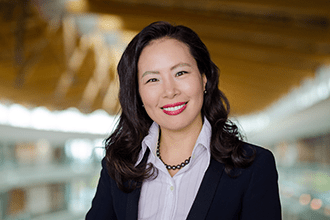
AHD: Special Guest Dr. Victoria Lee

Victoria_Lee_CEO_330_x_220.pngPresident and CEO of FraserHealth, Dr. Victoria Lee, will be joining us for our Academic Half Day on:

Thursday, May 16, 2019
ARHCC Baker 103 Conference Rm
11-12:00 p.m.
UBC Faculty, Preceptors, Residents, and Students are invited!

Dr. Lee will be discussing her involvement with Canada Health Infoway and how the organization has been working to improve patient health through the use of digital health solutions. She’ll also share her perspective on BC’s healthcare system and what challenges her team are currently addressing. Victoria is responsible for overall strategic direction and operations of Fraser Health Authority including a wide range of integrated health services – acute care hospitals as well as community-based residential care, home health, mental health, and public.

Victoria joined Fraser Health in 2010 as a medical health officer. She held progressive leadership positions including her most recent role as the vice president for population health and chief medical health officer. Prior to joining Fraser Health, she worked in collaboration with national and international organizations including the United Nations Development Programme and the World Bank in the areas of comparative health systems, health policy, health financing and ecohealth. Victoria also worked as a travel physician in rural communities in Chile and Brazil. Her research activities include health equity, community-based primary health system, health performance and clinical prevention. She serves on the board of Canada Health Infoway and the Canadian Partnership Against Cancer. Victoria obtained her medical degree from the University of Western Ontario, her Royal College fellowship in Community Medicine from the University of Toronto and postgraduate degrees in Public Health, Business Administration from Johns Hopkins University.

#BCHealthInnovation #WomenInMedicine

The Brain & Nature

“It’s not clear exactly why outdoor excursions have such a positive mental effect. Yet, in a 2015 study, researchers compared the brain activity of healthy people after they walked for 90 minutes in either a natural setting or an urban one. They found that those who did a nature walk had lower activity in the prefrontal cortex, a brain region that is active during rumination — defined as repetitive thoughts that focus on negative emotions.

‘Anything from 20 to 30 minutes, three days a week, to regular three-day weekends in the woods is helpful,’ says Dr. Strauss. ‘The point is to make your interactions a part of your normal lifestyle.'”

Read more on Get Back to Nature: Research Suggests That Mood Disorders Can Be Lifted by Spending More Time Outdoors (July 2018) via Harvard’s Men’s Health Watch.

Images of Cheakamus Centre (2019) via Jacqueline Ashby.

#GetBackToNature #EnjoyTheOutdoors

Diet & Climate Change

Great interactive piece on how our dietary habits impact our environment! Their four key takeaways:

“Modern agriculture inevitably contributes to climate change, but some foods have a bigger impact than others. Beef, lamb and cheese tend to do the most climate damage. Pork, chicken, and eggs are in the middle. Plants of all kinds typically have the lowest impact.

What you eat matters a lot more than whether it’s local or organic, or what kind of bag you use to carry it home from the store.

You don’t have to give up meat altogether to make a difference. Even smaller shifts, like eating less meat and more plants, or switching from beef to chicken, can reduce your climate footprint.

One simple way to cut your food-related emissions is to waste less. Buying what you need and actually eating it–instead of tossing it out—means that the energy used to produce your food has been spent efficiently.”

Access Canada’s Food Guide for healthy recipes and learn more about how to transform the hospital meal for sustainability.

#FoodAndClimateChange

CHES: Ten Articles of Interest on Medical Education

CHES recently distributed a collection of medical education article abstracts to members! “We thank Dr. Gisèle Bourgeois-Law who created these summaries for the education community at the Island Medical Program. While these articles have a medical education focus, we are using this opportunity to explore the value of such an initiative to our larger CHES community. Article themes include topics such as: feedback and mindfulness, those by local/BC educators, those relevant to a distributed medical program, and those with new ideas. Our aim is to include a variety of quantitative and qualitative research articles, review articles, and concept articles, some of which contain an interesting editorial or commentary. This summary is not meant to be comprehensive, nor to include everything of potential interest.

If you would like to nominate an article for future inclusion or have any questions, please email us at ches.communications@ubc.ca.”

#UBC #CHES #MedicalEducation

UBC Research on Placentophagy

Given the health risks associated with consuming your placenta, and the absence of detectable benefits, we strongly recommend women do not, and instead look to other mental wellness resources.

Dr. Jehannine Austin, Professor in UBC Faculty of Medicine

“The study, published online today in the Journal of Obstetrics and Gynaecology Canada, is the largest so far to look at the effects of eating one’s placenta—a practice known as placentophagy. Researchers used data from a 10-year genetic study involving 138 women with a history of mood disorders and compared data on outcomes between those who had eaten their placenta and those who had not.

Eating one’s placenta following childbirth is a growing trend, with many celebrities claiming that the practice provided them with health benefits, including preventing postpartum depression. However, previous studies have shown that consuming human placenta poses risks for mothers and their babies, including viral and bacterial infections.

This study’s data provides no support for the idea that postpartum placentophagy improves mood, energy, lactation, or plasma vitamin B12 levels in women with a history of mood disorders.”

#UBCFacultyOfMedicine #Placentophagy

Lancet Digital Health: Launched & Live!

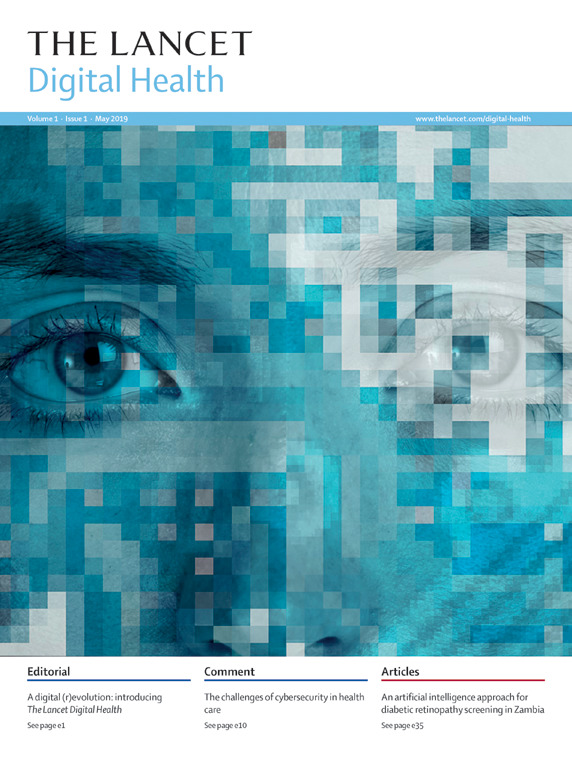
The inaugural issue of The #LancetDigitalHealth is now live! Access the journal here.

Featuring an Editorial plus three research articles on closed-loop insulin delivery for type 1 diabetes, a mobile phone intervention vs standard care adherence support after second-line antiretroviral therapy failure for HIV, and artificial intelligence using deep learning to screen for referable and vision-threatening diabetic retinopathy in Africa. All content is #openaccess. AI digitalhealth medicaldevices telemedicine CyberSecurity digitalmedicine