The Knowledge Project

knowledge project.jpeg

Unpack a series of topics via The Knowledge Project with Shane Parrish. Really enjoyed Episode 57: Decoding Difficult Conversations with Sheila HeenTwo time NY Times best selling author, consultant, and lecturer at Harvard Law School, Sheila Heen makes the tough talks easier by breaking down the three layers that make up every difficult conversation.

Thanks Mark for sharing!

~ Jacqueline

#CommunicationSkills #HowDoWeContributeToTheProblem #DescartesError #EmotionalFootprint #DifficultConversations

Google Health Unit

“Google made much ado of its recently created Health unit, but it didn’t offer much insight into what that division would actually… well, do. Now, however, it’s considerably clearer. Google Health lead David Feinberg and CNBC sources have outlined some of the ideas his team has, and they revolve around (surprise!) search for both you and your doctor. Feinberg envisions a search bar that would help doctors search medical records like they do the web. A doctor could search for “87” to find an 87-year-old patient instead of using the patient’s name, as an example.

An insider also claimed that Google is considering a Flights-style dedicated search experience for health. You could research conditions without wading through the regular web to find trustworthy info.”

More on Google wants to give doctors web-like searches for medical records via Engadget.

Cyber Patients

CyberPatient-Platform-360x220.jpg“Many of our existing training options, like simulation mannequins and standardized patients, come with a big price tag. And while nothing can beat the experience of training in a real-life setting, the beauty of CyberPatient is that it allows students to overcome some of their nervousness and learn from their mistakes before ever meeting a real patient,” says Dr. Qayumi. “Essentially, it’s helping bridge the gap between theory and practice in medical education.”

In an effort to see his vision fulfilled and transform health for everyone, Dr. Qayumi will be offering CyberPatient to developing nations of the world for free through IHI’s non-profit affiliate, CanHealth International.

“I know how difficult it can be for people in some countries to reach the level of education that we all enjoy here. It’s my duty to make a difference to human beings around the world and I’m very fortunate that UBC has inspired me and supported me along the way,” says Dr. Qayumi.

More on Cyber patients are training the world’s future doctors via UBC Faculty of Medicine.

Know Your Ecology

“Scientists at the University of British Columbia are getting a rare glimpse into the underwater behaviour of northern and southern resident killer whales off the B.C. coast, with the help of aerial drones. The unique footage, filmed in collaboration with the Hakai Institute, will help researchers determine if endangered southern residents are getting enough of their preferred prey, Chinook salmon, to meet their nutritional needs. The insights will inform conservation and recovery efforts for the population that has dwindled to under 75 individuals. The footage in this video shows pods of northern resident killer whales, filmed in the Johnstone Strait off the north east coast of Vancouver Island, and off Calvert Island, on B.C.’s central coast.”

Learn more on Aerial drones offer new perspective on resident killer whale behaviour via UBC.

#ScienceHealthTechnology #WeShareThisSpace #KnowYourNeighbours #ClimateChange

Peer Observation Project Dinner Tonight

Dole-Gourmet-PizzaReminder that our Peer Observation Project Dinner is tonight! We’d like to begin this second phase with a focus on Shared Goals & Action Planning. Our agenda is to share the summary of the team’s concerns, challenges, and ideas that were raised during collabour first gathering. We’ll also collect your feedback on the observation template that was forwarded and determine how we can modify it to best address your needs. Then we’ll learn how you’d like to partner up. (Please see Peer Observation Template & Role Description)
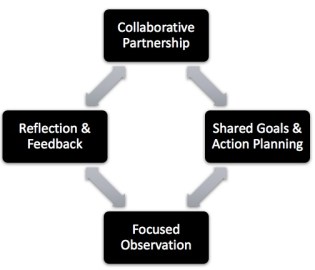

Peer Observation Project Phase II: Shared Goals & Action Planning Gathering
Where: In the comfort of your home! Tele/videoconference. We’ll send you the link and instructions via email.
Time: 19:00 – 19:45
Date: November 5, 2019

If you have any questions, please feel free to email me at jacqueline.ashby@ubc.ca

We look forward to connecting with you soon!

Just arrived? Want to learn more about this initiative? Visit us here!

Faculty Development Breakfast in Mission

coffee_espresso_americano-1506643140-2377Faculty Development Breakfast: Clinical Education Transformation Project
Over the past year, Dr. Christie Newton and I have spoken to 80+ (preceptors, residents, staff) on the current status of our clinical education paradigm and how we can improve the experience for residents, preceptors, and patients. In this session, I’ll share our findings and recommendations. Residents are invited.

Date/Time: Friday, November 8th from 7:30-9:00 a.m.

Location: Mission Division of Family Practice
Facilitator: Jacqueline Ashby, Ed.D.
Please RSVP for breakfast catering.

A big thank you to the Mission Division for hosting!

#MyFMF

Wow! This year’s FMF in Vancouver was such a blast. Thank you to all our family docs that posed and chatted with me. Congratulations to Dr. Jennafer Wilson who won the CFPC Indigenous Resident Leadership Award and Dr. Jeff Kornelsen who recently received the BCCCFP Exceptional Teacher Honor. It was wonderful to reconnect with our faculty and especially former Residents Drs. Hsu and Wright. We miss you both.

With all of us attending so many different sessions, I’d like to ask the Residents and Preceptors to forward me 3-5 educational pearls that you gathered over the past 4 days and I’ll compile your thoughts and share them with the team.

Big hug!

Jacqueline

CRISPR

“The global market for Crispr gene-editing products as medicine, to develop new crops (such as spicy tomatoes or long-life mushrooms) and other uses is predicted to be $5.3bn by 2025. Continued advances in Crispr precision and ease of use, like the just reported prime editing approach, are likely to make that number even higher. Crispr gene editing has the potential to treat a myriad of monogenic diseases from sickle cell anaemia to muscular dystrophy and cancer. Parents may one day be able to genetically customise their children’s health, physical features and abilities. Crispr will be the genetic scissors that tailor the human gene pool.”

More on Gene editing like Crispr is too important to be left to scientists alone via The Guardian.

Finding a Cure for Cancer

“Probably the best advice I received was from my PhD advisor. He simply stressed that you should always do quality work and keep in mind that society is what makes it possible for us to have all this fun in the lab. At some point, you need to think about how you can repay that debt.” Dr. Jim Allison

More on Meet the Carousing, Harmonica-Playing Texan Who Won a Nobel for his Cancer Breakthrough via Wired.

#JimAllison #Immunotherapy #Breakthrough

Ten Articles of Interest: Medical Education

CHES recently distributed a collection of medical education article abstracts to members! “We thank Dr. Gisèle Bourgeois-Law who has created these summaries for the education community at the Island Medical Program. While these articles have a medical education focus, we are using this opportunity to explore the value of such an initiative to our larger CHES community. Article themes include topics such as: feedback and mindfulness, those by local/BC educators, those relevant to a distributed medical program, and those with new ideas. Our aim is to include a variety of quantitative and qualitative research articles, review articles, and concept articles, some of which contain an interesting editorial or commentary. This summary is not meant to be comprehensive, nor to include everything of potential interest.”

If you would like to nominate an article for future inclusion or have any questions, please email us at ches.communications@ubc.ca.