BCCFP offers financial awards to residents in the UBC Family Practice Residency Program and fourth-year medical students entering the program.
Nomination Process
Residents
To be eligible for one of the resident awards, please note that a nominator is required – this may be a family physician, fellow resident or student. Submissions for 2019 are due by March 31.
These awards include:
$5,000 BCCFP Resident Leadership Award to a UBC Family Medicine R2 graduating from the UBC Family Practice Residency Program
$1,500 Dr. Manoo and Jean Gurjar Award, BCCFP Family Medicine Resident Scholarship – to a male and a female resident in the UBC Family Practice Residency Program
$1,000 BCCFP Medical Student Scholarship to two fourth-year medical students entering the UBC Family Practice Residency Program
To be eligible for one of the medical student awards, please note that a nominator is required – this may be a family physician, fellow student or resident. Submissions for 2019 are due by July 31. Please use our online form to nominate.
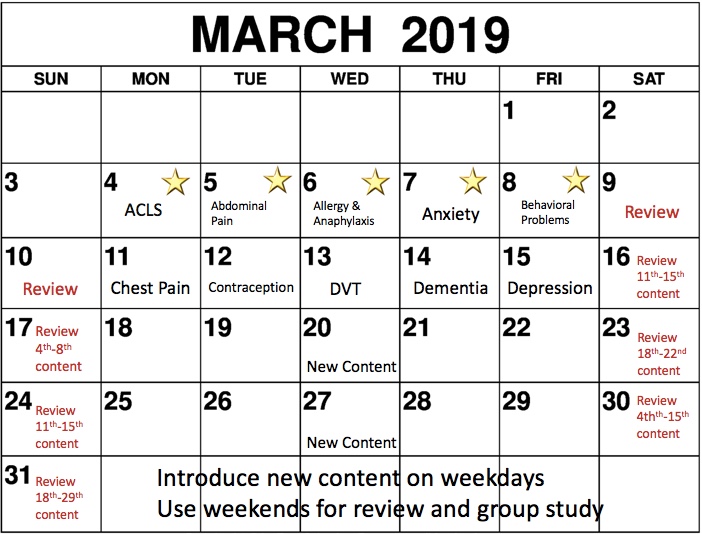
Hope you are well! I know many of you are in the midst of preparing and practicing for your exams. The strategy I used to successfully tackle tests involved planning and distributing content over a series of months in digestible, bite-size chunks. I used my weekdays to introduce new content and my weekends for reviewing topics that week and the week before. At the end of the month, I addressed the gaps and questions that emerged.
These monthly calendars were posted on my refrigerator to remind me of what I needed to cover and to provide my family with a sense of my journey. Gold stars were put on the days that I achieved my goal and this helped me in visually tracking my progress.
Group study was particularly important as it gave my team the opportunity to discuss conflicts in information, rehearse our oral exam responses, test our knowledge, and share additional resources. Working in a team also provided a source of motivation and encouragement.
When I think about your content, such as the 99 topics, I might approach it like this:
Learning scientists refer to these strategies as spaced learning, microlearning, and spaced repetition and they’ve been fairly successful methods for medical students (see The New Way Doctors Learn). Research indicates that people retain information, score better on exams, and modify behaviour using spaced learning/repetition. For more on the concept, watch the 5-minute video below:
What we know about the brain is that it’s hardwired to forget. Spaced repetition, in conjunction with testing/active retrieval, appears to work best in addressing the cognitive, behavioural, and emotional components of learning. In addition, it helps in developing one’s situational awareness. The brain is poor at self-assessment and testing provides that external feedback mechanism that informs us of our gaps and strengths.
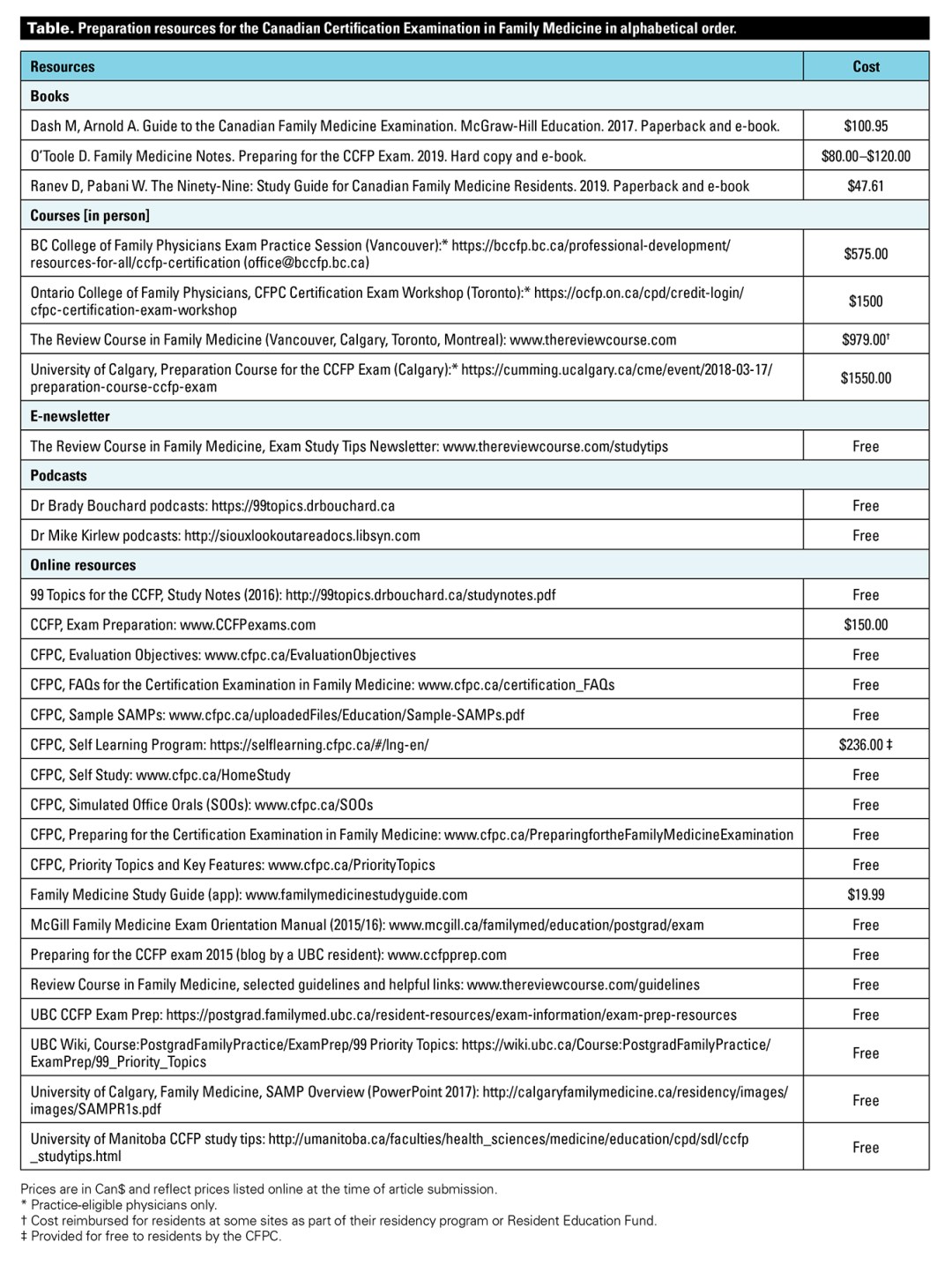
Regarding your material…The Review Course in Family Medicine recently updated their CCFP free study resources for the SOO and SAMP. You may also want to read the BCMJ’s Ready of Not for the CCFP Exam by Drs. Paul Dillon and Simon Moore. Listed below are resources they’ve identified:
Finally, consider using Honnold’s method for your exam preparation: surround yourself with the right people; practice, repeat, and test yourself until you’re comfortable with the material; mentally rehearse the experience; focus on what you need to do for success; find a confidence builder; work through your fear; and then on exam day release the stress and anxiety and immerse yourself in the experience.
You got this! If you need to talk, call me. I’m here for you. Always.
“What distinguishes pi from all other numbers is its connection to cycles. For those of us interested in the applications of mathematics to the real world, this makes pi indispensable. Whenever we think about rhythms—processes that repeat periodically, with a fixed tempo, like a pulsing heart or a planet orbiting the sun—we inevitably encounter pi.
….pi is intimately associated with waves, from the ebb and flow of the ocean’s tides to the electromagnetic waves that let us communicate wirelessly. At a deeper level, pi appears in both the statement of Heisenberg’s uncertainty principle and the Schrödinger wave equation, which capture the fundamental behavior of atoms and subatomic particles. In short, pi is woven into our descriptions of the innermost workings of the universe.” More on Why PI Matters by Steven Strogatz.
And to those who want to make pie to celebrate the occasion…check out the recipe above!
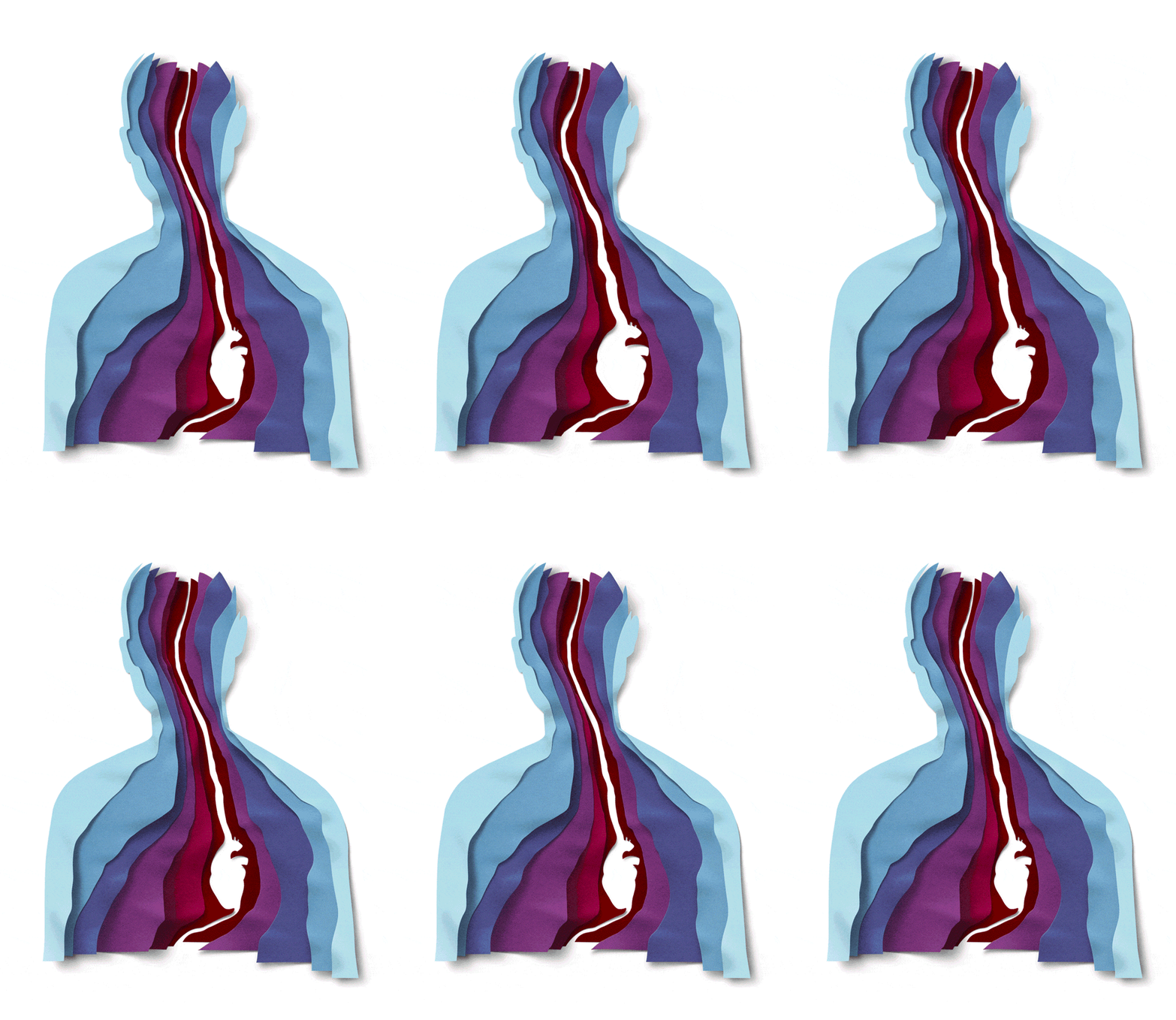
“On nights when I see my wife and daughter together, dancing across our living room floor, Beyoncé on the speaker and my baby leading the choreography, I’m almost brought to tears. It’s not that every small moment is now overflowing with emotion — I’m just more present while deciding on a board game to play or what takeout to order, less distracted, less focused on what’s happening tomorrow, or how dominant I am in a game of Uno.
I’ve given myself permission to feel it all, every single emotion. The good and bad alike. My own personal narrative has always been one of overcoming adversity and remaining strong for those around me. I still am, but I am also able to admit that sometimes I’m scared.” Trymaine Lee on My Life After a Heart Attach at 38 via The New York Times.
Eiko Ojala designs the most wonderful paper illustrations! His recent editorial illustration showcased above accompanied Lee’s NYT article. Eiko’s latest work focuses on the mind and body. You can view more of his brilliant creations here and here.
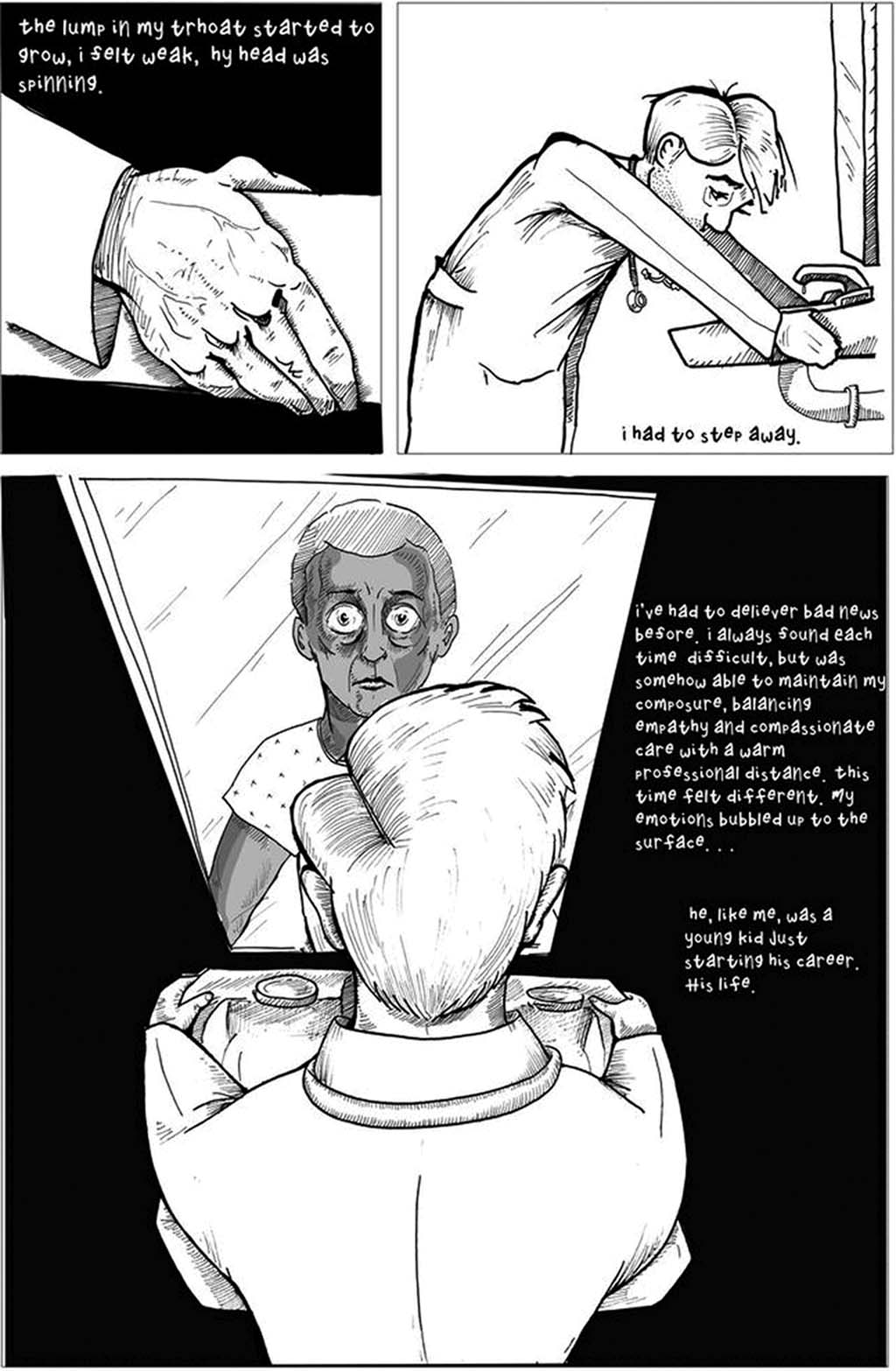
Visual communication is incredibly powerful and often a cathartic process for the illustrator. Dr. Mike Natter’s work in Progress Notes: Cancer (seen above) captures the tension and struggle he’s experiencing in delivering bad news. Patients are also increasingly using visual communication to explain their symptoms and diseases to their doctors. “Show, don’t tell: How visuals improve healthcare visits” describes how imagery is employed to describe and document the patient’s journey.
Patient identifying on her timeline where problems occurred
It was interesting to note in the article that EMR systems are expanding in their ability to include photographs and paper drawings (thanks to dermatologists and surgeons). Furthermore, OurNotes is an initiative recently launched “letting patients, caregivers, and providers jointly create clinical notes and care plans within the shared electronic health record.”
For those interested in using visual communication tools with their patients, drawMD is a free app that you can download and test!
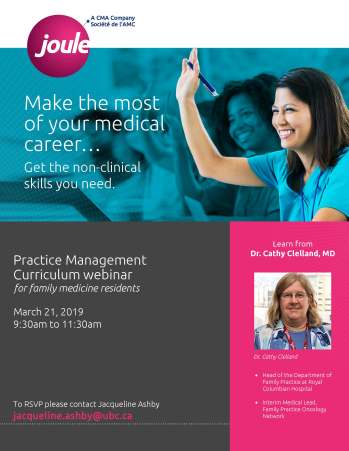
Just a reminder that I’ve scheduled the following for Thursday, March 21 from 9:30-11:30:
So you’re finishing residency: What you wish someone had told you (fees, licences, memberships)
Evaluating payment and practice options in British Columbia
If you prefer to join us from a remote location, here are the following instructions:
System testing – Action required (Prior to March 20th):
Click here to download the required software for the session.
Enter your email address at the login page and click Attend.
Enter your first name, last name and the name that you want to appear to others during the “live” session. Click Attend.
Follow the instructions provided onscreen to install the Saba Meeting connector (Step 1) and the Saba Meeting app (Step 2) for the browser that you are using.
System testing (for iPad and mobile users) – Action required (Prior to March 20th):
Download the Saba Meeting app from either the Apple Store or Play Store.
“What we are seeing is that technology can be used to help patients be more autonomous and to improve their health in partnership with their clinical teams. These benefits can be achieved at home but also inside the hospital where patients have a great desire to directly manage their room environment and access to information that impacts their medical care.”
Chris Longhurst, MD, Chief Information Officer and Associate Chief Medical Officer at UC San Diego Health
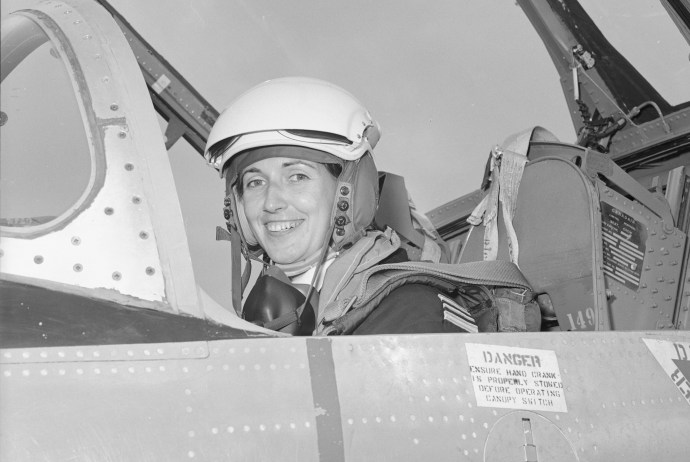
Wendy Clay in the cockpit of the CT114 Tutor Jet Aircraft in which she took her final test to qualify for her wings. MJ74-1221. 19 Aug 1974. Moose Jaw, Saskatchewan, Canada. Maj W.A.
“After earning her medical degree in 1967 from the University of British Columbia, Dr. Wendy Clay became the first female officer cadet in the Royal Canadian Navy. In honour of International Women’s Day and to commemorate its 150th anniversary, the Canadian Medical Association will share a story of a female physician who contributed to the advancement of women in medicine each hour starting today at 6am. These stories will appear on both Twitter and Facebook and can be viewed on The Canadian Medical Association’s website here.”
“Everyone is so busy doing research, they don’t have time to stop and think about the way they are doing it and whether perhaps they could do things differently and better. It’s a bit like a treadmill; you have to keep running to stand still so to speak.” ~ Douglas Altman
If evidence-based medicine is a topic that you’re interested in pursuing, you may want to check out this opportunity. Watch the video above first! Douglas Altman (1948-2018) was Professor of Statistics in Medicine and Director of the Centre for Statistics in Medicine at the University of Oxford and the BMJ’s chief statistical advisor for over twenty years. The Doug Altman Scholarship provides early career researchers full EBMLive delegate registration travel & accommodation funded by the McCall MacBain Foundation (MMF). They are offering ten early career researchers the opportunity to present at EBMLive 2019 in a dedicated session. Application Deadline March 31st. To learn more and apply, click here!

 Visual communication is incredibly powerful and often a cathartic process for the illustrator.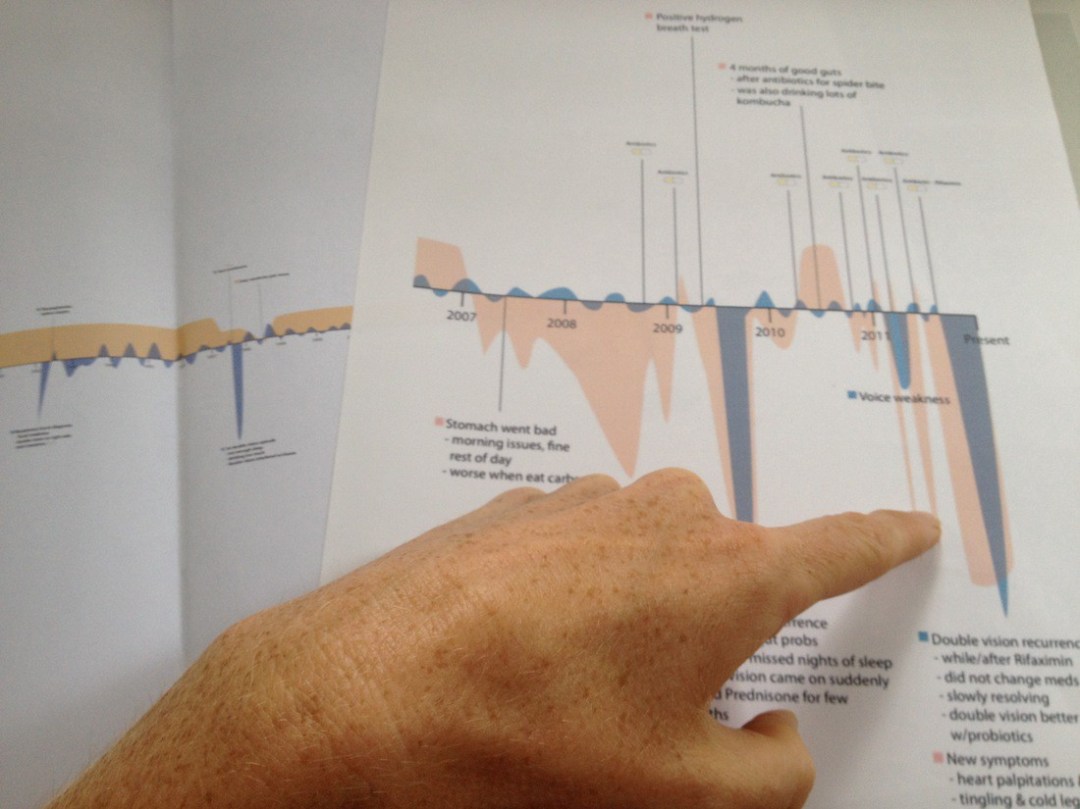
 Just a reminder that I’ve scheduled the following for Thursday, March 21 from 9:30-11:30: