Laughter & Medicine

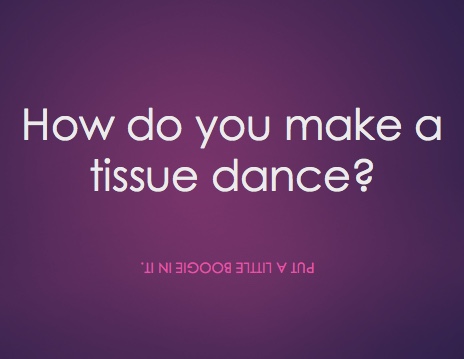
joke.jpeg

“In the new study, published in The Journal of Clinical Investigation, Jon T. Willie, Kelly Bijanki, and their colleagues at Emory University School of Medicine, Atlanta, looked at a 23-year-old undergoing iEEG for 8 weeks in preparation for surgery to treat her uncontrolled epilepsy [1]. One of the electrodes implanted in her brain was located within the cingulum bundle and, when that area was stimulated for research purposes, the woman experienced an uncontrollable urge to laugh. Not only was the woman given to smiles and giggles, she also reported feeling relaxed and calm.”

More on Discovering a Source of Laughter in the Brain (2019) by .

Coaching Communication

“Dr. Pollak taught two skills that are core to patient-centered communication and also identified by clinicians as areas in which they needed help: recognizing patient emotion and responding to negative emotion. The coach instructed clinicians how to identify negative emotions even when patients were not expressing them directly. For example, anxiety often prompts patients or caregivers to rapidly ‘pepper’ clinicians with questions,12 and many questions that initially appear as medical actually represent negative emotions. ‘Are the tumors getting bigger?’ represents fear or anxiety, and needs a response that addresses that fear, rather than a factual response about how many millimeters the tumors are currently.”

From Coach, Don’t Just Teach (2019) by Kathryn I. Pollak, PhD, Xiaomei Gao, MA & Laura P. Svetkey, MD, MHS

(Thank you Dr. Chow for sharing!)

Medical Humanities Chat

“Reading stories and poetry helps me make sense of the seemingly senseless suffering and heartbreak I witness daily as a doctor. In sharing poetry with fellow resident physicians I’ve found I’m not alone in this. Stories and poetry foster personal reflection, deepened empathy, and when shared with others, a sense of community. Words have healing powers.

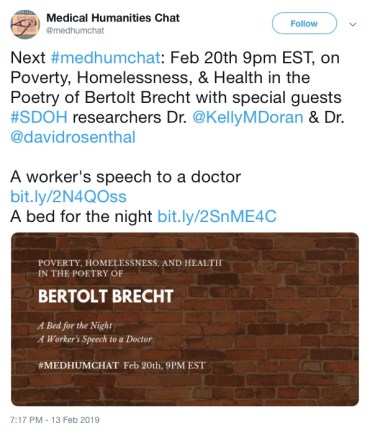
humchatThis year, I’m trying something new: bringing my love for stories and poetry in medicine to a Twitter chat that I’m calling Medical Humanities Chat, or #medhumchat. Each chat is guided reflection around a few short texts. After the chat, I’ll share the readings, questions, and a few comments from participants here. These blog posts will function as discussion guides that anyone, anywhere can use to foster reflection, empathy and connection in healthcare. It’s #FOAMed (free open access medical education) for the medical humanities.”

Dr. Colleen Farrell on Can Fairy Tales and Poetry Help Us Heal? Learn more about Medical Humanities Chat and see the tweet above to participate in her next session.

#colleenmfarrell #medhumchat

Science of Learning

“Positive emotional states have been associated with more ‘cognitive flexibility’ and thus may be more beneficial when complex diagnostic reasoning is needed (McConnell & Eva 2012, p. 1318). Due to their more global focus, learners in positive moods may better see the global principles underlying a problem and therefore more easily transfer information learned to a new setting (Brand et al. 2007). Teachers can harness the power of emotions by having learners reflect on the emotional context of their work with patients, teaching them to recognize how cases make them feel as well as think. Narrative medicine can be particularly useful, as telling our stories and those of our patients bring emotional content to the forefront, enhancing our attention and affiliation with the work (Charon 2007).”

More on the Twelve Tips for Applying the Science of Learning to Health Professions Education (2016) by H. C. Gooding, K. Mann, & E. Armstrong

#MustRead #MedicalEducators #CurriculumDesign #FamilyPracticeResidents #ExamPreparation

Friday Link Pack

A Mile in Our Moccasins (2018) “is a short film that was co-created by five Indigenous youth who are living with HIV. The vision behind the film is to combat HIV stigma, address HIV myths and misconceptions, while awakening compassion, education, and understanding in those who view it.” This incredibly courageous and moving film may be viewed here.

Have a great weekend! Know before you go and drive safe.

Warm regards,

Jacqueline

Power of Love

somewhere i have never travelled,gladly beyond
e. e. cummings, 18941962

somewhere i have never travelled,gladly beyond
any experience,your eyes have their silence:
in your most frail gesture are things which enclose me,
or which i cannot touch because they are too near

your slightest look easily will unclose me
though i have closed myself as fingers,
you open always petal by petal myself as Spring opens
(touching skilfully,mysteriously)her first rose

or if your wish be to close me,i and
my life will shut very beautifully,suddenly,
as when the heart of this flower imagines
the snow carefully everywhere descending;

nothing which we are to perceive in this world equals
the power of your intense fragility:whose texture
compels me with the colour of its countries,
rendering death and forever with each breathing

(i do not know what it is about you that closes
and opens;only something in me understands
the voice of your eyes is deeper than all roses)
nobody,not even the rain,has such small hands

When we use positive words, such as love, we can affect the brain’s frontal lobes and improve cognitive reasoning. Learn more via Neurologist Dr. Amber Mitchell on The Power of Love.

Changemaker Award

Do you know a medical student or resident who is passionate about improving our health care system and advocates for it? Nominate them for Doctors of BC’s Changemaker Award and give them the recognition they deserve.

The Changemaker Award honours one medical student and one medical resident who is leading change in health care through grassroots political or medical advocacy.

Each winner will be presented with $1,000 and an engraved plaque at the Awards Ceremony taking place during the Doctors of BC’s Annual General Meeting, June 1, 2019. Winners will also be featured in the BC Medical Journal and on the Doctors of BC website.

Submissions are due April 5, 2019.

Learn more and nominate here!

Know Before You Go

know
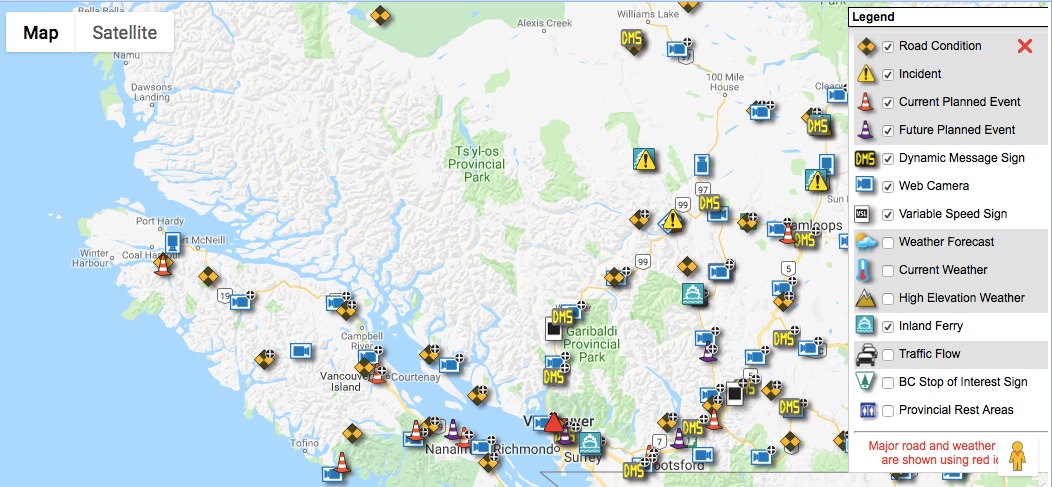
Image this morning via DriveBC Traveller Information

In the surfing community I grew up in, we would wake up at dawn and listen to the local radio station’s “Know Before You Go” surf report to hear the latest conditions. Not much has changed! Given our extreme weather we’ve experienced, I’ve posted a series of links that I reference before heading out on the roads, mountains, water, snow, or ice. It’s important to be prepared!

Recommendations
Get Prepared in Severe Storms via Government of Canada
Winter Driving Tips via Canada Safety Council

One final note, practice putting on your tire chains in your driveway before attempting it on snowy, slippery roadside conditions. Here’s a short video on it.

Warm regards,

Jacqueline

First in Canada Pilot Project: Takeaway Suboxone

“A first-of-its-kind pilot project is underway at St. Paul’s ED, in collaboration with the VCH Regional Addiction Program, providing opioid overdose patients with takeaway doses of suboxone upon discharge. Patients are given a three day supply of the opioid substitute treatment, along with instructions on how to take the medication. Patients must be in a sufficient state of withdrawal to start Suboxone. By letting patients take the dose with them, the barrier to treatment is reduced for patients uncomfortable with hospital stays.”
Learn more here at BC Emergency Medicine Network.