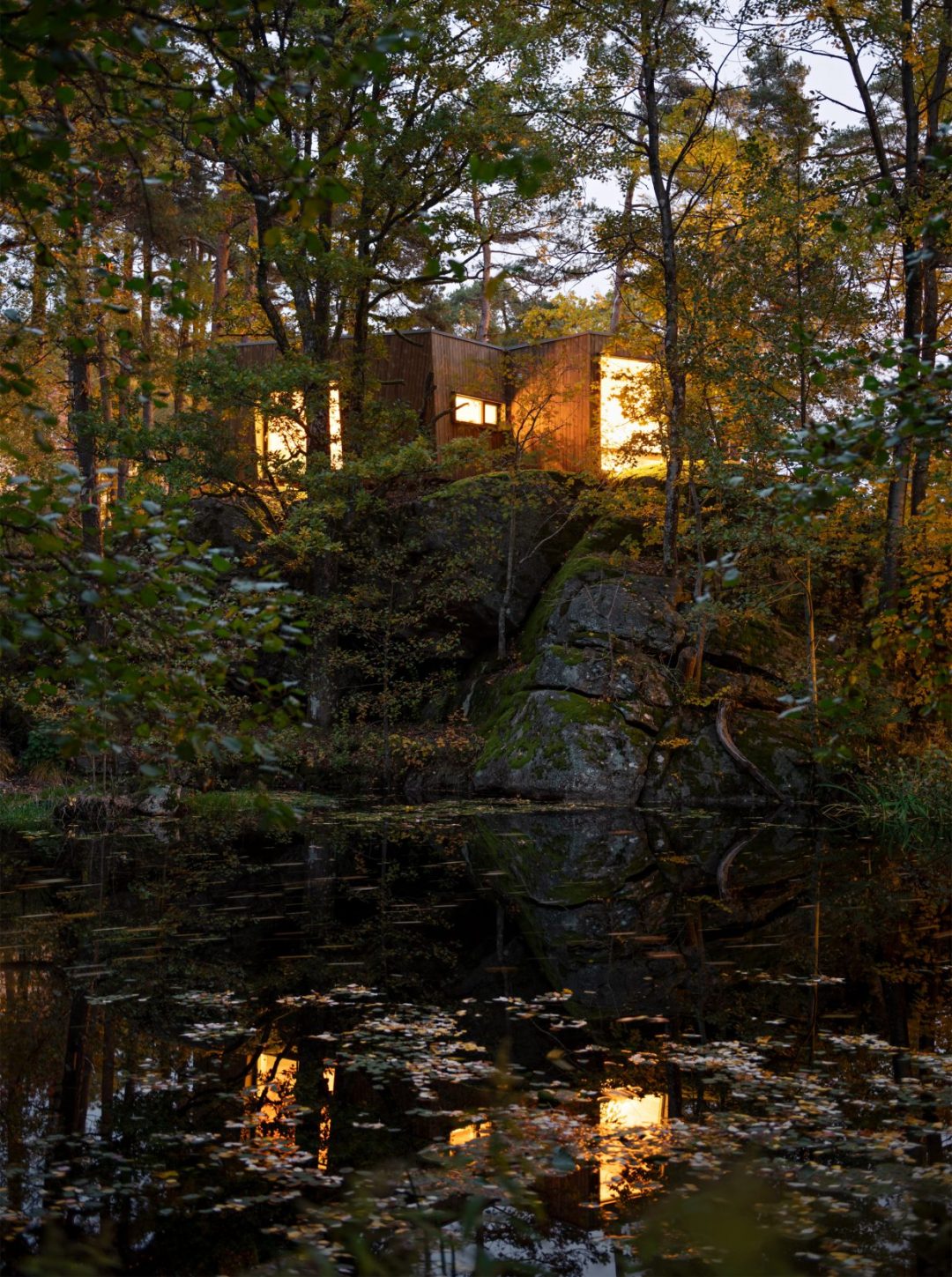
“Only a short walking distance from two of Norway’s largest hospitals, the secluded wooden shelters are designed to make hospitalisation easier for patients and their families. The space can be used for treatment and contemplation, and for spending time with relatives and friends away from the hospital corridors. The cabins are open to every patient connected to the hospitals regardless of disease group.” Snøhetta, Oslo- and New York-based architecture and design studio.
“Healthcare suffers from a lack of creativity. There’s this misconception that if you’re a creative type then you’re never going to go into healthcare or become a doctor or a nurse. I believe that making people healthier is a creative pursuit.”
Dr. Bon Ku, Assistant Dean for Health and Design at Thomas Jefferson University
Such a fan of Dr. Ku! Dr. Chow and I were fortunate to meet him following his presentation at Stanford MedX Ed Conference last year. Bon is always pushing the boundaries to allow for greater creativity, collaboration, and ideation in medical education. Follow him here.
“A pulmonary thromboendarterectomy, the surgery Shetty performed, can tie up an operating room for most of a day. In the U.S., the procedure can cost more than $200,000. Shetty did it for about $10,000 and turned a profit. A cardiac surgeon by training, Shetty is the founder and chairman of Narayana Health, a chain of 23 hospitals across India that may be the cheapest full-service health-care provider in the world. To American eyes, Narayana’s prices look as if they must be missing at least one zero, even as outcomes for patients meet or exceed international benchmarks. Surgery for head and neck cancers starts at $700. Endoscopy is $14; a lung transplant, $7,000. Even a heart transplant will set a patient back only about $11,000. Narayana is dirt cheap even by Indian standards, with the investment bank Jefferies estimating that it can profitably offer some major surgeries for as little as half what domestic rivals charge.”
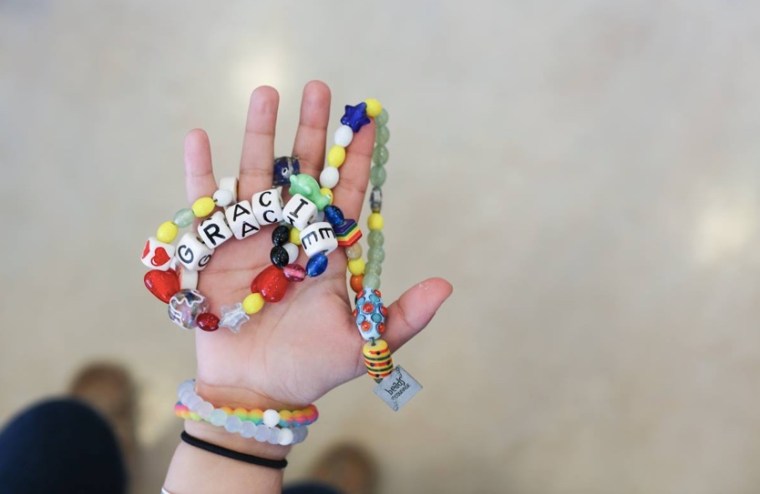
“These are my beads of courage. You get a yellow bead for an overnight stay. A white bead is for chemo. A black bead is when you get pricked. And I have two special heart-shaped beads because my heart stopped twice. The first time my heart stopped was late at night. It started beating really fast, and my nurse got very scared, and suddenly ten doctors ran in. They pulled out a big bag of ice and put it on my chest. I was a little annoyed because Justin Bieber was performing at the VMA’s and I had to turn down the volume. The doctors said, ‘Grace have you ever been on a roller coaster? This medicine is going to make you feel like you’re going down a giant hill!’
And they started putting those shock paddles on me. And I heard them tell my mom they were going to stop my heart, and she took out her Valium and started chewing it so it would work faster. Then somebody screamed, ‘Everyone clear!’ And my Mom said: ‘Are you ready Grace? It’s just a roller coaster! Are you ready?’ And then they pushed the shot into my IV and it felt like the world stopped spinning. The machine was going ‘beep, beep, beep,’ but then it stopped. And then nothing. And then nothing. And it felt like a giant boulder was dropped on my chest. And then suddenly my heart started beating again. And I yelled: ‘That did not feel like a roller coaster!’”
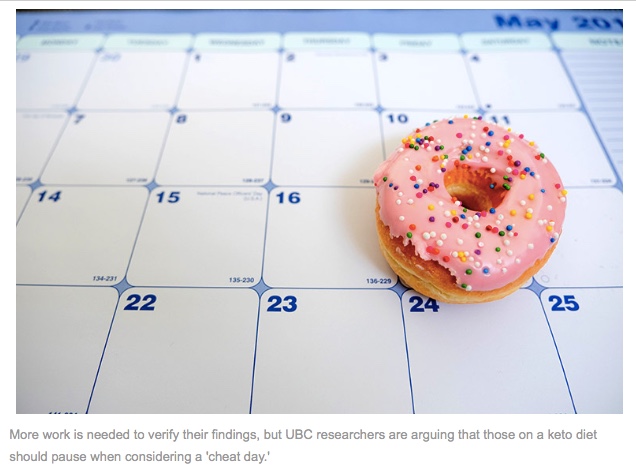
“My concern is that many of the people going on a keto diet—whether it’s to lose weight, to treat Type 2 diabetes, or some other health reason—may be undoing some of the positive impacts on their blood vessels if they suddenly blast them with glucose. Especially if these people are at a higher risk for cardiovascular disease in the first place. Our data suggests a ketogenic diet is not something you do for six days a week and take Saturday off.” Dr. Jonathan Little, UBCO Associate Professor in the School of Health and Exercise Sciences
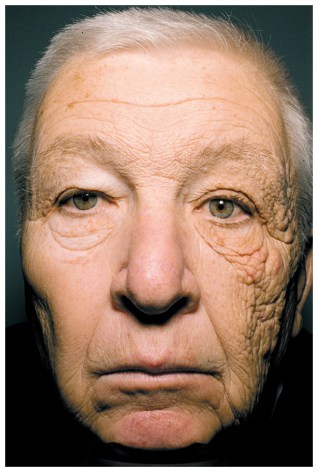
With summer right around the bend here’s an image of 69-year-old man with unilateral dermatoheliosis caused by ultraviolet rays that had penetrated the window glass of his delivery truck that he drove for 28 years. “Chronic UVA exposure can result in thickening of the epidermis and stratum corneum, as well as destruction of elastic fibers. This photoaging effect of UVA is contrasted with photocarcinogenesis.”
Read more on Unilateral Dermatoheliosis by Jennifer R.S. Gordon, M.D. & Joaquin C. Brieva, M.D. via The New England Journal of Medicine
Vancouver, British Columbia (2019). Image via J. Ashby
“We may sometimes feel that we can’t do much as individuals, but humanity is made up of individuals; we can make a difference. As individuals we can influence our own families. Our families can influence our communities and our communities can influence our nations.”
Dylan Goode, a graduate researcher at Heart Valve Performance Laboratory at UBC Okanagan’s school of engineering, holds one of the new heart valves. UBC
Congratulations to UBC Okanagan researchers who have made a breakthrough in making heart surgery safer and less invasive by creating a synthetic heart valve! Read more here about their recent discovery.
#UBCO

 “My concern is that many of the people going on a keto diet—whether it’s to lose weight, to treat Type 2 diabetes, or some other health reason—may be undoing some of the positive impacts on their blood vessels if they suddenly blast them with glucose. Especially if these people are at a higher risk for cardiovascular disease in the first place. Our data suggests a ketogenic diet is not something you do for six days a week and take Saturday off.”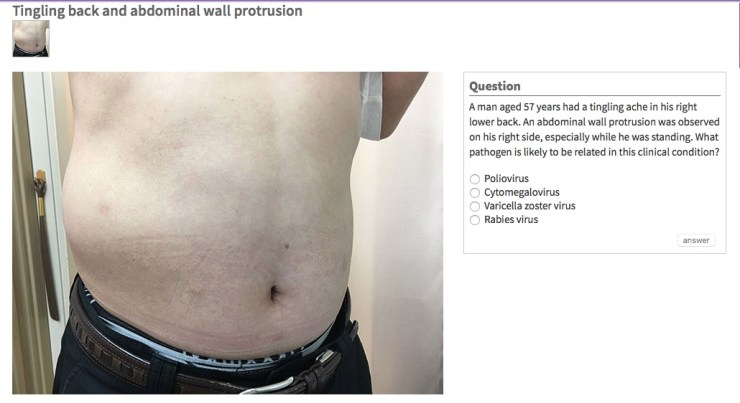


 Family Medicine Residency Site: Abbotsford-Mission