Return to School

Source: BC Centre for Disease Control COVID-19 Public Health Guidance for K-12 School Settings

“Help children understand that by doing these things, they can help keep everyone safe.”

As our children return back to school, here are a couple of great resources you may want to peruse:

Preparing children for back-to-school during the COVID-19 pandemic by Dr. Laura Sauvé Paediatric Infectious Diseases Specialist via BC Children’s Hospital.

COVID-19 and children prepared by the BC Centre for Disease Control.

The Cannabis Debate

Walther Otto Müller – From Franz Eugen Köhler’s Medizinal-Pflantzen. Published and copyrighted by Gera-Untermhaus, FE Köhler in 1887 (1883–1914). Obtained from http://caliban.mpiz-koeln.mpg.de/~stueber/koehler/

“The myths have been disproven. Unfortunately, the loudest voices in the cannabis debate often are people who have political or financial skin in the game, and the two sides are entrenched. Pro-cannabis people will say that cannabis is the greatest medication ever, and harmless. Others — often in the same field that I’m in, people who treat patients, people who do research with cannabis — will at times misrepresent the facts as well. They will go into a room of 100 or 200 high schoolers and relay the message that cannabis is as dangerous as fentanyl. That’s not true either. These camps seem to feel that even a single shred of evidence that runs counter to their narrative hurts them. So at the end of the day, a lot of what people hear about cannabis is either incomplete or flat-out wrong because both sides are promoting polar opposite views of cannabis.”

Learn more on What We Know and Don’t Know About Pot (interview with Dr. Kevin Hill) via Harvard Health & Medicine Gazette.

Additional info here on Medical Marijuana by Dr. Peter Grinspoon via Harvard Health Blog.

CPD Online Modules: Cannabis Education for Health Care Providers via UBC.

Multisystem Inflammatory Syndrome in Children (MIS-C)

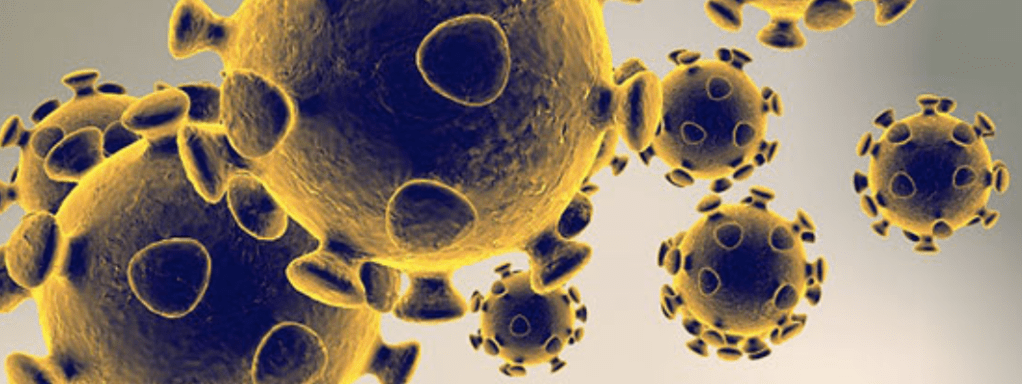
“Since mid-May 2020, CDC has been tracking reports of multisystem inflammatory syndrome in children (MIS-C), a rare but serious condition associated with COVID-19. MIS-C is a new syndrome, and many questions remain about why some children develop it after a COVID-19 illness or contact with someone with COVID-19, while others do not.

As of 8/20/2020, CDC has received reports of 694 confirmed cases of MIS-C and 11 deaths in 42 states, New York City, and Washington, DC. Additional cases are under investigation.

  • Most cases are in children between the ages of 1 and 14 years, with an average age of 8 years.
  • Cases have occurred in children from <1 year old to 20 years old.
  • More than 70% of reported cases have occurred in children who are Hispanic/Latino (239 cases) or Non-Hispanic Black (197 cases).
  • 99% of cases (687) tested positive for SARS CoV-2, the virus that causes COVID-19. The remaining 1% were around someone with COVID-19.
  • Most children developed MIS-C 2-4 weeks after infection with SARS-CoV-2.
  • Slightly more than half (55%) of reported cases were male.”

More here on Health Department-Reported Cases of Multisystem Inflammatory Syndrome in Children (MIS-C) in the United States ​via CDC.

According to B.C.’s Provincial Health Officer Dr. Bonnie Henry, “B.C. has had eight suspected cases but none of the children tested positive for COVID-19, had COVID-19 antibodies or had known exposures to COVID-19 cases.”  More here on B.C. sheds new light on where and how COVID-19 is spreading, as health officials announce 68 new cases via CBC.

Addressing the Surge of Medical Waste

Image: Medical examination glove floating in the waters. Location: Centennial Beach, British Columbia, Canada. Image taken by: Jacqueline P. Ashby.

“The widespread lack of an efficient medical recycling system represents a part of the bigger problem with the industry as a whole. In a commentary on healthcare’s role in the global climate crisis, Yale School of Medicine associate professor of anaesthesiology Jodi Sherman called environmental sustainability an ‘unappreciated dimension of health quality care’. She and her co-authors also pointed out that traditional assessments in the successes or failures in the healthcare system as a whole have yet to factor in the cost of pollution both up and downstream of the industry’s supply chain, from resource extraction to disposal management.

With medical waste currently more visible than ever, researchers are calling for healthcare’s waste and environmental footprint to be brought up the agenda. ‘Coronavirus could well become a catalyst, because people may realise that by degrading our environment, we could find that we are getting more and more of these types of diseases,’ says Roschnik.

‘Do we as a people want to live this way? Or do we say: if we want to be healthy, our planet needs to be healthy – and it’s incumbent on all of us to do something about it.’”

More here on How do you fix healthcare’s medical waste problem? via BBC.

Physician Gender Pay Gap

“Dr. Sharon Bal, co-chair of OMA’s committee for women, said the gender pay gap in medicine is likely bigger than the data suggest. Their analysis didn’t account for additional pay from leadership positions, where men are overrepresented, and it only looked at billings, not take-home pay. When women take parental leave, they may still receive capitation payments, but that money pays for their replacement and overheads, Bal said.

The report calls on the OMA to advocate for reform to payment schedules, more leadership and mentorship opportunities for women, improved parental benefits, and a campaign to improve pay equity within hospitals and medical schools. In addition, Hill said the profession should consider ‘moving away from a fee-for-service model entirely.’”

More here on Physician billing data reveal striking gender pay gap via CMAJ.

Education & Creativity

“We know three things about intelligence. One, it’s diverse. We think about the world in all the ways that we experience it. We think visually, we think in sound, we think kinesthetically. We think in abstract terms, we think in movement. Secondly, intelligence is dynamic. If you look at the interactions of a human brain, as we heard yesterday from a number of presentations, intelligence is wonderfully interactive. The brain isn’t divided into compartments. In fact, creativity — which I define as the process of having original ideas that have value — more often than not comes about through the interaction of different disciplinary ways of seeing things.”

~ Sir Ken Robinson, Educationalist (1950-2020)

Health Professions Education Grants

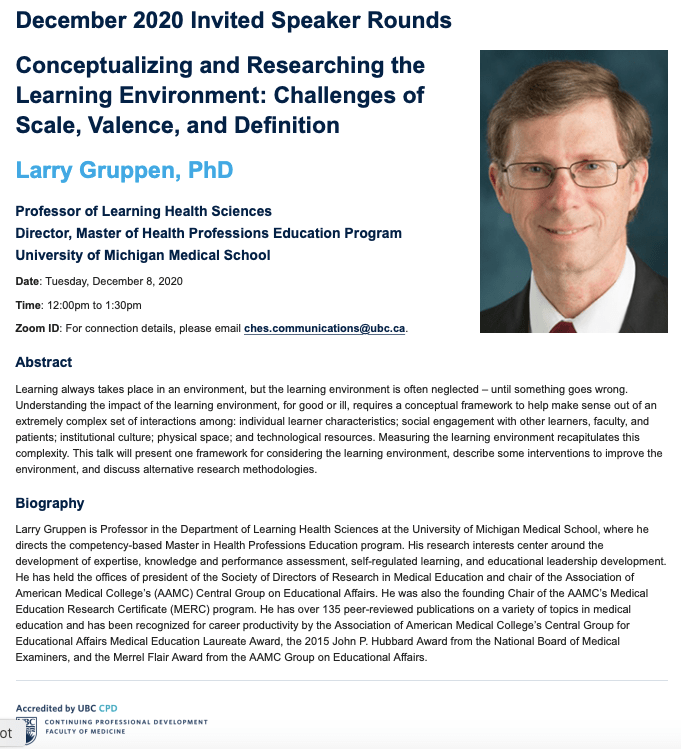
CAME submissions for Health Professions Education Grants are now open!
Letters of Intent Due: September 16, 2020 at 1700 EST

Opportunities for peer-reviewed grant support in Health Professions Education are limited. Learners and faculty at all stages, who have new projects, can face challenges in obtaining support.

The CAME Foundation Health Professions Education Grants support new and innovative scholarly projects in Health Professions Education that are not part of larger, formalized and funded education research programs.

Award amount
The maximum available funds per application are $5000, which can be spread over 12 months of support. There is a maximum of $20,000 in funds across the four grants. Funding will be awarded to one or more applicants at the discretion of the CAME Grants Committee.

More information here.

Wellbeing Convene

Relationship Matters with Dr. Bob Woollard
Thursday, August 27th at 8:00 am
 
Compassion in the Time of Coronavirus: The “Essential” Rounds with Dr. Sara Jassemi & Dr. Simone Lebeuf
Tuesday, September 8th at 12:00 pm 
 
These webinars are for students, staff, residents, and faculty members of UBC’s Faculty of Medicine, from all sites, and they are free of charge! Please distribute widely to all your networks. We will be most appreciative of your help during this promotion! Attached to this email is our promotional poster. 
 
Warm wishes,
Anosha AfaqProgram Director
Wellbeing Convene Webinars 
e: anosha.afaq@gmail.com

Stress First Aid as a form of Peer Support

7C-stress-first-aid-768x682.png
Image created by Caroline Dance, UBC Medical Student.

“This model is not linear — we don’t need to work through all the steps. The key is to ask, ‘What is needed right now?’  For example, I observe that my colleague is anxious. Perhaps I can ask how they could feel more safe, calm, and competent to manage the distress.

It’s not easy to train in new skills to support our mental health when the race has already begun.  We are all going to cycle out of the green zone many times, regardless of our practice of self-care.  We need each other right now to provide peer support to help each of us notice when we’re moving to the right of the stress continuum and pause or pace ourselves so we can complete this marathon together.”

Learn more here on Stress First Aid as a form of Peer Support (This Changed My Practice) by UBC’s Dr. Joanna Creek.