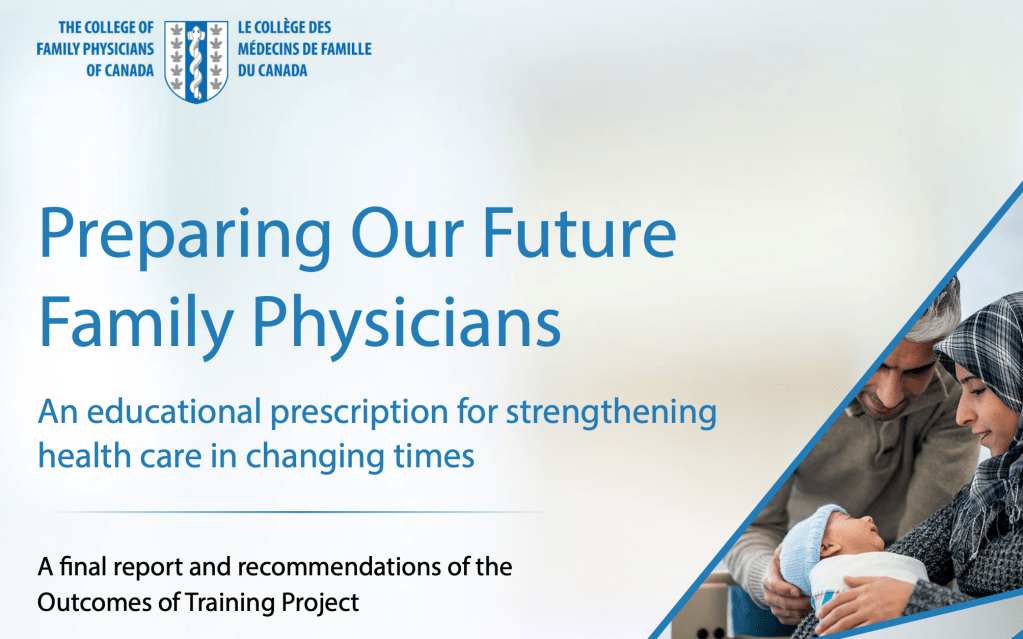
The CFPC’s Outcomes of Training Project (January 2022) is a critical reflection on the training of family physicians in dynamically changing times applying a social accountability lens with an ultimate goal of improved patient access to comprehensive care close to home. Defining and enabling comprehensive care and preparing family physicians for emerging and complex societal health care needs are the goals of this project and the basis of the education recommendations.
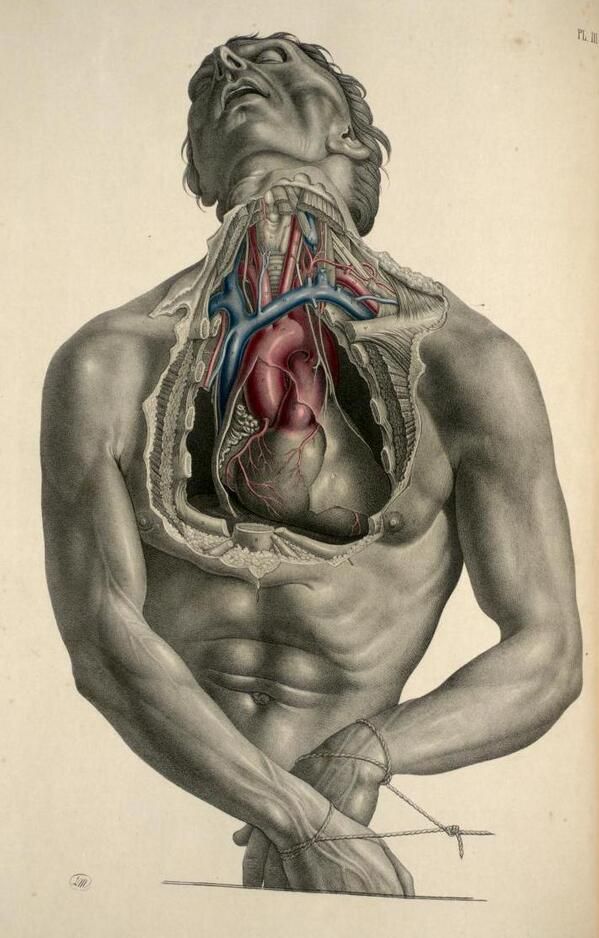
“Many, if not most, medical schools have recognized the value of including the humanities in the education of future doctors, art for medical education. A person who appreciates art is likely to be open-minded, curious, at ease with the unknown, able to tolerate ambiguity, and to approach artwork with a beginner’s mind – that is as if they were experiencing something for the first time. The need for this is expressed by a third year McGill medical student, Susan M Ge, who wrote, ‘Due to the technology available to look into the patient, doctors have lost the ability to see the manifestations of illness from simply observing the external appearance and demeanor of the patient. This void in the area of observation can be filled by the study of art. A piece of artwork holds both the physical and emotional back story of the people depicted in it if one knows how to look.'”13
Art of medicine, art as medicine, and art for medical education via CMEJ.
“’Environmental and behavioural factors certainly can influence the health and vitality of our skin,’ she explains. ‘These external elements can lead to skin damage and signs of premature aging, in the form of wrinkles, dull tone and dyspigmentation, as well as the development of skin cancers. ‘Examples of positive factors include sun protection, physical activity/exercise and a balanced diet. Examples of negative factors include sleep deprivation, stress and pollution.’
More on “How the study of epigenetics could help reverse skin aging: While we know that behaviour and environment can impact skin health, experts hope epigenetics research may offer clues as to what might help repair that damage over time” via Vancouver Sun.
We’re the Abbotsford-Mission Family Practice Residency Team based out of Abbotsford and Mission, British Columbia, Canada. We’re passionate about medicine, your educational journey, and delivering the best care to our community. We know you have several choices ahead and we’re here to help you in making the right decision for your future. Let’s get started!
One of the benefits of our program is that our residents complete a 4-week Cardiology rotation with the Cardiologists at their offices and in the CCU. The Cardiologists have a group chat (aka “The Bat Signal“) with residents inviting us to participate in procedures like cardioversions, central lines, and pericardiocentesis.
We have a Youth Clinic that is part of the Foundry. The Foundry is a centre that provides health care and mental health services to vulnerable youth. We work evening shifts there during our Pediatrics and Psychiatry rotations.
We allow 18-20 weeks of elective time depending on your needs during your R2 year.
With the exception of Obstetrics, all of our call shifts end at 2300. Which means you get to go home and sleep in your own bed!
Abbotsford hosts UBC ICC students from Chilliwack or elective students in the hospital. You will sometimes be on rotation with them or see them in the resident lounge. This provides an opportunity for resident-led teaching.
All residents complete two weeks of Nephrology as a core rotation in R1. This is a great rotation to learn about chronic kidney disease, working up AKIs, and better understand how dialysis works. Most residents also get to participate in starting dialysis lines as well.
We’re convenient! When you move to Abbotsford everyone is able to get to the hospital or their family medicine clinic within a ten-minute drive.
2nd year call is “Choose Your Own Adventure“! Residents can choose Hospitalist, Emergency, Peds ER, Youth Clinic, Obstetrics, and CCU.
Special interest opportunities in Youth Medicine, Prison Medicine, Maternity Care, Addictions Medicine, and Telehealth.
Generally the only learner on each rotation.
Abbotsford and Mission doctors, regardless of their specialty, are extremely kind and love to teach residents.
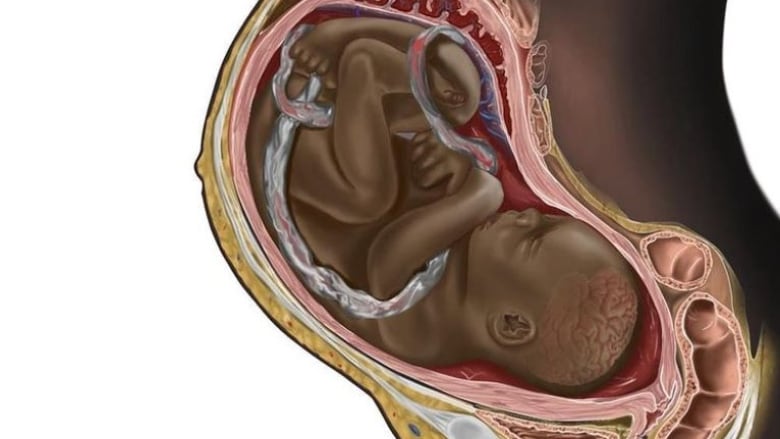
Chidiebere Ibe’s recent illustration of a fetus has gone viral. From Nigeria, he told CBC News: ‘I’m glad that people are blessed by the work and people feel that it’s time to make great change.’ (Chidiebere Ibe)
“Ware wanted to share the illustration to say, ‘Look, we can do better — this is what it looks like to make change in the medical industrial complex.’
‘This young medical illustrator who’s training to be a neurosurgeon is doing just that. He’s interrupting the process of white supremacy and instead saying, in fact, I want to imagine Black babies being born in this world, so I’m going to draw them … It really shows the importance of representation and supporting those medical illustrators who can actually tell our stories as part of their medical work.'”
More on llustration of Black fetus has Canadian parents, educators calling for diversity in medical resources via CBC.
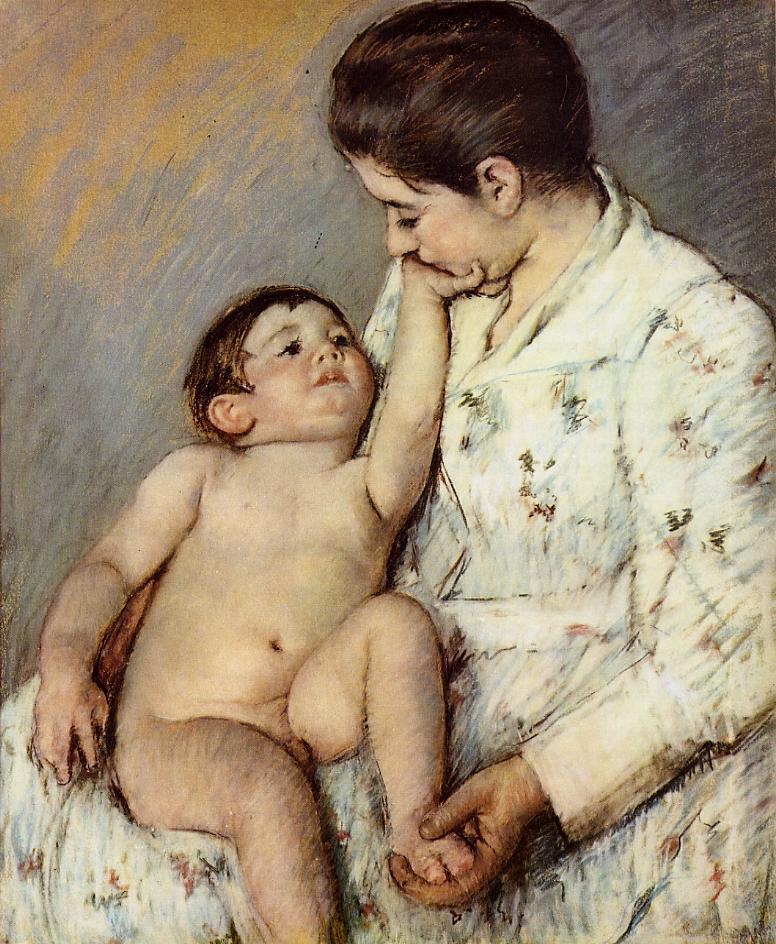
“The Sandy Hook, Dayton, and El Paso mass killings have all involved children being victims of violence or losing their parents. It’s not difficult to infer the subsequent lack of gun control essentially means that the public have accepted the murder and suffering of children. This is more than social media rhetoric; children continue to be separated from their parents and/or family members at our borders, and the ongoing practice of separating children from relatives or siblings, while familial ties are validated can take weeks to months. This is not a north American phenomenon as the ongoing plight of Syrian and Libyan refugees demonstrates. As practicing pediatricians and neonatologists, we are enraged that our countries and world, accepts these events happening to children. Why is a principle of zero tolerance not applied to these tragedies, as it is in Sweden to road deaths? (https://www.york.ac.uk/news-and-events/news/2006/zero-tolerance/).
Thus, the question thus arises about the value of children in society. Two decades ago, the Institute of Medicine published a book on the impact of the environment on children, Children’s Health, the Nation’s Wealth. In it is the following sentence on how our societies value our children: ‘The social transformation of childhood in modern societies reflects a retreat from the view that parents have full and unlimited jurisdiction over their children to one, in which the welfare of children is increasingly understood as a shared social responsibility, which requires investments in education, health care, and other institutions.’ Those other institutions may be seen to be institutions engaged in research that assesses and improves child health, both for the child and for the adult the child will become.
From this sentence quoted above, it seems as though the value of our children to society has steadily risen over the past few centuries, since the rights of the child were enshrined in the United Nations convention.
But it seems now that we are in a downward spiral. That the value of children depends on whose child. That the value of children depends on their ethnicity, the wealth of their parents, their genetic makeup, and their socioeconomic level. For example, the infant mortality rate in the US is higher among Black non-Hispanic infants, Native American infants, and Hispanic infants than white non-Hispanic infants (https://www.childstats.gov/americaschildren/infant_mortality.asp).”
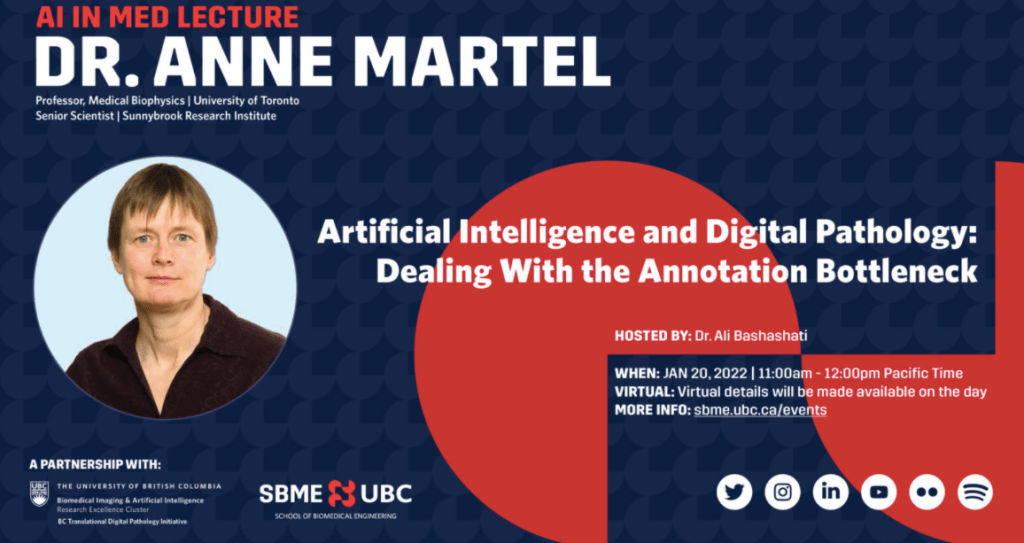
This talk is part of a limited series co-presented by SBME, BMI&AI, and BC Translational DPI.
Talk: “Artificial Intelligence and digital pathology: dealing with the annotation bottleneck”
The introduction of scanners that are capable of digitizing microscopic slides at high magnification has led to an explosion of interest in computational pathology in general and deep learning applied to whole slide images (WSIs) in particular. In my lab at Sunnybrook, we are developing AI models that can detect cancer, automatically segment regions of interest, and learn predictive and prognostic models that can be used to guide treatment decisions. In this talk I will outline some of the unique challenges of working with these extremely large WSIs and discuss some of the approaches that we have developed to overcome the problems of sparse annotations and weak, noisy labels, including self-supervision and multiple instance learning. I will also outline some of the challenges in deploying AI algorithms to the clinic.



 Family Medicine Residency Site: Abbotsford-Mission