
Understanding & Communicating Uncertainty

The Son of Man, 1946. Artist: Magritte

“Uncertainty pervades the diagnostic process. In health care, taxonomies of uncertainty have been developed to describe aspects such as personal (eg, individual knowledge gaps), scientific (eg, limits of biomedical knowledge), and probabilistic (eg, imprecise estimates of risk or prognosis) dimensions of uncertainty.1

When clinicians encounter diagnostic uncertainty, they often find themselves in an unfamiliar situation, without a clear method to proceed confidently, comfortably, and safely. Being unable to explain to patients what causes their symptoms may be perceived as a failure for all involved. When clinicians and patients dwell in diagnostic uncertainty, it can trigger feelings of concern and anxiety, may lead patients to mistrust clinicians’ competence, and could contribute to clinician burnout (feeling exhausted, disconnected, and personally inadequate), especially for early-career clinicians.2,3

Excellent diagnosticians should understand how uncertainty manifests. They should acknowledge and embrace uncertainty, and openly discuss it with other clinicians and patients to normalize its ubiquitous and inevitable part in the diagnostic process.4 Such a reimagining, focused on the inevitable and beneficial aspects of diagnostic uncertainty, relies on identifying how uncertainty is understood, managed, and communicated.”

More on Understanding and Communicating Uncertainty in Achieving Diagnostic Excellence via JAMA.
Prepare for the Unexpected: Contingency Planning Toolkit

Doctors of BC’s new initiative, Business Pathways (www.doctorsofbc.ca/managing-your-practice/business-pathways), has developed a contingency planning toolkit that provides clear information and outlines steps on how to:

  • Confirm your insurance coverage.
  • Assign key roles and responsibilities.
  • Create and mobilize a communications plan.
  • Complete a critical record inventory.
  • Create a schedule for review.
  • Solidify your personal contingency plans and estate.

Business Pathways will be developing more resources in the coming months to help doctors with the operational side of running their business.

If you have feedback and questions, please contact Julia Dreyer at jdreyer@doctorsofbc.ca.

Statement on Russia and Ukraine

February 24, 2022

On behalf of the University of British Columbia, I am deeply concerned about Russia’s attacks on Ukraine and its impact on many of our university community members. These attacks are unwarranted, unprovoked, and unacceptable.  

We join Prime Minister Justin Trudeau and B.C. Premier John Horgan in deploring this illegal and unjust war, and echo the international community’s calls for de-escalation and an immediate resolution to the conflict.    

We recognize that students, faculty, and staff may be affected by the conflict. I want to reassure you that we are doing all we can to provide required supports during this evolving situation.

International students in need of support are encouraged to contact International Student Advising at  isa@students.ubc.ca  or 604-822-5021. UBC Okanagan students can contact the advisors in the Global Engagement Office at geo.ubco@ubc.ca or 250-807-8585. Staff at  Student Health Services are also available to help, as are multilingual counselors available 24/7 through the UBC Student Assistance Program.

Additional supports available for students are also outlined below:

UBC Vancouver
https://students.ubc.ca/support 
https://students.ubc.ca/health/counselling-services

UBC Okanagan
https://students.ok.ubc.ca/health-wellness/

Please know that the UBC community is here to support you. If you see friends who are struggling, encourage them to seek support. If you need support, please reach out to us.

Take extra care,

Santa J. Ono
President and Vice-Chancellor

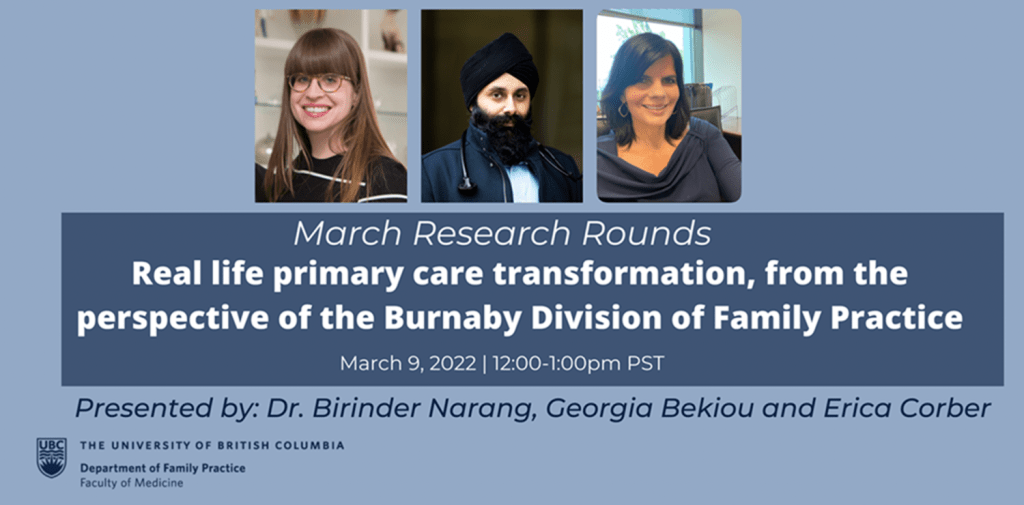
March Research Rounds

In this presentation on March 9, 2022 at noon PST, leadership of the Burnaby Division of Family Practice, Dr Birinder Narang, Georgia Bekiou and Erica Corber, will present the work of the Burnaby PCN over the past 3 years. Through this, the power of collaboration among family physicians, health authority & the community will be highlighted. There will be an honest discussion on success and struggles in the context of the current state of Primary Care in BC.

For more information and updates, check out the Department of Family Practice Website.

Seventh Annual Women’s Health Research Symposium

We would like to invite you to the upcoming Seventh Annual Women’s Health Research Symposium to be held in-person (at the Robert H. Lee Alumni Centre on the UBC campus) and virtually (via live-stream) on Wednesday, March 9, 2022.

The theme of this year’s event will centre on catalyzing women’s health research to address shared global health challenges with an emphasis on the scale, spread and impact of local research at the global level.

Please note that we will be hosting a mentorship and networking event for trainees engaged in women’s health research directly after the main symposium program.

More information on the program and speakers can be found here:  https://bit.ly/whri2022symposium

To register for the symposium, please click the following link: https://events.eply.com/whri2022

We very much look forward to seeing you at the Symposium!

Okanagan Orchards 2022

Got your peaches?!

We’re excited to announce that a date is set for our virtual Okanagan Orchards 2022!

Join our UBC Family Practice preceptors, faculty, residents, and administrators on the afternoon of Friday, May 27th from 1:00 to 4:30 p.m. for our faculty development and appreciation event.

We look forward to bringing our team together virtually for an interactive afternoon of intimate discussions, small workshops, and prizes.

This is open to all preceptors and faculty from across our plentiful province. Don’t be shy, join us. We’ll send further details, including an agenda and registration link, soon so keep your apples peeled. Feel free to share this event with colleagues at your site.

Please let me know if you have any questions. We look forward to seeing you in May!

Larissa McLean, BA, MHA
Manager, Rural Education & Initiatives
Faculty of Medicine | Department of Family Practice, Postgraduate Program 
The University of British Columbia  
larissa.mclean@ubc.ca
http://postgrad.familymed.ubc.ca 

How Doctors Describe Patients Matters

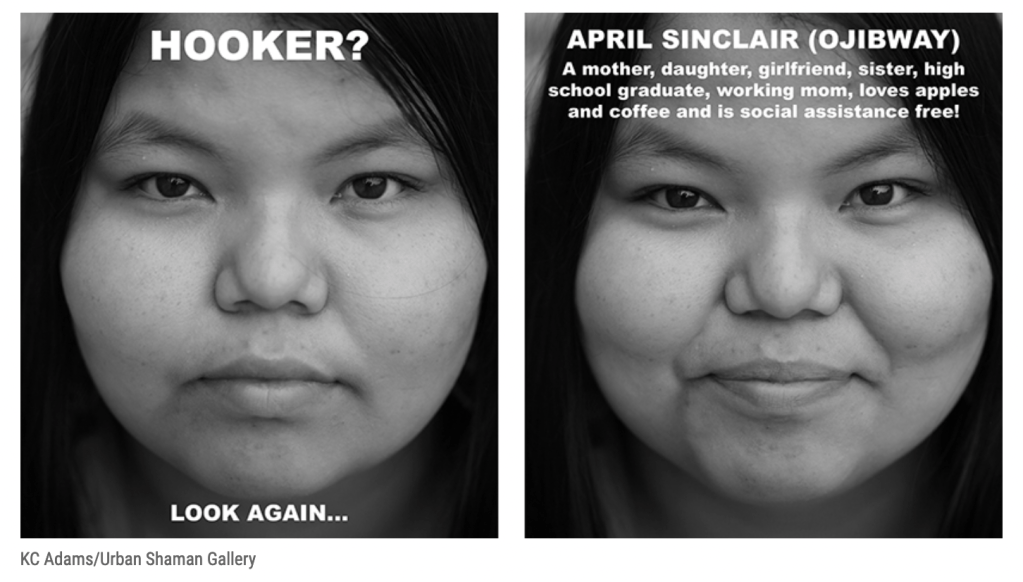
Perception exhibit by Visual artist KC Adams.

“’Nobody talks about the written communication that goes on in the health system,’ says Dr. Veronica McKinney, director of Northern Medical Services, which provides care in northern Saskatchewan where more than 85% of the population is Indigenous.

‘Examining why we are writing or using the terms that we do – that makes physicians feel uncomfortable,’ says McKinney, who has Cree and Métis ancestry. Yet, ‘it’s particularly important in health care because we like to think of ourselves as scientists – as very objective and not having biases – but in reality, we’re human and we all do.’

Perception exhibit by Visual artist KC Adams.

Last fall, the American Medical Association released a guide on equity-focused language as a ‘starting point for reflection.’ The guide lists terms to use and avoid and unpacks why language matters in medicine.

‘Words reflect and shape our thinking,’ as well as the narratives that people take for granted about race, power, health, and medicine, the authors explain. Unexamined narratives that uphold the status quo limit the questions clinicians ask, the solutions they develop and how they describe problems.”

Learn more on How doctors describe patients matters – even in their notes via CMAJ.

Read more on Winnipeg’s new art project stares down racism in the face: How a bold art project projected on Winnipeg’s downtown buildings will challenge perceptions of its Aboriginal citizens via Maclean’s.

Access Advancing Health Equity: A Guide to Language, Narrative and Concepts via AMA Center for Health Equity.

In Other News…

“Parkour enthusiasts need look no further than up in the trees for inspiration. Squirrels’ aerial acrobatics make the rodents masters of the form, a new study suggests.

A detailed look at how squirrels navigate narrow branches that bend and sway with the wind — where the smallest error could spell death — shows that the rodents make split-second calculations to balance trade-offs between branch bendiness and the distance between tree limbs. And for particularly tricky jumps, squirrels improvise parkour-style moves in midair to stick the landing, researchers report in the Aug. 6 Science.

This study is ‘a great example of how cool ‘normal’ animals can be in their biomechanics,’ says Michelle Graham, a graduate student in biomechanics at Virginia Tech in Blacksburg who was not involved with the research. ‘We’ve all seen squirrels do crazy stuff in nature, but no one ever pays any attention to it.’

As someone who studied biomechanics…I do! 🙂

More on Squirrels use parkour tricks when leaping from branch to branch via ScienceNews.

How does the study of biomechanics apply to human health? Read more on Preventive Biomechanics: A Paradigm Shift with a Translational Approach to Biomechanics via Am J Sports Med.

Children’s Mental Health During the COVID-19 Pandemic

Illustration from Children’s Experiences of the Pandemic via the Child Art Project conducted by Dr. Nikki Martyn

“Increasingly, research confirms the negative effects of COVID-19 safety measures on the mental health of children and adolescents.15 Saunders and colleagues6 call for an urgent response to the increasing sustained demand for mental health services inclusive of substance use and developmental disorders. The authors’ population-based cross-sectional study used linked administrative and health data to examine changes in utilization of physician-provided mental health services for 2.5 million children and adolescents aged 3 to 17 years in Ontario, Canada. From March 2020 through February 2021, the authors found a rapid and sustained 10% increase in outpatient mental health service utilization by children and adolescents compared with prior rates. Similar trends were not observed for acute mental health service utilization for the same period, except for girls. The current study found striking sex differences with substantially higher rates of utilization observed for acute inpatient psychiatric hospitalization and outpatient mental health services for school-aged and adolescent girls.

Illustration from Children’s Experiences of the Pandemic via the Child Art Project conducted by Dr. Nikki Martyn

Interventions for common mental health, substance use, and developmental disorders can be delivered in community schools and primary care practices to address mild to moderate symptoms before they worsen. Training non–mental health clinicians to assess and treat common mental health conditions virtually is critical for expanding access to services,23 thereby creating collaborative-care models to address children’s mental health needs in settings with fewer resources. Studies to determine which populations or diagnostic groups will benefit most from virtual or hybrid (virtual and in-person) visits and measurement of quality and outcomes will inform future directions.

Illustration from Children’s Experiences of the Pandemic via the Child Art Project conducted by Dr. Nikki Martyn

The immediate effect of the COVID-19 pandemic on children and adolescents has been significant, but the long-term effect will be more devastating without urgent action. Globally, 2.2 billion children have been or will be directly or indirectly affected by the COVID-19 pandemic and its sequelae. Saunders and colleagues6 and other researchers have sounded the alarm. We cannot wait to respond to the distress and escalating mental health and suicide crisis. Prioritizing children’s and adolescents’ mental health demands a transformational societal and systems solution that protects their future.”

Sounding the Alarm for Children’s Mental Health During the COVID-19 Pandemic via JAMA Pediatrics.

Learn more on this topic:

‘This is too much’: Art shows children’s struggles during pandemic, says researcher via CTV news.

Children’s Experiences of the Pandemic via the Child Art Project by Dr. Nikki Martyn, Program Head of Early Childhood Studies at the University of Guelph-Humber and Adjunct Professor in Human Relations and Nutrition at the University of Guelph.

Healthcare Tech Trends In 2022

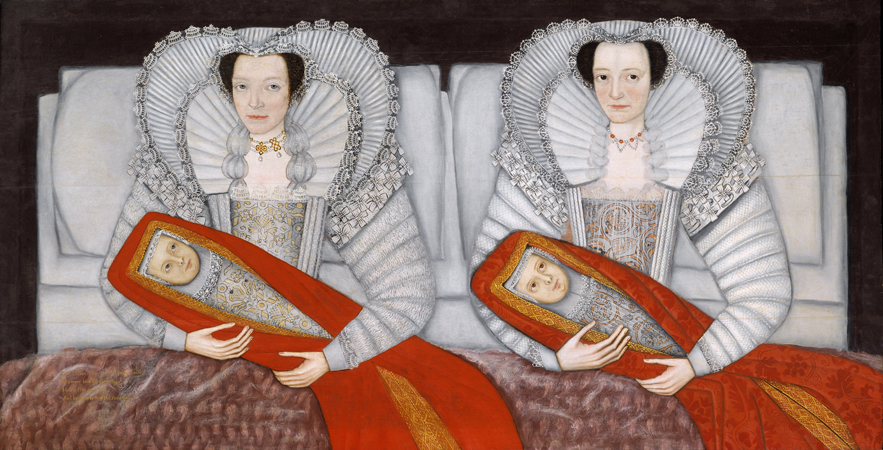
The Cholmondeley Ladies c.1600–1610. British School 17th Century. Artist: Unknown

“In healthcare, this trend encompasses the idea of the “virtual patient” – digital simulations of people that are used to test drugs and treatments, with the aim of reducing the time it takes to get new medicines from the design stage into general use. Initially, this may be confined to models or simulations of individual organs or systems. However, progress is being made towards useful models that simulate entire bodies. Current research suggests this is still some way from being a realistic possibility, but during 2022 we will continue to see progress towards this goal.

Digital twins of human organs and systems are a closer prospect, and these allow doctors to explore different pathologies and experiment with treatments without risking harm to individual patients while reducing the need for expensive human or animal trials. A great example is the Living Heart Project, launched in 2014 with the aim of leveraging crowdsourcing to create an open-source digital twin of the human heart. Similarly, the Neurotwin project – a European Union Pathfinder project – models the interaction of electrical fields in the brain, which it is hoped will lead to new treatments for Alzheimer’s disease.”

Read more on The Five Biggest Healthcare Tech Trends In 2022 via Forbes.

How observant are you? Can you spot at least 5 differences between The Cholmondeley Ladies?