A Resident’s Guide to the CCFP Examination

“Good family medicine residents commit to a study methodology early. They create a study calendar in December and cover one topic per day. They study using only three resources. They download the 99 App and carry their spiral-bound Family Medicine Notes to clinic. They treat every office encounter as a mock SOO. If they are still on iOS, they realize that now would be a good time to switch to Android, as the app is only available on the latter. They quiz themselves with the Family Medicine Study Guide App.

Bad family medicine residents look for a ‘golden approach’ that works, without accounting for their unique strengths and weaknesses. They spend months switching study tactics in the hope of finding the secret approach that works. It doesn’t work.”

More on The Bad Family Medicine Resident’s Guide to the CCFP Examination by our former UBC Abbotsford-Mission Family Medicine Resident, Dr. Joseph Westgeest, currently residing and practicing in beautiful Halifax.

Thank you Joseph for taking the time to compose your thoughts and experiences in preparing for exams.

Warm regards,

Jacqueline

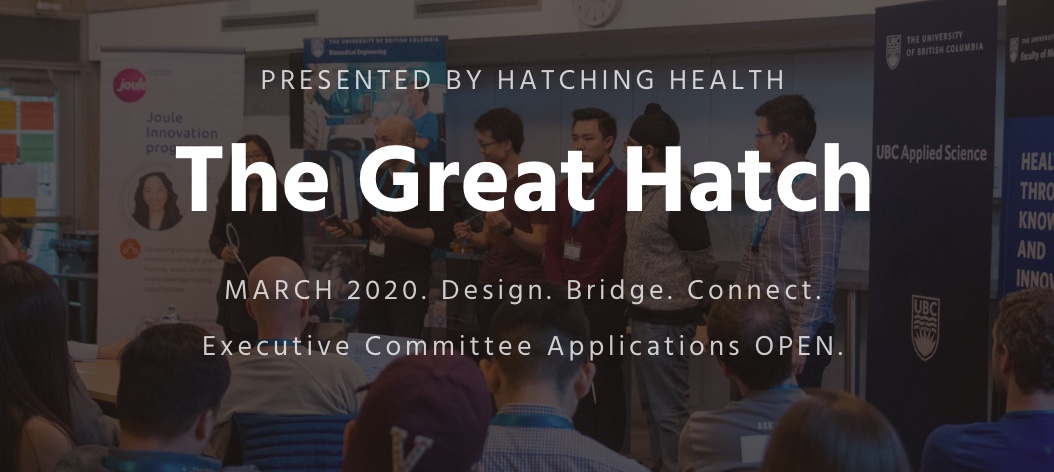
The Great Hatch

the great hatch.jpeg

What is The Great Hatch? How can we bring together individuals of all different backgrounds and give them the opportunity to address important issues within the world of healthcare? The Great Hatch is an annual weekend-long innovation event that aims to harness the potential we have as humans to create and critically think to solve problems and improve lives. We give people a chance to connect with each other because that is where the most inspiring stories and solutions are hatched.

Participate and learn more here!

On Medical Research

“The pharmaceutical industry, as thoroughly documented in recent literature, is the most profitable industry worldwide, more profitable than the weapon and financial industries. The question is not so much if the industry is profitable, it is more that there are levels of profitability that are immoral since this industry is linked to disease and people’s health, in which one has no option. One can buy an iPhone or not, or buy a cheaper one. But if one has cancer, they have to buy the suitable medicine, the one that the doctor prescribed. And if this medicine is not affordable, they simply die.”
….
“The industry is much more interested in producing medicines to treat rather than cure. Because when one has a medicine to treat and to treat for life, they keep a customer. And if it is a business, and this industry is a business, they retain a customer. Hypertension? Take this medicine for the rest of your life. Cholesterol? Take this for the rest of your life. An antibiotic you take for four days and you’re cured. And you lose a customer. Then antibiotics are running out and many drugs that would cure are running out. Today, 80% of medicines are to treat. And sometimes to treat the symptom only, not even the disease.”
~ Dr. Germán Velasquez, former Director of the World Health Organization Secretariat on Public Health, Innovation and Intellectual Property

More on Medical Research: Houston, we have a problem, Drugs for Neglected Diseases Initiative, Horizon 2020: The EU Framework Programme for Research, and Innovative Medicines Initiative.

#NeglectedDiseases #DevelopMedicinesToCure #BetterInvestmentDecisions #DefensivePatenting #RDProcess #PublishClinicalResults #GreaterTransparency #InternationalRDTreaty #OpenAccessOpenSource

Lead in the Water

Bubbler.jpg“A majority of public schools in Abbotsford and Mission use water with lead above a recently adjusted threshold set by Health Canada.

In March 2019, Health Canada halved the acceptable amount of lead concentration in water from .01 to .005 mg/L, putting 25 out of 34 schools in Abbotsford, and 14 out of 16 schools in Mission, over the limit.

The Abbotsford School District is now contracting an independent laboratory to test all of the schools that failed the water test and locate any contaminated water sources, according to the district’s manager of communications, Kayla Stuckart.

‘Staff will be taking action at each of the affected school sites to ensure the drinking water for students and staff is only available from fountains and sinks with water quality meeting health standards,’ Stuckart said.

The schools which failed water tests are listed below with their percentage above the Health Canada limit.”

Abbotsford:
Barrowtown Elementary: 50%
Mt Lehman Elementary: 37.5%
Godson Elementary: 33.3%
Dormick Park Elementary: 33.3%
Centennial Park Elementary: 30%
Wj Mouat Secondary: 27.8%
Aberdeen Elementary: 25%
Start Technologies: 25%
John Maclure Elementary: 20%
Wa Fraser Middle: 16.7%
Abbotsford Art Center: 16.7%
Clearbrook Elementary: 16.7%
Abbotsford Virtual School: 16.7%
Dr Thomas A Swift Elementary: 16.7%
Prince Charles Elementary: 16.7%
Center For Resources For Education: 16.7%
South Poplar Elementary: 16.7%
Bakerview Center For Learning: 14.3%
Asia North Poplar Elementary: 12.5%
Ross Elementary: 12.5%
Aboriginal Education Center: 12.5%
Upper Sumas Elementary: 12.5%

Mission:
École Les Deux Rives: 100%
Albert Mcmahon Elementary: 83.3%
Dewdney Elementary: 78.6%
Fraserview Elementary: 70%
Hatzic Middle School: 64.3%
Hatzic Elementary: 62.5%
West Heights Elementary: 60%
E.S. Richards Elementary: 44.4%
Silverdale Elementary: 44.4%
Cherry Hill Elementary: 40%
Hillside Elementary: 33.3%
Mission Secondary: 30.4%
Mission Central Elementary: 28.6%
Ferndale Elementary: 25%

More on Most public schools in Abbotsford and Mission have water contaminated with lead 25 out of 34 Abbotsford schools have been found to have lead above the Health Canada limit via Abbotsford News.

Feeding the World

“There were riots in 34 countries and a number of governments fell because people just didn’t get the food that they needed and they were demonstrating in the streets. And I realized that food security, having enough to eat, is not just an issue for your health, but it’s also an issue that has profound political consequences to the point where governments put ensuring that people get the food they need when they need it at a price they can afford, very high up the ladder of political imperatives.”
~ Dr. David Nabarro, UN Advisor on Sustainable Development

More on Changing climate is affecting how we feed ourselves via CBC.

Learn more here:

Artificial Intelligence & Medical Education

“The history of medical education reform amply demonstrates that curricular change has been incremental, reactive, and mostly around the margins. Changes that have occurred, such as earlier clinical experiences, more problem-based learning, and clinical skills testing, have not fundamentally altered learning environments and information-retention expectations imposed by medical school curriculum committees, the Liaison Committee on Medical Education, the Accreditation Council for Graduate Medical Education, and the National Board of Medical Examiners testing program. Given the curricular needs addressed above, changes in 21st-century medical education must be radical, not incremental. The current learning environment, with its excessive information-retention demands, has proven to be toxic and in need of complete overhaul. The speed of technological innovation means that the skills of some faculty members are outdated compared to those of their students. In a recent visit to a medical school by one of the authors, when students were asked if they were ‘being taught in the manner in which they prefer to learn,’ no student said that this was the case.

Accordingly, we advocate new curricula that respond to the challenges of AI while being less detrimental to learners’ mental health. These curricula should emphasize 4 major features:

  1. Knowledge capture, not knowledge retention;
  2. Collaboration with and management of AI applications;
  3. A better understanding of probabilities and how to apply them meaningfully in clinical decision making with patients and families; and
  4. The cultivation of empathy and compassion.

Barriers to such curricular changes are substantial and include long-standing faculty practices and funding streams, university policies and procedures, and a history of incremental reform by regulatory and accreditation bodies. It is our opinion that significant reform cannot take place within the existing regulatory structure. Perhaps changing the accreditation and licensing framework should be foremost among our considerations in reimagining medical education for the 21st century.”

More on Reimagining Medical Education in the Age of AI by Steven A. Wartman, MD, PhD and C. Donald Combs, PhD via AMA Journal of Ethics: Illuminating the Art of Medicine


Proust: On Treating Chronic Illness

“I learned that a death had occurred during the day which distressed me greatly, that of Bergotte. It was known that he had been ill for a long time past. Not, of course, with the illness from which he had suffered originally and which was natural. Nature hardly seems capable of giving us any but quite short illnesses. But medicine has annexed to itself the art of prolonging them. Remedies, the respite that they procure, the relapses that a temporary cessation of them provokes, compose a sham illness to which the patient grows so accustomed that he ends by making it permanent, just as children continue to give way to fits of coughing long after they have been cured of the whooping cough. Then remedies begin to have less effect, the doses are increased, they cease to do any good, but they have begun to do harm thanks to that lasting indisposition. Nature would not have offered them so long a tenure. It is a great miracle that medicine can almost equal nature in forcing a man to remain in bed, to continue on pain of death the use of some drug. From that moment the illness artificially grafted has taken root, has become a secondary but a genuine illness, with this difference only that natural illnesses are cured, but never those which medicine creates, for it knows not the secret of their cure.” ~ Marcel Proust in À la Recherche du Temps Perdu, originally published from 1913-1927

Marcel Proust’s continuous novel À la Recherche du Temps Perdu (REMEMBRANCE OF THINGS PAST) was originally published in eight parts, the titles and dates of which were: I. Du Coté de Chez Swann (1913); II. À l’Ombre des Jeunes Filles en Fleurs (1918), awarded the Prix Goncourt in 1919; III. Le Côté de Guermantes I (1920); IV. Le Côté de Guermantes II, Sodome et Gomorrhe I (1921); V. Sodome et Gomorrhe II (1922); VI. La Prisonnière (1923); VII. Albertine Disparue (1925); VIII. Le Temps Retrouvé (1927).

Community Event

wtilunch.jpg

LI IYÁ:QTSET – WE TRANSFORM IT: CATALOGUE LAUNCH
THE REACH GALLERY MUSEUM, ABBOTSFORD

Join us on the afternoon of Saturday, November 30 for the launch of the catalogue that accompanies the group exhibition Li iyá:qtset – We Transform It. This fully illustrated publication features visual art and written essays by some of the most important Indigenous artists, thinkers, writers, and scholars working in Coast Salish territory today.

Free Admission. Learn more here.