
“Dr. Pollak taught two skills that are core to patient-centered communication and also identified by clinicians as areas in which they needed help: recognizing patient emotion and responding to negative emotion. The coach instructed clinicians how to identify negative emotions even when patients were not expressing them directly. For example, anxiety often prompts patients or caregivers to rapidly ‘pepper’ clinicians with questions,12 and many questions that initially appear as medical actually represent negative emotions. ‘Are the tumors getting bigger?’ represents fear or anxiety, and needs a response that addresses that fear, rather than a factual response about how many millimeters the tumors are currently.”
From Coach, Don’t Just Teach (2019) by Kathryn I. Pollak, PhD, Xiaomei Gao, MA & Laura P. Svetkey, MD, MHS
(Thank you Dr. Chow for sharing!)
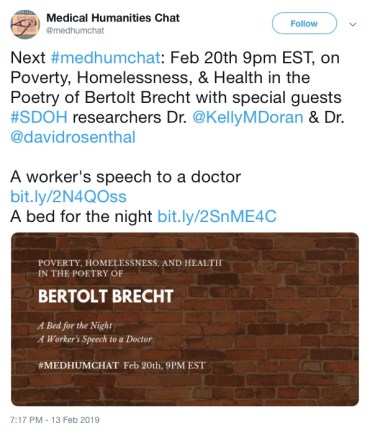 This year, I’m trying something new: bringing my love for stories and poetry in medicine to a Twitter chat that I’m calling Medical Humanities Chat, or



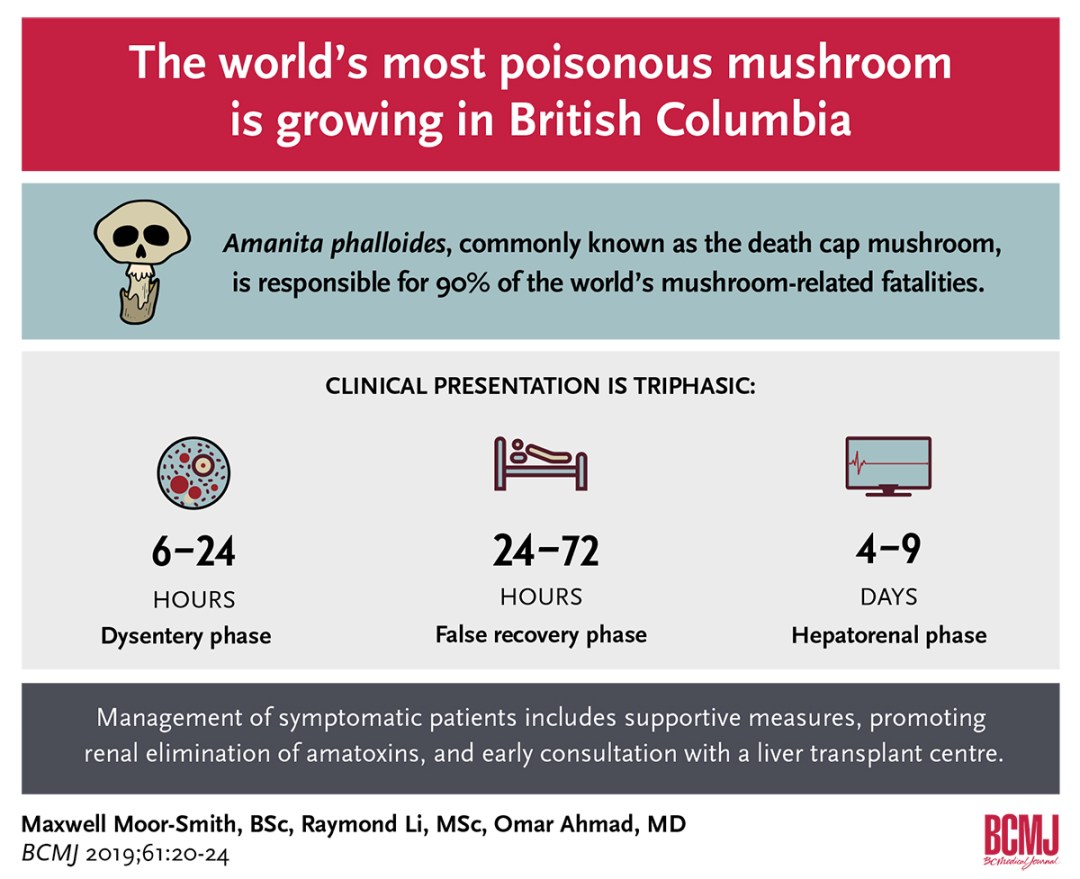 “Amatoxins in Amanita phalloides, commonly known as the death cap mushroom, are responsible for 90% of the world’s mushroom-related fatalities. The most deadly amatoxin for humans is α-amanitin, a bicyclic octapeptide that irreversibly binds RNA polymerase II, thus preventing protein synthesis and causing cell death. Three recent poisoning cases in British Columbia show how the death cap can be easily mistaken for edible mushrooms such as the puffball and the paddy straw mushroom.”
