Canada: STI on the Rise

“Last month, Alberta declared a provincewide outbreak of syphilis, with rates of the STI reaching a level not seen since 1948.

The federal government also recently announced more than $32 million in funding for research into STIs and blood-borne infections, writing that ‘rates of sexually transmitted infections in Canada have increased over the last decade — chlamydia increased by 49%, gonorrhea by 81%, and syphilis by an alarming 178%.’

These increasing rates of STIs across Canada are part of a global trend, says Dr. Rita Shahin, associate medical officer of health with Toronto Public Health.”

More on ‘Alarming’ increase in sexually transmitted infections found across Canada via CBC News.
Chemotherapy Effectiveness

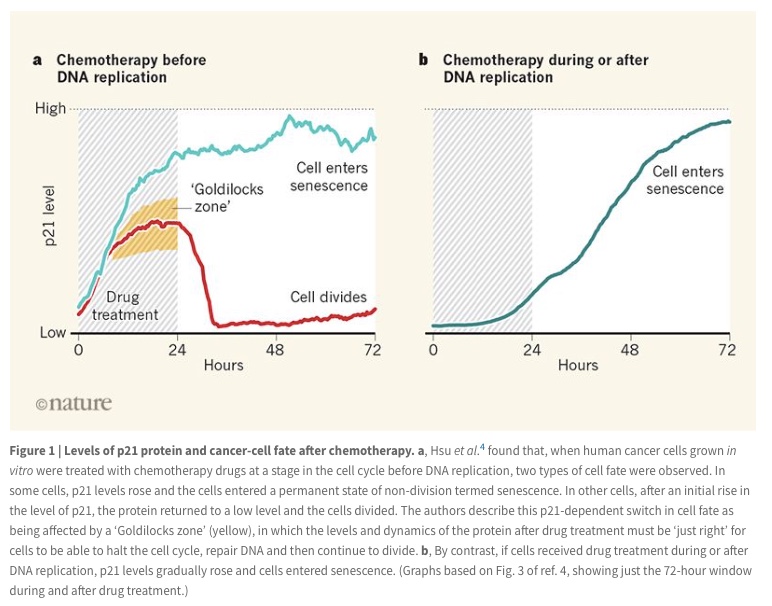
chemo.jpeg“Chemotherapy usually works by inducing DNA damage that leads to cell death. However, rather than dying after chemotherapy, some tumour cells enter an inactive state, termed senescence, in which they are alive but have permanently stopped dividing1. Although senescence in normal cells drives ageing and tissue degeneration2, cancer-therapy-induced senescence is associated with positive clinical outcomes3. Understanding the factors that drive the senescence of tumour cells might thus aid the development of new anticancer treatments. Writing in Cell, Hsu et al.4 shed light on a previously unknown aspect of how chemotherapy-induced entry into senescence is controlled.”
More on A dynamic view of chemotherapy effectiveness (2019) by LiuHemann via Nature.

A Tangled Net

pan310038-fig-0001-m.png
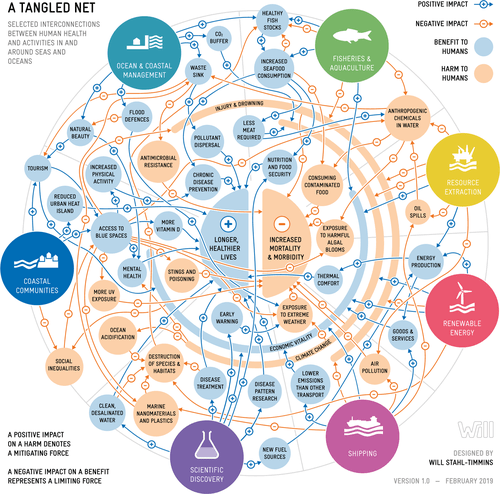
A tangled net – selected interconnections between human health and activities in and around the seas and oceans (designed by Will Stahl‐Timmins)

“We cannot continue to discharge vast amounts of waste materials into our seas and expect human health and wellbeing to be unaffected. As yet we lack a clear, global vision of how to reconcile the health of both oceans and people, and how to support decision makers in achieving sustainable marine ecosystems that promote public health. Global governance will be required to deliver these aspirations. This might, for example, involve establishing a panel similar to the Intergovernmental Panel for Climate Change to gather evidence and promote collaborative action.”

More on Time and tide: Our future health and wellbeing depend on the oceans (2019) by Depledge, White, Maycock, & Fleming via BMJ. 

Fostering human health through ocean sustainability in the 21st century (2019) by Fleming, Maycock, White, & Depledge via People And Nature.

Solidarity

“It’s possible to imagine a new organization of doctors that has nothing to do with the business of medicine and everything to do with promoting the health of patients and adroitly confronting the transformational challenges that lie ahead for the medical profession. Such an organization wouldn’t be a trade guild protecting the interests of doctors. It would be a doctors’ organization devoted to patients. Its top priority might be restoring the human factor—the essence of medicine—which has slipped away, taking with it the patient-doctor relationship. It might oppose anti-vaxxers; challenge drug pricing and direct-to-consumer advertisements; denounce predatory, unregulated stem-cell clinics; promote awareness of the health hazards of climate change; and call out the false health claims for products advocated by celebrities such as Gwyneth Paltrow and Mehmet Oz. This partial list provides a sense of how many momentous matters have been left unaddressed by the medical profession as a whole. Tackling any one of them would be hard; perhaps patient-advocacy groups could join in common cause.”

Why Doctors Should Organize: Meeting the challenges of modern medicine will require more than seeing patients (2019) by Eric Topol via The New Yorker.

Ganma

“Aboriginal people were instrumental in guiding the yarning, helping all participants understand each other, taking time to find the right words to express feelings and discover shared experiences.

The researchers found that many Aboriginal people were happy having non-Aboriginal people involved if they followed ganma and listened. Sometimes it led to a sense of reconciliation between the two groups.

In this context, ganma has come to mean ‘If you listen to us, we’ll listen to you’. That is, two cultures listening to and learning from each other. It’s symbolic, representing different communities working to find practical solutions when dealing with ecological grief and the loss of nature and home.”

More on ‘If the land is sick, you are sick’: An Aboriginal approach to mental health in times of drought: In Australia, psychological tools developed with Aboriginal people can also support farmers whose land is suffering the effects of climate change by Georgina Kenyon via Mosaic.

Integrated Model of Care

“Our vision is to embed social and health services in a one-stop integrated model of care for people living in the Downtown Eastside. To date, little work has focused on the impact of employment as a health and social intervention. Our project aims to bring together systems that are traditionally difficult to navigate for people living in the Downtown Eastside.”

Skye Barbic, UBC Lead Scientist

More on New employment support system coming to Downtown Eastside via CTV News.

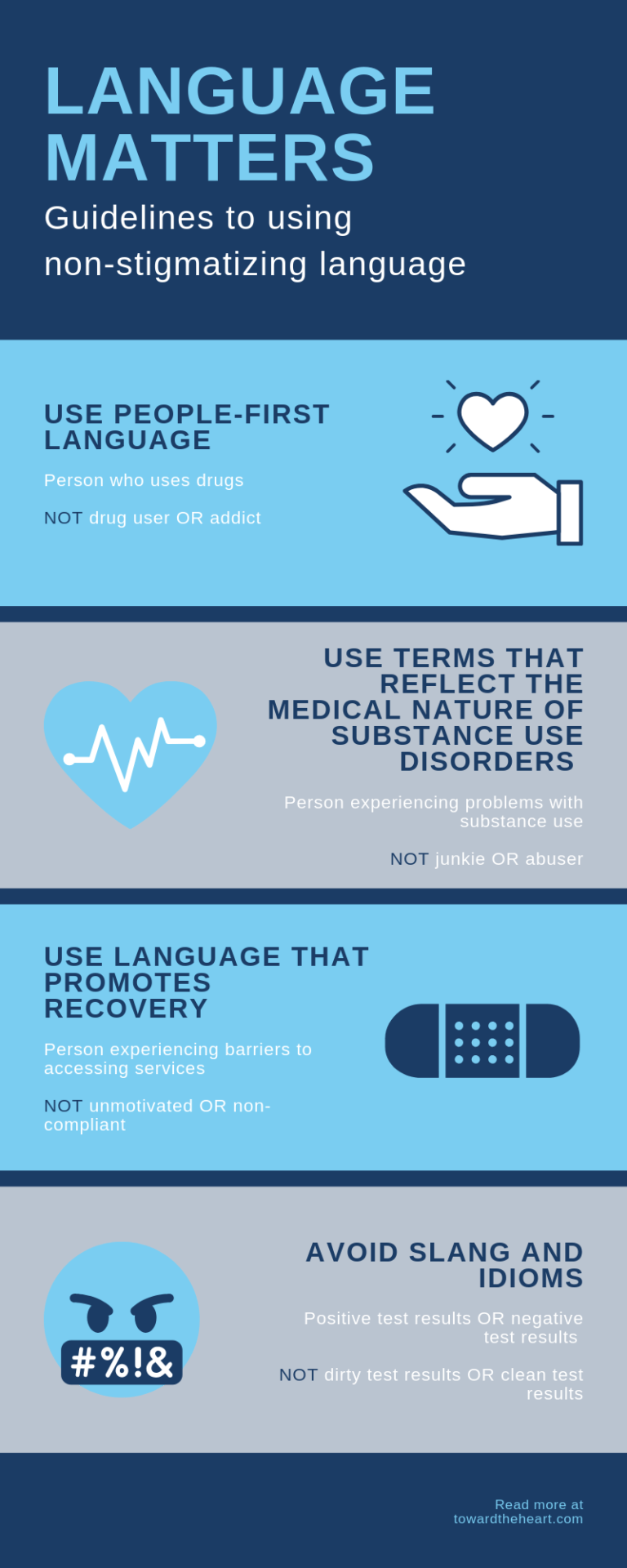
Language Matters

“An important aspect of Buxton’s work is encouraging the use of respectful, non-stigmatizing language when describing substance use disorders, addiction and people who use drugs. Stigmatization has a direct impact on people who use drugs, she said. It contributes to isolation, which means people who use drugs may use alone and will be less likely to access harm-reduction services or treatment such as a supervised injection site or naloxone, a medication that quickly reverses the effects of an overdose.”

More on UBC researchers help find solutions to the overdose crisis by Thandi Fletcher via UBC News.