A Hospital in 10 Days

“Its design is reportedly based on the Xiaotangshan Hospital that was built within a week in Beijing during the SARS outbreak in 2003.

‘China has a record of getting things done fast even for monumental projects like this,’ Yanzhong Huang, a senior fellow for global health at the Council on Foreign Relations, told the BBC.

‘This authoritarian country relies on this top down mobilisation approach. They can overcome bureaucratic nature and financial constraints and are able to mobilise all of the resources.'”

More on China building 1,000-bed hospital in 10 days to treat coronavirus via Dezeen.

#Coronavirus

The Mirage of Universality

“When compared with our international peers, Canada ranked last on the amount we spent on social programs in 2017. Canada needs to invest in, and evaluate, new social programs such as a guaranteed annual income. The arbitrary silos between health and social services must be reconsidered, with an emphasis on health and well-being in addition to conventional metrics such as gross domestic product growth. Our policy-makers might look to New Zealand, where earlier this year its government released a “well-being budget” with substantial investments in mental health, Indigenous Peoples and poverty reduction. Iceland and Scotland have articulated an interest in similar policies. Even the United States recently proposed a national interagency council on the social determinants of health. The effects of these strategies are not yet known, but if specific components are carefully evaluated, Canada can learn from them.”

More on the The mirage of universality: Canada’s failure to act on social policy and health care (2020) via CMAJ.

Thank you Dr. Liu for sharing!

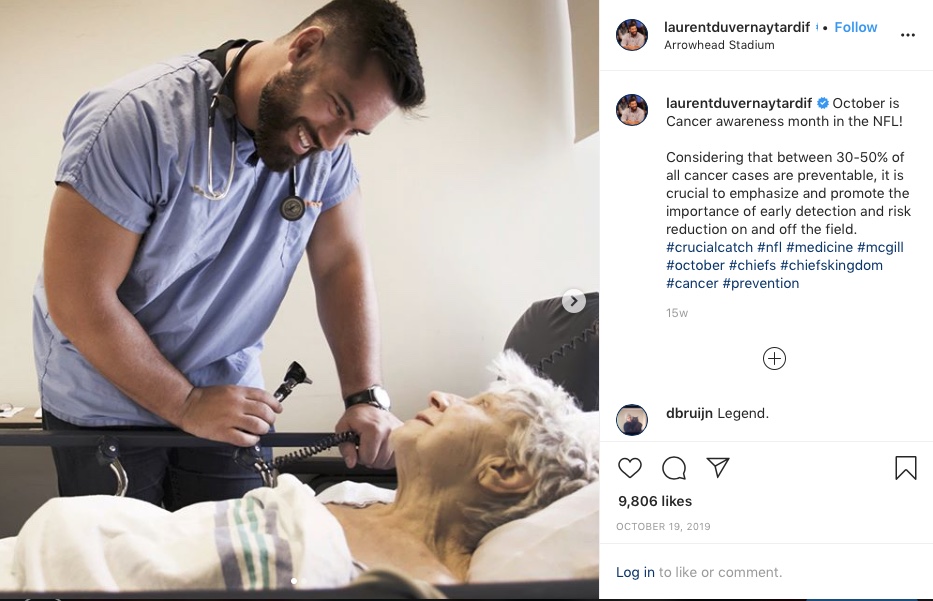
First MD in the Super Bowl!

MD.jpeg

“The discipline required to study medicine — the long hours, the note taking, the attention to detail — definitely made my transition to the NFL easier. Even just having a better understanding of how to take care of my body with nutrition and hydration has been helpful. But beyond that, playing in the NFL has taught me how to deal with failure in a way I’ve never experienced before. You can practice really hard and be at the very top of your art, but sometimes that’s still not enough to win a game.

By nature I’m a very competitive person, and playing football at this level has instilled in me a certain sense of resilience that has definitely helped me in my pursuit in medicine. Just like you can’t win every game, you won’t always have a successful outcome with every patient. What is in your control is how you deal with loss and disappointment. Learning how to keep a clear mind so that I can take lessons from every experience, regardless of the outcome, has definitely made me a better physician, as well as a better football player.”

Congratulations to Canadian Dr. Laurent D. Tardif. He is the first physician to play in the Super Bowl!

More on Le Docteur by Laurent Duvernay-Tardif via The Players’ Tribune.

Institutional Infrastructure for Wellness

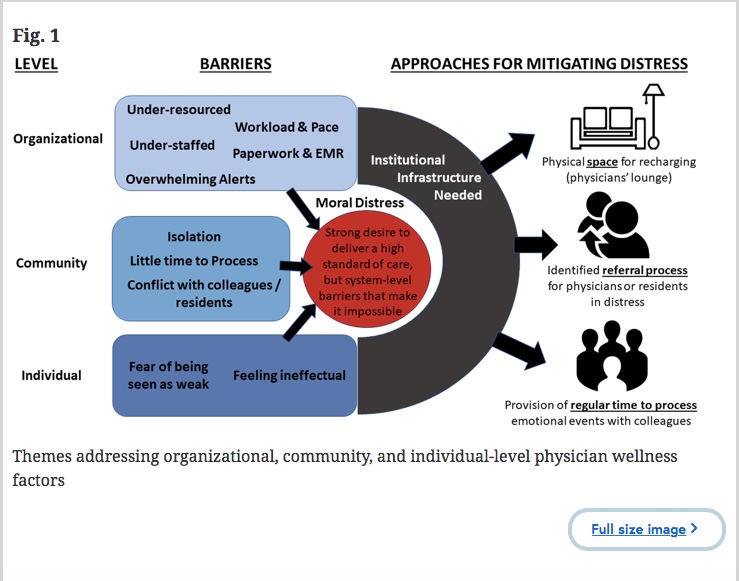
“Unmet needs relating to physician wellness patterned into organizational, community- and individual-level themes, detailed below. Institutional infrastructure, in the form of dedicated space, such as a physicians’ lounge for self-care, and an identified, internally supported dedicated time for physician processing, was highlighted as an unmet need. The disconnect between individuals’ desire to deliver care that met their own standards and their inability to deliver such care due to system-level barriers was a frequent source of distress, frustration, and demoralization. Please see Fig. 1 for an overview of themes and potential approaches for addressing the challenges described.”wellness.jpeg

More on Developing institutional infrastructure for physician wellness: Qualitative insights from VA physicians (2020) by Schwartz et al. via BMC.

Powerful Peptides

protein.jpg
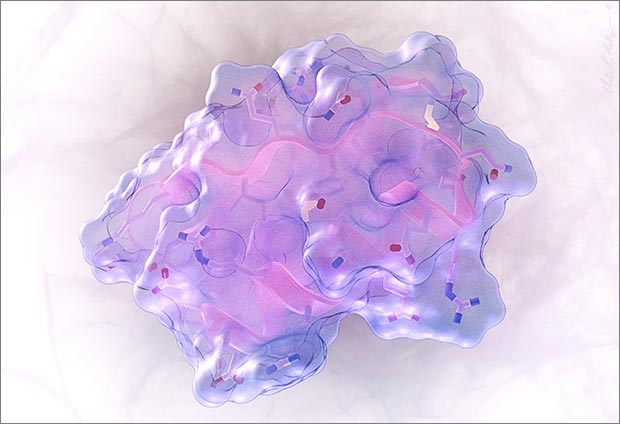
Artistic rendering of the computationally designed peptide gEHEE_06. The molecular surface is shown as a transparent blue shell, and the peptide’s backbone structure is pink. The amino acids’ side chains are white (carbon atoms), blue (nitrogen atoms) and red (oxygen atoms). The crisscrossing bonds that give the peptide its constrained, stable shape are in bright white. Graphic by Dr. Vikram Mulligan. Source here.

“Some common life-saving medicines, such as insulin, are made of proteins so large and fragile that they need to be injected instead of ingested as pills. But a new generation of medicine — made from smaller, more durable proteins known as peptides — is on its way. In a quick, informative talk, molecular engineer and TED Fellow Christopher Bahl explains how he’s using computational design to create powerful peptides that could one day neutralize the flu, protect against botulism poisoning and even stop cancer cells from growing.”

Learn more here at A new type of medicine, custom-made with tiny proteins by Christopher Bahl via TED2019.

Tackling Metabolic Disease

1024px-Drosophila_melanogaster_Proboscis.jpg
A fruit fly (Drosophila melanogaster) feeding off a banana. Image by Sanjay Acharya.

“When it comes to determining how women and men store fat differently, it turns out fruit flies may hold the key.

People and fruit flies are astonishingly alike genetically. In fact, nearly 75 per cent of disease-causing genes in humans can be found in the fly in a similar form.

In a new study, recently published in PLOS Biology, researchers from UBC’s faculty of medicine used fruit flies to make a fundamental genetic discovery about differences between how males and females store and metabolize fat.”

Learn more here on How do men and women store fat differently? Ask the fruit fly via UBC News.

Friday Link Pack

carbon

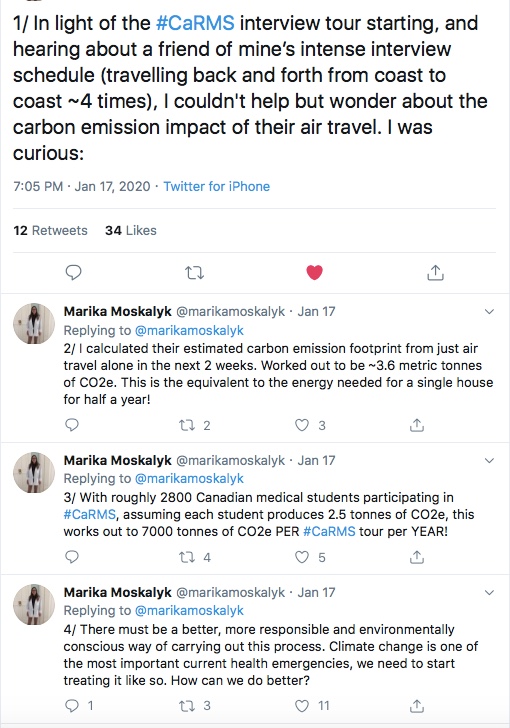
We can do CaRMS better. Contact the CaRMS Board of Directors to share your ideas.
Starbucks plan to reduce its environmental footprint.
Latest on the Coronavirus outbreak.
18 more things you should know about Google & healthcare.
Tuition-free EdX course “Introduction to Simulation Education in Healthcare.”
Neuroeconomics + Cognitive Neuroscience. Fascinating stuff.
Genetics & the future of precision medicine.
Top 10 medical innovations for 2020.
Who pays when patients miss appointments? Everyone.
UBC Health Awards for 2019. Nominate here.
A UBC science project for healthier ecosystems.
The health costs living near major roads.
Fighting overdoses with drug-dispensing machine.
Got an idea? Sign up for UBC’s Lite Hacks this Sunday!

Have a great weekend!

Jacqueline

Wellness & Outcomes

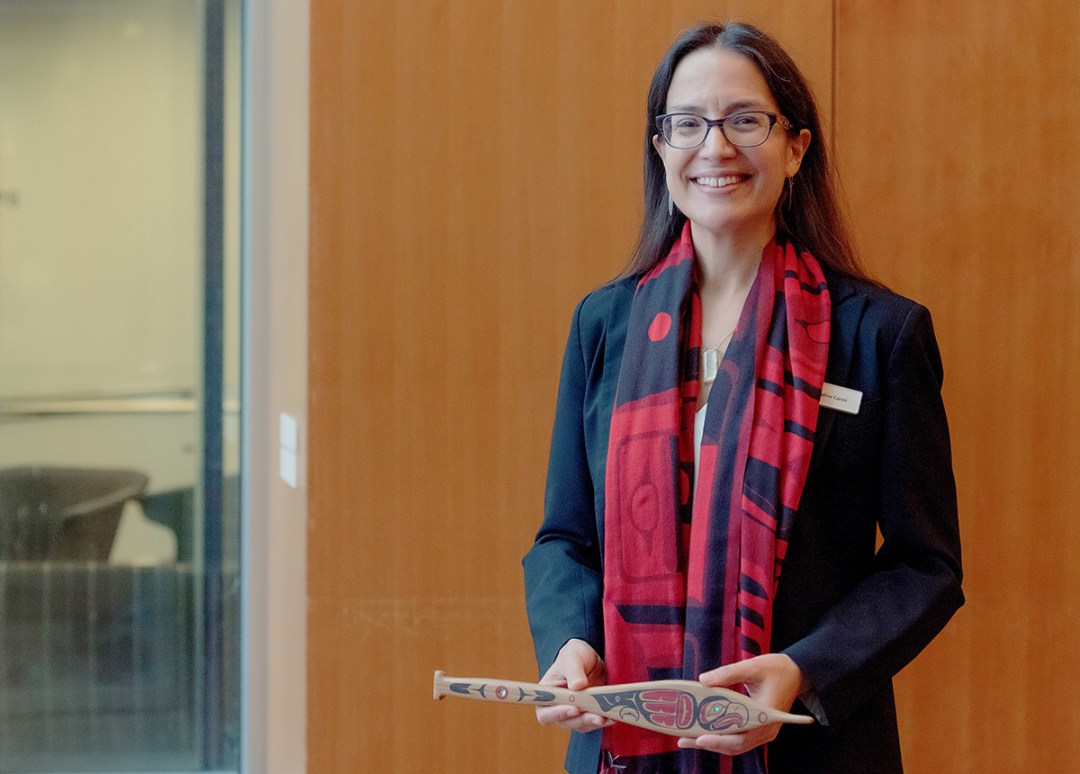
Nadine-Caron-FNHAC_1200x860.jpg“On Jan. 6, 2020, Nadine Caron, Canada’s first female First Nations general surgeon, was appointed to a newly created UBC position dedicated to improving cancer outcomes and wellness among Indigenous peoples.

Community members gathered to honour Dr. Caron as the founding First Nations Health Authority (FNHA) Chair in Cancer and Wellness at UBC and mark the start of the groundbreaking initiative aimed at transforming health for Indigenous peoples.”

More on Improving Indigenous Cancer Outcomes and Wellness via UBC Faculty of Medicine.

Models of Wellness

“Steven Manning remembers the night he realized he had become pessimistic about practicing medicine. One Wednesday at his family care practice in Williamston, N.C., he worked on electronic medical records well past 9 p.m. His wife and kids waited for him at home. He had seen about 30 patients that day but felt he hadn’t given a single one the highest level of care because the appointment times were too short. Yet the hospital and insurance companies kept pressuring him to see more patients a day, not fewer.

“I began to think, ‘I’m burned out. How did I get to this point? I don’t enjoy coming into work.’ ” It wasn’t too late to make a change. Within a year, Manning started a direct primary care practice, a model where patients pay a membership fee, negating the need for insurance billing. Without mounds of paperwork, he had time to do what he truly wanted: help patients.

“It brought back the joy of medicine I felt I was missing,” he says. “Before, I barely had time to address my patients’ diabetes, hypertension and heart failure, let alone spend time taking a mental and spiritual inventory.”

More on “From moms to medical doctors, burnout is everywhere these days” via The Washington Post.

#ChangingTheModel #PracticingWellness