Just in Time Teaching Tools App

“Northwell Health’s Office of Academic Affairs announced that it has launched its Just in Time Teaching Tools app to aid in the advancement of medical education knowledge and teaching skills of students, trainees and faculty. The app is now available in the Apple Store and in Google Play.
 
The new App uses the Just-in-time teaching (JiTT) model – a pedagogical approach that involves close interaction between instructors and their classrooms – to better provide timely and relevant teaching tips to trainees and faculty who need to actively engage with their instructors, specifically for those in the patient care setting.
 
‘The Just in Time Teaching Tools App allows for a more robust teaching and learning environment for everyone in the classroom,’ said the app’s developer, Alice Fornari, EdD, RDN, the associate dean of educational skills development at Zucker School of Medicine at Hofstra/Northwell and vice president of faculty development at Northwell. ‘The use of technology-enhanced learning platforms are feasible and accessible to learners across the continuum of medical education and are especially useful in geographically dispersed academic health systems. This new App makes that model even stronger.'”

Learn more about the app here.
Listen to the JiTT podcast here.

#MedEd #FacultyDevelopment #ClinicalTeaching

Seniors Care

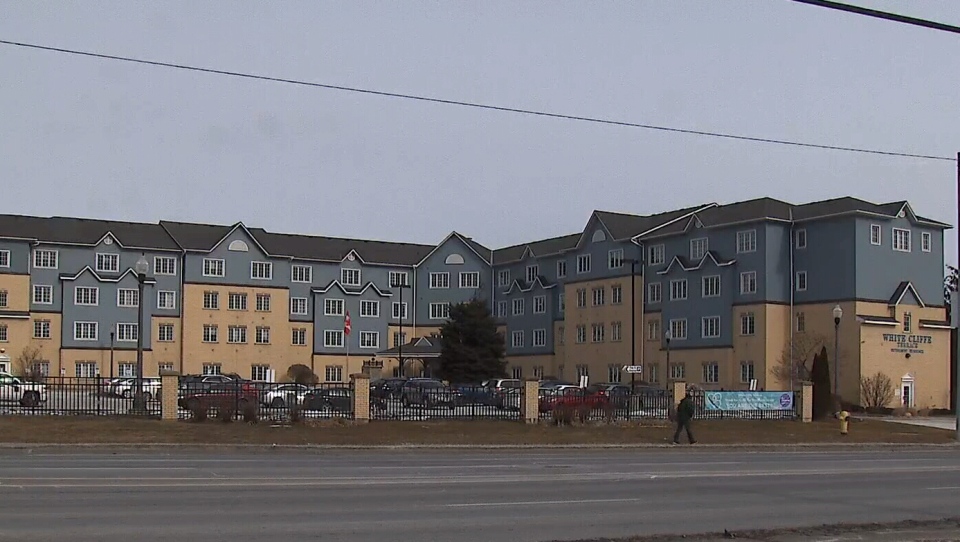
“Police say they are investigating reports that door handles were removed from the suites of residents at a retirement home in Courtice, Ont., amid the COVID-19 pandemic. Officers in Durham Region said the incident took place at White Cliffe Terrace Retirement Residence, and said someone came forward with information about the matter to police. In the letter, the company wrote that ‘a small’ number of door handles were removed within the assisted living household, where some of the home’s most vulnerable residents live.”

On Health Leadership, Advocacy, & Policy: It’s critical that family physicians responsible for overseeing the care of residents in these facilities periodically check in to determine the status of their patients. Forcible confinement is a crime.

More on Police investigate after door handles removed from suites of residents at Ontario retirement home amid pandemic via CTV News.

Where are Canada’s vaccines?

1808 cartoon showing Jenner, Thomas Dimsdale and George Rose seeing off anti-vaccination opponents.

“Professor Kohler says that instead of ‘hoarding’ vaccines, the Canadian government should have realized months ago that without any domestic manufacturing capability, it would be at the mercy of manufacturers and a fierce global competition for doses. ‘Having vaccine sovereignty is critical. Relying on exports for critical health needs doesn’t frankly make sense when we’re looking at trends of nationalism,’ she said. Canada signed a tentative agreement with US vaccine firm Novavax to produce millions of doses of its Covid-19 vaccine candidate at a facility in Montreal. But that production likely won’t begin until late this year at the earliest.”

Canada’s vaccine rollout stalls, confining seniors to their homes for months to come via CNN.

A Guide to Caring for Trans & Gender-Diverse Primary Care

The content of this illustrated guide is based on Sherbourne’s Guidelines for gender-affirming primary care with trans & non-binary patients authored by Dr. Amy Bourns, a family physician on Sherbourne’s LGBT2SQ Health Team.

Visit and learn more on My Guide to Caring for Trans and Gender-Diverse Patients via Rainbow Health Ontario.

Additional resources:
Improving gender-affirming care across BC via Trans Care BC.
Gender-affirming Care for Trans, Two-Spirit, and Gender Diverse Patient in BC: A Primary Care Toolkit via Trans Care BC.

Innovation UBC Research Impact Challenge

Explore how to generate impact from your research in Innovation UBC’s Research Impact Challenge.

Through a specialized series of education sessions, networking, and a set of mini-challenges you can leverage support from the Innovation UBC network to start moving your idea towards impact. Then pitch your idea at a networking event and compete to win a cash prize.

UBC researchers from all disciplines are invited to take part. Ideas might focus on offering solutions to key societal, health or economic challenges such as climate change, a post-pandemic society, digital security, food security or social justice. They could be technology-based, for example in artificial intelligence or advanced materials, community-focused or aimed at changing practice or policy.

Learn more and register here.

BC Infectious Diseases Symposium

Join us for this 6th annual conference, brought to you by Fraser Health, UBC, Surrey Memorial Hospital, and Vancouver Fraser Medical Program. Learn more here.

Dates: April 30, 2021 – May 1, 2021
April 30, 2021
Topics include: H. pylori: Who We Should Treat and Who We Shouldn’t; Pitfalls in Ordering Microbiology Tests; Updates in the Management of Community-Acquired Pneumonia in the Time of COVID; Updates on COVID-19; Update on HIV and Prep and PEP; Non-Pulmonary Tuberculosis; COVID-19 in Children.

May 1, 2021
Topic: In-depth case discussions of topics discussed on Day 1.

Quiz!

Image by Jacqueline Ashby

Knowing the natural environment that surrounds you and your patients is important in understanding how our environment influences our health and wellbeing. 

For example, in 2016, a three-year-old Victoria boy died after ingesting this type of mushroom. Name the world’s most poisonous mushroom now growing in BC?

Spider bites are often misdiagnosed. There are 5 species of black widow spiders in North America, north of Mexico. Name the species found in BC.

If your employment includes working in our BC mountains, you may come across 3 plants that are defined as “hazardous” by Worksafe BC. Name these 3 plants.

Leave your answers in the comment section below!

Have a great weekend,

Jacqueline

Environments by Design: Health, Wellbeing, & Place

“On January 1st, 2020, the world woke to news that a pneumonia outbreak in Wuhan, China, had been identified as a strain of coronavirus. By March, the World Health Organization would define it as a pandemic and the most serious global health threat on the planet. Under lockdown conditions the relationship between health and the spaces we inhabit became central.

The response from professionals and academics was immediate. Public health officials became consultants on ‘healthy buildings’, infectious disease specialists advised on planning codes, mental health experts became advisors on design strategy. Environmental psychologists collaborated on adapting homes for lockdown, sociologists re-examined behaviour in public space; teachers critiqued new spatial uses of the classrooms and, by extension, interior work environments of every type.

It is tempting to see this recent global concern about health and environments as new. The reality is, it has a long history. The public health profession was born from the housing conditions of the 19th century urban poor. ‘Sick building syndrome’ has been a concern for years. Demands for walkable neighbourhoods are long standing. Housing for the elderly, accessible design, and the broader healthy cities agenda globally, all pre-date COVID-19.

Seen in this light, this conference seeks to bring recent experiences and responses into dialogue with these longer standing areas of research into health, wellbeing and environments.”

Environments by Design: Health, Wellbeing, & Place
Place: Virtual 
Dates: 01-03 December, 2021
Learn more here.
Abstracts: June 25, 2021 (Round One)   |   November 5, 2021 (Round Two)

Sixth Annual Women’s Health Research Symposium

This event is being hosted by the Women’s Health Research Institute, one of only a few research institutes worldwide to focus exclusively on women’s health. With this event, we aim to celebrate the work of local women’s health researchers and offer a unique forum for networking and knowledge exchange. This event will engage researchers and relevant stakeholders from a wide range of disciplines in order to provide a forum where provincial leaders in women-focused health research can connect and collaborate. Because we will be holding the symposium virtually this year, we want to use this opportunity to showcase the amazing research taking place across British Columbia with representation from all corners of the province.

Wednesday, March 3, 2021
Virtual Conference
www.whri.org

More information on the program and speakers can be found here.

To register for the symposium, please click the following link.

We very much look forward to seeing you at the Symposium!