Refugee Health Care: Ukraine

KEY POINTS

  • Canada has launched a 3-year temporary visa pathway to shelter nationals fleeing from Ukraine, which may allow for more rapid approval and integration than regular refugee pathways, but may also leave gaps in access to essential medications and social and refugee protection services.
  • Clinical considerations for practitioners caring for people fleeing conflict in Ukraine include screening for noncommunicable and infectious diseases, anticipating mental health conditions and offering available vaccinations as needed.
  • Key gaps in the health system in Canada include lack of universal access to interpreters and lack of supports for coordination of care across health services; addressing these will require a multistakeholder approach and multisectoral partnerships.
  • Health care providers and civil society should take a trauma-and violence-informed care approach when engaging with people fleeing the war in Ukraine.

The war in Ukraine has driven global counts of displaced people and refugees to an all-time high, with numbers expected to continue to increase as a result of global instability and the impacts of climate change. As of May 25, 2022, 8 million people were internally displaced from Ukraine and more than 6.6 million had fled the country. Most have entered neighbouring Eastern European countries, but Western European countries, the United States and Canada have also accepted people fleeing from Ukraine. Canada has granted 112,035 temporary visas for Ukrainians; 241,620 people have applied; and as of May 18, 2022, 32,201 had arrived. Refugees fleeing traumatic situations face socioeconomic stressors and barriers to services after arrival and are more likely to transition to poor health than other immigrants, but this can be mitigated by supportive resettlement services. Although Canada has a long history of welcoming and integrating refugee groups and other humanitarian migrants, the concurrent arrival of Ukranians displaced by the war and refugees from Afghanistan into health systems strained by COVID-19 requires an examination of current refugee health practices and programs and demands creative solutions. We outline clinical considerations for health providers caring for people displaced by the war in Ukraine, based on available evidence and guidance, and discuss how Canada can strengthen its measures to provide health care to currently arriving refugees and prepare for future refugee waves.

The war in Ukraine and refugee health care: considerations for health care providers in Canada via CMAJ.
New Clinic Brings Cancer Care to Nunavut

“When Ellen King’s husband Eliyah was diagnosed with pancreatic cancer in 2020, it was just the start of a long health journey — one that would require the couple to travel far from home to Ottawa frequently and for long periods.

That’s because there are few oncologists — cancer specialists — who work in the North. The first time King and her husband travelled for Eliyah’s treatments, they left in December, and they didn’t return home until May.

‘It’s horrible, cause we have to leave our family, we have to leave our friends and worst of all we have to leave our fur baby — and the dog is Eliyah’s shadow and they do everything together,’ King said.

Starting this week, the couple’s stress over cancer treatments might lift at least a little — for the first time ever in Nunavut, an oncologist team will be offering follow-up care to some cancer patients at the Qikiqtani General Hospital in Iqaluit, in the territory’s first specialty cancer clinic.”

More on ‘It’s just better being at home’: New clinic brings cancer care to Nunavut via CBC.

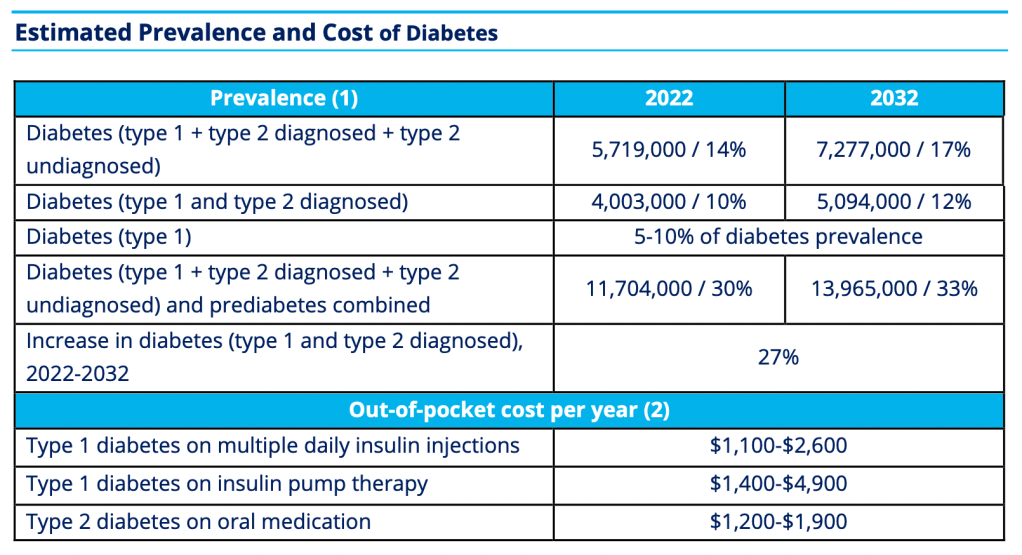
Diabetes in Canada

Diabetes Canada’s Recommendations to the Government of Canada
1. Implement a nationwide diabetes framework based on Diabetes 360°, aimed at achieving measurable improvements in diabetes outcomes and reducing its burden on Canadians and the health-care system.

2. Ensure fairness in access to the Disability Tax Credit and Registered Disability Savings Plan for Canadians living with type 1 diabetes.

3. Adopt a nationwide approach to reduce out-of-pocket costs for people living with diabetes and facilitate their achievement of better health outcomes while maintaining or improving access to evidence-based therapy.

4. Take a leadership role in implementing decision support tools for diabetes management by incorporating electronic medical records into health systems within federal jurisdiction and support provinces/territories to do the same.

More on Diabetes Canada: The Backgrounder via Diabetes Canada.

Curriculum & Assessment/Evaluation Resources

Greetings Residents!

Here are a series of resources that we will reference during tomorrow’s presentations on Curriculum and Assessment/Evaluation.

Curriculum
+ Domains of Care & Core Activities: Core Learning Outcomes via UBC (May 2020)
+ Residency Training Profile for Family Medicine and Enhanced Skills Programs Leading to Certificates of Added Competence via CFPC (May 2021)
+ CanMEDS-Family Medicine Indigenous Health Supplement via CFPC
+ UBC Family Medicine Curriculum Learning Outcomes & Repository

Assessment & Evaluation
We invite each of you to check out the newly updated Assessment and Evaluation section of the program website. It just went up today! A big thank you goes out to our former Assessment and Evaluation Portfolio Director Dr. Theresa van der Goes who worked very hard to revise the website content. As with every first iteration, feedback is welcome. Please email me if you have any issues.

The following sections have been added or updated: 
1. Resident Assessment
2. Field Notes
3. In-Training Assessment Report Process
4. Periodic Review
5. Benchmarks (Assessment Objectives for 2021 to 2022 Cohort and Assessment Objectives for 2022 to 2024 Cohort
6. Video Review
7. Decisions on Progress and Advancement
8. Resident in Difficulty

Best,
Jacqueline

The True Cause of Death

“I had met him at the Over 60 Health Center, a clinic founded by and created for the Gray Panthers, to serve the aging Black Panthers and others in the community. And now a short decade later, he is gone. A self-described lifelong revolutionary, a Black Panther and member of the Black August organizing committee, Roy’s life was filled with stories, and those stories culminating into his immediate cause of death—metastatic cancer. His other underlying medical issues: hepatitis C and a rare spinal cord condition that contributed to unrelenting functional decline. Thinking about his life and what led to this death, I reflected on the day he came to establish care with me. I remember learning of the years of fragmented care, the years of struggle finding safe and affordable housing, and I remember him adjusting to a progressive disability. Life took on twisty turns, and his care again became disrupted after my departure from the community health center, my own father’s death, the birth of my daughter, and then a global pandemic.

The expansion of telehealth allowed me to see him again a year ago, only to find out that he had been diagnosed with hepatocellular carcinoma, despite timely cancer screening and successful treatment for hepatitis C with new direct-acting antivirals. But as I lay awake thinking of events that occurred to him during the last decade that I knew him, and over the 7 decades that he lived, I realized that something glaring was missing from his cause of death at age 71. His stories and his revolutionary steadfastness made it clear. Systemic racism. It affected his ability to be housed safely, obtain medications, navigate his health care, receive appropriate care, and ultimately did contribute to his death.

Like many of my peers, I was never formally taught to write a death certificate.1 Instead, years ago, completing the death certificate worksheet was just one of many tasks given to me as an internal medicine resident. These ‘to-do’ items handed to interns and residents, at best came with formal teaching and training, and at worst came merely as a checklist of what to do when someone dies; pronounce the patient, call the family, call the medical examiner, call the organ donation network, fill out the worksheet. Check. Done. Next task.”

Read more on The True Cause of Death via JAMA.

Faculty / Resident Development Initiatives Grant Applications

Call for Proposals! The 2022-2023 Call for FRDIG Applications is now open!

The Faculty / Resident Development Initiatives Grant (FRDIG) is designed to support projects that aim to enhance the quality or scholarship of teaching in the Faculty of Medicine at UBC. This year’s call is sponsored by the Office of Faculty Development and the Office of Respectful Environments, Equity, Diversity & Inclusion.

Letter of Intent can be downloaded by clicking here!

Important Dates:

  • Now: Applications are open for Letter of Intent
  • July 31, 2022: Letter of Intent due by 11:59pm
  • August 12, 2022: Applicants invited to the full application stage 
  • September 11, 2022: Full Application due by 11:59pm
  • September 30, 2022: Successful/all applicants are notified

This year, there are two streams for funding:

  • General stream
  • Equity, diversity, and inclusion stream

For details, visit here.