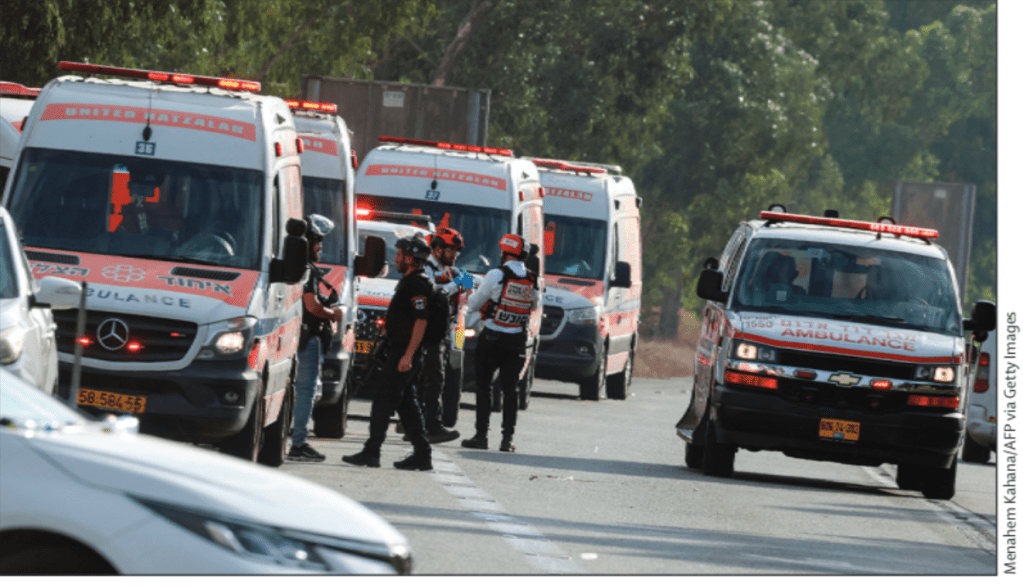
“Under the circumstances, I feel compelled to speak out. As health professionals, we are committed to humanity and must condemn and fight these crimes against humanity.” ~ Aron Troen, Director of Hebrew University’s Nutrition and Brain Health Laboratory.
Read more on Israeli and Palestinian Doctors Speak Out: Medics and health workers describe how they have been affected by Hamas’ attacks on Israel and the response in Gaza via The Lancet.
“Canadian mothers face a high rate of severe, long-term injuries from the use of forceps or vacuum in childbirth, and urgent action is needed to reduce it, the authors of a new analysis paper say.
Operative vaginal delivery (OVD) refers to using forceps or vacuum in the second stage of labour when the cervix is fully dilated. Health-care professionals may need to use the instruments if labour stalls or if the fetus is at risk.
In an article published Thursday bymedical journal BMJ, epidemiologist Giulia Muraca, an assistant professor in obstetrics and gynecology at McMaster University, and her co-authors note that Canada has the highest rate of maternal trauma during forceps- and vacuum-assisted deliveries out of 24 high-income countries. Canada’s injury rate was 16 per cent, compared to an average rate of 5 per cent for the group.
The paper says that of the more than 35,000 single infants born after OVD in Canada, one in four attempted forceps deliveries and one in eight attempted vacuum deliveries resulted in obstetric trauma — most commonly, obstetric anal sphincter injury, which involves severe tearing to the perineum.”
Read more on Severe childbirth injuries from forceps, vacuum ‘unacceptably high’ in Canada, research shows via CBC.
Question What is the reliability of chatbot-generated responses to physician-generated medical queries?
Findings In this cross-sectional study of 33 physicians across 17 specialties who generated 284 medical questions, chatbot generated predominantly accurate information in response to these diverse medical queries as judged by these academic physician specialists. The median accuracy score was 5.5 (between almost completely and completely correct), and the median completeness score was 3.0 (complete and comprehensive).
Meaning Chatbot shows promise as a tool for providing accurate medical information in clinical settings.
Read more here on Accuracy and Reliability of Chatbot Responses to Physician Questions via JAMA Network.
Background: To train physicians who will respond to patients’ evolving needs and expectations, medical schools must seek educational strategies to foster the development of non-technical competencies in students. This article aims to synthetize studies that focus on patient engagement in medical training as a promising strategy to foster the development of those competencies.
Methods: We conducted a rapid review of the literature to synthetize primary quantitative, qualitative and mixed studies (January 2000-January 2022) describing patient engagement interventions in medical education and reporting non-technical learning outcomes. Studies were extracted from Medline and ERIC. Two independent reviewers were involved in study selection and data extraction. A narrative synthesis of results was performed.
Results: Of the 3875 identified, 24 met the inclusion criteria and were retained. We found evidence of a range of non-technical educational outcomes (e. g. attitudinal changes, new knowledge and understanding). Studies also described various approaches regarding patient recruitment, preparation, and support and participation design (e.g., contact duration, learning environment, patient autonomy, and format). Some emerging practical suggestions are proposed.
Conclusion: Our results suggest that patient engagement in medical education can be a valuable means to foster a range of non-technical competencies, as well as formative and critical reflexivity. They also suggest conditions under which patient engagement practices can be more efficient in fostering non-instrumental patient roles in different educational contexts. This supports a plea for sensible and responsive interventional approaches.
Read more on Fostering the development of non-technical competencies in medical learners through patient engagement: a rapid review via CMEJ.
“The overall objective of World Mental Health Day is to raise awareness of mental health issues around the world and to mobilize efforts in support of mental health.
The Day provides an opportunity for all stakeholders working on mental health issues to talk about their work, and what more needs to be done to make mental health care a reality for people worldwide.”
An Ottawa walk-in clinic already under scrutiny is now being accused of falsely posting the biographies of at least two doctors who have never worked for the clinic on its website.
Dr. Sonam Maghera shared screenshots with CBC of the South Keys Health Center’s (SKHC) website section of team members, which displayed her name and a description matching the bio posted on her practice’s website word for word.
According to Maghera, she has never had any contact whatsoever with the South Keys clinic.
“I was deeply concerned because I didn’t work there … and they could have potentially been seeing patients under my licence,” she said.
The physician, who specializes in sports medicine, became aware of the problem last week after a patient contacted her clinic concerned that Maghera had left her existing practice with the Ottawa Orthopedic Centre.
Read more on Doctors discover their bios being used by clinic despite never working there via CBC News.
Abstract: Background: Breast cancer-related lymphedema (BCRL) after primary therapy is a common condition, causing physical and psychological distress. Decongestive lymphedema therapy (DLT) using multi-layered compression bandages is an effective treatment. We conducted a randomized controlled trial evaluating the use of a specific mobilizing bandage (Mobiderm®) on lymphedema volume reduction during the intensive phase of DLT.
Methods and Results: Fifty female BCRL patients were randomized to receive either conventional multi-layered bandages or mobilizing bandaging by using Mobiderm. Affected limb volume and excess volume were evaluated at baseline (D0) and after 15 days. The primary outcome was change in affected limb volume after adjustment for baseline. Symptom scores were evaluated by visual analogue scale (VAS); safety and tolerability were also assessed. Baseline characteristics were comparable. Affected limb volume reduction was observed in both study groups after 15 days: by 19.0% in the Mobiderm arm and 8.6% in controls (adjusted values). The between-group mean difference in adjusted volume reduction at day 15 was 256 mL (95% confidence interval [CI], 92.5 to 421.3 mL; p = 0.003) favoring Mobiderm. Reductions in excess volume of 57.3% (Mobiderm) and 25.1% (controls) were observed (adjusted values); with between-group mean difference in adjusted excess volume of 220.2 mL (95% CI, 69.3 to 371.3 mL; p = 0.006) favoring Mobiderm. Pain/heaviness VAS scores fell significantly in both groups, with mean reductions of 1.84 (Mobiderm) versus 0.83 (control; p = 0.001). Both regimens were well tolerated.
Conclusion: The use of Mobiderm in multilayer compression bandaging shows benefit in lymphedema reduction and in alleviating functional symptoms/pain in patients with BRCL.
Read more on Safety and Efficacy of a Mobiderm Compression Bandage During Intensive Phase of Decongestive Therapy in Patients with Breast Cancer-Related Lymphedema: A Randomized Controlled Trial via Lymphatic Research and Biology.
Resident Assessment Learning Tools. Designed by Dr. Vincent Wong, Dr. Jacqueline Ashby, and Lindsay Gowland. Project funded by the UBC Faculty of Medicine.
As our department co-lead for Assessment & Evaluation, I often receive questions as to the differences between field notes and in-training assessment reports. The infographic above attempts to easily explain how these two instruments are used in our program. If you have any further questions, please feel free to reach out to me at jacqueline.ashby@ubc.ca or visit our A & E website here.
“As a Collective of Indigenous Peoples and allies, this multi-sector partnership uses culturally safe ways to foster respectful anti-racist, non-discriminatory health care provision and policy change.
The Collective is guided by decolonizing and Indigenous community-led approaches for wholistic Traditional and Western health and wellness health equity research that honors locally distinctive knowledge, experiences, and protocols that benefit all generations. As a Collective of Elders, Knowledge Keepers, Healers, community members, youth and young adults across several Friendship and Métis Centres in the BC Interior, cultural safety education and environments are defined according to community-identified needs and ways of knowing and doing.
In response to the Truth and Reconciliation and In Plain Sight reports, our intention is to recruit, mentor and retain Indigenous undergraduate and graduate students, co-develop culturally safe and relevant curricula, and engage in research inclusive of Indigenous knowledge, philosophies and perspectives.
Current projects include urban, rural/remote health promotion and chronic disease prevention and self-management and urban Indigenous youth/young adult identity and cross-generational learning/relearning about Traditional wellness.”
Learn more on the Indigenous Health Promotion and Cultural Safety Lab via UBC Faculty of Health and Social Development.
“Despite high rates of harm attributable to alcohol use itself and the associated marginalization of illicit drinkers in Vancouver’s Downtown Eastside (DTES), alcohol-specific harm reduction services there are under-resourced and highly disconnected from one another. In response to these conditions and high rates of death amongst its membership, the Eastside Illicit Drinkers Group for Education, an affiliate group of the Vancouver Area Network of Drug Users, convened a regular meeting of stakeholders, termed a ‘community of practice’ in 2019 to bring together peers who used beverage and non-beverage alcohol, shelter and harm reduction service providers, public health professionals, clinicians, and policymakers to improve system-level capacity to reduce alcohol-related harm.
The discussions that followed from these meetings were transformed into the Vancouver Alcohol Strategy (VAS), a comprehensive, harm reduction-oriented policy framework for alcohol harm reduction in the DTES.
This article highlights our experiences producing community-led alcohol policy through the VAS with specific attention to the ways in which people who use alcohol themselves were centred throughout the policy development process. We also provide summary overviews of each of the VAS document’s 6 thematic areas for action, highlighting a sampling of the 47 total unique recommendations. Historically, people who use non-beverage alcohol and whose use of alcohol in public spaces is criminalized due to housing precarity and visible poverty have been excluded from the development of population-level alcohol policies that can harm this specific population.
The process of policy development undertaken by the VAS has attempted to resist this top-down approach to public health policy development related to alcohol control by intentionally creating space for people with lived experience to guide our recommendations.
We conclude by suggesting that a grassroots enthusiasm for harm reduction focused policy development exists in Vancouver’s DTES, and requires resources from governmental public health institutions to meaningfully prevent and reduce alcohol-related and policy-induced harms.”
Learn more on Vancouver’s Alcohol Knowledge Exchange: lessons learned from creating a peer-involved alcohol harm reduction strategy in Vancouver’s Downtown Eastside via Harm Reduction Journal.






 Family Medicine Residency Site: Abbotsford-Mission