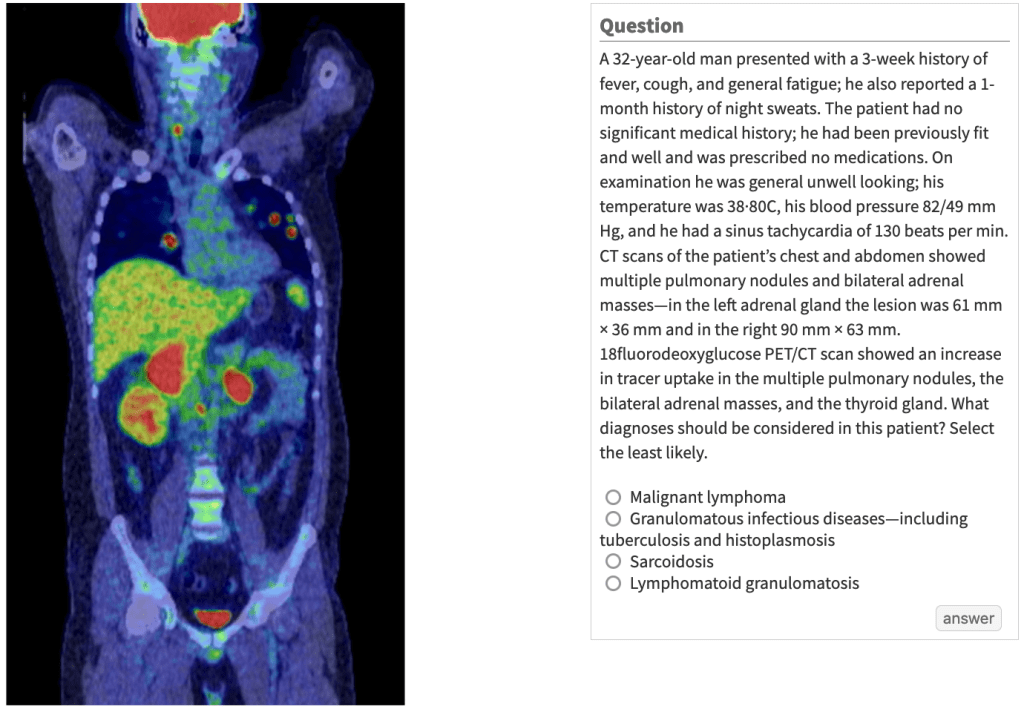

Echoes of Conflict

“The conflict in Gaza presents distinct difficulties that significantly impact the psychological well-being of healthcare workers (HCWs) making it imperative to understand and address their mental health needs in this specific context. This article highlights the unique challenges of the ongoing Gaza conflict and its critical impact on the mental health of HCWs. Observations in the paper revealed that HCWs in Gaza face extraordinary challenges, including the targeting of medical facilities, severe shortages of medical supplies, and the ethical dilemmas of providing care in such constrained conditions. These factors contribute to heightened stress, anxiety, and a pervasive sense of helplessness among HCWs.
The paper also notes the compounded emotional burden due to the loss of colleagues and the need to navigate complex interactions with patients’ families under extreme conditions. Furthermore, the lack of basic needs like adequate nutrition and safe drinking water for HCWs themselves further compromises their ability to provide care effectively, contributing further to worsened mental health. The paper also notes the lack of sufficient media coverage and support for these workers, contributing to a sense of isolation and neglect.
HCWs in Gaza find themselves in a uniquely challenging situation, one that is marked not only by the immediate stresses of the ongoing conflict but also by the deep-seated psychological scars from past wars. The circumstances in Gaza are clinically relevant as they directly affect the HCWs’ ability to provide care and maintain their well-being. These findings highlight the need for targeted mental health interventions and support tailored to the specific challenges faced by HCWs in Gaza. Addressing these issues is crucial for their well-being and ability to provide effective healthcare under such demanding and traumatic circumstances.”
Learn more on the “Echoes of conflict: the enduring mental health struggle of Gaza’s healthcare workers” via Conflict & Health Journal.
Image source: Why this neurosurgeon chose to stay in his beloved Gaza — and why he left via NPR.
Universal Free School Meals

Question What is the association between universal free school meals (UFSMs) and school and student outcomes in US schools?
Findings The search identified 2784 records, with 6 studies included, representing more than 11 000 elementary, middle, and high schools. Nonrandomized intervention studies performed difference-in-difference or rate ratio analysis to investigate CEP participation rates, attendance, anthropometrics, and/or suspensions. CEP was associated with increased lunch (3 studies; moderate certainty) and breakfast (1 study; very low certainty) participation. School attendance was unchanged or improved in schools with CEP compared with schools without UFSM (2 studies; low certainty). CEP was associated with lower obesity prevalence (1 study; very low certainty) and fewer suspensions (1 study; very low certainty). Reasons for downgrading the certainty ratings included indirectness (data not fully representative of the United States) and inconsistency (small number of studies limiting ability to assess consistency). Despite the limitations, the evidence reflected well-designed longitudinal intervention studies appropriate for decision-making.
Meaning In this systematic review, UFSMs were associated with increased meal participation, no or slight improvements in attendance, and decreased obesity prevalence and suspension rates; certainty of evidence was moderate for lunch participation and low or very low for other outcomes. Studies did not report several important outcomes, such as diet quality and food security, suggesting the need for more high-quality research encompassing policy-relevant indicators.
Read more on Universal Free School Meals and School and Student Outcomes via JAMA.
Violence Against Female Health Workers

“On the night of Aug 8, 2024, a 31-year-old female trainee doctor was raped and murdered towards the end of a 36-h shift at a hospital in Kolkata, India. A male civic volunteer has been arrested for the crime, the shocking nature of which motivated the Indian Medical Association (IMA) to call for a national strike. Much of the coverage has focused on the incident as an example of attacks on health workers. Globally, health workers experience high rates of workplace violence, with up to 62% of health workers suffering physical violence or non-physical violence at some point. But crucially, this was not only an attack on a doctor; it was also an attack on a woman. The misogynistic nature of the crime has thus far been underappreciated.
Violence against female health workers can manifest in many ways. Rape and murder represent extremes on the spectrum of workplace violence, defined by WHO as ‘incidents where staff are abused, threatened or assaulted in circumstances related to their work’. Non-physical violence includes verbal abuse, threats, bullying, discrimination, and sexual harassment. Although reporting is often patchy, a scoping review found that 64% of studies reported a higher prevalence of all forms of workplace violence for women than for men in the health workforce. There are myriad reasons why health workers are particularly vulnerable to violence. Hospitals can be highly stressful and emotive environments. Patients and visitors can be at their most vulnerable. Behaviour can be influenced by mental health or substance use issues, and work in the community can be highly precarious. Staff work unsociable hours under enormous pressure. Women make up around 67% of global employment in the health and care sector, so they are statistically at greater risk of experiencing workplace violence. But this fact is a gross oversimplification of the situation.”
Read more on The structural roots of violence against female health workers via The Lancet.
Image source “Murdered Indian doctor’s father speaks out: ‘All I can do now is get her justice’” via The Guardian.
The Power of Machine Learning

“Machine learning hit the public awareness after spectacular advances in language translation and image recognition. These are typically problems of classification — does a photo show a poodle, a Chihuahua or perhaps just a blueberry muffin? Surprisingly, the latter two look quite similar (E. Togootogtokh and A. Amartuvshin, preprint at https://arxiv.org/abs/1801.09573; 2018). Less widely known is that machine learning for classification has an even longer history in the physical sciences. Recent improvements coming from so-called ‘deep learning’ algorithms and other neural networks have served to make such applications more powerful.”
Read more on The Power of Machine Learning via Nature Physics
“Recently, artificial intelligence and machine-learning algorithms have gained significant attention in the field of osteoporosis [1]. They are recognized for their potential in exploring new research fields, including the investigation of novel risk factors and the prediction of osteoporosis, falls, and fractures by leveraging biological testing, imaging, and clinical data [2]. This new approach might improve the performance of current fracture prediction models by including all possible variables such as the bone mineral density (BMD) of all sites as well as trabecular bone score (TBS) data [3]. Also, the new model could suggest novel factors that could influence the fracture by calculating all variables through a deep learning network. Although there are a few studies in osteoporosis and fracture prediction using machine learning [4–6], a fracture-prediction machine-learning model with a longitudinal, large-sized cohort study including BMD and TBS has not been developed [3].”
Read more on Clinical Applicability of Machine Learning in Family Medicine via Korean J Family Medicine.
JAMA Podcast: Long COVID in Children

“To address the need to characterize long COVID in children and adolescents, the National Institutes of Health funded a pediatric program in the Researching COVID to Enhance Recovery (RECOVER) Initiative. Editorialist Suchitra Rao, MBBS, MSCS, University of Colorado School of Medicine and Children’s Hospital Colorado, Aurora, discusses this and more with JAMA Senior Editor Tracy A. Lieu, MD, MPH.”
Listen and learn more on Long COVID in Children via JAMA.
Navigating Climate Change: Perspectives from Indigenous Providers
Overview: Join this panel of Indigenous experts on climate change and planetary health to discuss impacts on Indigenous and non-Indigenous peoples’ health and practical steps to support their well-being.
By the end of this session, you will be able to:
- Describe how climate change impacts Indigenous peoples’ health, communities, and traditional lifestyles.
- Apply practical steps to support Indigenous health and resilience in the face of climate change.
- Engage your Indigenous patients and their families in communication around climate change and planetary health impacts on their well-being.
- Access resources on planetary health and climate change for Indigenous and non-Indigenous providers and patients.
Presenters: Elder Roberta Price, Miles Marchand (MD FRCPC, Syilx First Nation), Shannon Waters (Public Health & Preventive Medicine Specialist), Viola Brown (Nurse Practitioner), & Ojistoh Horn (Family Physician).
Please register here.
MPox Cases Reported
“The declaration of mpox as a public health emergency of international concern following years of precautions against COVID-19 has many people worried.
Here are some answers from Canadian infectious disease specialists and public health authorities on what this all means.
On Aug. 14, Dr. Tedros Adhanom Ghebreyesus, the director general of the World Health Organization, made the declaration. He said a coordinated international response is essential to stop the outbreak in Congo, and to save lives, after the mpox virus surged across several African countries.
For governments around the world, the declaration represents a rallying cry to better monitor and respond to the threat by preventing, diagnosing and treating the infection.
But an individual’s risk of contracting mpox, which causes painful rashes, varies. People with mpox can also experience fever, enlarged lymph nodes, muscle aches, headaches, and respiratory symptoms.”
Read more on Mpox is now a global public health emergency. Do I need to worry? via CBC News.
Rural Family Medicine Residency Program
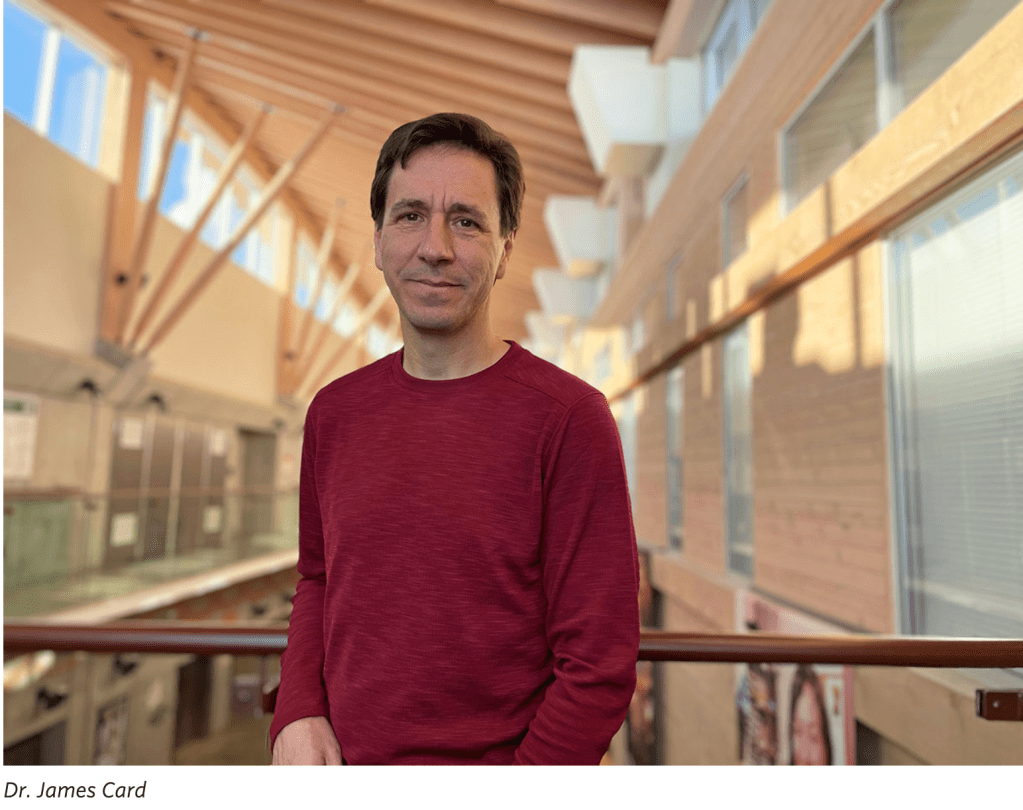
“It was a pivotal moment in James Card’s life — one that he reflects on often. After a challenging day of tree planting near MacKenzie, in northern British Columbia (B.C.), he piled into his company truck and flicked on the radio. The news segment was covering a health care rally in nearby Prince George, where thousands of people were protesting the lack of doctors in the North.
Card found himself listening intently. He loved the North, but he needed a change. He wanted to do something different, something that would give him the meaning and stability he craved.
As he drove through the rugged and beautiful landscape, listening to the broadcast, he decided he would become a doctor.
In 2004, UBC began to expand and distribute its MD undergraduate program with support from the Government of B.C. and its academic partners. The expansion stretched across the province, reaching regional, rural, remote and Indigenous communities to help meet the growing healthcare needs of British Columbians.
When UBC opened the doors to the new Northern Medical Program (NMP), which is delivered in partnership with the University of Northern British Columbia in Prince George, Card applied and was accepted.
His student number was 0001.”
Read more on UBC Faculty of Medicine launches new rural family medicine residency program via UBC Faculty Medicine News.