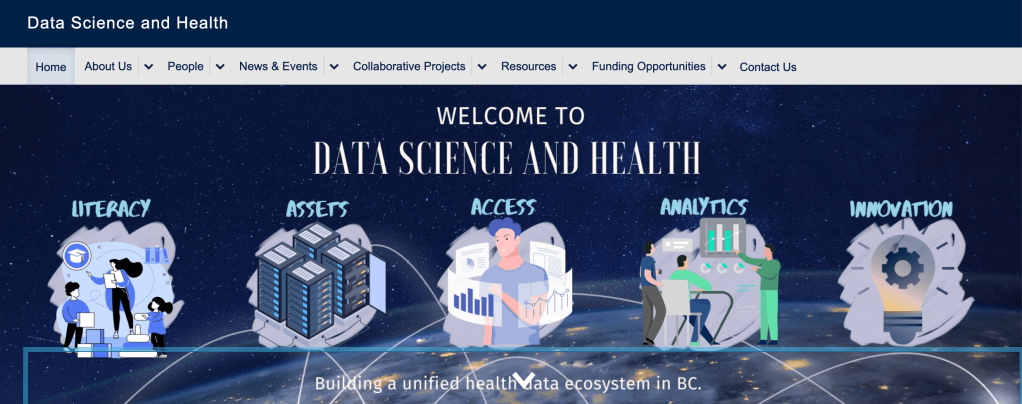
“The Data Science and Health (DASH) Cluster is building a system to link health research data in BC by enhancing the availability and use of health data to improve diagnosis, treatment, and prevention of disease, and enable computational tools that speed discovery of new knowledge, optimizing health outcomes for all BC residents.
The UBC Micro-certificate in Health Data Analytics: Opportunities and Applications is a new program developed by the UBC DASH Cluster and the Data Science Institute for health care professionals and researchers in the health sector with exposure to health data, either clinical or operational. Designed by industry and academic experts, the micro-certificate consists of three four-week online courses, combining self-paced independent study with weekly live online sessions.
In this information session, get an overview of the program, the curriculum, learning outcomes, and what to expect. Meet the program instructors to learn about how you can apply your learning to benefit your organization or your personal endeavours. There will be plenty of time for your questions!”
Colorized electron micrograph showing malaria parasite (right, blue) attaching to a human red blood cell. The inset shows a detail of the attachment point at higher magnification. Credit: NIAID
“The R21/Matrix-M™ malaria vaccine represents the start of a global effort to eradicate malaria with the addition of vaccine to other measures and highlights Oxford’s commitment to addressing global health challenges in regions heavily affected by the disease.
R21 is the second malaria vaccine to be recommended by WHO for children living in endemic areas. Along with the earlier WHO recommendation of the RTS,S vaccine, there is now many-fold greater vaccine supply for Africa where the disease kills nearly half a million children annually. The rollout of both vaccines is funded by Gavi, the Vaccine Alliance.
Integrating these vaccines into national malaria control plans, along with other interventions, aims to drastically reduce childhood mortality and strengthen the fight against malaria.”
Read more on Shipment of R21 malaria vaccine to Central African Republic marks latest milestone for child survival via University of Oxford.
Learn more about detecting, navigating and discussing health misinformation
June 27 (Thu) | 6:30–8 p.m. PDT | Webinar Audience: all health professionals Overview: Gain insight on how to help patients navigate health misinformation and get access to recommended resources to help clinicians and patients assess the reliability of health information. Our panellists are available to share their knowledge and experience — don’t miss this opportunity to get your questions answered. Learn more here.
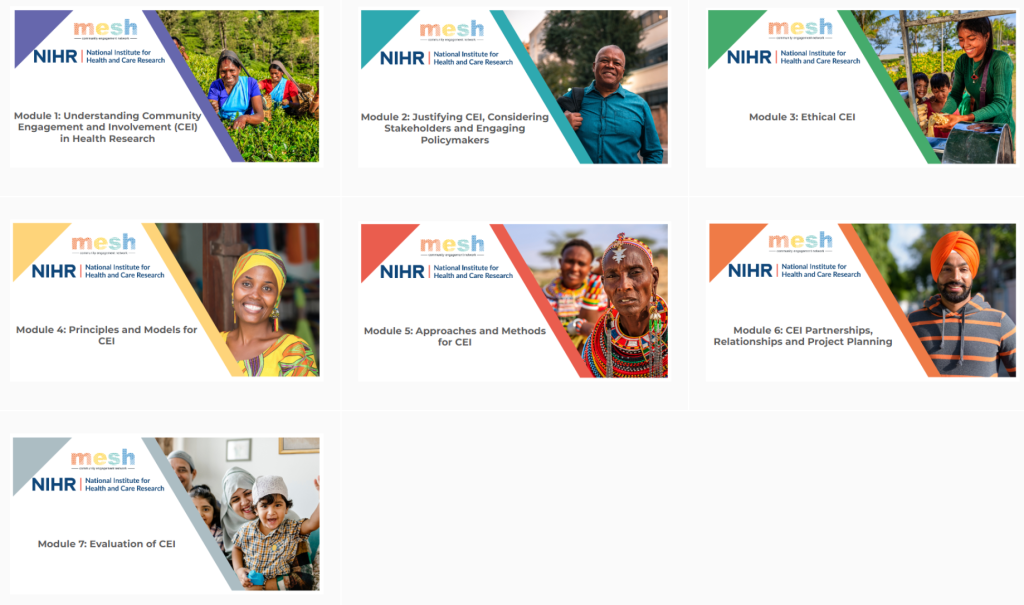
Hello Team! I wanted to introduce you to a series of free online modules focused on community engagement and involvement in global health research. This course was designed by Dr. Alun Davies, a Research Fellow at Green Templeton College, University of Oxford. “The aim of this course is to develop learners’ understanding and knowledge of CEI, supporting their ability to plan and design ethical and impactful CEI in health research. For the purposes of this course, we use the term CEI to mean:
‘An active involvement of the community throughout the research process, using participatory approaches and working in partnership with all key stakeholders. CEI includes a range of activities which involve interactions between researchers, community members and stakeholders, aimed at improving the relevance, value and conduct of health research.’
In progressing through the modules, learners will gain a better understanding and appreciation of the terms used for CEI, the broad range of CEI aims and approaches, and the overall value of CEI. CEI is an essential and rewarding component of research, and, as the course authors, we hope that you enjoy learning about it through this course.
The 7 course modules have been authored and peer reviewed by specialists in the area of CEI.
Who is this course for? This course is open to all with an interest in CEI in health research including:
Early career CEI practitioners who want to learn about the theory and practice of CEI
Experienced CEI practitioners who feel they want to affirm good practice
Researchers with an interest in learning about CEI, or who want to start planning a CEI strategy
Research funders and managers
Learners in the Global North with an interest in patient and public involvement (PPI) and community engagement
Course learning outcomes: Learners completing this course will be able to:
Explain how CEI is understood and applied in health research
Identify why CEI is important
Understand ethical principles that support CEI
Describe different CEI methods and approaches, and have the tools to decide which approach is the most appropriate and effective for their context
Plan for, and evaluate, CEI activities
How to use the course: The different modules of the course can be undertaken in any order. After successful completion of each end-of-module quiz, a certificate can be obtained. Alternatively, depending on your needs, you can select individual modules to complete.
Certification: An electronic certificate of completion can be obtained for each module once the corresponding module quiz is completed. You will need to score 80% or more to receive a certificate.
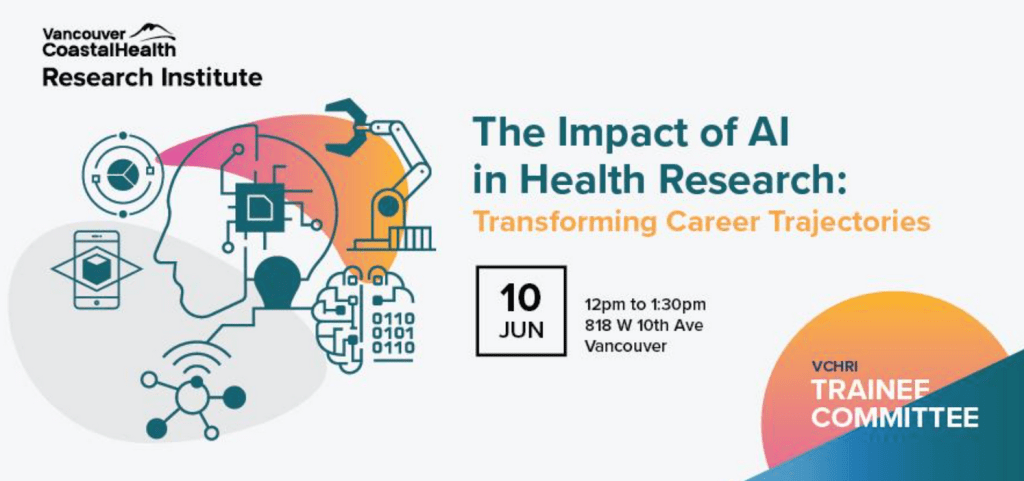
The Impact of AI in Health Research: Transforming Career Trajectories June 10, 2024, 12:00 pm to 1:30 pm
Looking for artificial intelligence (AI)-related opportunities in academia or industry? Join the VCHRI Trainee Committee for an insightful exploration of how professionals utilize AI to advance health research and enhance health care delivery.
An expert panel of speakers will share their experiences, addressing misconceptions and answering questions. Pizza and light refreshments will be provided.
Event is in-person at Paetzold Auditorium, Vancouver General Hospital.
About the speakers:
Dr. Teresa Tsang, executive director at VCHRI and director of the University of British Columbia (UBC) AI Echo Core Lab
Dr. Purang Abolmaesumi, professor in the Department of Electrical and Computer Engineering at UBC
Negin Farivar, chief technology officer and co-founder of SnapCyte Solutions Inc.
Dr. Ilker Hacihaliloglu, assistant professor in the Department of Radiology at UBC
Dr. Aline Talhouk, assistant professor in the Department of Obstetrics and Gynecology at UBC and director of data science and informatics at OVCARE
Dr. Kenneth To, chief executive officer of ViewsML
Learn more about detecting, navigating and discussing health misinformation
June 27 (Thu) | 6:30–8 p.m. PDT | Webinar Audience: all health professionals. Overview: Gain insight on how to help patients navigate health misinformation and get access to recommended resources to help clinicians and patients assess the reliability of health information. Our panellists are available to share their knowledge and experience — don’t miss this opportunity to get your questions answered.
“Ten years ago, Dr. Jeff Lichtman — a professor of molecular and cellular biology at Harvard University — received a small brain sample in his lab.
Although tiny, the 1 cubic millimeter of tissue was big enough to contain 57,000 cells, 230 millimeters of blood vessels and 150 million synapses.
‘It was less than a grain of rice, but we began to cut it and look at it, and it was really beautiful,’ he said. ‘But as we were accumulating the data, I realized that we just had way, way more than we could handle.’
Eventually, Lichtman and his team ended up with 1,400 terabytes of data from the sample — roughly the content of over 1 billion books. Now, after the lab team’s decade of close collaboration with scientists at Google, that data has turned into the most detailed map of a human brain sample ever created.”
Read more on Google and Harvard unveil most detailed ever map of human brain via CNN.
“Almost 600 people took the time to nominate family physicians from across the province – another record-breaking year! We heard stories of gratitude, compassion, kindness, advocacy, education and community engagement.
While they were all individual experiences, they all had one thing in common: unwavering support for patients and the specialty of family medicine.
Pictured on the right: Dr. Laura Phillips, an exemplary family physician based in Victoria, has, in the words of one her nominators, “lead by example and demonstrated outstanding leadership and advocacy skills while being a role model for all whom she interacts with.” Graduating from UBC in 2001 and completing her Family Medicine residency in Victoria, Dr. Phillips embarked on a journey of service that has positively impacted her patients, colleagues and communities.
Thank you to each and every nominator and to all the family physicians who continue to have a profound impact on the health and well-being of British Columbian residents. Please join us in celebrating this year’s BCCFP Award Recipients!“
Read more here on BC College of Family Physicians 2024 Award Recipients via BCCFP.
Kate Wahl, a PhD student in the UBC faculty of medicine’s department of obstetrics & gynaecology, wants to help Canadians navigate that decision. She’s developed It’s My Choice, Canada’s first interactive website aimed at helping people identify the abortion option that best fits their values and circumstances.
Hosted by the Society of Obstetricians and Gynaecologists of Canada (SOGC), the tool integrates the best available evidence on the two methods of abortion available in Canada: the abortion pill and abortion procedure. Users learn what to expect from each option, and after completing a secure and anonymous questionnaire, receive a personalized recommendation designed to support conversations with their healthcare provider.
Wahl developed It’s My Choice together with her UBC supervisor Dr. Sarah Munro, Dalhousie University’s Dr. Melissa Brooks, and a team of researchers, clinicians and patient partners. We spoke with her about the new resource.e
Read more here on UBC student launches ‘It’s My Choice’ to empower abortion care decisions via Faculty of Medicine.
This will be a 2 hour virtual workshop on the evening of Monday, June 10th. It is geared for physicians who have prior POCUS training and want a refresher on their POCUS teaching skills. There is no cost to register, and eligible faculty will be paid at the academic teaching rate for their time as well as a dinner per diem to thank you for your time. Please see attached invite for more details.




 Family Medicine Residency Site: Abbotsford-Mission