
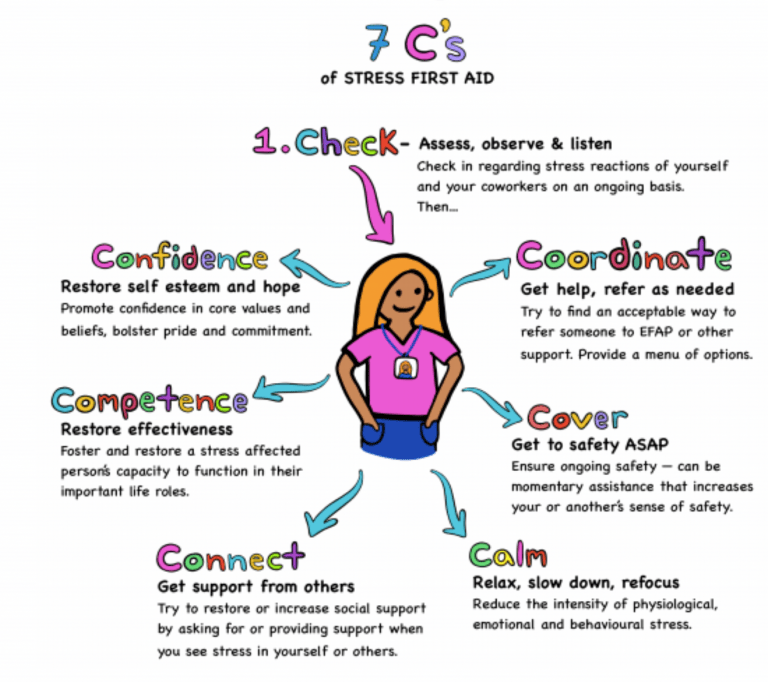
“This model is not linear — we don’t need to work through all the steps. The key is to ask, ‘What is needed right now?’ For example, I observe that my colleague is anxious. Perhaps I can ask how they could feel more safe, calm, and competent to manage the distress.
It’s not easy to train in new skills to support our mental health when the race has already begun. We are all going to cycle out of the green zone many times, regardless of our practice of self-care. We need each other right now to provide peer support to help each of us notice when we’re moving to the right of the stress continuum and pause or pace ourselves so we can complete this marathon together.”
Learn more here on Stress First Aid as a form of Peer Support (This Changed My Practice) by UBC’s Dr. Joanna Creek.





 “’Efforts to prevent the spread of the COVID-19 virus have resulted in extreme social exclusion for people in prison, which negatively and unfairly impacts the mental health and wellbeing for people inside,’ explains project co-lead Kelsey Timler, a PhD student in interdisciplinary studies at UBC. ‘Since mid-March, people in prison have not had access to in-person visits from friends, family and religious and spiritual leaders, and almost all programming has been cancelled. Time passes very slowly, which adds to the stress and anxiety of being incarcerated during a global pandemic. COVID-19 has exacerbated pre-existing inequities and finding ways to support community building and belonging is incredibly important right now.’
 Family Medicine Residency Site: Abbotsford-Mission