“Parkour enthusiasts need look no further than up in the trees for inspiration. Squirrels’ aerial acrobatics make the rodents masters of the form, a new study suggests.
A detailed look at how squirrels navigate narrow branches that bend and sway with the wind — where the smallest error could spell death — shows that the rodents make split-second calculations to balance trade-offs between branch bendiness and the distance between tree limbs. And for particularly tricky jumps, squirrels improvise parkour-style moves in midair to stick the landing, researchers report in the Aug. 6 Science.
This study is ‘a great example of how cool ‘normal’ animals can be in their biomechanics,’ says Michelle Graham, a graduate student in biomechanics at Virginia Tech in Blacksburg who was not involved with the research. ‘We’ve all seen squirrels do crazy stuff in nature, but no one ever pays any attention to it.’
As someone who studied biomechanics…I do! 🙂
More on Squirrels use parkour tricks when leaping from branch to branch via ScienceNews.
How does the study of biomechanics apply to human health? Read more on Preventive Biomechanics: A Paradigm Shift with a Translational Approach to Biomechanics via Am J Sports Med.
Illustration from Children’s Experiences of the Pandemic via the Child Art Project conducted by Dr. Nikki Martyn
“Increasingly, research confirms the negative effects of COVID-19 safety measures on the mental health of children and adolescents.1–5 Saunders and colleagues6 call for an urgent response to the increasing sustained demand for mental health services inclusive of substance use and developmental disorders. The authors’ population-based cross-sectional study used linked administrative and health data to examine changes in utilization of physician-provided mental health services for 2.5 million children and adolescents aged 3 to 17 years in Ontario, Canada. From March 2020 through February 2021, the authors found a rapid and sustained 10% increase in outpatient mental health service utilization by children and adolescents compared with prior rates. Similar trends were not observed for acute mental health service utilization for the same period, except for girls. The current study found striking sex differences with substantially higher rates of utilization observed for acute inpatient psychiatric hospitalization and outpatient mental health services for school-aged and adolescent girls. …
Illustration from Children’s Experiences of the Pandemic via the Child Art Project conducted by Dr. Nikki Martyn
Interventions for common mental health, substance use, and developmental disorders can be delivered in community schools and primary care practices to address mild to moderate symptoms before they worsen. Training non–mental health clinicians to assess and treat common mental health conditions virtually is critical for expanding access to services,23 thereby creating collaborative-care models to address children’s mental health needs in settings with fewer resources. Studies to determine which populations or diagnostic groups will benefit most from virtual or hybrid (virtual and in-person) visits and measurement of quality and outcomes will inform future directions.
Illustration from Children’s Experiences of the Pandemic via the Child Art Project conducted by Dr. Nikki Martyn
The immediate effect of the COVID-19 pandemic on children and adolescents has been significant, but the long-term effect will be more devastating without urgent action. Globally, 2.2 billion children have been or will be directly or indirectly affected by the COVID-19 pandemic and its sequelae. Saunders and colleagues6 and other researchers have sounded the alarm. We cannot wait to respond to the distress and escalating mental health and suicide crisis. Prioritizing children’s and adolescents’ mental health demands a transformational societal and systems solution that protects their future.”
Sounding the Alarm for Children’s Mental Health During the COVID-19 Pandemic via JAMA Pediatrics.
Learn more on this topic:
‘This is too much’: Art shows children’s struggles during pandemic, says researcher via CTV news.
Children’s Experiences of the Pandemic via the Child Art Project by Dr. Nikki Martyn, Program Head of Early Childhood Studies at the University of Guelph-Humber and Adjunct Professor in Human Relations and Nutrition at the University of Guelph.
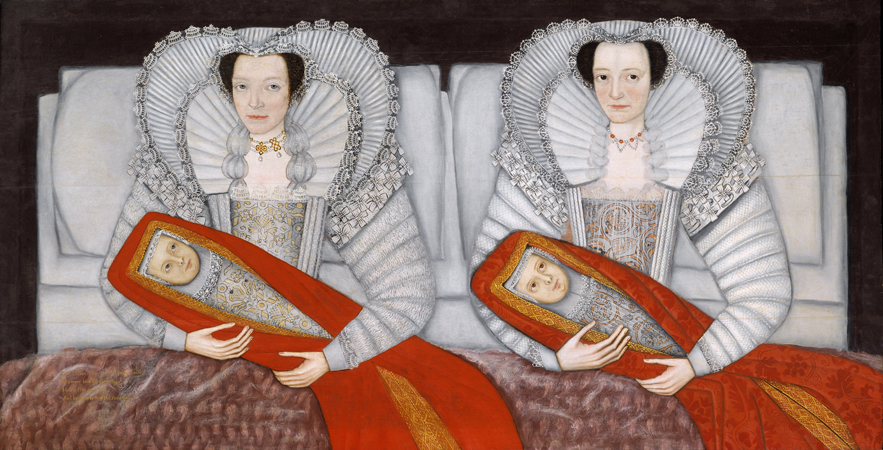
The Cholmondeley Ladies c.1600–1610. British School 17th Century. Artist: Unknown
“In healthcare, this trend encompasses the idea of the “virtual patient” – digital simulations of people that are used to test drugs and treatments, with the aim of reducing the time it takes to get new medicines from the design stage into general use. Initially, this may be confined to models or simulations of individual organs or systems. However, progress is being made towards useful models that simulate entire bodies. Current research suggests this is still some way from being a realistic possibility, but during 2022 we will continue to see progress towards this goal.
Digital twins of human organs and systems are a closer prospect, and these allow doctors to explore different pathologies and experiment with treatments without risking harm to individual patients while reducing the need for expensive human or animal trials. A great example is the Living Heart Project, launched in 2014 with the aim of leveraging crowdsourcing to create an open-source digital twin of the human heart. Similarly, the Neurotwin project – a European Union Pathfinder project – models the interaction of electrical fields in the brain, which it is hoped will lead to new treatments for Alzheimer’s disease.”
Read more on The Five Biggest Healthcare Tech Trends In 2022 via Forbes.
How observant are you? Can you spot at least 5 differences between The Cholmondeley Ladies?
“Artificial intelligence (AI) in health care is the future that is already here. Despite its potential as a transformational force for primary care, most primary care providers (PCPs) do not know what it is, how it will impact them and their patients, and what its key limitations and ethical pitfalls are. This article is a beginner’s guide to health care AI, written for the frontline PCP. Primary care—as the dominant force at the base of the health care pyramid, with its unrivaled interconnectedness to every part of the health system and its deep relationship with patients and communities—is the most uniquely suited specialty to lead the health care AI revolution. PCPs can advance health care AI by partnering with technologists to ensure that AI use cases are relevant and human-centered, applying quality improvement methods to health care AI implementations, and advocating for inclusive and ethical AI that combats, rather than worsens, health inequities.”
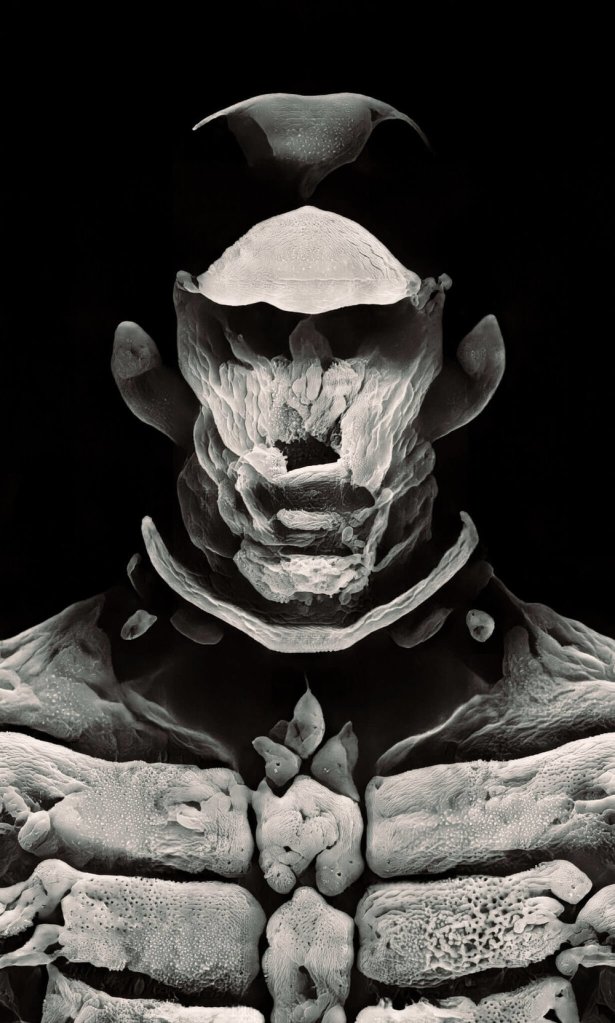
Raphael’s Cherubs, 1512-1513, Artist Raffaello Sanzio da Urbino
“While research on armed conflict focuses primarily on violence and suffering, this article explores the practices of love and care that sit alongside these experiences of harm. Motivated by our omissions to pay sufficient attention to love and care in our research to date, we ask: How can centering practices of love and care illuminate different pathways for understanding the remaking of worlds in the wake of violence? Building on interdisciplinary literature, we conceptualize love and care as practices and potential sites of politics that shape how people survive and make sense of violence as well as imagine and enact lives in its wake. Drawing from our respective research in Colombia and Uganda, we argue that paying attention to love and care expands scholarly understandings of the sites associated with remaking a world, draws attention to the simultaneity of harms and care, sheds light on the textured meanings of politics and political work, and highlights ethical and narrative dilemmas regarding how to capture these political meanings without reducing their intricacies. For each of the pillars of our argument, we propose a set of questions and avenues that can shape emergent research agendas on taking love and care seriously in contexts of armed conflict.”
More on Taking Love and Care Seriously: An Emergent Research Agenda for Remaking Worlds in the Wake of Violence via Oxford Academic.
“Endocrine therapy is used to change the body’s physical characteristics to reduce gender dysphoria or incongruence. Feminizing endocrine treatment involves the use of ovarian hormones or anti-androgen drugs; however, venous thromboembolism or meningioma can be associated risks. Masculinizing endocrine treatment involves testosterone supplementation, but lower high-density-lipoprotein cholesterol, increased triglycerides, and risk of polycythemia may occur. In youth, gonadotropin-releasing hormone agonist therapy can be used as a reversible means of suppressing unwanted puberty and preventing irreversible body changes.
Physicians can provide treatment that achieves a patient’s goals and minimizes the risk of causing harm by conducting an initial assessment, prescribing medications based on individual factors, and providing follow-up treatment monitoring. Physicians who treat youth must be trained in childhood and adolescent developmental psychopathology. They must also be able to diagnose gender dysphoria or incongruence, establish the youth’s capacity to make decisions regarding their medical care and to understand the relatively irreversible changes in physical characteristics and reproductive capacity that will occur, and ensure that the youth has parental or other adult support and will be able to transition safely in their home setting. Counseling may be required for youth who suffer from anxiety, depression, or suicidality.”
More on Endocrine Treatment of Transgender and Gender-Diverse People via BC Medical Journal
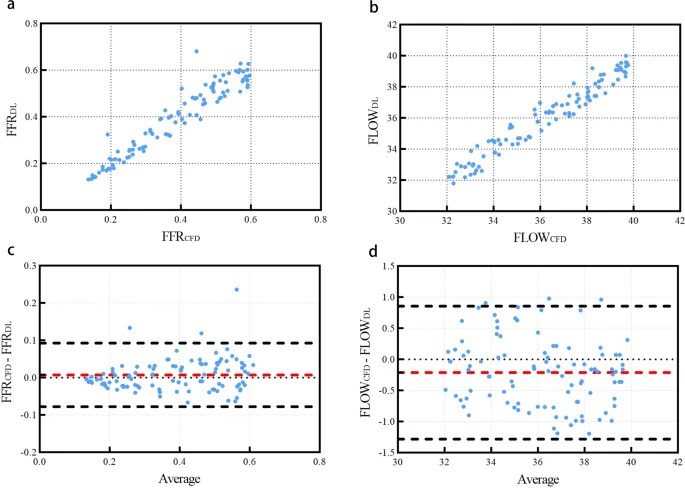
“The clinical treatment planning of coronary heart disease requires hemodynamic parameters to provide proper guidance. Computational fluid dynamics (CFD) is gradually used in the simulation of cardiovascular hemodynamics. However, for the patient-specific model, the complex operation and high computational cost of CFD hinder its clinical application. To deal with these problems, we develop cardiovascular hemodynamic point datasets and a dual sampling channel deep learning network, which can analyze and reproduce the relationship between the cardiovascular geometry and internal hemodynamics. The statistical analysis shows that the hemodynamic prediction results of deep learning are in agreement with the conventional CFD method, but the calculation time is reduced 600-fold. In terms of over 2 million nodes, prediction accuracy of around 90%, computational efficiency to predict cardiovascular hemodynamics within 1 second, and universality for evaluating complex arterial system, our deep learning method can meet the needs of most situations.”
Prediction of 3D Cardiovascular hemodynamics before and after coronary artery bypass surgery via deep learning via Nature.
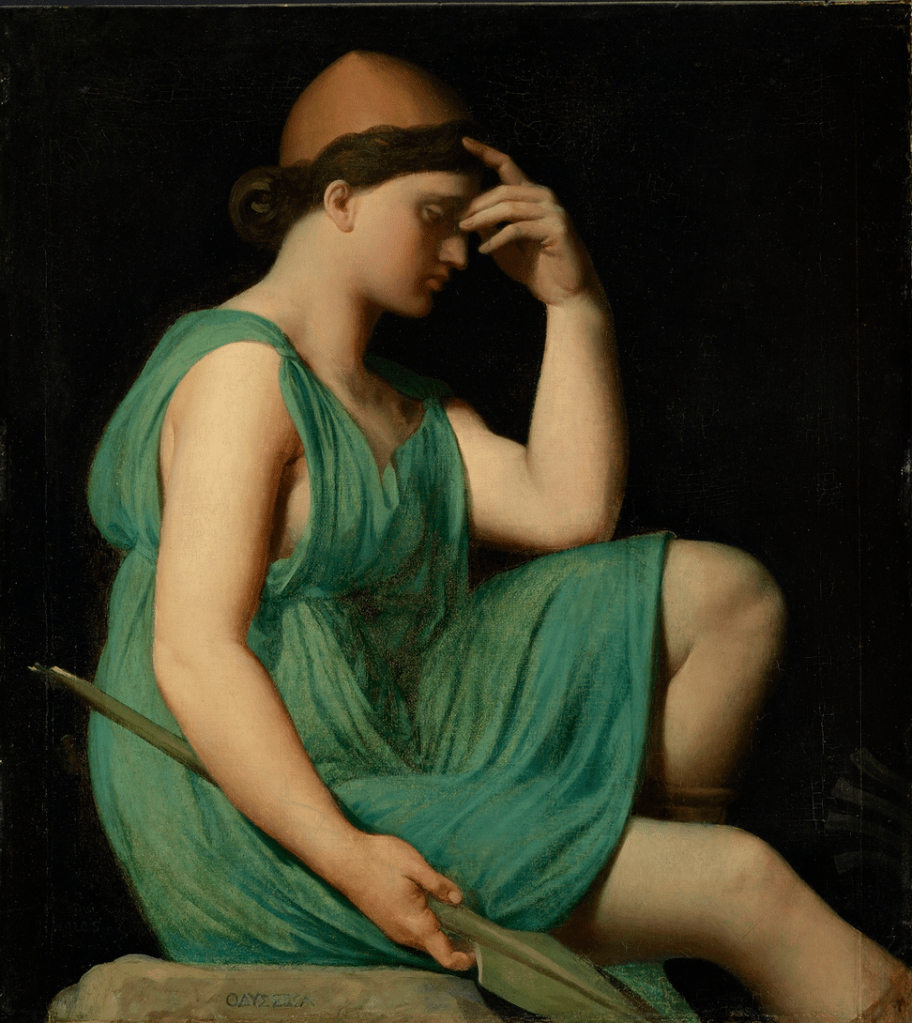
L’Odyssée (1850). Artist Jean-Auguste-Dominique Ingres.
“While CaRMS is officially and visibly bilingual, there are barriers to matching between English- and French- speaking medical schools that extend beyond language. Notably, there are different research traditions and other cultural distinctions with respect to student evaluation and support. Additional electives for unmatched students, for example, are not offered in French-speaking medical schools. While many English-speaking schools have extensive research and other opportunities that allow medical students to distinguish themselves for matching purposes, French-speaking schools have traditionally relied more extensively on letter grading to separate students (however, French-speaking schools have also now adopted pass/fail grading). Matching across linguistic divides between Quebec and the rest of Canada has therefore occurred somewhat sporadically.
When I re-applied through CaRMS the year after I did not match, a helpful note was eventually added to the front page of the Dean’s letter, which mentioned my linguistic adversity. Though my language issues were noted to various degrees in my evaluations, having a senior administrator acknowledge language as a factor in my overall record was likely crucial in my securing interviews in the second round. My own explanations, given in the first round, may have been simply dismissed as excuses – I had naively believed that the practical challenges of bilingualism, which also lie at the core of our national identity, would have merited some additional consideration.”
It’s the start of Resident Doctors Appreciation Week!
Resident appreciation is a year-round activity and endeavour we strive for. We are shining a spotlight on it especially this year for the week of February 7-11, 2022. Traditionally, the second week of February has been known nationally as Resident Awareness Week and, following a provincial rebranding decision in 2021, we are continuing to celebrate Resident Doctors Appreciation Week in 2022.
The residents of our Health & Wellness Committee and our External Relations Committee have been hard at work creating a mix of old and new ways to show appreciation for their fellow residents. We are excited to host our residents at a return of last year’s well loved event, Virtual Trivia Night, on February 9 where teams will go up against each other to prove who is the ultimate trivia-lover—all the while enjoying a good dinner on us.
Launching at Trivia Night will be the External Committee’s video on residents in BC, where residents were invited to participate on-site at Vancouver General Hospital to chat about their work and themselves. Residents at distributed sites were invited to submit video clips and photos discussing their experiences in residency and to highlight the province-wide work of residents in BC. This video will be made public on our YouTube channel following its launch.
Also special this year is a new podcast episode where our residents spotlight and interview BC Provincial Health Officer Dr. Bonnie Henry about her experiences in medicine. Be sure to check it out once it launches later this week!
Lastly, as is tradition, BC has declared February 7-11, 2022, Resident Doctors Appreciation Week in the province. View the full declaration.
Thank you to all our residents for all that you do for the people of BC!
“Lomas’s Positive Lexicography Project aims to capture the many flavours of good feelings (some of which are distinctly bittersweet) found across the world, in the hope that we might start to incorporate them all into our daily lives. We have already borrowed many emotion words from other languages, after all – think ‘frisson’, from French, or ‘schadenfreude’, from German – but there are many more that have not yet wormed their way into our vocabulary. Lomas has found hundreds of these ‘untranslatable’ experiences so far – and he’s only just begun.”
Explore The ‘untranslatable’ emotions you never knew you had via BBC.
Made me think about the language we use in medicine and how some of the experiences we go through may have no words to describe.




 Family Medicine Residency Site: Abbotsford-Mission