Holding Artificial Intelligence to Account

“In this issue of The Lancet Digital Health, Xiaoxuan Liu and colleagues give their perspective on global auditing of medical artificial intelligence (AI). They call for the focus to shift from demonstrating the strengths of AI in health care to proactively discovering its weaknesses.

Machines make unpredictable mistakes in medicine, which differ significantly from those made by humans. Liu and colleagues state that errors made by AI tools can have far-reaching consequences because of the complex and opaque relationships between the analysis and the clinical output. Given that there is little human control over how an AI generates results and that clinical knowledge is not a prerequisite in AI development, there is a risk of an AI learning spurious correlations that seem valid during training but are unreliable when applied to real-world situations.”

Read more on Holding Artificial Intelligence to Account via The Lancet.

Nominations 2022 Faculty of Medicine Awards

To all faculty and staff,

Nominations are now open for the 2022 Faculty of Medicine Awards.

This suite of Faculty of Medicine awards was recently refreshed in 2021 and includes several new awards which were launched last year with much success. These awards provide an expanded opportunity to acknowledge outstanding faculty and staff members who demonstrate exceptional contributions to the Faculty, and who are also dedicated to advancing our values and our vision of transforming health for everyone.

Please review the awards and nominations guidelines carefully and submit your nominations by Friday, June 10th. Recipients will be announced this summer, and the awards will be presented at our annual reception in the fall.

Sincerely,

Dermot Kelleher, MB, MD, FRCP, FRCPI, FMedSci, FCAHS, FRCPC, AGAF
Professor, Department of Medicine
Dean, Faculty of Medicine
Vice-President, Health
The University of British Columbia

Award Categories

For information on each award category and to download a nomination form, click on the links listed below.

*New award launched in 2021

Skin Color Bias & Health Outcomes

“In this research note, we use data from the National Longitudinal Study of Adolescent to Adult Health (Add Health) to determine whether darker skin tone predicts hypertension among siblings using a family fixed-effects analytic strategy. We find that even after we account for common family background and home environment, body mass index, age, sex, and outdoor activity, darker skin color significantly predicts hypertension incidence among siblings. In a supplementary analysis using newly released genetic data from Add Health, we find no evidence that our results are biased by genetic pleiotropy, whereby differences in alleles among siblings relate to coloration and directly to cardiovascular health simultaneously. These results add to the extant evidence on color biases that are distinct from those based on race alone and that will likely only heighten in importance in an increasingly multiracial environment as categorization becomes more complex.”

More on New Evidence of Skin Color Bias and Health Outcomes Using Sibling Difference Models: A Research Note via Demography.

In-office Anaphylaxis Preparedness

“Although anaphylaxis management recommendations depend on practice resources and proximity to emergency services, key components for medical clinics include a highly visible anaphylaxis protocol, regular rehearsals, appropriately maintained supplies, and a treatment log to record events.[3,19]

Clinic staff should be familiar with an anaphylaxis management protocol that is tailored to their office and incorporates input from staff members across multiple disciplines.[20] This protocol should feature flow charts for initial management of respiratory distress and hypotension/shock, and should include drug dosages, supplemental oxygen and intravenous fluid recommendations, and contact information for emergency medical services.[7] The importance of a protocolized approach to anaphylaxis care cannot be overstated because the rapidly evolving nature of anaphylaxis does not afford the time to look up information or recall memorized algorithms.[6] In one pediatric emergency department, implementing an anaphylaxis protocol enhanced anaphylaxis management by improving the rates of epinephrine administration and appropriate observation, and by reducing the rate of corticosteroid monotherapy.[21]

Guidelines strongly recommend regular anaphylaxis rehearsals; however, they do not specify the content or frequency of those events, but rather defer this to the discretion of the attending physician.[3,7,19] At the least, medical professionals should be able to quickly locate and assemble necessary supplies for administration, and roles for calling emergency services and treatment logging should be established.[3,19] Readily available supplies should be maintained, and their contents and expiry dates should be regularly documented.[3] Recommended anaphylaxis supplies are provided in the Box. Treatment logs should be readily accessible for documenting clinical events, vital signs, and medications/treatments administered.[7]”

More on In situ simulation training for in-office anaphylaxis preparedness via BCMJ.

Child Protection in Emergencies

Drawing by Anastasia, 7, from a village in east Ukraine bombed by the Russians.

“Children’s exposure to adverse experiences is much higher than we had once thought, with a global systematic review finding that a billion children a year are victims of violence. The past two years have tipped the balance of these scales against all children. Emergencies increase family violence and mental health distress. More than seven million children have lost a parent or main care giver to covid-19, and the global pandemic has exacerbated pre-existing inequalities and risks for childhood adversity. Parenting in war is violently undermined: in chaos and emergency, families face extreme, unanticipated challenges. We also know that adverse experiences are often unwittingly transmitted across generations.

On the positive side, we now have convincing evidence of how to increase protective factors for children. Parenting programmes have been found to be effective at supporting parents to be the good care givers that they overwhelmingly want to be. They prevent and disrupt the intergenerational transmission of violence and trauma and improve mental health for parents and children. When combined with economic assistance (“‘cash plus care”) they are even more effective. The research is now so strong—with 77 systematic reviews and more than 100 randomised trials in lower resource countries—that the World Health Organisation (WHO) is developing guidelines for parenting programmes. In doing so, parenting programmes parallel other public health interventions for children that are backed up by robust evidence, such as polio vaccines and antenatal care. In emergencies, families need evidence based support that is accessible, relevant, and simple.”

More on Ukraine’s children: use evidence to support child protection in emergencies via BMJ.

Access to Self-Care Inventions

“Health for all will not be achieved if the current estimated 100 million people experiencing homelessness continue to be underserved. Actions by support workers, health workers, health administrators and health policy makers, legislators, and regulators is needed to improve access to self-care interventions among people experiencing homelessness.20

People experiencing homelessness must be engaged as part of the solution to improve access to quality health services and the uptake of self-care interventions. Support organisations working with people experiencing homelessness should involve people who have been homeless as peer educators to provide one-to-one support, reliable information on self-care interventions, and facilitate access to quality health services. For instance, the use of peer support has been shown to reduce drug and alcohol use and increase healthy behaviours. Additionally, support organisations, in partnership with health workers, need to engage directly with people experiencing homelessness, such as through group dialogues and individual support sessions to rebuild their trust, dignity, and self-esteem—both to overcome previous negative experiences of accessing healthcare and to prioritise self-care.

Health workers have a specific role in supporting people experiencing homelessness and their ability to self-care. Increasing the skills and competencies of health workers to provide non-stigmatising, trauma informed care for people experiencing homelessness is essential. A good model is the health worker training developed by Pathway, a UK charity that enhances care coordination for people experiencing homelessness admitted to hospital.”

More on Access to self-care interventions can improve health outcomes for people experiencing homelessness via BMJ.

More on a good model: Pathway. Healthcare for homeless people—what we do. 2019. https://www.pathway.org.uk/about-us/what-we-do/

CAR T-cell Therapy in Cancer

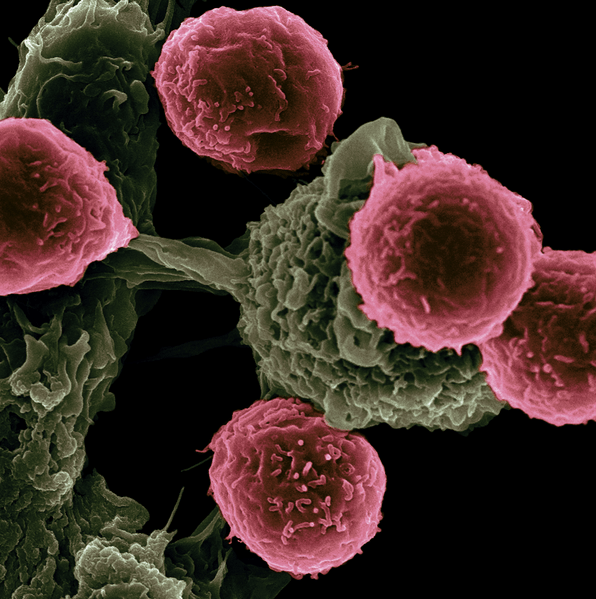
“Chimeric antigen receptor (CAR) T-cell therapy is a novel therapeutic T-cell engineering option, where T-cells obtained from a patient’s blood are engineered ex vivo to express specific tumour antigen receptors. The highly selective nature of CAR T-cell therapy has led to a revolution in cancer treatment. The use of CAR T-cell therapy has been successful in treating haematological malignancies and there is also a growing interest in using CAR T-cell therapy to target solid tumours. However, there are notable challenges with CAR T-cell therapy, including non-sustained responses, antigen escape, and life-threatening adverse effects. Studies are underway to improve the safety of CAR T-cell therapy by limiting their expression, producing switchable CAR T-cells, and producing genetically engineered T-cells that are equipped with genes to reduce adverse effects.”

More on Opportunities and challenges for CAR T-cell therapy in cancer via Cambridge Medical Journal.

Ableism in Medical Education

The Capability Imperative: Revealing Ableism in Medical Education:
“The movement to diversify medical education recognizes that various perspectives and life experiences enrich medical training, practice, and patient care. However, students with disabilities remain underrepresented in medical education and face barriers in structure, culture, and climate. Efforts to remedy exclusion have focused on bettering accommodation policy and practice.

This presentation draws from a constructivist grounded theory of four U.S. medical schools that asked: how is disability inclusion enacted in medical education? Amongst other things, the study shows that inclusion was informed by the capability imperative, a context-specific manifestation of ableism that upholds a cultural logic of compulsory hyper-ablebodiedness and mindedness. I describe this logic and argue that it renders disabled students’ misfits in medical education. Their inclusion is constrained, always exceptional. To be truly inclusive of diverse bodyminds, the capability imperative must be interrogated and dismantled.”

Learn more on The Capability Imperative: Revealing Ableism in Medical Education here.

Practice Patterns & Family Physicians

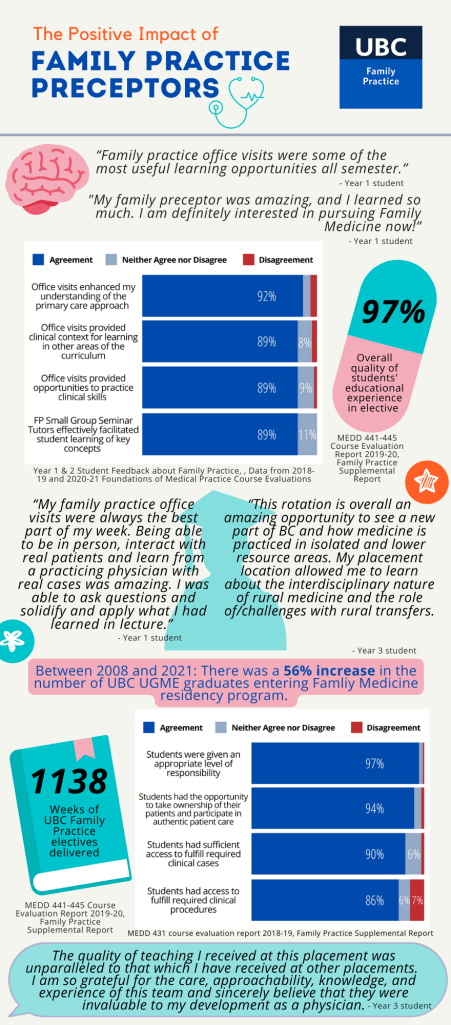
The Early Career Primary Care (ECPC) study is exploring changing practice patterns among family physicians, as well as practice intentions and choices among family medicine residents and early career physicians.

In this seminar on April 13, 2022 at noon PSTDr. Ruth Lavergne and Dr. Ian Scott will share findings that call into question common narratives about changing practice patterns and generational differences in primary care, and point to the need for different approaches to ensure access to quality primary care in Canada.

For more information and updates, check out the Department of Family Practice Website.