Doreen Ketchens plays “When The Saints Go Marching In”.
“Improvisation is an important aspect of patient-physician communication. It is also a defining feature of jazz music performance. This essay uses examples from jazz to illustrate principles of improvisation that relate to an individual communication act (ie, building space into one’s communication), a physician’s communicative style (i.e., developing one’s voice), and the communicative process of the medical encounter (i.e., achieving ensemble). At all 3 levels, the traditions of jazz improvisation can inform efforts to research and teach medical interviewing by fostering a contextualized view of patient-physician communication.”
Jazz and the ‘Art’ of Medicine: Improvisation in the Medical Encounter via Annals of Family Medicine.
Every child matters. On September 30th, people across Canada wear orange and participate in Orange Shirt Day events to recognize and raise awareness about the history and legacies of the residential school system in Canada.
The Canadian government designated September 30 National Day for Truth and Reconciliation, beginning in 2021. This responds to Truth and Reconciliation Call to Action 80, which states that the federal government will work with Indigenous people to establish a statutory day to “honour Survivors, their families, and communities, and ensure that public commemoration of the history and legacy of residential schools remains a vital component of the reconciliation process”.
Orange Shirt Day originates from the story of Phyllis Webstad from the Stswecem’c Xgat’tem First Nation. In 1973, on her first day at St. Joseph’s Residential School in Williams Lake, BC, Phyllis’s shiny new orange shirt was stripped from her, never to be seen again.
40 years later, on September 30th, 2013, Phyllis spoke publicly for the first time about her experience, and thus began the Orange Shirt Day movement.
Background: The aim of this paper is to present a synthesis of solutions for post-graduate medical education (PGME) and the health-care system in addressing challenges in relation to women’s health.
Methods: A critical review was conducted within three themes: women’s health status, women’s preferences for female physicians, and women in surgery. The study was conducted in two phases that consisted of an analysis of the trends of Iranian women’s health and women’s participation in PGME since 1979 followed by a thematic analysis to assess the current challenges and their implications on medical education.
Results: Our analysis revealed important trends and challenges. Since 1979, life expectancy has increased by 29% in Iranian women, while female adult mortality rate has decreased by 78%, and maternal mortality rate has decreased by 80%. The number of female medical specialists has increased by 933% , while the number of female subspecialists has increased by 1700%. According to our review, ten major challenges regarding women’s health were identified: 1) Increase in chronic disease; 2) Increase in cancer cases; 3) Preference for same-gender physicians in sensitive procedures; 4) Delayed care-seeking due to lack of female surgeons; 5) Lack of gender-concordance in clinical settings; 6) Underestimating female surgeons’ capabilities; 7) Female physicians’ work-family conflicts; 8) Male-dominancy in surgical departments; 9) Women’s under-representation in higher rank positions; and 10) Lack of women in academic leadership.
Conclusion: We identified different solutions to bridge these gaps. Community-based education, Gender- concordant considerations, and empowering women in surgical departments could help medical education policy makers to address the challenges.
Learn more: Health Care and Medical Education to Promote Women’s Health in Iran; Four Decades Efforts, Challenges and Recommendations via Arch Iran Med.
Njide Ndili, Country Director for PharmAccess Foundation
“Njide Ndili is the Country Director for PharmAccess Foundation, an international NGO dedicated to facilitating affordable access to quality health care in Africa by stimulating investments in the healthcare industry through partnerships with the private sector and government institutions.
She is an EXCO member of Healthcare Federation of Nigeria, a Trustee and sponsor of the Healthcare Excellence Award and remains on the Board of the Society for Quality in Healthcare in Nigeria. Njide Ndili is the Country Director for PharmAccess Foundation, an international NGO dedicated to facilitating affordable access to quality health care in Africa by stimulating investments in the healthcare industry through partnerships with the private sector and government institutions.
This talk was given at a TEDx event using the TED conference format but independently organized by a local community. Learn more at https://www.ted.com/tedx
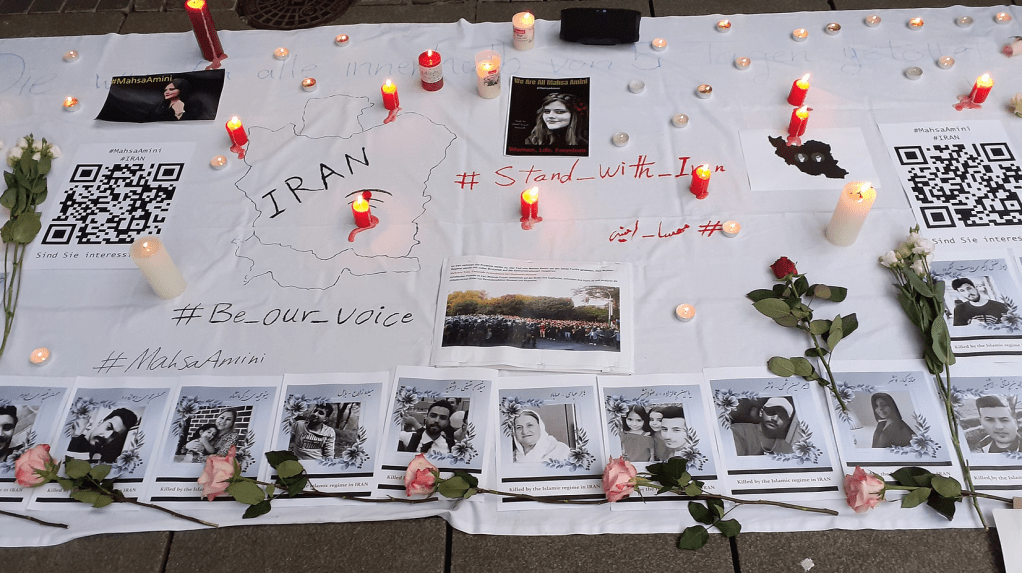
On behalf of the University of British Columbia, we wish to express our concern about the unfolding situation in Iran in response to the tragic death of Mahsa Amini.
UBC stands with the courageous women of Iran, and all who seek to protect their human rights and freedoms and stand up against repression and discrimination. We acknowledge the trauma and distress that members of our community may be experiencing in response to the situation in Iran, and would like to emphasize the UBC supports available to anyone who may be impacted.
For faculty and staff, all mental health resources can be found on the HR website: https://hr.ubc.ca/health-and-wellbeing/mental-health. This provides access to UBC’s Extended Health Benefits Plan, and our Employee and Family Assistance Program, which is a confidential and voluntary resource providing professional and emergency counselling services and additional support via phone, video, web or mobile app.
For students, our UBC Students Assistance Program is a free, 24/7 confidential wellness resource, including crisis, grief, and trauma counseling:
UBC Vancouver Students Assistance Program UBC Okanagan Students Assistance Program
Peaceful protests are at the heart of advocating for human rights and freedoms, and UBC echoes the message of bringing an end to violence against women.
Gage Averill Provost and Vice-President, Academic, pro tem, UBC Vancouver
Rehan Sadiq Provost and Vice-President, Academic, pro tem, UBC Okanagan
Dermot Kelleher, Dean, Faculty of Medicine and Vice-President, Health invites you to join a virtual event today Tuesday, September 27, 2022 10:00–11:30 am PT Given the discussion topic, this event may go beyond 11:30 am
Please join us in coming together in a concerted effort to reflect on the purpose of National Day for Truth and Reconciliation, also known as Orange Shirt Day.
We gratefully acknowledge that the UBC Faculty of Medicine and its distributed medical programs, which includes four university academic campuses, are located on traditional, ancestral, and unceded territories of Indigenous peoples around the province.
The UBC Vancouver-Point Grey academic campus is located on the traditional, ancestral, unceded territory of the xʷməθkʷəy̓əm (Musqueam), and UBC operations in Vancouver more generally are also on the territories of the Skwxwú7mesh (Squamish) and səlil̓ilw̓ətaʔɬ (Tsleil-Waututh) peoples.
The UBC Okanagan academic campus is located on the traditional, ancestral, unceded territory of the Syilx Okanagan Nation.
The University of Northern BC Prince George campus is located on the traditional territory of the Lheidli T’enneh, who are part of the Dakelh First Nations.
The University of Victoria is located on the traditional territory of the lək̓ʷəŋən-speaking peoples — the Songhees and the Esquimalt, and the W̱SÁNEĆ peoples.
“’We developed SnapCyte based on a need for affordable, basic cell analytics that can be accessed by any scientist working in a cell culture or biotechnology laboratory,’ says Dr. Mads Daugaard, an associate professor of urologic sciences at UBC and senior research scientist at VPC. ‘This app makes commercially available affordable, high-performance laboratory technology that can be conveniently accessed on a smartphone.’
Used in the analysis of cancer cells and other diseases at a microscopic scale, the first-of-its-kind smartphone app aims to supercharge the development of novel, personalized medical treatments. Dr. Daugaard and his team at VPC, a Centre of Excellence hosted by UBC and the Vancouver Coastal Health Research Institute, developed the technology based on their own need for fast and accurate cell growth data. Now, they want to bring the breakthrough technology to researchers around the globe.
‘The app returns precision data results within five minutes,’ he says. ‘With the former technology, this process would normally take 45 minutes to an hour with the most high-end live-cell imaging and analysis platforms, or 24 hours with colorimetric assays.’”
More on AI cell analytics app aims to supercharge biotechnology research via UBC.
With the help of artificial intelligence, UBC researchers have demonstrated that concussed brains create ‘neural detours,’ re-routing information along alternative pathways.
“It was a freak accident, and at first it didn’t seem like a big deal.
UBC student Rori Wood was practicing with her teammates on the Thunderbirds women’s rugby team. During non-contact drills, another player caught her in the eye with an elbow.
‘I was like, oh, that hurt. My eye was throbbing, and there was a cut, but I wasn’t too worried about it because it didn’t feel like that big of a hit,’ she remembers.
As one of the team’s veteran forwards, Rori was used to the scrums and tackles that come with the position. Her main concern was getting the eye cleaned up and making sure it didn’t swell too much before the next day’s match.
But a few hours later her head began to hurt — really hurt — and she felt sick to her stomach. There was a feeling of sensory overload: “When my parents picked me up to go to the doctor, everything was so, so bright. Like, a literal fog. And sound just hurt. I wore earmuffs to the appointment.”
More on Unlocking the mysteries of concussion and the brain: New UBC research could make diagnosis, treatment and prevention more effective for everyone — especially women via UBC Medicine.
Please find below a few valuable resources as you prepare for your upcoming exams.
CFPC Examination Quick Links and Dates via CFPC. Candidate Guide to the Certification Examination in Family Medicine via CFPC. Virtual Simulated Office Oral Examinations via CFPC. UBC Department of Family Practice Postgraduate Program: SOOs via UBC. Guidelines on the Optimal Viewing & Scoring of a SOO via CFPC. UBC Department of Family Practice Postgraduate Program: SAMPs via UBC. SAMPs Frequently Asked Questions via CFPC.






 Family Medicine Residency Site: Abbotsford-Mission