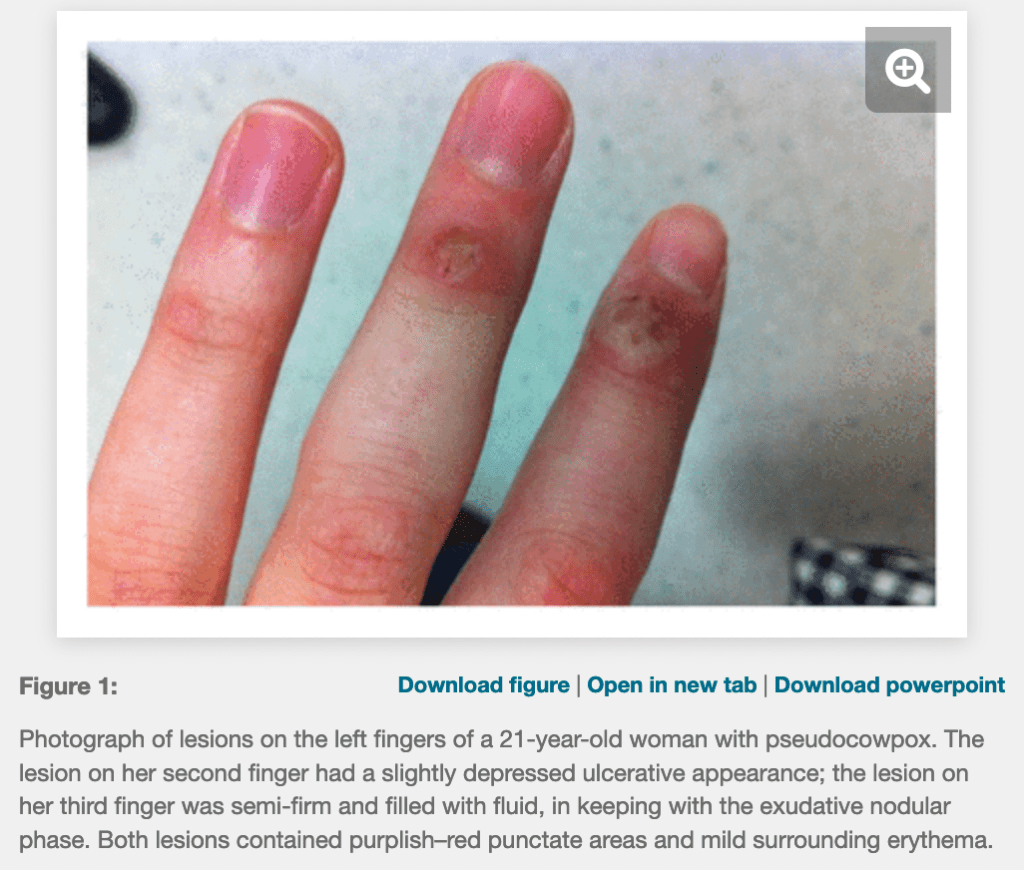
“A 21-year-old woman presented to the emergency department with a 2-week history of lesions on her left hand. As a student in an agriculture program, she had had ungloved contact with goats and the mouth of a baby calf during a farm practicum 1 week before presentation. The animals had no evidence of disease. The patient reported no history of symptomatic herpes infections, recent travel or chronic illnesses. She had 2 discreet, nonpainful, well-circumscribed lesions on the dorsum of her left second and third fingers, each measuring less than 1 cm in diameter (Figure 1). She had a small, tender, left epitrochlear lymph node, and mild swelling and tenderness of the left wrist.”
Learn more on Pseudocowpox Lesions in an Agricultural Student via CMAJ.
“I didn’t even try to come home. I just knew how hard it would be,” Brennan told CBC News.
“We had someone from the B.C. residency program come to Australia and they basically said, ‘Don’t come back.’ The statistically low match rate means even some of the top students don’t get through. So I said, ‘Why bother?’
“It’s really sad because I went to medical school thinking I’d just come back to Canada. I think that’s what all of us thought. Going to school in Australia — it’s a way to be a doctor, but it’s not actually a way to be a doctor in Canada.”
While he was reluctant to leave Canada, his mum and sister in Vancouver and his dad in Calgary, Brennan turned to the U.S., where international medical graduates are more than twice as likely to land a residency.
“They have enough spots to accommodate every single American student and a ton of internationals,” he said. “They’ve got it figured out.”
Read more on Meet the Canadian-born doctors who can’t work in Canada via CBC.
“Compared with brain injury research being done on athletes, the research involving people who have suffered similar injuries from intimate partner violence is in its infancy, said van Donkelaar.
The silence and stigma shrouding domestic violence mean those who suffer brain injuries are falling through the cracks of what van Donkelaar calls ‘an unrecognized public-health crisis in Canada.’
Of nearly 96,000 victims of intimate partner violence reported to police in Canada in 2017, 79 per cent were women, according to Statistics Canada.
But spousal and domestic violence is often not reported to police and it’s hard to determine how many survivors might have experienced traumatic brain injury as a result, said van Donkelaar.
Based on research from the U.S., including a study by the Centers for Disease Control and Prevention, he said the prevalence of brain injuries could be anywhere from 30 to more than 90 per cent of all survivors.”
Learn more on Brain injury from domestic abuse a ‘public health crisis’ via CBC. Freezer forming part of Banksy’s new work removed hours after artist confirms mural via CNN.
“As the provision of virtual care extends beyond the pandemic, family physicians are continuing to manage patients virtually. Enhancing family physicians’ skills in performing examinations and issuing diagnoses virtually will support family physicians to confidently provide high quality virtual care to their patients.
The purpose of these four clinical vignettes is to support family physicians to perform thorough and comprehensive patient examinations by demonstrating the successful examination of common medical conditions seen in practice, musculoskeletal and neurological virtual assessments, when not physically present with the patient. The videos take a practical, patient-centred approach that supports the provision of comprehensive, longitudinal care. Resources are provided to support learning and integration of skills into practice.”
Learn more and register here at Virtual Examinations – Tools for Clinical Practice via UBC CPD.
Nearly half (49%) of family doctors recently surveyed by the College of Family Physicians of Canada (CFPC) reported working beyond their desired capacity, the organization told CMAJ. “High or severe work-related burnout is experienced around four times more by family physicians working beyond their desired capacity (32.1%) than those working at the desired capacity (8.7%).”
Family physicians who reported working beyond their desired capacity were also three times more likely to say they were considering or taking a break from work. And more than 15% of those working beyond their desired capacity said they “generally feel pretty good, but there are trying days,” compared to nearly half (44%) of those working at desired capacity.
In Ontario, doctors do not get paid overtime, “but we do know they work long hours,” according to the Ontario Medical Association (OMA). Almost three-quarters (73%) of 2,649 physicians surveyed by the OMA in 2021 reported some level of burnout, up from two-thirds (66%) the previous year.
“Physicians retiring prematurely, reducing their workloads, changing their scope of practice or leaving medicine entirely in response to burnout will exacerbate the situation for remaining physicians, resulting in a potential domino effect,” the OMA told CMAJ.
Read more on Overworked health workers are “past the point of exhaustion” via CMAJ.
CGSHE Speaker Series presents, Dr. Martha Paynter, Abortion to Abolition: The Path to Reproductive Health & Justice in Canada
This Sexual & Reproductive Health Week, Dr. Martha Paynter joins us for the CGSHE Speaker Series. She will discuss the unique and progressive legal standing of abortion in Canada, and outline our greatest threats to reproductive justice. She will explore how the abortion movement can adopt the philosophies of abolition to make the next leap in improving reproductive health and justice.
Dr. Martha Paynter (she/her) is an Assistant Professor in the Faculty of Nursing at the University of New Brunswick and a registered nurse working in abortion and reproductive health care. Dr. Paynter is founder and director of Wellness Within: An Organization for Health and Justice, and is the author of Abortion to Abolition: Reproductive Health and Justice in Canada, published by Fernwood Publishing.
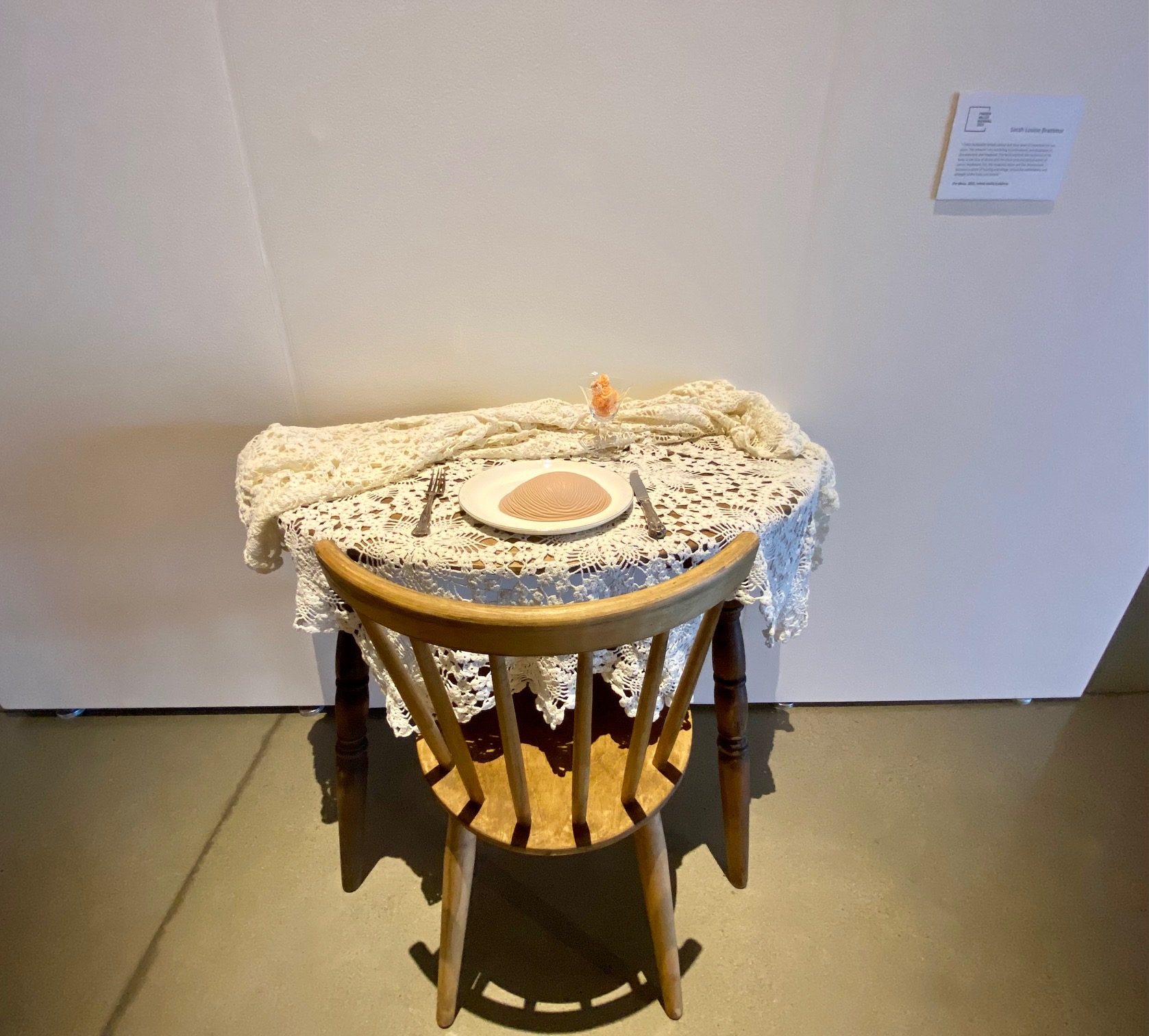
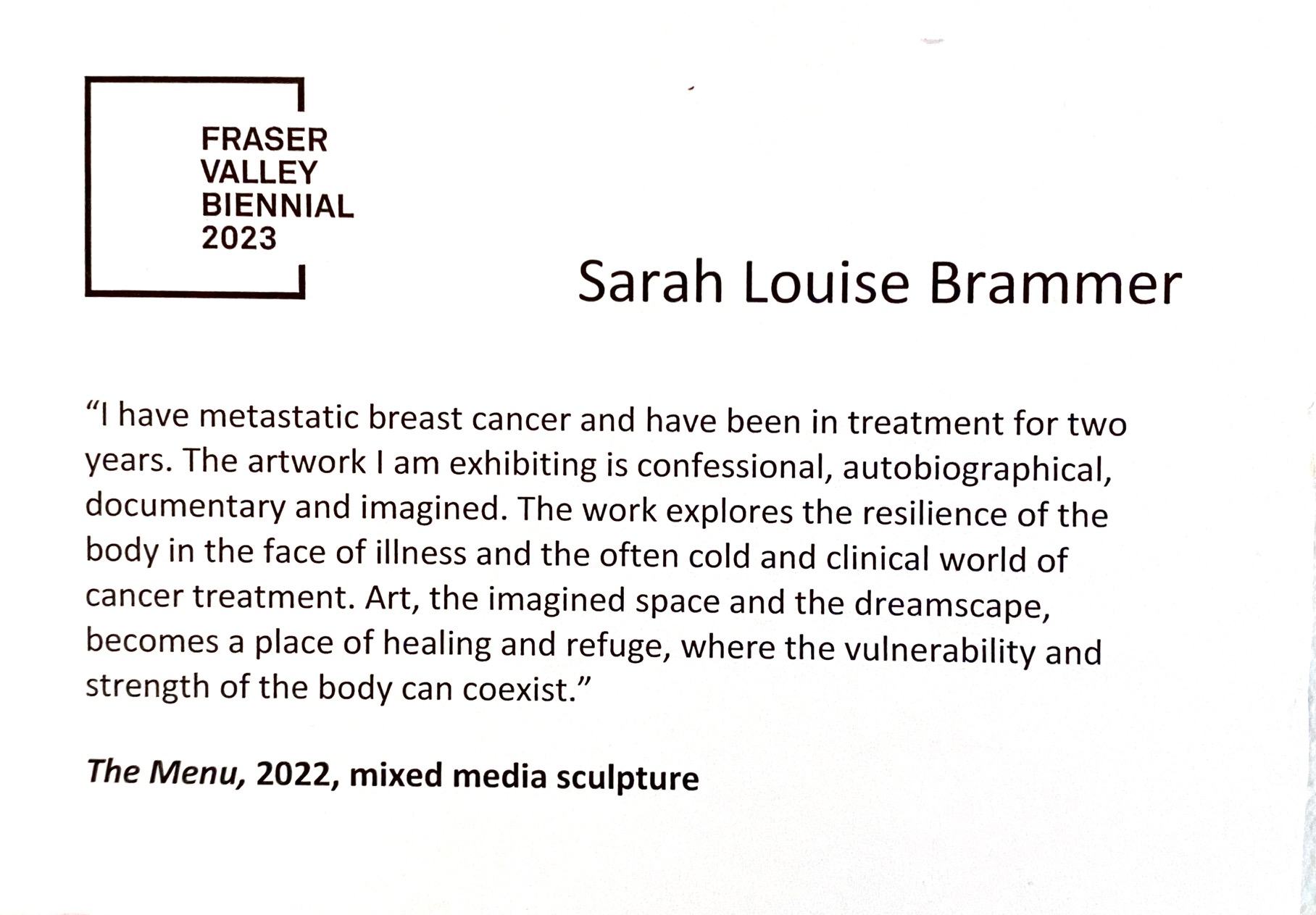
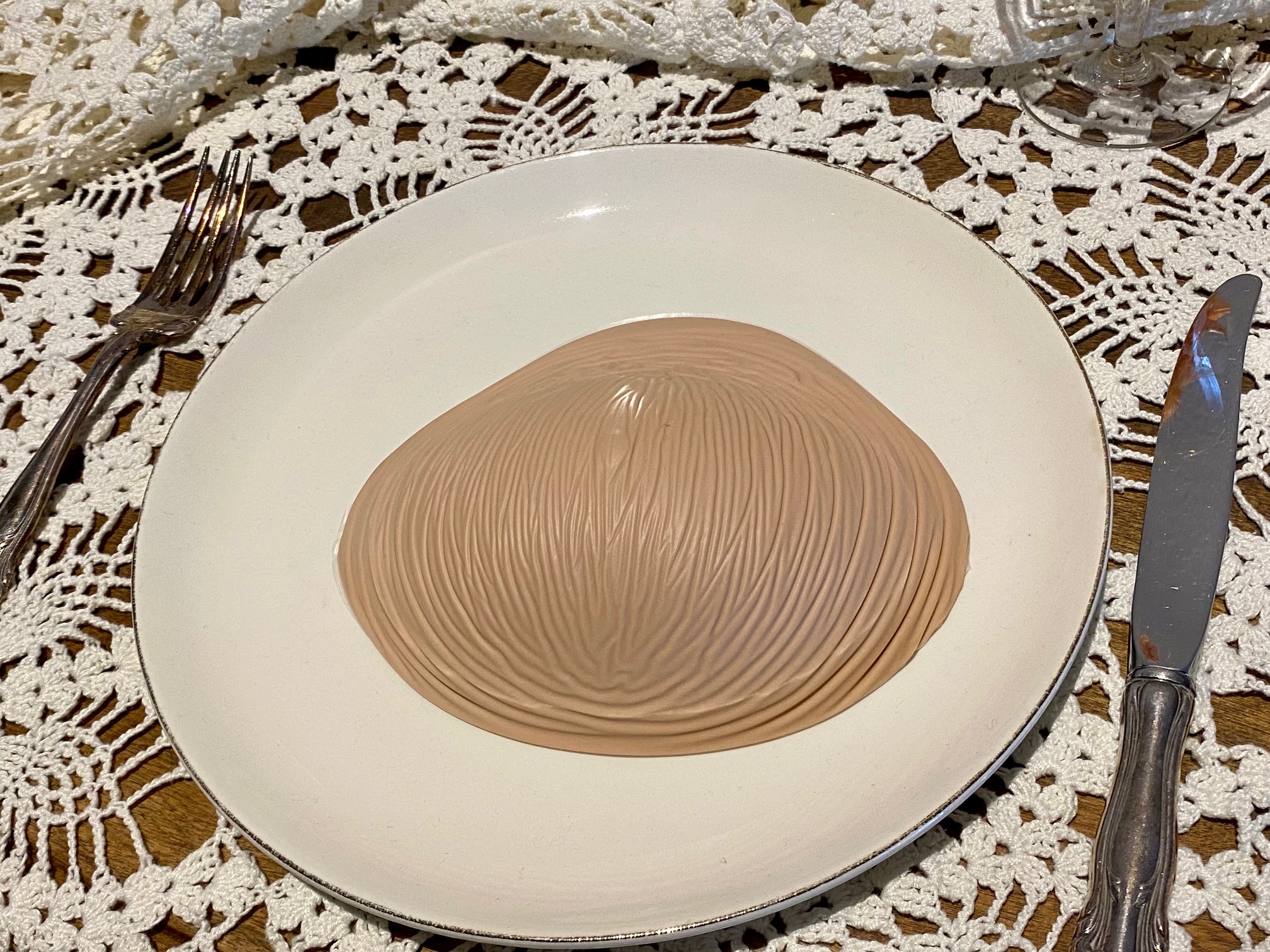
“The Fraser Valley Biennial exhibition always promises to be a dynamic, collective representation of exceptional artwork produced in the last two years by artists who call the Fraser Valley region home. Since its start in 2011, the Biennial has showcased the work of more than 250 local and regional artists, many of whom we have seen go on to other exciting opportunities and great successes!
For the 2023 Biennial, we are pleased to welcome guest curator Candace Couse, who recently joined the Department of Visual Art at the University of the Fraser Valley as an Assistant Professor. Couse has set the theme for this year’s Biennial as ‘the body,’ and has encouraged artists to explore this concept as broadly as possible. The resulting exhibition includes work in a variety of media that approach ‘the body’ through a variety of lenses, including: issues of ability and disability, disease, strength and resilience, athleticism, tissues/organs/microorganisms, the five senses, and the relationship between the body and technology. Throughout the exhibition, visitors will have the opportunity to reflect on the body as both a literal and symbolic object, as well as on their own embodied experiences.”
“Born in 1922, the third child and first daughter in a family of nine children, Lillie Johnson came to Canada from Jamaica in 1960. She was already a trained and experienced nurse, teacher, and midwife, having worked in both Jamaica and the U.K. Johnson went on to earn her Bachelor of Science in Nursing from the University of Toronto, and spent her career in Ontario serving in many different capacities. She taught a course in Child and Maternal Health at Humber College, and then became the first Black director of public health in Ontario’s Leeds, Grenville, and Lanark district.”Born in 1922, the third child and first daughter in a family of nine children, Lillie Johnson came to Canada from Jamaica in 1960. She was already a trained and experienced nurse, teacher, and midwife, having worked in both Jamaica and the U.K. Johnson went on to earn her Bachelor of Science in Nursing from the University of Toronto, and spent her career in Ontario serving in many different capacities. She taught a course in Child and Maternal Health at Humber College, and then became the first Black director of public health in Ontario’s Leeds, Grenville, and Lanark district.
The accomplishment for which Lillie Johnson is best known, though, is the founding of the Sickle Cell Association of Ontario in 1981, which still exists today. She was indispensable in lobbying the government for the inclusion of Sickle Cell Disease in newborn screening in Ontario. Incredibly accomplished in her field, Johnson has received numerous different awards and honours in her lifetime, including being the torch bearer for the Pan-Am Games in 2015, and being invested into the Order of Ontario (the province’s highest honour) in 2010.
Now nearly 100 years old, Lillie Johnson has had a tremendous impact on health care in Ontario, and remains dedicated and passionate about family, health care, and education. In 2015, she published her memoir, entitled ‘My Dream.'”
Learn more about Lillie Johnson via The Museum of Healthcare.
From family medicine clinics to specialist units around British Columbia, there are more than 1300 UBC resident doctors training in regional, rural and remote communities.
Guided by UBC clinical faculty, resident doctors provide compassionate care to families and patients, and play a crucial role in our healthcare system. They also contribute their skills and knowledge beyond the clinic.
“Resident doctors support the education of medical students, conduct research and strengthen health care as they train to become expert practitioners in numerous specialties,” says Dr. Ravi Sidhu, Associate Dean of Postgraduate Medical Education. “I am grateful for their dedication to serving and enhancing health of communities across B.C.”
Thank you to all UBC resident doctors for the care you provide communities across B.C.
As part of Resident Doctors Appreciation Week, we caught up with a few UBC resident doctors to learn more about their experience by asking the following question: “How has residency training informed your future practice?”
Read more about UBC resident doctors Dayle Ostapiuk, Brian Hwanki Kim, and Mehar Kang responses here.
Because of the negative consequences of concussion, considerable research efforts have been directed toward understanding the risk factors for sport-related concussion (SRC) and its outcomes to better inform strategies for risk reduction. Girls are suggested to have an increased risk of concussion, warranting exploration into sex-dependent variations in concussion presentation and management, with the potential that this information might inform sex-specific rules directed toward risk reduction within sports.
Objective
To compare sex-associated differences in epidemiology and concussion management in adolescent soccer players within a prospective, longitudinal high school injury surveillance project.
Design, Setting, and Participants
This prospective, longitudinal cohort study assessed male and female soccer athletes from all high schools in the Michigan High School Athletic Association (MHSAA) during academic years 2016-2017 to 2018-2019.
Exposures
Sport-related concussion captured in the MHSAA Head Injury Reporting System.
Main Outcomes and Measures
Outcomes included details regarding each documented SRC event, including injury mechanism, immediate management, and return-to-play time. Multiple comparisons were made between male and female athletes regarding SRC risk, mechanism, short-term management, and outcomes.
Results
A total of 43 741 male and 39 637 female soccer athletes participated in MHSAA soccer during the 3 consecutive academic years of study (2016-2017: n = 751 schools; 2017-2018: n = 750 schools; and 2018-2019: n = 747 schools). During the 3 years of surveillance, 1507 of the 83 378 soccer athletes (1.8%) were reported to have SRC during soccer participation, including 557 boys (37.0%) and 950 girls (63.0%). Documented SRC risk in female soccer participants was greater than in male soccer participants (risk ratio, 1.88; 95% CI, 1.69-2.09; P < .001). Male soccer athletes most often sustained SRC from contact with another player (48.4%), whereas SRCs in female soccer players recorded in the Head Injury Reporting System were most often from nonplayer contact events (41.9%; P < .001). Adolescent male soccer players with a documented SRC were more likely to be removed from play on the day of injury (odds ratio, 1.54; 95% CI, 1.15-2.06; P = .004). Although the overall median time to return to play was 11 days (interquartile range [IQR], 7-15 days), male athletes typically returned 2 days earlier than female athletes (median, 10 [IQR, 7-14] days vs 12 [IQR, 7-16] days; Peto test P < .001).
Conclusions and Relevance
In this cohort study, sex-associated differences were revealed among adolescent soccer athletes in SRC risk, mechanism of injury, immediate management, and outcomes in injuries documented in a statewide injury reporting system. Thus, consideration might be given to sex-specific approaches to participation and concussion management in the sport.
Association of Sex With Adolescent Soccer Concussion Incidence and Characteristics via JAMA.








 Family Medicine Residency Site: Abbotsford-Mission