
What is…?”
Cue the strings.
Click here to answer.
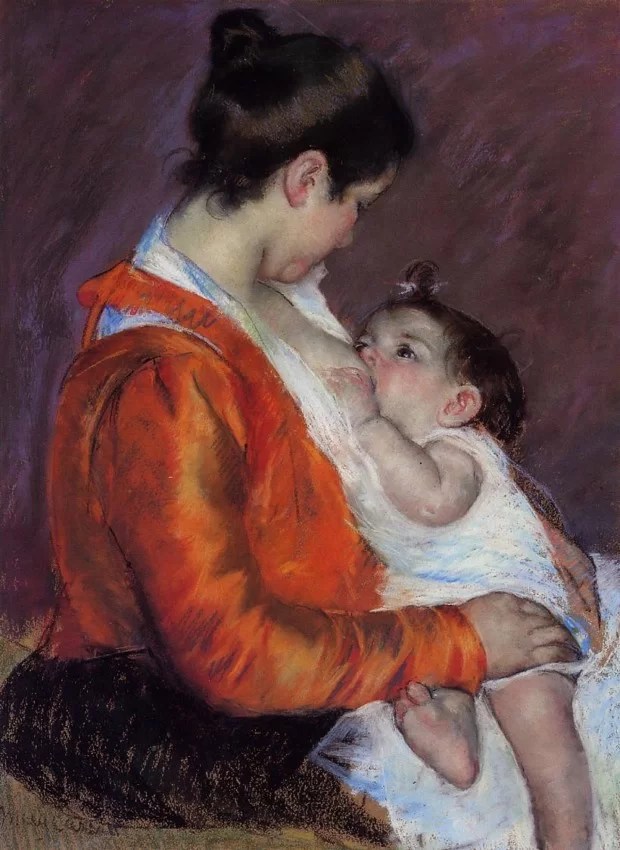
Thousands of mothers describe it in online forums as a wonder drug that helped them produce enough milk to breastfeed their babies.
‘It kind of sounded like a miracle drug,’ said Emily Matreal, 29, who lives just outside Detroit and took domperidone in 2021 to help her breastfeed her son, Conner.
Health Canada told CBC that although the agency is aware the drug is routinely prescribed to stimulate lactation, it is not approved for that purpose.
CBC spoke with nine women in Canada, the U.S. and Australia who say they had debilitating psychological side effects when they tried to come off the drug. They described extreme anxiety, panic attacks, insomnia and intrusive thoughts so severe they were left unable to function or care for their children, often for months. Some were forced to stop working or move in with family. At least one attempted to take her own life. They all say no one warned them these things could happen.
Multiple experts interviewed by CBC said they believe such side-effects are rare.
‘It’s very unpredictable,’ said researcher Janet Currie, who wrote her doctoral thesis on postpartum domperidone prescriptions in British Columbia. She says she’s helped between 15 and 20 postpartum women with severe psychological side effects slowly taper off the drug in the last year.
‘No one can tell you exactly in advance whether you’ll have these symptoms and how intense they will be.’
Domperidone is not approved as a lactation aid anywhere in the world and there are no large-scale clinical trials that shed any light on how often these side effects occur.”
Learn more via Banned in the U.S., not approved for breastfeeding — why are so many moms taking this drug? via CBC News,

Resident & Faculty Development Breakfast Huddle: Direct Observation & Coaching
At this meeting, we’ll discuss UBC’s Transition to Residency that includes the Direct Observation & Coaching initiative.
Date: Friday, January 27, 2023
Time: 0745-0845
Location: Abbotsford Division of Family Practice
RSVP by December 16, 2022: https://doodle.com/meeting/participate/id/avlBYLrd

Environment and Climate Change Canada has issued arctic outflow, winter storm, wind and snowfall warnings for multiple areas in BC.
Warming Centres: In response to this weather event, Warming Centres may be opened for the public at the discretion of local governments and First Nations in affected areas.Temporary Winter Shelters and Extreme Weather Response Shelters are operated by BC Housing and their partners for anyone who is homeless or at risk of homelessness.
Temporary Winter Shelters and Extreme Weather Response Shelters are operated by BC Housing and their partners for anyone who is homeless or at risk of homelessness:
Communities that have opened additional Warming Centres in response to this event, as of December 5th, 2022, include:
Connect with your local government or First Nation for more information about extreme cold resources and supports available in your community.
Contact a healthcare provider, or call HealthLinkBC at 8-1-1, if you are experiencing mild, cold-related illness. Call 9-1-1 in case of medical emergency.
“’Helmet, helmet!’ squealed my daughter, excitedly. I followed behind as she ran to the back door, ready to start the day. The bike ride to her daycare center had become our shared morning ritual, a ritual that I had started long before she entered the world 16 months ago. The bike ride to the research laboratory or hospital had become one of the most cherished parts of my days. The ride gave me time to reflect on the day ahead and to be present. Now it is something that my daughter has come to love as much as I do.
I watched my daughter run inside and then hopped back on my bicycle, heading to the hospital on my first day as a third-year medical student. To say I was nervous was an understatement. I timidly found the neurology resident in the crowded work room. Together with another medical student, resident, and attending physician, we made up the team that treated patients who had been admitted with strokes. The senior resident told me I would be caring for JoAnne, a 92-year-old woman with a left posterior circulation stroke, resulting in almost complete loss of movement, sensation, and pain in the right side of her body.
As a medical student, I was expected to perform a full neurologic examination on this patient in the presence of the entire stroke team. Because I had just been thrust into the medical school clinical period after 4 years of working on my PhD thesis in a basic science laboratory, my confidence in my clinical skills was meager. I internally recited the neurologic examination as I trotted to JoAnne’s room followed by the rest of the team and the patient’s nurse. Am I sweating? What’s the first part of the neuro exam again? I walked in to find a small, frail-appearing woman lying on the bed. She looked somber with glassy blue eyes staring off into the distance. I introduced myself as the third-year medical student who would be taking care of her. She turned to me and gave me the smallest nod. Was that a smile? I started the examination with what I knew best, the cranial nerves. I watched her eyes move slowly from side to side and then up and down. Did I see neglect of the right side? Now to the deep tendon reflexes. As I swung the reflex hammer and met her biceps tendon, she winced in pain. Should I keep going or should I stop? I needed the information… right? I stopped with the reflex hammer in mid-air and looked to my attending physician for an answer as I cut the reflex examination short.”
Read more on Role Reversal via JAMA A Piece of My Mind.
“One million people in British Columbia do not have a family doctor. In response to this crisis, Doctors of BC, BC Family Doctors, and the provincial government have been in discussions since May to develop a new payment model that will help to address the challenges in primary care.
The new payment model, which will launch February 1, 2023, is based on what physicians told us they need to stabilize and strengthen longitudinal family practice. The hope is this new model will not only stabilize longitudinal family practice, but begin to make it both sustainable and rewarding. Everyone deserves a family doctor, and Doctors of BC believes the new model is a significant step forward to achieving that goal. There is still much more work to be done, please watch for updates in the coming weeks and months.”
New family physician payment model to help doctors and patients via Doctors of BC.
“British Columbia announced several new measures to bring more doctors to the province, amid an ongoing shortage of physicians and strained emergency departments.
Premier David Eby says the province is tripling the number of seats in the Practice Ready Assessment program, going from 32 spots to 96 by March 2024.
The program allows internationally-educated family doctors to become licensed to work in B.C, placing them in rural and urban communities who need more physicians and requiring they work that placement for at least three years.
Eby says the pandemic has exposed challenges and added further strains in the health-care system, with too many British Columbians struggling to find a family doctor.
Some, he said, are proposing to respond to that stress by undercutting the principles of universal public health care and promoting an approach that would allow the wealthiest to buy their way to the front of the line. He insisted the public system is the only way forward, calling it one of Canada’s greatest achievements.
“‘We can’t privatize our way to a better health-care system and we can’t cut supports and get more doctors,’ Eby said.”
B.C. announces plan to license more internationally trained doctors via CBC News.
Learn more:
‘They teach us’: how whales can help dispel the myth of green capitalism via The Guardian.
Several humpback whales found dead on B.C.’s coast in a matter of weeks via CBC.

“Join us and Race & Health as we launch a new Lancet Series assessing the pervasive impacts of racism, xenophobia, and discrimination on health inequities globally—and what we can do to improve the lives of minoritised people.
The Series will be published in The Lancet’s special issue: Advancing racial and ethnic equity in science, medicine, and global health.
This is a hybrid event, kindly supported by Wellcome Trust. Register to attend in person or online.”
Fri, Dec 9, 2022, 6:00 AM – 8:00 AM (PST)
Online Event link https://www.raceandhealth.org/events/
“Surges in respiratory illnesses are overwhelming children’s hospitals across Canada, prompting calls to reintroduce masking in schools.
‘It’s a pediatric healthcare crisis of a proportion that I don’t think anybody has seen in their careers at this point,’ said Lennox Huang, chief medical officer and vice-president of medical and academic affairs at Toronto’s Hospital for Sick Children.
Across Ontario, all pediatric intensive care units are operating at more than 100% capacity. The situation is impacting adult services, too, as hospitals are diverting pediatric patients to adult ICUs.
The province has instructed all hospitals to work at up to 150% of their usual operating capacity, up from 120% under normal surge plans.
SickKids is redeploying staff and cancelling scheduled surgeries to prioritize emergency procedures, Huang told CMAJ. ‘It’s all hands on deck.’
‘We’re seeing nurses, physicians, and respiratory therapists working in areas they wouldn’t have otherwise,’ he said. ‘Physicians are, in many cases, doubling up on the number of shifts, clinical work, and calls that they’re doing to meet the clinical demand.’
Calls for masking in schools as respiratory infections overwhelm children’s hospitals via CMAJ.
 Family Medicine Residency Site: Abbotsford-Mission