Measles Outbreak

Ontario’s measles outbreak has become so big that public health officials in New York state have included the province in a travel advisory that urges residents to get vaccinated before visiting.

“Measles is only a car ride away!” reads the April 2nd measles travel advisory for all New Yorkers from the New York State Department of Health.

“Currently, measles outbreaks are happening in parts of the United States and Canada, especially in Ontario, and around the world.”

The advisory also lists the following countries as having a high number of measles cases: Yemen, Pakistan, India, Thailand, Ethiopia, Romania, Afghanistan, Indonesia, Kyrgyzstan and Vietnam.

“Measles is a highly contagious virus. Around 90 per cent of people who are exposed to a person with measles will become infected if they are not vaccinated. Because measles is so contagious, it easily crosses borders,” the advisory continues.

The advisory notes that Canada’s outbreak includes more than 600 cases with the majority located in Ontario.

According to Public Health Ontario, a total of 655 confirmed and probable measles cases have been reported in Ontario this year as of April 2. Of this total, 560 are confirmed and 95 are probable.

Ontario’s measles outbreak is so big, even New York health officials are taking notice via CBC News.

Machine Learning Prediction of Premature Death

Background: Multimorbidity, the co-occurrence of 2 or more chronic conditions, is important in patients with inflammatory bowel disease (IBD) given its association with complex care plans, poor health outcomes, and excess mortality. Our objectives were to describe premature death (age < 75 yr) among people with IBD and to identify patterns between multimorbidity and premature death among decedents with IBD.

Methods: Using the administrative health data of people with IBD who died between 2010 and 2020 in Ontario, Canada, we conducted a population-based, retrospective cohort study. We described the proportion of premature deaths among people with IBD. We developed statistical and machine learning models to predict premature death from the presence of 17 chronic conditions and the patients’ age at diagnosis. We evaluated models using accuracy, positive predictive value, sensitivity, F1 scores, area under the receiver operating curve (AUC), calibration plots, and explainability plots.

Results: All models showed strong performance (AUC 0.81–0.95). The best performing was the model that incorporated age at diagnosis for each chronic condition developed at or before age 60 years (AUC 0.95, 95% confidence interval 0.94–0.96). Salient features for predicting premature death were young ages of diagnosis for mood disorder, osteo-and other arthritis types, other mental health disorders, and hypertension, as well as male sex.

Interpretation: By comparing results from multiple approaches modelling the impact of chronic conditions on premature death among people with IBD, we showed that conditions developed early in life (age ≤ 60 yr) and their age of onset were important for predicting their health trajectory. Clinically, our findings emphasize the need for models of care that ensure people with IBD have access to high-quality, multidisciplinary health care.

Learn more on Machine learning prediction of premature death from multimorbidity among people with inflammatory bowel disease: a population-based retrospective cohort study via CMAJ.

B.C. Review of Health Authorities

A month after the head of Fraser Health was ousted, the CEO of the Provincial Health Services Authorities has been replaced as several board members are dismissed and a formal ministry review begins.

The New Democrats had promised to review health authority spending and decision-making on the provincial campaign trail in the fall, and on Monday Minister Josie Osborne announced PHSA would be the first to come under the microscope.

Both the health minister and the premier focused on the review rather than the change of leadership in the C-suite and in the boardroom.

Fraser Health board chair, Jim Sinclair, and several other members have “ended their terms”, according to Osborne, as have other board members at PHSA.

“Thank you so much to all the individuals who have served on health authority boards over the past years, welcome (to) the new members,” she said.

The CEO of PHSA, David Byres, was also removed from the post and replaced by Dr. Penny Ballem, who had served as Chair of Vancouver Coastal Health before being tasked with overseeing the COVID-19 vaccine rollout, then serving as a special advisor in the premier’s office.

Read more on the topic via CTV News.

Safeguarding Sensitive Data

“At UBC, faculty and staff are entrusted with a wealth of sensitive data, and ensuring its security is not just a best practice, it’s a legal obligation.

Understanding Personal Information

Personal Information refers to any data that can be used to identify an individual. This goes beyond names and Social Insurance Numbers (SINs) – it encompasses details like employee IDs, student records, and even birthdays.

Why is Data Security Crucial?

Breaches can have severe consequences. Unauthorized access to Personal Information can lead to identity theft, financial fraud, and reputational damage. Additionally, UBC adheres to the Freedom of Information and Protection of Privacy Act (FIPPA), which mandates safeguarding personal information.

Simple Steps, Big Impact

  • Embrace Encryption: Think of encryption as a digital vault. By encrypting your devices, you add an extra layer of security, making it significantly harder for unauthorized individuals to access sensitive data.
  • Share with Care: For file sharing, leverage UBC-approved services like TeamShare or MS OneDrive. These platforms offer robust security measures to ensure your data stays protected during transmission.
  • Declutter Regularly: Don’t let unnecessary files accumulate on your devices. Regularly review and delete any outdated or irrelevant information. This minimizes the potential damage if a breach occurs.

Business vs. Personal Information

It’s important to distinguish between personal and business information. Business contact information, like your department or work location, is generally public knowledge and not considered PI.

By understanding the importance of data security and adopting these simple practices, you can play a vital role in safeguarding personal information at UBC. Remember, even small actions have a significant impact!”

Read more on the topic:
Safeguarding Sensitive Data: A Guide for UBC Faculty and Staff via UBC.
Security Classification of UBC Electronic Information and Services via UBC CIO.
Safeguarding Research, Data, and Digital Transactions via UBC Privacy Matters.
Privacy and Risk using Generative AI via UBC CIO.

The End Kidney Deaths Act

“Two major, interconnected problems afflict organ transplantation today: the widening gap between the demand for organs and their supply and the illegal, exploitative organ trade.

In the Declaration of Istanbul, adopted in 2008, the global transplant community agreed upon key ethical principles for organ donation and transplant, including prevention of organ trafficking and transplant tourism, equity in access and allocation, and financial neutrality in donation. These principles are promoted by the Declaration of Istanbul Custodian Group (DICG). They have been widely accepted by US and international transplant organizations, and align health care professionals with the standards adopted by intergovernmental bodies, such as the World Health Organization, which have promulgated standards for national legislation and regulations globally to counteract organ trade, protect donors and patients, and support transplant medicine overall. The principles were reiterated most recently in Resolution 77.4 on ‘increasing availability, ethical access and oversight of transplantation of human cells, tissues and organs,’ adopted by the World Health Assembly on June 1, 2024.”

Read more on The End Kidney Deaths Act Risks Irreversible Harm to Organ Donation via JAMA.

UBC IT update: Restricting the use of DeepSeek at UBC

DeepSeek has quickly become one of the most downloaded artificial intelligence (AI) applications. However, it has raised serious privacy and security concerns, particularly around data collection and storage practices. Government agencies and universities, including those in Canada, are taking precautionary measures regarding its use.

Following a review in early 2025, UBC does not permit the installation or use of the DeepSeek Applications (including mobile, desktop and web or browser) any UBC-owned or personal devices used for university business or accessing a UBC system through user login. UBC also strongly recommends against using or installing the apps on other personal devices.

Read the full update on the UBC Privacy Matters website, including alternative platforms for those requiring AI tools for research, learning or professional use — including the DeepSeek Model, which can be downloaded from reputable sources and is not currently known to be high risk.

Read more here.

BC Simulation Network Conference

Discover. Learn. Connect. Join us at the BCSN Conference, where innovation meets collaboration! This is your chance to gain cutting-edge insights, hear from leaders in our field, and connect with like-minded professionals who share your passion for simulation. Don’t miss this opportunity to expand your knowledge, ignite new ideas, and be part of shaping the future.

Purchase your tickets today to confirm your attendance in this transformative event. Please click HERE to access Eventbrite.

Unwind and Connect: An Evening of Networking and Fun – June 5th

Join us from 1830-2100 in the TRU Nursing & Population Health Building (same place as the conference) for an unforgettable evening! After a day of inspiring sessions and engaging discussions, come together with fellow attendees to relax, mingle, and forge meaningful connections in a casual, vibrant setting. Enjoy delicious bites, refreshing beverages, and entertainment designed to bring us closer as a community. Don’t miss this opportunity to expand your network and make lasting memories.

Tickets are available through the same link above. If you plan to attend, please register for tickets so we can plan for the event. Thank you.

Hotel info:

There are several hotels near by for those coming from out of town.

·         Coast Hotels

·         Ramada by Wyndham Kamloops

·         Best Western Plus Kamloops Hotel

·         Sandman Signature Kamloops Hotel

·         Prestige Kamloops Hotel

·         Wingate by Wyndham Kamloops

We were able to secure rooms at a discounted rate through Fairfield Inn & Suites Kamloops for $179.00CAD per night. Last day to book April 20, 2025.

Patient Data & Ethical Risks


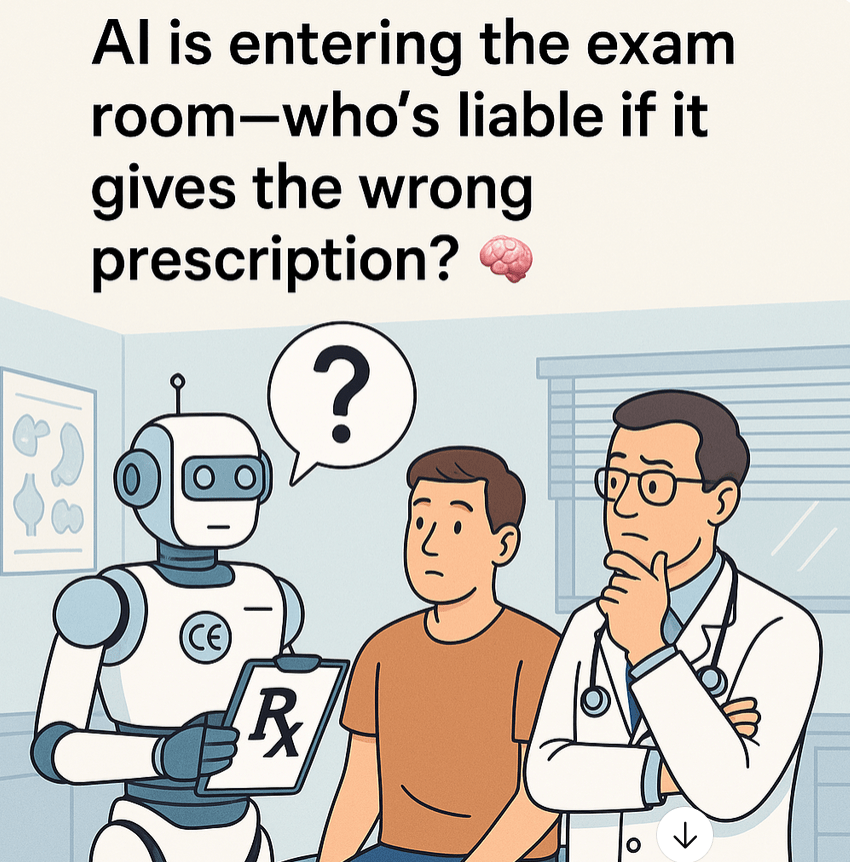
🚨 AI & Patient Data: A Serious Ethical Risk 🚨

A recent viral post on X suggests a doctor uploaded patient data into Grok AI, which then recommended a successful treatment. While this may sound like a breakthrough, it raises serious legal and ethical concerns.

⚠️ Why this is a Problem
🔹 Privacy Violations: Uploading patient data into non-compliant AI tools may breach HIPAA, PHIPA, or GDPR, leading to legal and professional risks.
🔹 Unvalidated AI Advice: Grok and similar AI models aren’t designed for clinical decision-making and lack regulatory approval.
🔹 Data Security Risks: Sensitive health data could be stored or accessed in ways that compromise confidentiality.
🔹 Erosion of Patient Trust: Using non-secure AI tools without consent can damage the doctor-patient relationship.

Responsible AI Use in Medicine
✔️ Use HIPAA-compliant, clinically validated AI tools.
✔️ Anonymize patient data before any AI analysis.
✔️ Obtain informed patient consent for AI-driven decisions.
✔️ Stay updated on AI regulations and ethical standards.

AI has potential in healthcare, but patient privacy and safety must come first. Innovation should never come at the cost of ethics.

AI in Healthcare: Are We Asking the Right Questions?

Figure from Patients’ Trust in Health Systems to Use Artificial Intelligence via JAMA.


After nearly a decade in medical education, I’ve seen AI quietly reshape both learning and clinical practice. But as educators, clinicians, and patients, are we asking the right questions about its use?

Too often, AI tools are implemented without transparency, oversight, or patient consent. Some platforms even guide users on capturing patient data—without clear governance—raising serious concerns about privacy, ownership, and compliance.

💡 Questions we all need to ask:
🔹 Patients: Is AI being used in my care? How is my data stored and used? Can I access my AI-generated records? Can I opt out?

🔹 Educators & Institutions: Are AI tools aligned with privacy laws? Have vendor agreements been updated to reflect AI-driven features?

🔹 Developers & Policymakers: Is AI implementation transparent and ethical? Are there built-in safeguards? Does the tool comply with FIPPA/HIPAA?

AI itself isn’t good or bad—it’s a tool. But without scrutiny, it can become a liability rather than an asset.

🔍 Never assume AI is being used ethically. Ask the hard questions. Demand clear answers. Protect patient trust.

~ Jacqueline

Learn more on Patients’ Trust in Health Systems to Use Artificial Intelligence via JAMA

Vaccinations


A measles outbreak is unfolding in Ontario, and health officials are urging parents to ensure their children are vaccinated. With cases rising across the province, the highly contagious virus is finding gaps in community immunity—gaps that could put infants, immunocompromised individuals, and unvaccinated children at risk.

Measles isn’t just a rash and fever; it can lead to severe complications like pneumonia, brain swelling (encephalitis), and even death. The good news? Vaccination works. The MMR (Measles, Mumps, Rubella) vaccine is over 97% effective after two doses and has been a pillar of public health for decades.

Unfortunately, declining vaccination rates have given measles a path to resurgence. Many cases are linked to international travel, where the virus spreads rapidly among unprotected individuals. The best defense is simple: Check your child’s vaccination status and book their MMR shot if they’re due.

Public health experts stress that herd immunity—where enough people are vaccinated to stop the virus from spreading—relies on at least 95% coverage. The more people delay or refuse vaccines, the more vulnerable communities become.

The takeaway? Measles is preventable, but only if we take action. Protect your child, your community, and those most at risk. Vaccinate.

Read more on Ontario measles cases more than double over last 2 weeks, 31 hospitalizations reported via CBC News.

Where to get immunized in British Columbia: https://immunizebc.ca/immunization-basics/where-get-immunized

Image via CDC.