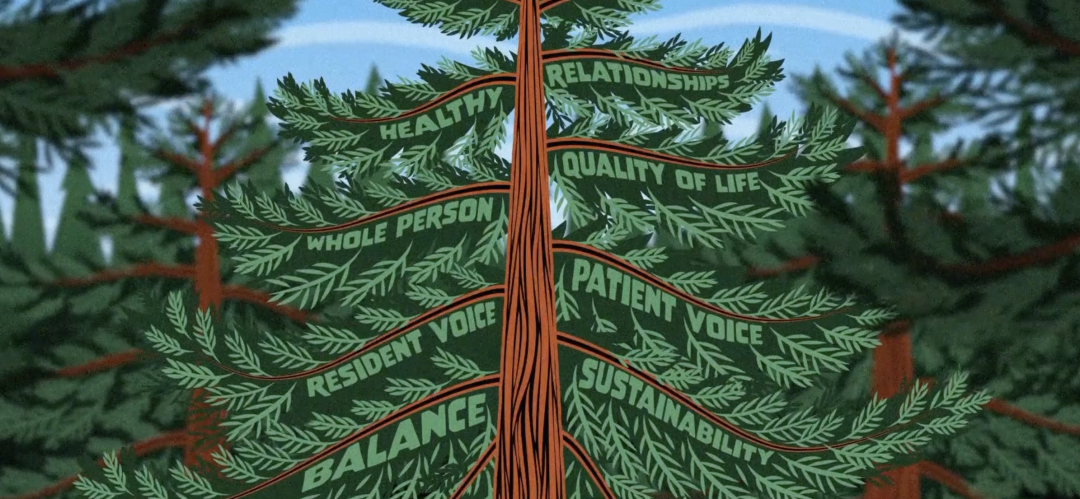
SAFE AI

We’re entering a new era in healthcare and medical education—one where AI is increasingly integrated into tasks such as clinical reasoning and decision support. To support clinicians and educators in using AI responsibly, we developed the SAFE approach:

S: Set Boundaries: Define what AI can and cannot do in your clinical context.
1. No final diagnoses, prescriptions, or critical decisions.
2. Use for drafts, brainstorming, summaries, or language simplification.
3. Establish clinical red lines where human judgment is non-negotiable.

A: Add Friction: Prevent blind reliance with built-in checks.
1. Label all AI-generated text: “Machine-generated. Verify before use.”
2. Require human review before integrating into EMRs.
3. Add pop-up reminders or checklists before clinical use.

F: Foster Reflection: Create space for metacognition.
1. Debrief as a team: “Where did AI help us? Where did it overreach?”
2. Reflect not just on workflow, but on thinking habits.
3. Make critical thinking part of every AI-assisted task.

E: Educate Clinicians: Build AI literacy as a core clinical skill.
1. Explain how language models work—and where they fail.
2. Share real stories of hallucinations, bias, and misfires.
3. Use vignettes to spark ethical reflection and dialogue.

As this technology evolves, it’s crucial to recognize that AI is less about being “artificial” or “intelligent,” and more about automation and translation. It does not replace human judgment—it requires it.

Canfield Distinguished Scholar in Patient Partnerships


Applications are now open for the position of Canfield Distinguished Scholar in Patient Partnerships at UBC. This part-time honorific position for UBC faculty is an opportunity to support research, teaching, and outreach initiatives in patient partnerships in health professional education. It has been enabled through a partnership between the Patient and Community Partnership for Education in the Office of UBC Health and the Centre for Health Education Scholarship.

This position was established thanks to the generous donation of Carolyn Canfield, with the intention of augmenting UBC’s leadership and furthering the understanding of how patients interacting with students early in their careers can support more compassionate, high-quality care.

For a copy of the full job posting and more information about the application process, please go to our website here. The awarding of this Distinguished Scholar is subject to the usual University approvals.

Applications can be submitted to:

Michelle Huebert, CHES Administrative Manager
Email: ches.manager@abbotsfordfamilymed
Subject Line: Canfield Distinguished Scholar in Patient Partnerships

Review of applications will begin on July 2, 2025, and will continue until the position is filled.

Please share this announcement within your networks and anyone who may be interested in applying.

In Memory of Dr. Theresa Alida van der Goes

Dr. Theresa Alida van der Goes

We are deeply saddened by the passing of Dr. Theresa Alida van der Goes—a remarkable physician, educator, and leader in Family Medicine.

Theresa’s impact on the UBC Faculty of Medicine and the Department of Family Practice has been profound. As a community Family Physician in Nanaimo, she cared for patients across clinical settings with skill and compassion. Beyond her clinical practice, Theresa was a pioneering force in assessment and evaluation, shaping the educational experience of countless residents across British Columbia.

From her early role in establishing the Nanaimo site to becoming the first Assessment Director for the UBC Postgraduate Family Medicine Program, Theresa’s leadership helped guide one of Canada’s largest family medicine residency programs. Her contributions were instrumental in building a fair, transparent, and evidence-informed approach to assessment that has become a national standard.

Recognized with the CAME Certificate of Merit Award in 2021, Theresa was celebrated for her thoughtful mentorship, intellectual rigor, and deep commitment to education. Even after retiring in 2022, she remained a trusted voice of wisdom and fairness.

She will be dearly missed and long remembered.

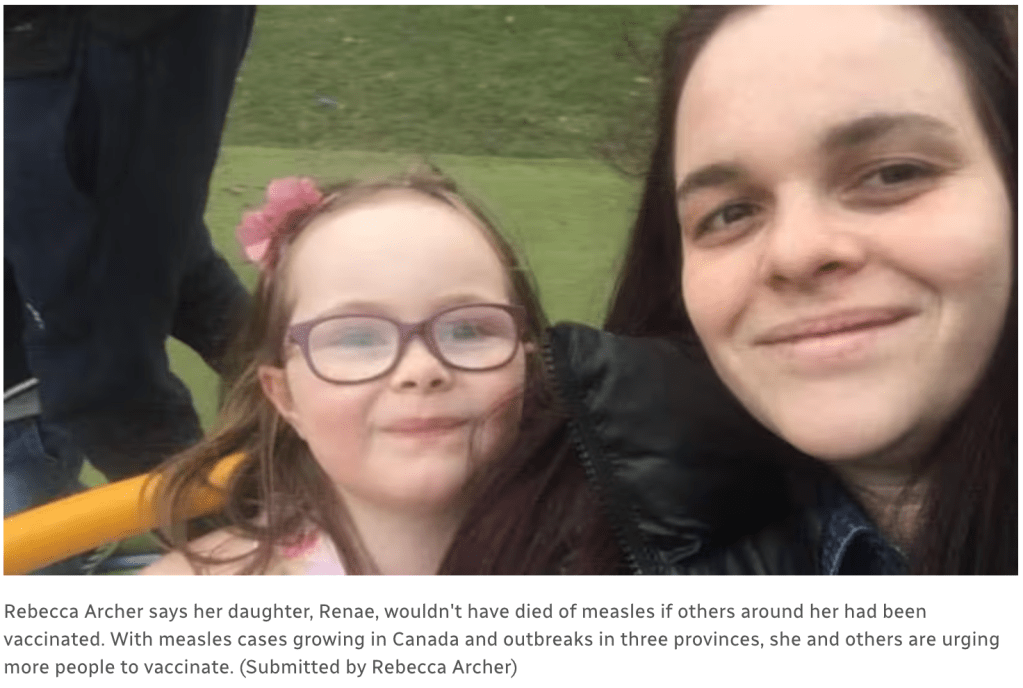
With measles outbreaks growing in Canada, this mother pleads with parents to vaccinate

Rebecca Archer lovingly places a pair of small glasses on a shelf filled with memorabilia like trinkets and photos. They belonged to her 10-year-old daughter, Renae, who suddenly died after a measles infection.

“She was just really intelligent. Just a really happy child, always smiling,” she remembers.

Renae was just five months old when she got the measles – too young to be vaccinated, but unable to avoid being exposed during an outbreak in Manchester, England, in 2013. The infant was hospitalized, but recovered. For the next 10 years, Renae had no other medical issues, her mom says. But the measles virus was sitting dormant in her brain for years. When it woke up, Renae started having seizures. Then, she couldn’t speak, or eat, or even stay conscious. 

“The fact that it was measles, I just couldn’t get my head around it,” Archer said. 

With measles cases on the rise in Canada at rates unseen in almost three decades — and vaccination coverage for childhood vaccines like the measles, mumps and rubella (MMR) shot falling since the pandemic  — Archer and others who have suffered from measles complications are pleading that those who can get vaccinated do. 

Read more via CBC News.

Housing Is Healthcare

May 2025 Research Round | Housing Is Healthcare: Equity in Access for All Residents

Date: Wednesday 14 May 2025
Time: 12:00 – 1:00 PM Pacific Time
Location: Zoom

Inequities exist within Canada’s public healthcare system, including geographic disparities that impact access to care. Please join us for the May 2025 Research Rounds, happening on Wednesday, May 14 at 12:00 pm PT. This virtual event features Dr. Jude Kornelsen (Associate Professor in the Department of Family Studies, Co-Director of the Centre for Rural Health Research) and community partner Asmaa Anwar, who will present findings from a mix-methods study undertaken in BC (April-August, 2024) to understand and document the cost consequences to and experiences of transplant patients who had to relocate to Vancouver from outside of the lower mainland to receive transplant care, including evidence-derived recommendations to improve access to care.

Support for those impacted by the tragedy at the Lapu-Lapu Day Festival

April 28, 2025

On April 26, a senseless attack at the Lapu-Lapu Day festival in Vancouver left at least 11 people dead and injured many others. It is shocking that a tragedy of this scale and violence could happen right here in our city, and our thoughts are with everyone who has suffered loss on this dreadful day.

At this very difficult time, we urge care and compassion for any staff, faculty or students impacted by this unthinkable event and who may need additional support. Below are resources to support all members of the UBC community:

Student resources

Faculty and staff resources

    UBC Human Resources is working closely with departments to deploy additional on-site counselling. The Employee and Family Assistance Program is also being expanded in support of part-time and auxiliary staff who may be impacted.

    In acknowledgment of this tragedy, the university will be lowering its flags to half-mast. The university extends our condolences and will continue to support our community members over the coming weeks. 

    Benoit-Antoine Bacon
    President and Vice-Chancellor On behalf of the UBC Executive

    THYRO-CHIC 2025: When Layering Becomes a Lifestyle Choice

    Screenshot from “Stuck” by Thirty Seconds to Mars, directed by Jared Leto (2023). Used for educational and awareness purposes.

    It’s easy to laugh about cold hands, freezing feet, and wearing gloves indoors — but sometimes, it’s more than just poor circulation or a drafty office.

    Feeling cold all the time is one of the early, often overlooked signs of hypothyroidism — a condition where the thyroid gland slows down, dragging your metabolism (and body temperature) with it.

    ✅ Always cold when others aren’t
    ✅ Needing gloves indoors
    ✅ Bundling up even in mild weather
    ✅ Fatigue, brittle nails, dry skin

    If this sounds familiar (or you’re starting to dress like Jared Leto at Fashion Week just to stay warm), it might be time to check your thyroid levels.
    Early diagnosis matters.

    Treatment can restore your energy, improve your health, and yes — maybe even reduce your daily glove budget.

    Stay warm, but stay curious about your health.
    Read more on Emerging Therapies in Hypothyroidism via Annu Rev Med.

    Rounds Royale: Lesions

    Game Show Host: Dr. Jeo Pardee, MD (Mostly Digital): She’s artificial, she’s intelligent, and she’s never taken a sick day.

    Let the games begin!

    “A 5-year-old boy from rural east-central Ontario was referred to the urgent dermatology service with tender papulopustular and nodular lesions on the trunk, limbs, and face, which had developed over 9 days. The 7 lesions began as small papules that gradually enlarged and developed purulent discharge. At the time of presentation, the largest lesion was a nodule (around 2 cm) with a central depression (Figure 1A), while other lesions were smaller (0.5–1.5 cm), and some were actively draining pus (Figure 1B).

    The patient had a 1-month history of a nonresolving cough, 2 brief febrile episodes, and mild lethargy. Three weeks before the skin lesions appeared, he had received 2 doses of oral dexamethasone for suspected croup, without improvement. Two days after the skin lesions appeared, he was started on azithromycin for clinical suspicion of pneumonia. Two days later, his treatment was changed to oral amoxicillin–clavulanic acid, given the pustular nature of the skin lesions. Six days after onset of the skin lesions, a chest radiograph showed left lower lobe infiltrate and a small pleural effusion. A complete blood count obtained at the same time revealed a leukocyte count of 10.1 (normal 5–13.2) × 109/L with normal differential, a platelet count of 457 (normal 197–382) × 109/L, and a hemoglobin of 125 (normal 96–128) g/L. His C-reactive protein was mildly elevated at 14.4 (normal < 5) mg/L. He completed a 7-day course of amoxicillin–clavulanic acid, which had no effect on the skin lesions.

    The patient’s medical history was notable for reactive airway disease managed with fluticasone (250 μg, 2 puffs twice daily). There was no history of recurrent or severe infections, and he was immunized according to the standard schedule. He had no recent travel, ill contacts, or symptomatic family members. Aside from the family owning 2 healthy dogs, he had no other contact with animals. The family had regraded the front yard of their home around 3 months before the onset of the skin lesions.”

    Don’t forget, people: phrasing matters. I need it in the form of a question — just like your existential crises during CaRMS. While we await your answer, a little Vivaldi — because drama belongs in diagnostics, too. Answer here via CMAJ!

    Dawn Patrol with Dr. Shahana Alibhai

    “True emotional literacy is being able to see others from the inside out and yourself from the outside in.” — Dr. Shahana Alibhai

    What an incredible kickoff to our Dawn Patrol UBC Abbotsford-Mission Faculty Development Series with Dr. Shahana Alibhai! She’s so inspiring and innovative in her approach to life, relationships, medicine, and education. Her powerful session reminded us that cultivating trust, curiosity, and mattering is core to shaping high-performance teams and compassionate clinical educators.

    Some key takeaways:
    🔹 Trust = Empathy + Authenticity + Logic
    🔹 Mattering means learners feel valued and add value
    🔹 Authenticity shines through when we share our stories including our failures. I love the quote she shared from Tim Ferriss “Tell us your best failure”
    🔹 Support isn’t one-size-fits-all. Ask your learners: What does support look like for you?

    Huge thanks to Dr. Alibhai for setting the tone for reflective leadership and emotionally intelligent teaching in medicine. She brings humanity to the science and passion to the art! And she’s one of our own!

    Learn more about her: https://drshahana.com/

    If this is what Dawn Patrol mornings feel like, count me in. 😊 ☕ 🌊

    Academics & Researchers: Traveling to the US

    “The association that represents academic staff at Canadian universities is warning its members against non-essential travel to the United States.

    The Canadian Association of University Teachers says it released updated travel advice Tuesday due to the “political landscape” created by the Trump administration and reports of some Canadians encountering difficulties while crossing the border.

    The association says academics who are from countries that have tense diplomatic relations with the United States, or who have themselves expressed negative views about the Trump administration, should be particularly cautious about attempting to cross the border.

    It says the warning also particularly applies to people “whose research could be seen as being at odds with the position of the current U.S. administration,” or who identify as transgender.

    In addition, the association says academics should carefully consider what information they have, or need to have, on their electronic devices when crossing the border, and take actions to protect sensitive information.

    Reports of foreigners being sent to detention or processing centres for more than seven days, including Canadian Jasmine Mooney as well as a pair of German tourists and a backpacker from Wales, have been making headlines since Trump took power.

    The Canadian government recently updated its advisory to warn residents travelling to the United States they may face scrutiny from border guards and the possibility of detention if denied entry.

    Crossings from Canada into the United States dropped by about 32 per cent, or 864,000 travellers, in March compared to the same month a year ago, according to data from U.S. Customs and Border Protection.”

    Read more on Canadian university teachers warned against travelling to the United States via CBC.