Antisemitism and Islamophobia in Medical Education

Date: Tuesday, September 20, 2022 – This webinar will be delivered in English
Delivery 1: 12:00pm-1:00pm EDT
Delivery 2: 12:00pm-1:00pm PST (3:00pm-4:00pm EDT)
Title: Antisemitism and Islamophobia in Medical Education
Presenters: Dr. Ayelet Kuper and Dr. Umberin Najeeb, University of Toronto

Biographies:

Dr. Ayelet Kuper, MD, DPhil, FRCPC is the Senior Advisor on Antisemitism for the Temerty Faculty of Medicine, University of Toronto. She is an Associate Professor in UofT’s Department of Medicine and practices medicine within the Division of General Internal Medicine at Sunnybrook Health Sciences Centre. She is a Scientist and Associate Director at the Wilson Centre (UHN/UofT). She is interested in the kinds of knowledge we see as legitimate within medical education and medicine more broadly, and in the ideas, individuals, and groups that are included or excluded based on their knowledge claims. A child and grandchild of Holocaust survivors, she holds a doctorate from the University of Oxford in Holocaust literature in addition to her medical training and is cross-appointed to UofT’s Anne Tanenbaum Centre for Jewish Studies. She has been teaching about equity and inclusion within the MD Program, graduate programs, and various residency programs for many years, and she sits on numerous committees related to anti-oppression and social justice for a wide range of equity-deserving groups at the Faculty of Medicine and at UofT. She has published over 80 peer-reviewed papers, many of which relate to power, equity, inclusion, and social justice.

Dr. Umberin Najeeb, MD, FCPS (Pak), FRCPC is the Senior Advisor on Islamophobia for the Temerty Faculty of Medicine, University of Toronto. She is an Associate Professor of Medicine and a staff internist at Sunnybrook Health Sciences Centre. She is the Faculty Lead, Equity for the Department of Medicine and the Co-Director of the Department of Medicine’s Master Teacher Program at the University of Toronto. She developed and implemented a unique research based longitudinal collaborative mentorship program for international medical graduate (IMG) physicians. Her areas of scholarly focus are 1) transition and integration of IMGs (and other Internationally Educated Health Professionals) into their training and working environments and 2) health professions education with specific focus on curriculum design, program development, faculty development and mentorship. She uses her voice and lived experiences as a Muslim woman to be an ally in her many roles. Dr. Najeeb teaches around the constructs of equity, diversity, inclusion, and allyship at undergraduate, postgraduate, and faculty development levels and contributes to committee and policy work related to social justice and EDI. She has won numerous teaching and mentorship awards at the local, provincial and national levels.

Overview:

These rounds are designed to address antisemitism and Islamophobia and to help faculty members ensure that all of our learners and faculty members feel safe and able to engage in respectful conversations.  The rounds will include content on transformative learning, dialogue. and teaching with stories about the antisemitism and Islamophobia affecting Canadian medical learners and faculty.

Learning objectives:

  1. Describe the recent and current landscape of antisemitism (AS) and Islamophobia (IP) in Canadian medical education
  2. Recognize where AS and IP fit within equity, diversity and inclusion (EDI) frameworks
  3. Develop an approach to teaching these complex topics in academic settings

To register for the event, please click here.

Guide to Advance Care Planning Discussions

THE COLLEGE OF LE COLLÈGE DES FAMILY PHYSICIANS MÉDECINS DE FAMILLE OF CANADA DU CANADA: Guide to Advance Care Planning Discussions
Developed by Residents for Residents

What is advance care planning?
Advance care planning (ACP) is a process in which a person reflects on and communicates their values, beliefs, goals, and preferences to best prepare for their future medical care. The designation of a substitute decision maker (SDM) is a key element of ACP.1

Why is ACP important?

Up to 76 per cent of patients will be unable to participate in some or all of the decisions affecting their own health care at the end of life,2 and 47 per cent of Canadians have not had a discussion with a family member or friend about what they would want or not want if they were ill and unable to communicate.3 Without the direction provided by ACP, families often feel burdened by directing medical care in crisis situations, and may feel ill-prepared to make decisions due to a lack of understanding of the patient’s values and preferences. When no prior direction has been documented, physicians often resort to using full resuscitative and medical care. This can mean aggressive treatments that the patient might not have wanted, and may result in unnecessary suffering for both the patient and their family.

Learn more about the resources that the CFPC provides here.

Traumatic Rupture of the Pancreas in Children

Figure 1. Complete rupture in the middle of the pancreas.

“Pancreatic trauma in children is rare; therefore, both scientific knowledge and clinical experience regarding its management are limited. Abdominal sonography and subsequent computed tomography (CT) imaging are the diagnostic mainstay after severe abdominal trauma in many pediatric trauma centers. However, the diagnosis of pancreatic injury is missed on the initial imaging in approximately one third of cases, with even higher numbers in young children. While conservative treatment is preferred in low-grade injuries, surgical interventions may be indicated in more severe injuries. We present a case series including four patients with high-grade pancreatic injury. Two patients were treated surgically with open laparotomy and primary suture of the head of the pancreas and pancreatico-enterostomy, one patient underwent endoscopic stenting of the pancreatic duct and one received conservative management including observation and secondary endoscopic treatment. We want to emphasize the fact that using a minimally invasive approach can be a feasible option in high-grade pancreatic injury in selected cases. Therefore, we advocate the necessity of fully staffed and equipped high-level pediatric trauma centers.”

Learn more on Minimally Invasive Approaches for Traumatic Rupture of the Pancreas in Children—A Case Series via MDPI.

In Doctors We Trust

“At the start of last summer, my 13-year-old daughter Martha was busy with life. She’d meet her friends in the park, make silly videos on her phone and play “kiss, marry, kill”. Her days were filled with books and memorising song lyrics. She’d wonder aloud if she might become an author, an engineer or a film director. Her future was brimming with promise, crowded with plans.

By the end of the summer she was dead, after shocking mistakes were made at one of the UK’s leading hospitals.

What follows is an account of how Martha was allowed to die, but also what happens when you have blind faith in doctors – and learn too late what you should have known to save your child’s life. What I learned, I now want everyone to know. In a small way, I hope Martha’s story might change how some people think about healthcare; it might even save a life.

I am a fierce supporter of the principles of the NHS and realise how many excellent doctors are practising today. There’s no need for the usual political arguments: as the hospital in question has confirmed to me, what happened to Martha had nothing to do with insufficient resources or overstretched doctors and nurses; it had nothing to do with austerity or cuts, or a health service under strain.

No matter how many times I’m told that ‘it was the doctors’ job to look after Martha’, I know, deep down, that had I acted differently, she’d still be living, and my life would not now be broken. It’s not that I think I’m to blame: the hospital has admitted breach of duty of care and talked of a ‘catastrophic error’. But if I’d been more aware of how hospitals work and how some doctors behave, my daughter would be with me now.

As another bereaved parent told me, life after the death of your child is like being on an island, separate from the mainland where the ‘normal people’ live. You so badly want to go back there but you never can. You’re stuck on the island for ever.”

Learn more on ‘We had such trust, we feel such fools’: how shocking hospital mistakes led to our daughter’s death via The Guardian.

BC Patient Safety & Quality Council

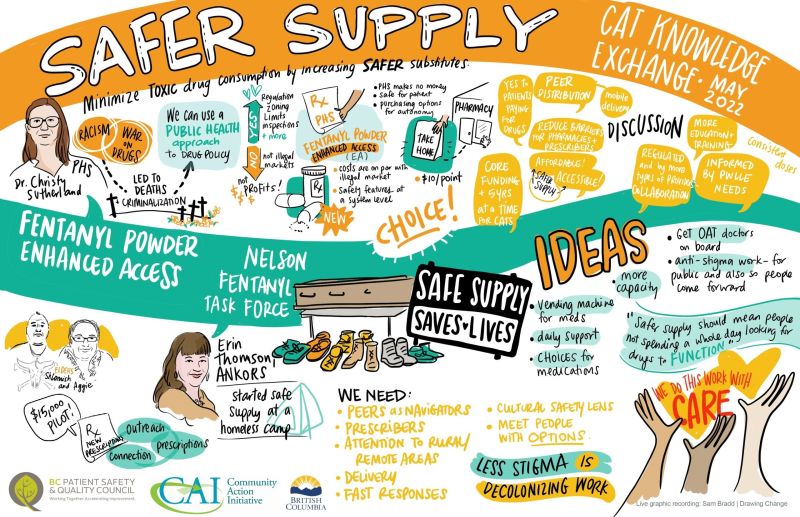
“We provide support for 36 Community Action Teams across BC to reduce overdose deaths with the CAT Knowledge Exchange initiative, which recently included a session on how to implement safer supply projects.

For International Overdose Awareness Day, explore resources that can help your community save lives.”

Learn more on the CAT Knowledge Exchange, Safer Supply Project Session (Part 1 & Part 2) via BC Patient Safety & Quality Council.

Study: Artificial Intelligence in Medical Education

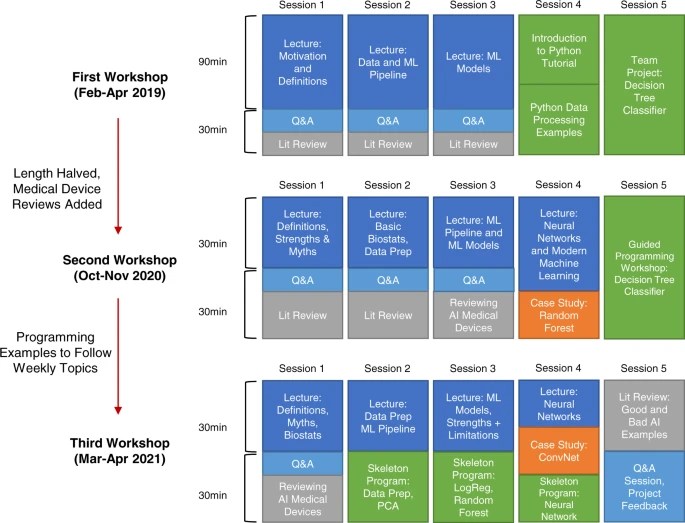
Artificial intelligence (AI) in medicine can potentially create workplace efficiencies and aid in clinical decision making. To guide AI applications safely, clinicians need some understanding of AI. Numerous commentaries advocate for AI concepts to be taught, such as interpreting AI models and validation processes. However, few structured programs have been implemented, especially on national scales. Pinto Dos Santos et al. surveyed 263 medical students and 71% agreed they needed AI training. Teaching AI to medical audiences requires nuanced design to balance technical and non-technical concepts for learners who typically have a broad range of prior knowledge. We describe our experiences delivering an AI workshop series to three cohorts of medical students and make recommendations for future AI medical education based on this.

Learn more on Insights from teaching artificial intelligence to medical students in Canada via Communications Medicine.

Coaching a Learner

“Academic coaching requires an inquiry-based approach to framing questions that will lead learners to their own conclusions. It complements advising, which answers specific questions, and mentoring, which is longitudinal and relational. Coaches see the learner as expert, and they assist with planning, achieving goals, and remaining accountable. Coaching can support academic performance, wellness, professionalism, leadership development, or skills training and does not require subject expertise. Notably, in skills coaching, coaching may look more directive than described above. All 3 roles—coach, advisor, and mentor—entail developing a trusted relationship designed to support the learner; however, coaches spend more time probing and listening than telling and answering, as depicted above.”

Study: On Patient Ownership

Introduction

Patient ownership is an important element of physicians’ professional responsibility, but important gaps remain in our understanding of this concept. We sought to develop a theory of patient ownership by studying it in continuity clinics from the perspective of residents, attending physicians, and patients.

Methods

Using constructivist grounded theory, we conducted 27 semi-structured interviews of attending physicians, residents, and patient families within two pediatric continuity clinics to examine definitions, expectations, and experiences of patient ownership from March–August 2019. We constructed themes using constant comparative analysis and developed a theory describing patient ownership that takes into account a diversity of perspectives.

Results

Patient ownership was described as a bi-directional, relational commitment between patient/family and physician that includes affective and behavioral components. The experience of patient ownership was promoted by continuity of care and constrained by logistical and other systems-based factors. The physician was seen as part of a medical care team that included clinic staff and patient families. Physicians adjusted expectations surrounding patient ownership for residents based on scheduling limitations.

Discussion

Our theory of patient ownership portrays the patient/family as an active participant in the patient–physician relationship, rather than a passive recipient of care. While specific expectations and tasks will vary based on the practice setting, our findings reframe the way in which patient ownership can be viewed and studied in the future by attending to a diversity of perspectives.

Learn more on “It is you, me on the team together, and my child”: Attending, resident, and patient family perspectives on patient ownership via Perspectives on Medical Education.

Is Monkeypox Airborne?

Could masks help prevent the spread of monkeypox?

PHAC is recommending healthcare settings adopt precautions against airborne, droplet, and contact transmission until more information is available.

The federal government is also generally encouraging “good hand hygiene and respiratory etiquette,” including wearing a mask or covering coughs, along with limiting sexual partners and practising safer sex.

Other public health authorities have emphasized avoiding close physical contact without much reference to spraying droplets or inhaling aerosols.

The United States Centers for Disease Control and Prevention initially warned travellers to wear face masks to prevent the spread of monkeypox but later dropped the recommendation, noting it “caused confusion.”

Now, the agency only suggests masks for those in close contact with infected people.

‘For people out and about, or travelling, the individual risk of having any contact with somebody with monkeypox remains incredibly low,’ Hugh Adler of the Respiratory Infections Group at the Liverpool School of Tropical Medicine told Reuters.”

Read more on Is monkeypox airborne? via CMAJ.

Unexplained Pediatric Hepatitis

“Earlier this year, physicians in the United Kingdom raised alarm over an apparent surge in cases of unexplained severe acute hepatitis in children.

By late June, the U.K. reported 258 cases, 12 of which required liver transplants, up from about 20 in a normal year.

As of mid-July, 35 countries reported more than 1000 probable cases, including 22 deaths, with most cases occurring in Europe.

Canada has reported 23 cases so far, two of which required liver transplants. An expert told CMAJ that’s roughly the number you would expect to see given the size of Canada’s population.

It’s not unusual for the causes of severe liver inflammation in children to be unknown – by some estimates, up to half of such cases are unexplained. And it’s still unclear whether the numbers reported globally reflect a true uptick in unexplained cases versus increased attention to the issue.”

More on Emerging clues to unexplained pediatric hepatitis via CMAJ.