Heat Warnings issued for southern B.C. August 14, 2023

Heat Warnings have been issued by Environment and Climate Change Canada for areas in the following regions of British Columbia (via EmergencyInfoBC):

More information:


Recommended actions

If you are in the area under a Heat Warning:

  1. Know the symptoms of heat-related illness and seek medical care if you or someone you are caring for are unwell:
    • Call 9-1-1 or your local emergency number in case of a medical emergency. 
  2. Take steps to keep your home cool or seek cooler locations, such as a community Cooling Centre. 
  3. Check on family, friends and neighbours who are at higher risk of heat-related illness, particularly if they live alone. 
  4. Drink plenty of water. Be aware that sugary or alcoholic drinks cause dehydration. 
  5. If you must be outdoors, take precautions to stay cool like wearing protective clothing and sunscreen, seeking cooler outdoor spaces and staying in shaded areas as much as possible. 
  6. Monitor local sources of information and follow all instructions from your municipality, Local Authority or First Nation

Cooling centres

In response to Heat Warnings, local governments and First Nations in affected areas may open Cooling Centres for the public.

Local governments and First Nations can post Cooling Centre locations on Emergency Map BC. If Cooling Centres are not posted in your area, visit your municipality, Local Authority or First Nation website or social media channels for more information.


Heat safety

Heat stroke is a health emergency. Call 9-1-1 or your local emergency number if you or someone you’re caring for is displaying symptoms.

Heat-related illness 

Overheating can be harmful to your health and potentially deadly. If someone is experiencing symptoms such as rapid breathing, rapid heart rate, extreme thirst, altered levels of consciousness, and decreased urination with an unusually dark yellow colour, take immediate steps to cool down and seek emergency care: 

  • Get medical attention or call 911 or your local emergency number. 
  • Move to a cooler indoor or outdoor area. 
  • Take a cold shower or bath if it is safe to do so. Or, remove clothing and apply ice packs and wet cloths, especially around the neck, armpits, and groin. Replace wet cloths regularly. 

Who is at greater risk? 

Heat affects everyone, but the risks are greater for: 

  • Older adults (i.e. over 50) 
  • People who live alone or are socially isolated 
  • People with pre-existing health conditions such as:
    • Diabetes  
    • Heart disease, or  
    • Respiratory disease 
  • People with mental illness such as:
    • Schizophrenia  
    • Depression, or  
    • Anxiety  
  • People with substance use disorders  
  • People who are marginally housed  
  • People who work in hot environments  
  • People who are pregnant  
  • Infants and young children, and 
  • People with other disabilities or limited mobility 

Check on family, friends and neighbours, who are at higher risk, particularly if they live alone. Make sure they have a cool space. For people susceptible to heat, the risk increases at indoor temperatures higher than 26°C, and temperatures higher than 31°C can be dangerous. 

Staying cool indoors 

  • If you have air conditioning, turn it on.  
  • If you do not have air conditioning, make your home cooler by:
    • Closing shutters, curtains, or blinds during the day (starting around 10am). This traps the cooler air inside and blocks the sun.  
    • Re-open curtains or blinds and windows at around 8 p.m. to let the cooler overnight air into the house.  
    • Place multiple fans around your home to help move cooler air into the home overnight.  
  • Take cool baths or showers.

Staying cool outdoors 

  • Seek cooler outdoor spaces and stay out of direct sunlight as much as possible.
  • Do errands in the morning or late in the day.  
  • Never leave children or pets in a parked car.  
  • Stay in the shade and wear a hat and protective clothing.  
  • Use sunscreen and UV-protective eyewear.  
  • Seek cooler, breezier areas when outdoors, such as large parks near trees and water. 

Resources

To prepare for heat, refer to the following resources:

For heat safety recommendations specific to your area, visit the heat information provided by your local health authority:

If you suspect heat-related illness, contact a healthcare provider or call HealthLinkBC at 8-1-1. Mild to moderate heat illness can quickly become severe. In case of a medical emergency, dial 9-1-1.


About heat alerts

There are two kinds of heat alerts issued in BC:

  • Heat Warning: daytime and overnight temperatures are higher than usual, but they’re not getting hotter every day. Take the usual steps to stay cool.
  • Extreme Heat Emergency: daytime and overnight temperatures are higher than usual, and are getting hotter every day. Activate your emergency plan for heat.

For more information about how Environment and Climate Change Canada determines Heat Warnings in BC, visit the Criteria for Public Weather Alerts.

On Sugar-Sweetened and Artificially Sweetened Beverages

Importance  Approximately 65% of adults in the US consume sugar-sweetened beverages daily.

Objective  To study the associations between intake of sugar-sweetened beverages, artificially sweetened beverages, and incidence of liver cancer and chronic liver disease mortality.

Design, Setting, and Participants  A prospective cohort with 98 786 postmenopausal women aged 50 to 79 years enrolled in the Women’s Health Initiative from 1993 to 1998 at 40 clinical centers in the US and were followed up to March 1, 2020.

Exposures  Sugar-sweetened beverage intake was assessed based on a food frequency questionnaire administered at baseline and defined as the sum of regular soft drinks and fruit drinks (not including fruit juice); artificially sweetened beverage intake was measured at 3-year follow-up.

Main Outcomes and Measures  The primary outcomes were (1) liver cancer incidence, and (2) mortality due to chronic liver disease, defined as death from nonalcoholic fatty liver disease, liver fibrosis, cirrhosis, alcoholic liver diseases, and chronic hepatitis. Cox proportional hazards regression models were used to estimate multivariable hazard ratios (HRs) and 95% CIs for liver cancer incidence and for chronic liver disease mortality, adjusting for potential confounders including demographics and lifestyle factors.

Results  During a median follow-up of 20.9 years, 207 women developed liver cancer and 148 died from chronic liver disease. At baseline, 6.8% of women consumed 1 or more sugar-sweetened beverage servings per day, and 13.1% consumed 1 or more artificially sweetened beverage servings per day at 3-year follow-up. Compared with intake of 3 or fewer servings of sugar-sweetened beverages per month, those who consumed 1 or more servings per day had a significantly higher risk of liver cancer (18.0 vs 10.3 per 100 000 person-years [P value for trend = .02]; adjusted HR, 1.85 [95% CI, 1.16-2.96]; P = .01) and chronic liver disease mortality (17.7 vs 7.1 per 100 000 person-years [P value for trend <.001]; adjusted HR, 1.68 [95% CI, 1.03-2.75]; P = .04). Compared with intake of 3 or fewer artificially sweetened beverages per month, individuals who consumed 1 or more artificially sweetened beverages per day did not have significantly increased incidence of liver cancer (11.8 vs 10.2 per 100 000 person-years [P value for trend = .70]; adjusted HR, 1.17 [95% CI, 0.70-1.94]; P = .55) or chronic liver disease mortality (7.1 vs 5.3 per 100 000 person-years [P value for trend = .32]; adjusted HR, 0.95 [95% CI, 0.49-1.84]; P = .88).

Conclusions and Relevance  In postmenopausal women, compared with consuming 3 or fewer servings of sugar-sweetened beverages per month, those who consumed 1 or more sugar-sweetened beverages per day had a higher incidence of liver cancer and death from chronic liver disease. Future studies should confirm these findings and identify the biological pathways of these associations.

Sugar-Sweetened and Artificially Sweetened Beverages and Risk of Liver Cancer and Chronic Liver Disease Mortality via JAMA Network

Hunger

Image by Dall-e

You regale me
with stories
of meals past
seared scallops
fresh snap peas from your garden
— not the peas of my youth
which I shamefully admit
I still cannot tolerate
—more and more your mind wanders
outside the confines of these walls
remember that last
chicken masala?
you don’t trust them anymore
those ghost flavours on your tongue
taunting you
almost bruising your wanting taste buds
You would rather
mine the pure pleasures of food
as you perch on the edge
of your hospital bed
than acknowledge the tube
in your nose
and your rising lipase levels
You’re afraid to eat now
so instead
you ask me to indulge
in some steak salad
and wine and report back
tomorrow

Hunger by Poet Hollis Roth via Ars Medica

About the Poet Hollis Roth is a palliative care physician, graduate student, and writer. She uses narrative medicine and poetry to explore themes of grief, loss, and hope. Hollis lives in Lethbridge, Alberta, with her two beloved cats Iggy and Roy. Email: hollis.roth@dfm.queensu.ca

No Doctor is an Island

Image generated by DALL-E 2.

“We can see physician–physician power dynamics play out in several ways.”

In this issue of Medical Education, Armson et al. report on an ethnographic study of how small groups of family physicians work together in communities of practice to apply new evidence-based information into practice.1 From these data, the authors developed a ‘change talk’ framework to illustrate the conversational elements which propel the adoption and adaptation of medical and practice knowledge.1 They conclude that iterative questioning and sharing of practice experiences in small learning groups helps physicians develop feasible and rigorous strategies for incorporating new knowledge and practice changes.1

The ‘change talk’ framework was identified within the context of mono-professional communities of education practice (CoPs), in this case groups of family physicians centred on continuing medical education. CoPs, often understood as a group of professionals sharing a set of problems and learning and innovating together, are valuable in medicine, particularly for professional development.2 CoPs are frequently mono-professional (e.g., family physicians or specialist physicians), as they are in the Armson study, rather than intraprofessional (e.g., a mix of family physicians and specialist physicians). Mono-professional knowledge generation shapes the questions asked, comparators considered and therefore the knowledge generated. As a result, the knowledge may not be seamlessly transferable to other professional groups. We can see this in clinical practice guidelines produced by groups of specialist physicians, often without fulsome involvement from family physicians. These guidelines have the hallmark of focusing on the diagnosis and management of a single illness or organ system, without consideration of how therapeutic options may interact in patients with multiple co-morbidities.1, 3 The paper by Armson et al. has provided a testament to the value of mono-professional continuing education CoPs and can be used to consider how additional benefit may be realised within intraprofessional education CoPs and which challenges may be encountered.

It is often assumed that professional learning and working could be enhanced by taking another’s perspective in account. Research has, however, shown that understanding another profession is not made possible by simply taking perspective but by getting perspective.4 This means that direct conversations between specialists and family physicians are essential4 to the practice of high quality comprehensive care. In order to realise the promise of true intraprofessional collaboration and education, physicians must acknowledge and overcome engrained professional and social hierarchies that manifest in power dynamics.5, 6 We can see physician–physician power dynamics play out in several ways; previous research has shown that physicians easily overlook how hierarchy can lead to different perceptions of risks and patterns of silencing.5 These intraprofessional power dynamics are also present within medical education settings, where there is a tradition of physicians and trainees hiding their uncertainty to maintain credibility.7, 8 This may be exacerbated in specialist–family physician interaction because the intraprofessional hierarchy often places specialists at a higher status than family physicians, such as in educational arrangements which find family physicians being trained by specialists, but seldom reverses that dynamic.9

Read more on No Doctor is an Island via Medical Education.

“Weekend Warrior” Physical Activity & Incident Cardiovascular Disease

Image by Kiet Le (source)

Key Points
Question  Does engagement in moderate to vigorous physical activity, with most activity concentrated within 1 to 2 days of the week (ie, a “weekend warrior” pattern), confer similar cardiovascular benefits to more evenly distributed physical activity?

Findings  In an analysis of 89 573 individuals providing a week of accelerometer-based physical activity data, a weekend warrior pattern of physical activity was associated with similarly lower risks of incident atrial fibrillation, myocardial infarction, heart failure, and stroke compared with more evenly distributed physical activity.

Meaning  Increased activity, even when concentrated within 1 to 2 days each week, may be effective for improving cardiovascular risk profiles.

Learn more on Accelerometer-Derived “Weekend Warrior” Physical Activity and Incident Cardiovascular Disease via JAMA.

UBC President & Vice Chancellor

Dr. Benoit-Antoine Bacon has been named the 17th President and Vice-Chancellor of The University of British Columbia, the university announced today.

“I am delighted to welcome Dr. Bacon to UBC,” said UBC Board of Governors Chair, Nancy McKenzie. “Dr. Bacon brings outstanding leadership qualities, vision, experience and a strong relationship-based approach to engagement with students, faculty and staff, and the broader post-secondary community. We are excited to work with him to realize UBC’s vision of inspiring people, ideas and actions for a better world.”

Learn more about Dr. Bacon via UBC News.

Diagnostic Test Accuracy

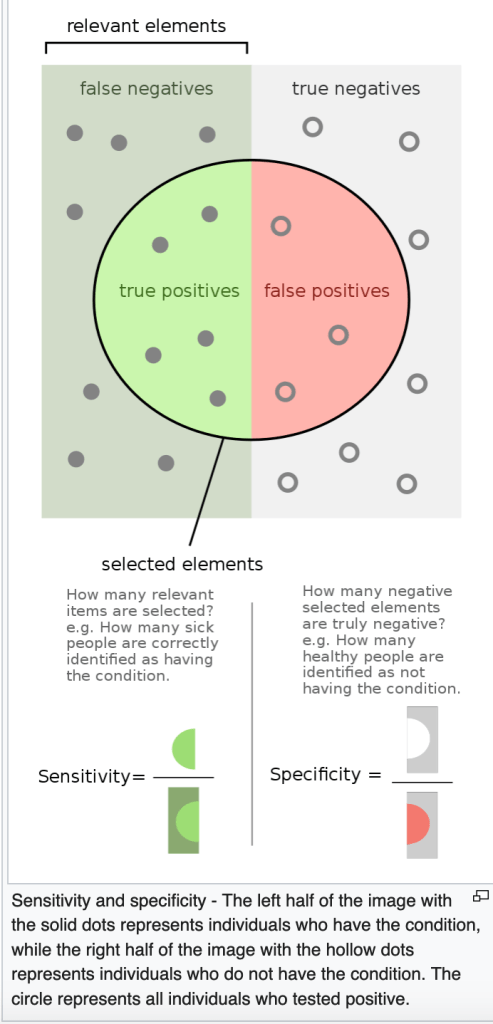
Background: Sensitivity and specificity are characteristics of a diagnostic test and are not expected to change as the prevalence of the target condition changes. We sought to evaluate the association between prevalence and changes in sensitivity and specificity.

Sensitivity and specificity: Image retrieved via Wikipedia.

Methods: We retrieved data from meta-analyses of diagnostic test accuracy published in the Cochrane Database of Systematic Reviews (2003–2020). We used mixed-effects random-intercept linear regression models to evaluate the association between prevalence and logit-transformed sensitivity and specificity. The model evaluated all meta-analyses as nested within each systematic review.

Results: We analyzed 6909 diagnostic test accuracy studies from 552 meta-analyses that were included in 92 systematic reviews. For sensitivity, compared with the lowest quartile of prevalence, the second, third and fourth quartiles were associated with significantly higher odds of identifying a true positive case (odds ratio [OR] 1.17, 95% confidence interval [CI] 1.09–1.26; OR 1.32, 95% CI 1.23–1.41; OR 1.47, 95% CI 1.37–1.58; respectively). For specificity, compared with the lowest quartile of prevalence, the second, third and fourth quartiles were associated with significantly lower odds of identifying a true negative case (OR 0.74, 95% CI 0.69–0.80; OR 0.65, 95% CI 0.60–0.70; OR 0.47, 95% CI 0.44–0.51; respectively). Pooled regression coefficients from bivariate models conducted within each meta-analysis showed that prevalence was positively associated with sensitivity and negatively associated with specificity. Findings were consistent across subgroups.

Interpretation: In this large sample of diagnostic studies, higher prevalence was associated with higher estimated sensitivity and lower estimated specificity. Clinicians should consider the implications of disease prevalence and spectrum when interpreting the results from studies of diagnostic test accuracy.

The association of sensitivity and specificity with disease prevalence: analysis of 6909 studies of diagnostic test accuracy via CMAJ.

First-Ever Malaria Vaccine

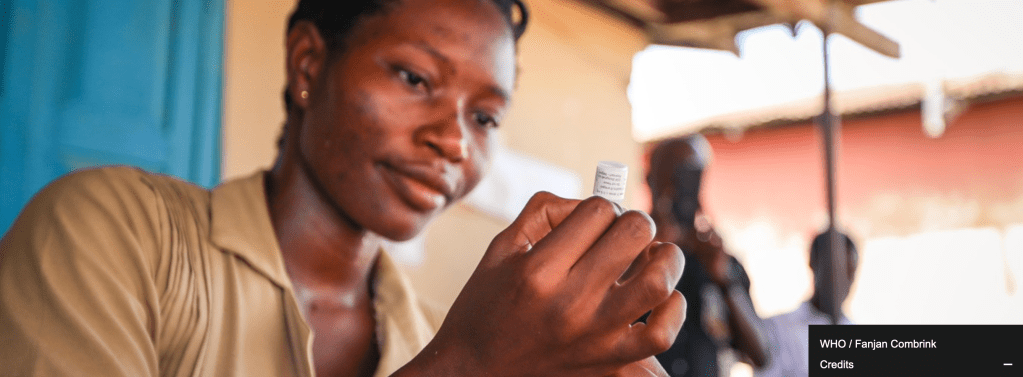
“Twelve countries across different regions in Africa are set to receive 18 million doses of the first-ever malaria vaccine over the next two years. The roll out is a critical step forward in the fight against one of the leading causes of death on the continent.”Twelve countries across different regions in Africa are set to receive 18 million doses of the first-ever malaria vaccine over the next two years. The roll out is a critical step forward in the fight against one of the leading causes of death on the continent.

The allocations have been determined through the application of the principles outlined in the Framework for allocation of limited malaria vaccine supply that prioritizes those doses to areas of highest need, where the risk of malaria illness and death among children are highest.

Since 2019, Ghana, Kenya and Malawi have been delivering the malaria vaccine through the Malaria Vaccine Implementation Programme (MVIP), coordinated by WHO and funded by Gavi, the Vaccine Alliance, the Global Fund to Fight AIDS, Tuberculosis and Malaria, and Unitaid. The RTS,S/AS01 vaccine has been administered to more than 1.7 million children in Ghana, Kenya and Malawi since 2019 and has been shown to be safe and effective, resulting in both a substantial reduction in severe malaria and a fall in child deaths. At least 28 African countries have expressed interest in receiving the malaria vaccine.

In addition to Ghana, Kenya and Malawi, the initial 18 million dose allocation will enable nine more countries, including Benin, Burkina Faso, Burundi, Cameroon, the Democratic Republic of the Congo, Liberia, Niger, Sierra Leone and Uganda, to introduce the vaccine into their routine immunization programmes for the first time. This allocation round makes use of the supply of vaccine doses available to Gavi, Vaccine Alliance via UNICEF. The first doses of the vaccine are expected to arrive in countries during the last quarter of 2023, with countries starting to roll them out by early 2024. 

‘This vaccine has the potential to be very impactful in the fight against malaria, and when broadly deployed alongside other interventions, it can prevent tens of thousands of future deaths every year,’ said Thabani Maphosa, Managing Director of Country Programmes Delivery at Gavi, the Vaccine Alliance. ‘While we work with manufacturers to help ramp up supply, we need to make sure the doses that we do have are used as effectively as possible, which means applying all the learnings from our pilot programmes as we broaden out to a new total of 12 countries.'”

Learn more on 18 million doses of first-ever malaria vaccine allocated to 12 African countries for 2023–2025: Gavi, WHO and UNICEF via WHO.

New Treatment Option for Aggressive Cancers

“A new study by researchers at UBC’s Faculty of Medicine and McGill University has revealed that the popular dietary supplement alanine may offer an effective treatment option for people diagnosed with several types of aggressive cancer.

The findings, published in Nature Communications, show alanine’s potential as a treatment for cancers characterized by a dual loss of the SMARCA4 and SMARCA2 genes. These SMARCA4/2-deficient cancers include small cell carcinoma of the ovary, hypercalcemic type (SCCOHT) — a rare and lethal tumour that occurs predominantly in women in their mid-twenties — as well as other malignancies, including a subset of lung cancers.

Currently, there are few effective treatments for these forms of cancer, which are often highly resistant to conventional chemotherapies and have very poor outcomes.

‘Through an unbiased genome-wide screen, our teams identified the key metabolic change that enables the development of the aggressive SMARCA4/2-deficient cancers,’ said Dr. Yemin Wang, an adjunct professor in UBC’s department of laboratory medicine and staff scientist at the BC Cancer, and co-lead author of the study. ‘This finding not only helps us better understand the biology of these cancers, but also provided multiple potential treatment strategies, alone or in combination with chemotherapy or immunotherapy, for clinical validation.’”

Learn more here on “Popular dietary supplement may offer new treatment option for aggressive cancers” via UBC Faculty of Medicine.

Government of Canada Strengthens Access to Abortion Services 

Health Canada has recently provided funding to help increase safe and consistent access to abortion services across Canada. As a part of this work, the University of British Columbia Faculty of Medicine division of Continuing Professional Development (UBC CPD) is developing new education for primary care providers. This education will provide doctors and other health professionals guidance and insight into intersectionality and the historic, systemic and sustained barriers people face while accessing abortion care (or optimal care) in Canada.

To make this education as impactful as possible, we need to hear from you.

As a health professional working in either primary care or specifically in abortion care, your experience can help us create meaningful education for your continuing professional development.

How to participate

Participate in a virtual 90-minute, paid focus group.

Consider joining a focus group if you:

  • Practice in Canada and,
  • Regularly provide surgical or medical abortions in your practice as an OBGYN, family physician, or nurse practitioner, midwife, pharmacist, registered nurse or public health nurse

OR

  • Are a family physician, or nurse practitioner, working in primary care and do not provide abortion care in your practice

OR

  • Are a midwife, pharmacist, registered nurse or public health nurse that often provides education, support, or referrals for abortion care access

Sign up

If you are selected for a focus group, you will be contacted via email with next steps.

Contact

For questions regarding this project, contact:cpd.education@ubc.ca.