Key Points Question Does engagement in moderate to vigorous physical activity, with most activity concentrated within 1 to 2 days of the week (ie, a “weekend warrior” pattern), confer similar cardiovascular benefits to more evenly distributed physical activity?
Findings In an analysis of 89 573 individuals providing a week of accelerometer-based physical activity data, a weekend warrior pattern of physical activity was associated with similarly lower risks of incident atrial fibrillation, myocardial infarction, heart failure, and stroke compared with more evenly distributed physical activity.
Meaning Increased activity, even when concentrated within 1 to 2 days each week, may be effective for improving cardiovascular risk profiles.
Learn more on Accelerometer-Derived “Weekend Warrior” Physical Activity and Incident Cardiovascular Disease via JAMA.
Dr. Benoit-Antoine Bacon has been named the 17th President and Vice-Chancellor of The University of British Columbia, the university announced today.
“I am delighted to welcome Dr. Bacon to UBC,” said UBC Board of Governors Chair, Nancy McKenzie. “Dr. Bacon brings outstanding leadership qualities, vision, experience and a strong relationship-based approach to engagement with students, faculty and staff, and the broader post-secondary community. We are excited to work with him to realize UBC’s vision of inspiring people, ideas and actions for a better world.”
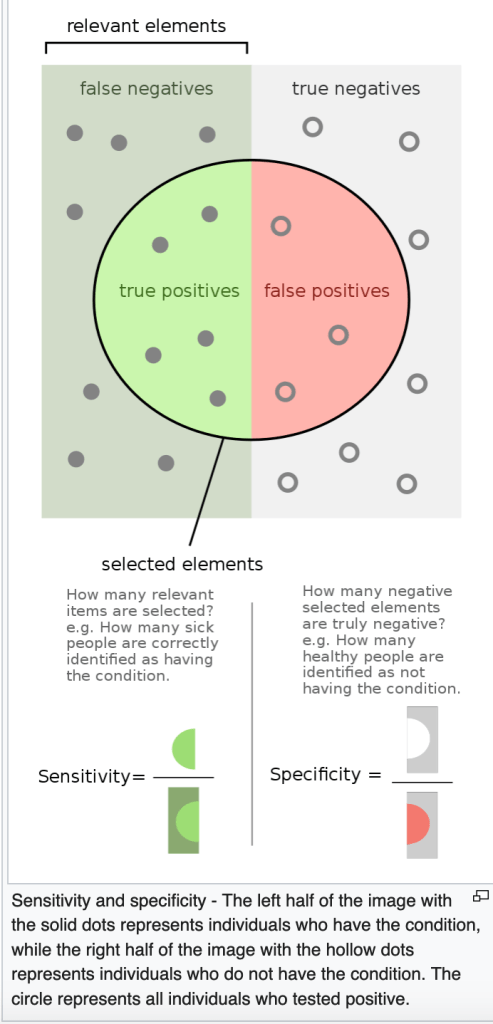
Background: Sensitivity and specificity are characteristics of a diagnostic test and are not expected to change as the prevalence of the target condition changes. We sought to evaluate the association between prevalence and changes in sensitivity and specificity.
Sensitivity and specificity: Image retrieved via Wikipedia.
Methods: We retrieved data from meta-analyses of diagnostic test accuracy published in the Cochrane Database of Systematic Reviews (2003–2020). We used mixed-effects random-intercept linear regression models to evaluate the association between prevalence and logit-transformed sensitivity and specificity. The model evaluated all meta-analyses as nested within each systematic review.
Results: We analyzed 6909 diagnostic test accuracy studies from 552 meta-analyses that were included in 92 systematic reviews. For sensitivity, compared with the lowest quartile of prevalence, the second, third and fourth quartiles were associated with significantly higher odds of identifying a true positive case (odds ratio [OR] 1.17, 95% confidence interval [CI] 1.09–1.26; OR 1.32, 95% CI 1.23–1.41; OR 1.47, 95% CI 1.37–1.58; respectively). For specificity, compared with the lowest quartile of prevalence, the second, third and fourth quartiles were associated with significantly lower odds of identifying a true negative case (OR 0.74, 95% CI 0.69–0.80; OR 0.65, 95% CI 0.60–0.70; OR 0.47, 95% CI 0.44–0.51; respectively). Pooled regression coefficients from bivariate models conducted within each meta-analysis showed that prevalence was positively associated with sensitivity and negatively associated with specificity. Findings were consistent across subgroups.
Interpretation: In this large sample of diagnostic studies, higher prevalence was associated with higher estimated sensitivity and lower estimated specificity. Clinicians should consider the implications of disease prevalence and spectrum when interpreting the results from studies of diagnostic test accuracy.
The association of sensitivity and specificity with disease prevalence: analysis of 6909 studies of diagnostic test accuracy via CMAJ.
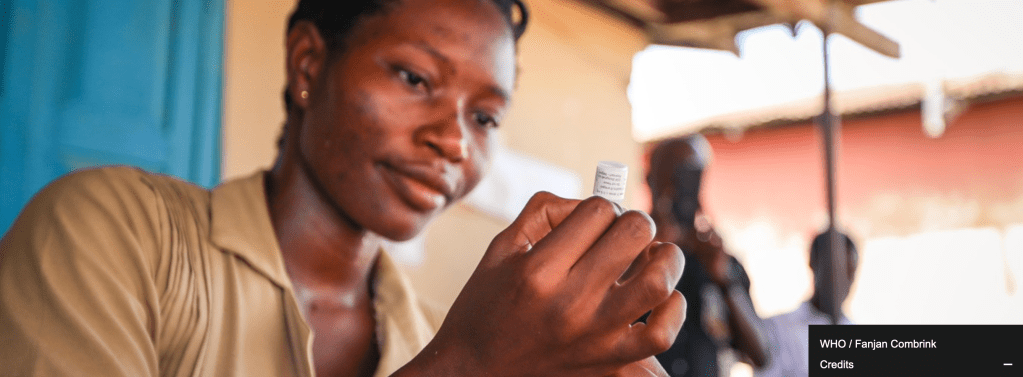
“Twelve countries across different regions in Africa are set to receive 18 million doses of the first-ever malaria vaccine over the next two years. The roll out is a critical step forward in the fight against one of the leading causes of death on the continent.”Twelve countries across different regions in Africa are set to receive 18 million doses of the first-ever malaria vaccine over the next two years. The roll out is a critical step forward in the fight against one of the leading causes of death on the continent.
The allocations have been determined through the application of the principles outlined in the Framework for allocation of limited malaria vaccine supply that prioritizes those doses to areas of highest need, where the risk of malaria illness and death among children are highest.
Since 2019, Ghana, Kenya and Malawi have been delivering the malaria vaccine through the Malaria Vaccine Implementation Programme (MVIP), coordinated by WHO and funded by Gavi, the Vaccine Alliance, the Global Fund to Fight AIDS, Tuberculosis and Malaria, and Unitaid. The RTS,S/AS01 vaccine has been administered to more than 1.7 million children in Ghana, Kenya and Malawi since 2019 and has been shown to be safe and effective, resulting in both a substantial reduction in severe malaria and a fall in child deaths. At least 28 African countries have expressed interest in receiving the malaria vaccine.
In addition to Ghana, Kenya and Malawi, the initial 18 million dose allocation will enable nine more countries, including Benin, Burkina Faso, Burundi, Cameroon, the Democratic Republic of the Congo, Liberia, Niger, Sierra Leone and Uganda, to introduce the vaccine into their routine immunization programmes for the first time. This allocation round makes use of the supply of vaccine doses available to Gavi, Vaccine Alliance via UNICEF. The first doses of the vaccine are expected to arrive in countries during the last quarter of 2023, with countries starting to roll them out by early 2024.
‘This vaccine has the potential to be very impactful in the fight against malaria, and when broadly deployed alongside other interventions, it can prevent tens of thousands of future deaths every year,’ said Thabani Maphosa, Managing Director of Country Programmes Delivery at Gavi, the Vaccine Alliance. ‘While we work with manufacturers to help ramp up supply, we need to make sure the doses that we do have are used as effectively as possible, which means applying all the learnings from our pilot programmes as we broaden out to a new total of 12 countries.'”
Learn more on 18 million doses of first-ever malaria vaccine allocated to 12 African countries for 2023–2025: Gavi, WHO and UNICEF via WHO.
“A new study by researchers at UBC’s Faculty of Medicine and McGill University has revealed that the popular dietary supplement alanine may offer an effective treatment option for people diagnosed with several types of aggressive cancer.
The findings, published in Nature Communications, show alanine’s potential as a treatment for cancers characterized by a dual loss of the SMARCA4 and SMARCA2 genes. These SMARCA4/2-deficient cancers include small cell carcinoma of the ovary, hypercalcemic type (SCCOHT) — a rare and lethal tumour that occurs predominantly in women in their mid-twenties — as well as other malignancies, including a subset of lung cancers.
Currently, there are few effective treatments for these forms of cancer, which are often highly resistant to conventional chemotherapies and have very poor outcomes.
‘Through an unbiased genome-wide screen, our teams identified the key metabolic change that enables the development of the aggressive SMARCA4/2-deficient cancers,’ said Dr. Yemin Wang, an adjunct professor in UBC’s department of laboratory medicine and staff scientist at the BC Cancer, and co-lead author of the study. ‘This finding not only helps us better understand the biology of these cancers, but also provided multiple potential treatment strategies, alone or in combination with chemotherapy or immunotherapy, for clinical validation.’”
Learn more here on “Popular dietary supplement may offer new treatment option for aggressive cancers” via UBC Faculty of Medicine.
Health Canada has recently provided funding to help increase safe and consistent access to abortion services across Canada. As a part of this work, the University of British Columbia Faculty of Medicine division of Continuing Professional Development (UBC CPD) is developing new education for primary care providers. This education will provide doctors and other health professionals guidance and insight into intersectionality and the historic, systemic and sustained barriers people face while accessing abortion care (or optimal care) in Canada.
To make this education as impactful as possible, we need to hear from you.
As a health professional working in either primary care or specifically in abortion care, your experience can help us create meaningful education for your continuing professional development.
How to participate
Participate in a virtual 90-minute, paid focus group.
Consider joining a focus group if you:
Practice in Canada and,
Regularly provide surgical or medical abortions in your practice as an OBGYN, family physician, or nurse practitioner, midwife, pharmacist, registered nurse or public health nurse
OR
Are a family physician, or nurse practitioner, working in primary care and do not provide abortion care in your practice
OR
Are a midwife, pharmacist, registered nurse or public health nurse that often provides education, support, or referrals for abortion care access
New CIHR Funding Opportunity: Strengthening the Health Workforce for System Transformation
In partnership with CIHR’s Institute of Aging (IA), Institute of Cancer Research (ICR) Institute of Human Development, Child and Youth Health (IHDCYH), Institute of Population and Public Health (IPPH), the Centre for Research on Pandemic Preparedness and Health Emergencies (CRPPHE), the Social Sciences and Humanities Research Council and Michael Smith Health Research BC, this funding opportunity aims to address the current health workforce crisis, a key priority area identified within the IHSPR strategic plan, and advance the Quadruple Aim (improved population health outcomes, better patient and provider experience, and increased value) and health equity.
We encourage you to engage in this exciting new funding opportunity and appreciate your support in spreading the word. Please don’t hesitate to reach out should you have any questions.
Aim: To inform the implementation, evaluation and/or spread/scale (share) of an evidence-informed workforce solution(s) that addresses system level challenges (e.g., system organization, governance, accountability, remuneration, capacity building) that align with one or more of the themes identified in the CAHS Assessment on Health Human Resources to advance the Quadruple Aim and health equity.
Research area(s): In addition to aligning with one or more CAHS Themes, projects must align with one or more of the following research areas: general health workforce, Indigenous health workforce, pediatric workforce, public health workforce, rural and remote health workforce, cancer health workforce, aging workforce, workforce that cares for an aging population and equitable, diverse and inclusive health workforce.
Additional details:
14 Implementation Science Team grants are available.
Each grant = $250,000 per year for 3 years ($750,000 total).
Supplemental funding of $375,000 will support the highest overall ranked fundable application to lead the Evidence Support and Knowledge Mobilization Hub for timely dissemination, exchange, and uptake of evidence into policy and practice.
An information webinar is scheduled for June 27, 2023 at 1 pm EDT| Register here.
The registration deadline is October 5, 2023
The application deadline is November 9, 2023.
For more information, please refer to the full funding opportunity on ResearchNet.
“On May 23, Indigenous elders and community members, alongside family members, friends, faculty and staff, gathered at UBC’s First Nations Longhouse to honour and celebrate the incredible achievements of this year’s Indigenous medical school graduates.
This year’s graduates are joining a strong community of more than 130 UBC Indigenous medical alumni who have also graduated from the Faculty of Medicine’s Indigenous MD Admissions pathway and are now providing culturally safe and accessible health care for families and communities across British Columbia (B.C.) and beyond.
The pathway, which began in 2002, serves a pivotal role in encouraging and creating new opportunities for more Indigenous students to study medicine while supporting them on their journey to becoming doctors.”
Learn more about this exciting week via UBC Faculty of Medicine.
“The SYMPLIFY study is the first large-scale evaluation of a multi-cancer early detection (MCED) test in individuals who presented to their GP for diagnostic follow-up for suspected cancer.
The study enrolled 6,238 patients, aged 18 and older, in England and Wales who were referred for urgent imaging, endoscopy or other diagnostic modalities to investigate symptoms suspicious for possible gynaecological, lung, lower GI or upper GI cancer, or who had presented with non-specific symptoms. Participants provided a blood sample, from which DNA was isolated and tested. The most commonly reported symptoms leading to referral were unexpected weight loss (24.1%), change in bowel habit (22.0%), post-menopausal bleeding (16.0%), rectal bleeding (15.7%), abdominal pain (14.5%), pain (10.6%), difficulty swallowing (8.8%) and anaemia (7.1%).”
Learn more on Multi-Cancer Blood Test Shows Real Promise in NHS trial via University of Oxford News.
“The list of physicians speaking out about a resourcing crisis at hospitals in B.C.’s Lower Mainland grew Monday to include dozens of doctors working within the obstetrician and gynecology units at Surrey Memorial Hospital (SMH).
More than two-thirds of women’s health providers at the hospital have signed a letter saying critically inadequate resources are compromising patient safety, resulting in an untold number of close calls and the death of a newborn in 2021.
‘It’s scary. I’ve had many colleagues come to me and say, ‘Every day I’m afraid. I’m afraid of what’s going to happen to our patients. I’m afraid of litigation. I’m afraid for our nursing colleagues,’ said Dr. Claudine Storness-Bliss, an obstetrician and gynecologist who is co-lead at the department.
‘It’s a storm.'”
Read more on Resource crisis has led to 1 newborn’s death and ‘countless’ close calls at Surrey Memorial, OBGYNs say via CBC News.







 Family Medicine Residency Site: Abbotsford-Mission