Serious Illness Conversations

BC Centre for Palliative Care promotes a person-centred approach to care that is respectful of, and responsive to, individual patient and family preferences, needs, and values.

View and download our Serious Illness Conversation Brochure for Health Care Providers.

The Centre’s Serious Illness Conversation (SIC) Initiative aims to:

  • Promote the use of the Serious Illness Conversation Guide and Program — developed by Ariadne Labs of Harvard Medical School — throughout health authorities in B.C.
  • Support the education of health-care professionals on using the SIC Guide in their practice.
  • Work with health authorities to integrate the SIC Guide into clinical practice for patients with a serious illness.
  • Develop tools and resources in collaboration with Ariadne Labs.

To download The Serious Illness Conversation Guide, please click here.
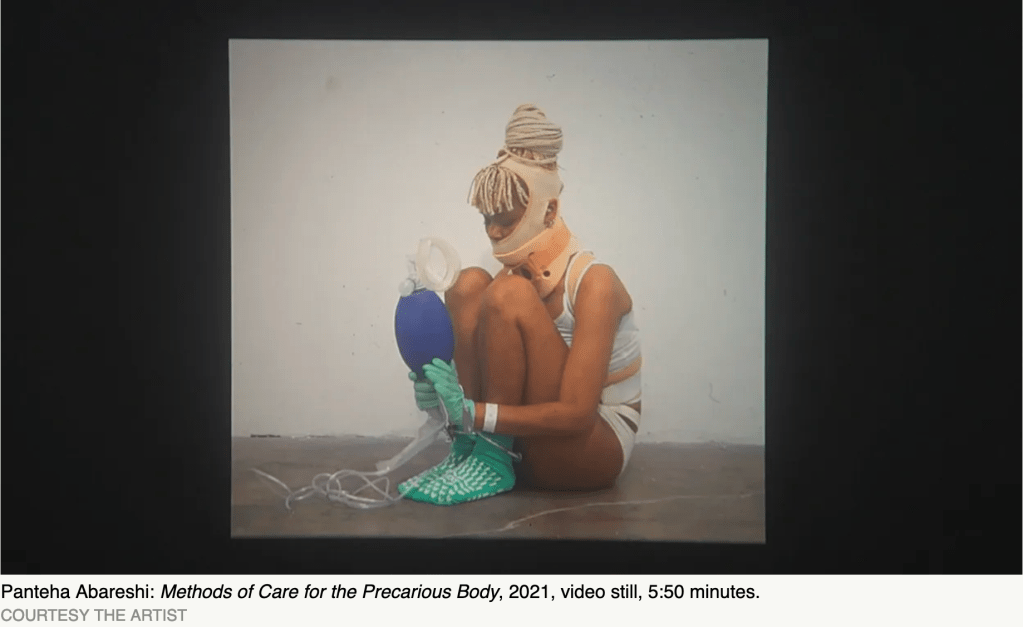
Learn more about the artist Panteha Abareshi and Chronicling Illness via Art in America.

Without a family doctor?

“Millions of Canadians are without a family doctor, and with long waits at ERs and walk-in clinics, many are wondering where they can get the care they need.

So how can people make sure their health is taken care of when they don’t have a regular primary care provider?

There isn’t one answer, as individual health needs are complex and can vary based on factors like age, family history and any existing chronic illnesses. The first tip is not to give up on finding a family physician, as many doctors agree that people should have a family doctor or primary care provider.

‘We need that continuity of care to make sure that you don’t get into trouble,’ Dr. Peter Lin, a family doctor in Toronto, and a director of the Canadian Heart Research Centre, told Dr. Brian Goldman on The Dose

‘Family doctors … primary care [providers], nurse practitioners … are really good at pattern recognition to try and figure out what’s going on and put the pieces together.'”

Without a family doctor? Physicians offer some short-term solutions via CBC.

BC Rural Health Conference 2024

There’s something special about the BC Rural Health Conference. It’s not just the knowledge you gain, but also the friendships you form. Embrace the excitement, the learning, and the camaraderie that makes this event so exceptional!

Join rural medicine peers on May 24-26 in Whistler, BC for an amazing line-up of speakers and topics. This year’s program is packed with opportunities to network and interact with individuals who can share and learn the unique benefits of rural practice. Highlights include: 

  • Social and networking events to connect with rural peers, including locums  
  • Interactive breakout sessions and hands-on skills workshops to discover current and emerging trends in rural medicine 
  • Pre-conference courses include: The CARE Course Goes WILDE and the Rural POCUS Congress  
  • Presentation of the BC Rural Health Awards on Friday afternoon  
  • Wellness opportunities, including stretching and yoga sessions, complimentary chair massages, guided hikes and other excursions 
  • Free (and fun) childcare during conference hours  

Register now! Discounted rates end March 31.  

Register at https://bit.ly/RHC24reg

Lecture: Role of Exercise as a Cancer Treatment

Dr. Kerry S. Courneya
March 21 2024

Exercise is established as a supportive care intervention in oncology to improve health-related fitness, symptoms, and quality of life in cancer patients and survivors. Exercise has also been proposed as a possible cancer treatment; however, there are an infinite number of clinical oncology settings in which exercise may be tested as a cancer treatment. These distinct clinical oncology scenarios have implications for the treatment goals of exercise, the feasibility of exercise, the likelihood of exercise producing a clinical benefit, and the design of preclinical and clinical research. In this presentation, I will propose a novel framework to guide research on exercise as a cancer treatment across distinct clinical oncology settings. I will then summarize recent preclinical, observational, and intervention studies examining exercise as a cancer treatment across these different clinical scenarios and offer directions for future research.

Kerry S. Courneya, Ph.D. is a Professor and Canada Research Chair in the Faculty of Kinesiology, Sport, and Recreation at the University of Alberta. He received his B.A. (1987) and M.A. (1989) in Kinesiology from Western University in London, Ontario, and his Ph.D. (1992) in Kinesiology from the University of Illinois at Urbana-Champaign. He spent five years as an assistant professor at the University of Calgary (1992-1997) before moving to the University of Alberta in 1997. His research program focuses on the role of exercise after a cancer diagnosis including how exercise might help cancer patients prepare for treatments, tolerate and respond to treatments, recover after treatments, and improve treatment outcomes. He has received numerous awards for his research including the Manulife Prize for the Promotion of Active Health, the O. Harold Warwick Prize from the Canadian Cancer Society, and the Award of Research Excellence from the Canadian Association of Psycho-Oncology. In 2023, Prof. Courneya was appointed an Officer in the Order of Canada for his groundbreaking research in exercise oncology.

Location: UBC Life Sciences Building, Room 1001
Time: 12:30pm – 1:30pm
Hybrid Zoom Meeting ID: 91067 093313, Passcode: 093313

Save the Date: Okanagan Orchards

We’re excited to announce that Okanagan Orchards is back, live and in-person on Saturday, June 1 at the Eldorado Resort in Kelowna! This is the annual Family Practice Postgraduate faculty development and appreciation event.

We will have a morning of workshops, followed by some options for outdoor activities in the afternoon and will wrap up with an appreciation dinner in the evening. It’s a great opportunity for some networking and support, and we have a lot of fun too!

A travel reimbursement will be available to eligible out-of-town preceptors (more details to come when registration opens this spring). There is no registration fee for this event.

There are a limited number of guest rooms held at the Eldorado Resort in Kelowna, so booking early is recommended. Book guest rooms directly with this link.  

This event is open to all preceptors and clinical faculty from across our beautiful province.

Stay tuned for further details, including an agenda and registration link.

Colorectal Cancer Screening

Background

Colorectal cancer is the third most diagnosed cancer in adults in the United States. Early detection could prevent more than 90% of colorectal cancer–related deaths, yet more than one third of the screening-eligible population is not up to date with screening despite multiple available tests. A blood-based test has the potential to improve screening adherence, detect colorectal cancer earlier, and reduce colorectal cancer–related mortality.

Methods

We assessed the performance characteristics of a cell-free DNA (cfDNA) blood-based test in a population eligible for colorectal cancer screening. The coprimary outcomes were sensitivity for colorectal cancer and specificity for advanced neoplasia (colorectal cancer or advanced precancerous lesions) relative to screening colonoscopy. The secondary outcome was sensitivity to detect advanced precancerous lesions.

Results

The clinical validation cohort included 10,258 persons, 7861 of whom met eligibility criteria and were evaluable. A total of 83.1% of the participants with colorectal cancer detected by colonoscopy had a positive cfDNA test and 16.9% had a negative test, which indicates a sensitivity of the cfDNA test for detection of colorectal cancer of 83.1% (95% confidence interval [CI], 72.2 to 90.3). Sensitivity for stage I, II, or III colorectal cancer was 87.5% (95% CI, 75.3 to 94.1), and sensitivity for advanced precancerous lesions was 13.2% (95% CI, 11.3 to 15.3). A total of 89.6% of the participants without any advanced colorectal neoplasia (colorectal cancer or advanced precancerous lesions) identified on colonoscopy had a negative cfDNA blood-based test, whereas 10.4% had a positive cfDNA blood-based test, which indicates a specificity for any advanced neoplasia of 89.6% (95% CI, 88.8 to 90.3). Specificity for negative colonoscopy (no colorectal cancer, advanced precancerous lesions, or nonadvanced precancerous lesions) was 89.9% (95% CI, 89.0 to 90.7).

Conclusions

In an average-risk screening population, this cfDNA blood-based test had 83% sensitivity for colorectal cancer, 90% specificity for advanced neoplasia, and 13% sensitivity for advanced precancerous lesions. (Funded by Guardant Health; ECLIPSE ClinicalTrials.gov number, NCT04136002. opens in new tab.)

Learn more here on “A Cell-free DNA Blood-Based Test for Colorectal Cancer Screening” via The New England Journal of Medicine

Remembering Dr. Connie Eaves

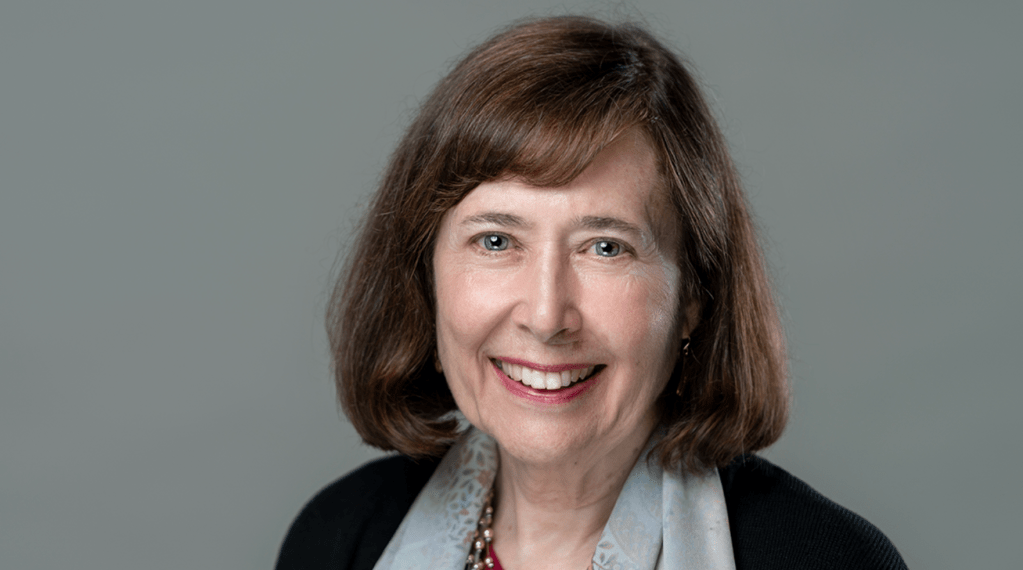
“It is with heavy hearts that we announce the passing of Dr. Connie Eaves, professor in UBC’s Department of Medical Genetics and the School of Biomedical Engineering, and a distinguished scientist at BC Cancer’s Terry Fox Laboratory.

A world authority on stem cells, Connie was an exceptional scientist, but she was also a leader, beloved mentor, and deeply-respected colleague and friend.

Her research career — spanning more than five decades — was driven by curiosity and an unwavering devotion to improving the lives of people with cancer.

Her discoveries advanced knowledge on the origin of leukemia and breast cancer, and her pioneering research methodologies — including developing a technique to separate cancerous from normal stem cells — have become gold standard approaches used by laboratories around the world.”

Read more on Remembering Dr. Connie Eaves, a pioneer in leukemia and breast cancer research via UBC Faculty of Medicine

Homeostasis & Ultrasound

“A new device tested in pigs enables monitoring and early detection of pH changes in deep tissues due to post-operative leaks following gastrointestinal surgery. Such leaks – which occur at high rates 3-7 days following surgery – can be fatal if overlooked, and as such, require constant monitoring. Yet, early detection of these leaks remains a challenge.

To address this need, Jaiqi Liu and colleagues developed a novel class of pH-responsive materials for real-time ultrasound measurement of pH changes indicative of leaks from healing surgical joins following gastrointestinal surgery. They dubbed their bioresorbable, shape-adaptive, ultrasound-readable materials structure, ‘BioSUM.’ The thin and implantable device is comprised of small metal discs within a pH-responsive hydrogel. During recovery, the distance between the metal discs can be measured using ultrasound. Should a leak occur, the hydrogel reacts to the change in pH and swells, pushing the metal discs further apart, signaling a complication.”

Learn more: Liu, J., et al. (2024) Bioresorbable shape-adaptive structures for ultrasonic monitoring of deep-tissue homeostasis. Science. doi.org/10.1126/science.adk9880.

Loneliness & the Power of Connection

“If you are lonely, if you’ve ever been lonely, you are not alone. Loneliness is extraordinarily common. It is a universal part of the human experience – a natural signal like hunger or thirst that our body sends us when we lack something that we need for our survival, which is social connection. In the latest RSA Short, US Surgeon General Vivek Murthy explains how we can get better at spotting the signs of loneliness in people around us, and the simple steps we can all take to build a more connected society, and a more connected life.”

Speaker: Dr Vivek Murthy, 21st Surgeon General of the United States via US Department of Health and Human Services

Family Physician Shortages

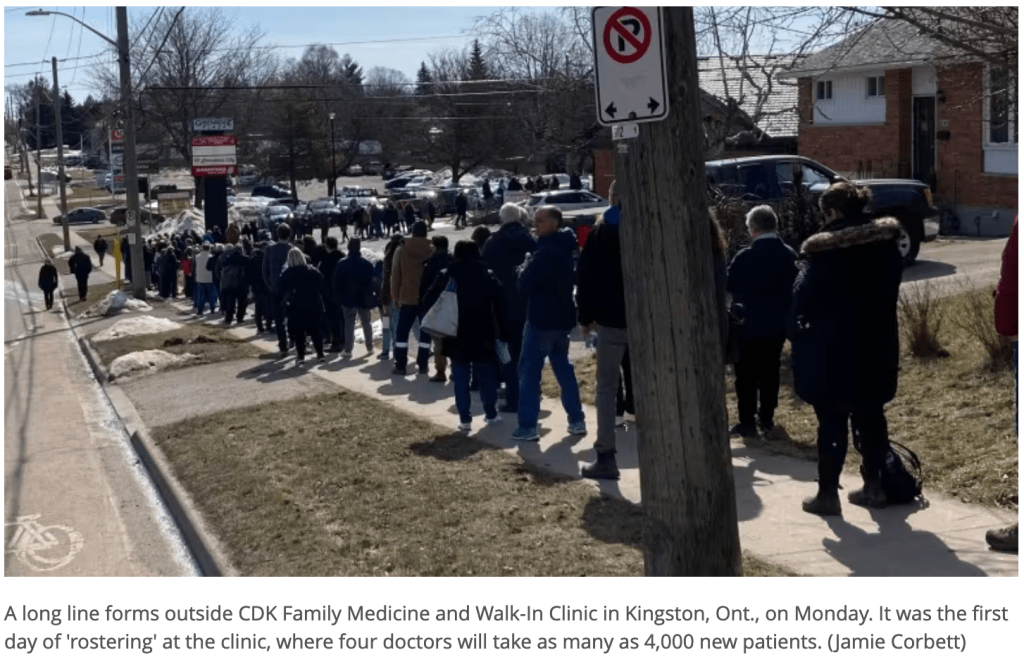
“Hundreds of people desperate to find a family physician lined up overnight outside a Kingston, Ont., medical clinic this week, in what many are calling a clear sign of the serious doctor shortage in the region.

On Feb. 22, the CDK Family Medicine and Walk-In Clinic announced four physicians would start taking on as many as 4,000 new patients at the clinic. Some 30,000 residents are currently without a family doctor in Kingston.

During ‘rostering’ days held last week, prospective patients were asked to line up outside the clinic to be seen on a first-come, first-served basis. On Wednesday, the line was cut off after the first 100 people.”

Read more on Hundreds line up outside Kingston clinic in desperate bid for family doctor via CBC News.