Cognitive Biases & AI

“Generative artificial intelligence (AI) models are increasingly utilized for medical applications. We tested whether such models are prone to human-like cognitive biases when offering medical recommendations. We explored the performance of OpenAI generative pretrained transformer (GPT)-4 and Google Gemini-1.0-Pro with clinical cases that involved 10 cognitive biases and system prompts that created synthetic clinician respondents.

Medical recommendations from generative AI were compared with strict axioms of rationality and prior results from clinicians. We found that significant discrepancies were apparent for most biases. For example, surgery was recommended more frequently for lung cancer when framed in survival rather than mortality statistics (framing effect: 75% vs. 12%; P<0.001). Similarly, pulmonary embolism was more likely to be listed in the differential diagnoses if the opening sentence mentioned hemoptysis rather than chronic obstructive pulmonary disease (primacy effect: 100% vs. 26%; P<0.001). In addition, the same emergency department treatment was more likely to be rated as inappropriate if the patient subsequently died rather than recovered (hindsight bias: 85% vs. 0%; P<0.001). One exception was base-rate neglect that showed no bias when interpreting a positive viral screening test (correction for false positives: 94% vs. 93%; P=0.431).

The extent of these biases varied minimally with the characteristics of synthetic respondents, was generally larger than observed in prior research with practicing clinicians, and differed between generative AI models. We suggest that generative AI models display human-like cognitive biases and that the magnitude of bias can be larger than observed in practicing clinicians.”

More on Cognitive Biases & Artificial Intelligence via NEJM AI.

Violence, Poverty, Mental Health Issues & Sexploitation Among Canada’s Kids

“The state of childhood in Canada has reached a breaking point. The seventh annual Raising Canada report, released today, finds that the top 10 threats to childhood are escalating, with children’s quality of life in Canada demonstrably worsening. The report includes an urgent call for policymakers to address and overcome these pressing issues. It also calls on community leaders to recognize the value of youth engagement as a critical element of creating and implementing solutions to complex social issues.

The annual Raising Canada report is published by Children First Canada, based on research conducted by the University of Calgary and McGill University. Researchers compiled existing data and conducted interviews with youth, parents and other subject matter experts. It comes as Canada ranks 66th out of 194 countries on the global Kids Rights Index.

Among the startling findings:

  • 28.4% of children under 18 live in food-insecure households, an increase from 24.3% the previous year.
  • One in five kids (20%) in Canada have diagnosed mental health challenges.
  • Two-thirds (60%) of Canadians reported experiencing maltreatment (including physical and/or emotional abuse) before the age of 15.
  • Police reports of online sexual exploitation of children have nearly tripled since 2014; Sextortion reports have increased by 150% since June 2022 and online sexual luring reports have surged 815% over the last five years.
  • Hospital stays for children under four have increased by 32% due to respiratory illnesses.
  • Child homicide and filicide are significant threats to children’s survival, with 40 child homicides reported in 2022.

This year’s report also highlights several cross-cutting themes, including the influence of technology on children and adolescents. Researchers note that digital platforms have made it easier to create and share messages of hate, discrimination, and cyberbullying, which adversely impact mental health, physical activity, and the risk of violence and abuse. Evidence also concludes that the negative effects of technology on mental health have intensified since the onset of the pandemic, with the RCMP warning that victims face extreme outcomes of sextortion, including self-harm or suicide.

“Children today are facing unprecedented threats—from rising poverty and mental health crises to violence in their homes and online. Parents are struggling to offer their children a better way of life than they had,” says Sara Austin, Founder and CEO of Children First Canada. “Canada’s kids deserve better—a better childhood and a brighter future, and their survival and ability to thrive depend on the choices we make today. We must act with urgency and conviction to turn this around.”

Read more on New Report Reveals Record Increases in Violence, Poverty, Mental Health Issues and Sexploitation Among Canada’s Kids (2024) via Children First Canada.

Global Health Conference 2025

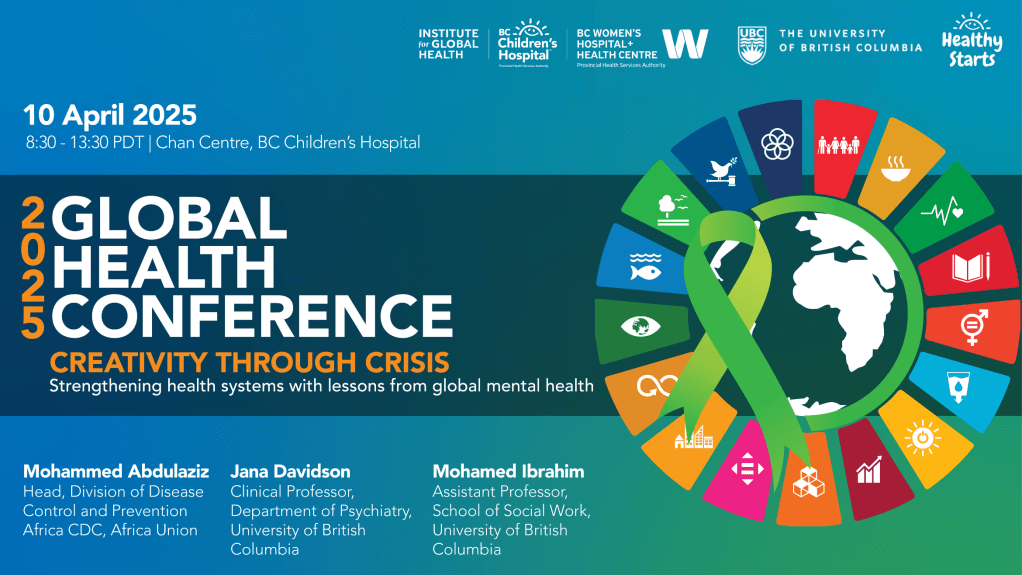
The Global Health Conference is an annual event bringing together a community of students, trainees, clinicians, researchers, and faculty from across health professions and disciplines to share knowledge. We hope that you will join us for a conversation on “Creativity Through Crisis: Lessons from Global Mental Health” with conference co-Chairs Dr. Jana Davidson and Dr. Mohamed Ibrahim. This year, we will examine the intensifying impact of global events such as conflict, climate change, and COVID-19 on mental health disparities worldwide. Our goal is to create an inclusive discussion forum for anyone interested in global health or mental health – everyone is welcome to attend.

Registration is now open!

Date: Thursday April 10th, 2025
Time: 8:30 am – 1:30 pm
Location: In-person (Chan Centre for Family Health Education, BCCHR) + Virtual

Managing Polypharmacy

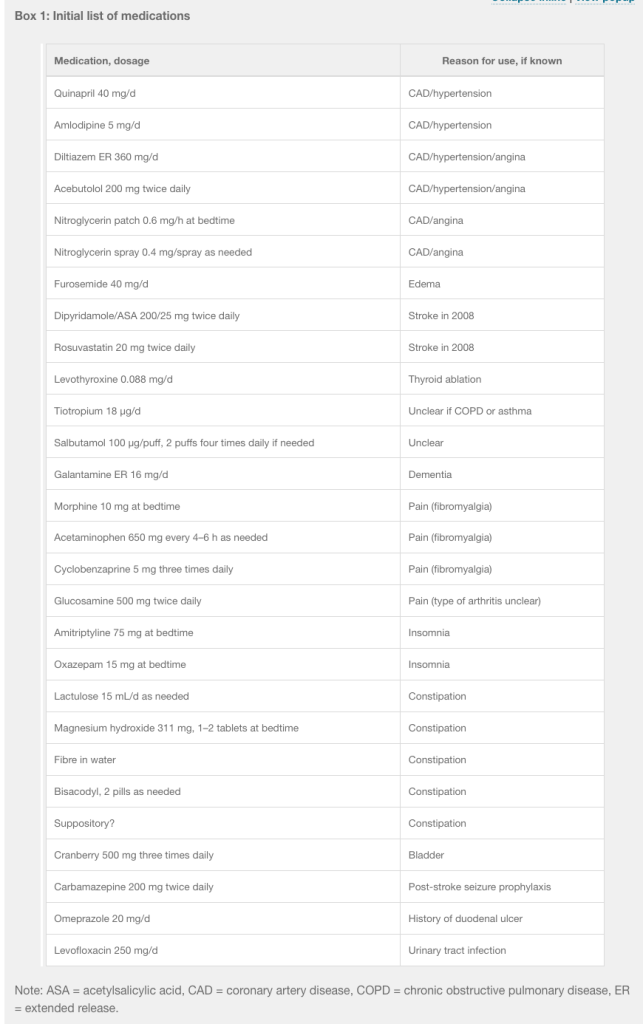
“A 77-year-old woman was referred to a geriatric day hospital with concerns about mobility and falls, pain, constipation, cognition and polypharmacy. Comorbidities included cerebrovascular disease, coronary artery disease, hypertension, dementia, fibromyalgia, myositis, bipolar disorder, arthritis, remote duodenal ulcer and hypothyroidism. A stroke 3 years earlier resulted in increasing difficulties with transfers and ambulation, leading to 3–4 falls weekly. Chronic pain was attributed to fibromyalgia. The patient was frustrated by her loss of independence, because she now required daily assistance with washing and dressing. Staff at her retirement residence managed her complex medication regimen (see Box 1 for the list of medications). Placement in a long-term care facility was being considered.”

Read more on the case of managing polypharmacy in a 77-year-old woman with multiple prescribers via CMAJ.

Learn more about polypharmacy risk reduction via SharedCare Partners for Patients.

Causation vs. Correlation

Causation vs. Correlation: The Coffee and Baby Sleep Saga

Imagine you’re on your 24-hour call shift and you notice a strange trend: the nights you chug coffee after dinner, the clinic’s tiniest patients—babies—seem to cry more. Hmm, you think, “Does my coffee cause baby insomnia?”

Before you start banning coffee on call, let’s unpack two key concepts:

1️⃣ Correlation: This is when two things happen together. In this case, your coffee habit and baby tears seem to rise in tandem. Coincidence? Maybe. Correlation is like spotting two family members wearing plaid shirts at the same time—they’re connected somehow, but you can’t be sure it’s because they planned it.

2️⃣ Causation: This is when one thing directly causes another. If your coffee somehow made its way into those babies’ milk bottles, then you’d have causation.

Here’s the twist: just because two things are correlated doesn’t mean one causes the other. Maybe babies are just naturally fussier on stormy nights, and you drink coffee to power through those wild weather calls. The real culprit could be thunderclouds, not caffeine.

Key Takeaway: Don’t jump to conclusions! Always dig deeper, just like when a patient’s mysterious rash pops up. Is it an allergy (causation) or coincidence?

Predictors of Cost-Related Medication Nonadherence in Canada

Background: In Canada, many patients face substantial out-of-pocket costs for prescription medication, which may affect their ability to take their medications as prescribed. We sought to conduct a comprehensive analysis of the burden and predictors of cost-related nonadherence in Canada.

Methods: Using pooled data from the 2015, 2016, 2018, 2019, and 2020 iterations of the Canadian Community Health Survey, we calculated weighted population estimates of the burden of cost-related nonadherence in the preceding 12 months and used logistic regression models to measure the association of 15 demographic, health, and health system predictors of cost-related nonadherence overall and stratified by sex.

Results: We included 223 085 respondents. We found that 4.9% of respondents aged 12 years or older reported cost-related nonadherence. Those who self-identified as female, belonging to a racial or ethnic minority group, or bisexual, pansexual, or questioning were more likely to report cost-related nonadherence. Younger age, higher disease burden, poorer health, non-employer prescription drug coverage, and not living in the province of Quebec were associated with cost-related nonadherence.

Interpretation: Our nationally representative findings reveal inequities that disproportionally affect marginalized people at the intersections of sex, race, age, and disability, and vary by province. This foundational understanding of the state of cost-related nonadherence may be used to inform potential expansion of public drug coverage eligibility, premiums, and cost-sharing policies that address financial barriers to medication adherence.

Predictors of cost-related medication nonadherence in Canada: a repeated cross-sectional analysis of the Canadian Community Health Survey via CMAJ.

Atlas of Cells

“The Human Cell Atlas will impact almost every aspect of biology and medicine, ultimately leading to a richer understanding of life’s most fundamental units and principles.”

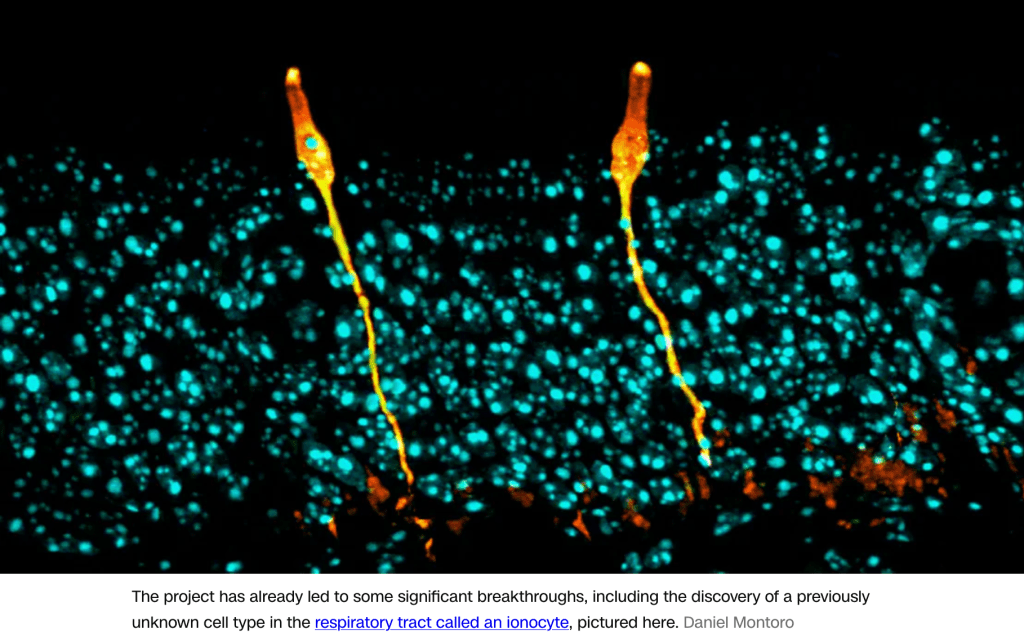
“The Human Cell Atlas is a global consortium that is mapping every cell type in the human body, creating a 3-dimensional Atlas of human cells to transform our understanding of biology and disease. The Atlas is likely to lead to major advances in the way illnesses are diagnosed and treated.

There are about 37 trillion cells in the human body and each has its own specialized role. To identify, understand and map each cellular role, HCA researchers use and develop innovative technologies such as single cell transcriptomics, spatial genomics, and computational and AI techniques. These can reveal the active genes and other characteristics in an individual cell to help classify what the cell does, and where exactly it lives and works in the body.”

Learn more about the Human Cell Atlas.

She’s Not Alone: Misdiagnosed & Dismissed

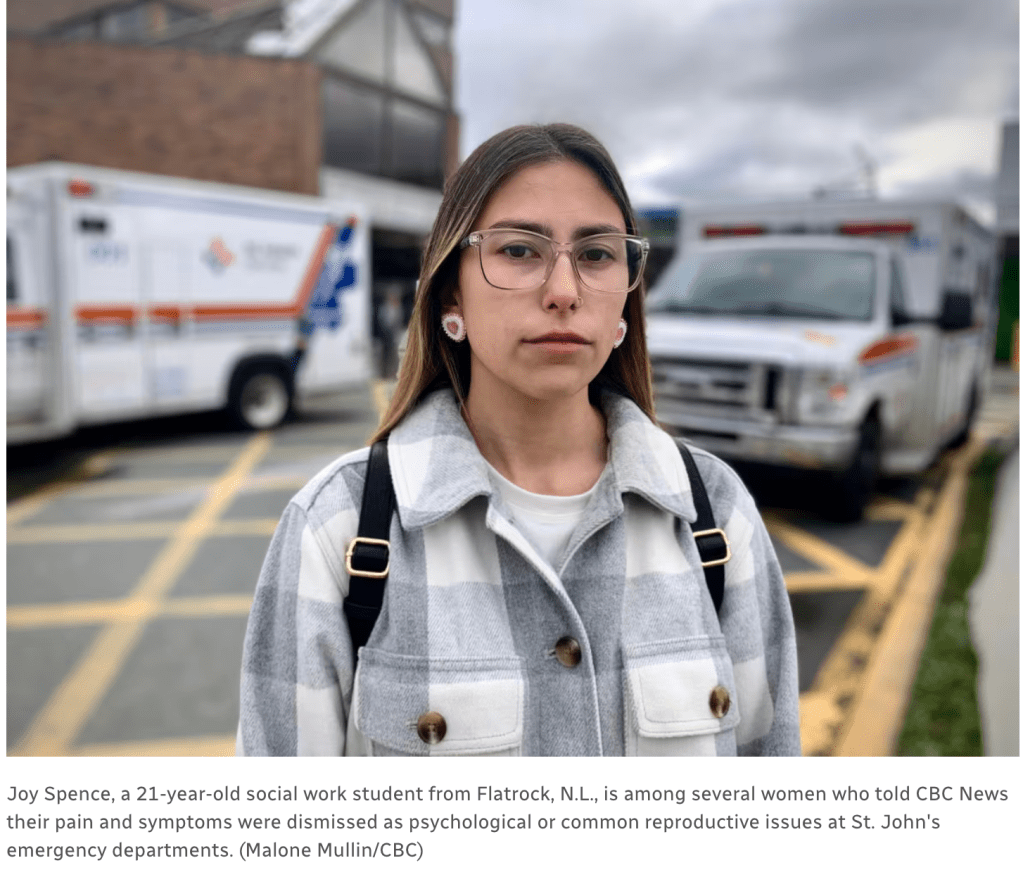
“A woman who says she was repeatedly denied adequate emergency care last spring is blasting the Newfoundland and Labrador health-care system, saying she’s been left psychologically scarred after being told several times that her gangrenous appendix was simply anxiety or constipation.

Joy Spence, 21, said she visited emergency departments at two hospitals in St. John’s over the course of nearly two weeks this May.

What began as weakness and abdominal pain on her right side quickly deteriorated into blacking out from the agony in her torso. 

But no matter how dire her symptoms got, doctors kept sending her home.

‘They would just tell me, ‘Your bloodwork’s normal, there’s nothing we can do.’ They would send me home, then same thing again,” she said. ‘I would go back again. They would get me to do the bloodwork, say everything’s normal.’

Ultrasound and CT scans apparently turned up nothing, but Spence, in such severe pain, says she had no option but to keep returning to the hospital, where she says she was eventually left screaming in a waiting room, ignored by hospital staff.

‘If somebody doesn’t help me, I’m going to die,’ she recalls wailing, watching doctors and nurses pass her by.

At one point, she was dismissed outright by a walk-in clinic nurse, she adds.

‘Somebody said to me, ‘I don’t know what you expect me to do,’ she said. ‘You’re a healthy 21-year-old young female.’

Doctors said her gangrenous appendix was just anxiety. She’s not alone via CBC News.

Canada Records its First Human Bird Flu Case

“Canada has confirmed its first human case of bird flu after a teenager tested positive for the virus, according to health authorities.

The teenager, from the western province of British Columbia, is believed to have caught the H5 avian flu from a bird or animal, said a statement by the province on Saturday. The infected person is undergoing treatment at a children’s hospital.

The province said it was tracing the teenager’s contacts to pinpoint the source of the contagion.

‘This is a rare event,’ British Columbia Health Officer Bonnie Henry said in a statement. ‘We are conducting a thorough investigation to fully understand the source of exposure here in BC.’

Canada’s Health Minister Mark Holland assured members of the public that the risk to them remains low.”

Read more on ‘Rare event’: Canada records its first human bird flu case via AlJazeera.

Human Tissues, Aging, & the Space Station

“Researchers from the SIL flew to the Kennedy Space Centre (Florida, USA) to integrate the samples into the payload in preparation for the launch, which took place early in the early hours of Tuesday 5th November (UK time).

The samples are housed inside a Science Cube, which will be accommodated inside the ICE Cubes Facility once onboard the ISS; the platform provides power and data to the payload, as well as real-time connectivity with ground, enabling researchers back in Oxford to monitor and interact with the experiment in real-time.

Dr Ghada Alsaleh, who leads the Space Innovation Lab at Oxford, said: ‘This is an exciting moment— not just because we’re embarking on a journey to space, but because we’re bringing along a ground-breaking project that could help people live healthier lives, both on Earth and in Space.

‘Our project seeks to uncover how ageing progresses under microgravity conditions, and to test if these conditions could speed up the study of ageing processes that take much longer to observe on Earth. By conducting this research on the International Space Station (ISS), we hope to gain insights that could lead to breakthroughs in understanding and treating age-related diseases. These discoveries could significantly improve the quality of life for people on Earth, reducing the burden of ageing not only for individuals but also for their loved ones and society as a whole.

‘Using cutting-edge tools like organoids, 3D printing, and mechanical stress testing, we’re trying to understand how ageing works at the cellular level. The goal is to find ways to slow down age-related health issues, whether you’re on Earth or up in Space.'”

More on Oxford space lab experiment heads to International Space Station via University of Oxford news.