Join UBC this November for a dynamic, in-person conference packed with practical insights from experienced professionals currently in the field—our first live event since 2019! Explore a wide range of timely topics including job opportunities, work–life balance, practice management, college complaints, billing strategies, navigating Pathways, and more. Don’t miss the chance to connect with colleagues and potential employers at our networking reception and job fair. We can’t wait to welcome you back!
Sat Nov 29, 2025 UBC Robson Square 800 Robson Street Vancouver, BC
To learn more about the event or register, please click here.
Excited to be facilitating two sessions at the 2025 CHES Celebration of Scholarship hosted by the UBC Centre for Health Education Scholarship.
October 22, 2025 Robert H. Lee Alumni Centre, UBC Round Table Discussion (8:30–9:15am) “DocBot 101: Making Sense of AI Before It Makes Sense of You” Co-facilitated with Dr. Meera Anand, this interactive session invites educators and researchers to explore how we can prepare learners to critically engage with AI before it defines the terms for them.
Oral Presentation (2:15–3:15pm) “Swipe Right on Clinical Reasoning: Med Students Date the Future (It’s AI)” I’ll be sharing insights on how generative AI is reshaping clinical reasoning and what this evolving relationship means for medical students and educators.
Grateful to CHES and UBC CPD for supporting meaningful dialogue in health professions education. Looking forward to connecting with colleagues who are navigating and shaping this rapidly changing space and technology.
If you’re interested in attending, register here for the event.
Research and Reflections on Teaching: A Medical and Health Education Series (R&R Series)
Title of Webber Lecture: What’s love got to do with teaching? Embedding humanity into our teaching to spark transformation and joy Webber Lecturer: Katie Lee Bunting, Department of Occupational Science and Occupational Therapy, UBC Date: Friday, September 12, 2025 Time: 8:30am – 1:00pm (PST) Location: Hybrid+ (various in-person sites across the province and virtual access available for the Webber lecture)
NOTE: This event is for all faculty who teach in the health and medical programs in the UBC Faculty of Medicine.
Join us for this half-day hybrid+ event exploring the transformative power of teaching with love in health professions education. Through the Webber Lecture and local discussions, we’ll reflect on key dimensions of love as a pedagogical practice and explore how compassion and connection can be meaningfully integrated into your teaching. Connect with colleagues from across the Faculty of Medicine at in-person sites throughout the province, where breakfast and lunch will be provided. For those unable to attend in person, the Webber Lecture will also be available remotely from 9:00 – 10:00 am.
Learning Objectives By the end of the session, you will be able to:
Articulate the relevance of teaching with love in health professions education
Describe key dimensions of love as a pedagogical practice
Identify two implications to spark transformation and joy in your teaching relationships
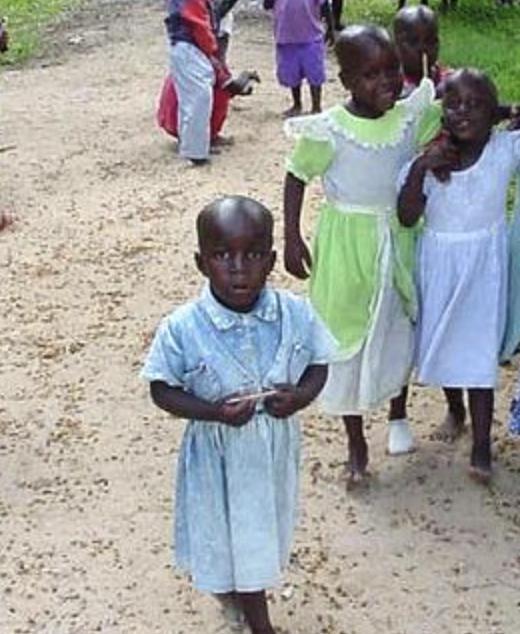
“In Africa, there has been an increase in the number of orphans and children who are vulnerable since the advent of Human Immunodeficiency Virus (HIV) and Acquired Immune Deficiency Syndrome (AIDS). An estimated 163 million children are living as orphans, with 17.5 million having lost one or both parents due to the HIV and AIDS pandemic [1]. This crisis requires establishing programs to support and mentor orphans and vulnerable children (OVC). However, the psychosocial needs of OVC are neglected or overlooked by the service providers [2]. In response to this crisis, there have been concerted efforts in the form of community-based interventions to mitigate the impact of HIV and AIDS on children [3]. Community-based interventions (CBOs) have therefore been identified as a strategic point for psychosocial support intervention [4, 5].
Community-based interventions of OVC can take many forms, such as financial help, home care, defense against the law, dietary needs, and emotional support. Numerous studies on community-based intervention support for OVC have been conducted across Africa, including in South Africa (n = 7), Kenya (n = 1), Zimbabwe (n = 4), Nigeria (n = 2), and Uganda (n = 1) [2, 6]. Notwithstanding various community-based interventions to support the OVC, the lack of support focusing on the psychosocial well-being of the OVC is still a significant concern.”
Read more on Community-Based Interventions to Support HIV and AIDS Orphans and Vulnerable Children (OVC) in Africa: A Systematic Review via International Journal of Integrated Care.
Varenicline is an accepted first-line therapy for smoking cessation in adults, but evidence in adolescents is limited. In a trial of 175 adolescents and young adults (ages 16 to 25 years) who were interested in nicotine vaping cessation, more patients assigned to varenicline plus weekly counseling were abstinent at 9 to 12 weeks compared with counseling alone (51 versus 14 percent) [76]. These results are promising but differ from two prior trials of varenicline for cessation of combustible nicotine (smoking) in adolescents that did not demonstrate benefit. We suggest varenicline as second line therapy (with a nicotine patch) for adolescent patients who have not had success with nicotine replacement therapy alone and are close to 18 years of age. (See “Management of smoking and vaping cessation in adolescents”, section on ‘Varenicline’.)
Efficacy of varenicline for vaping cessation in teens and young adults (June 2025) on What’s new in family medicine via UpToDate.
Each year, we gather to celebrate the outstanding achievements, compassion, and commitment of our residents, faculty, and preceptors across the Family Practice Residency Program. The 2025 Postgraduate Awards honour individuals who exemplify excellence in clinical care, teaching, leadership, and advocacy. These awards reflect the heart of family medicine—dedication to patients, communities, and lifelong learning. Congratulations to all of this year’s nominees and recipients. Your contributions continue to shape the future of family practice in remarkable ways. Big shout out to Abbotsford-Mission Residents & Preceptors:
Peter Grantham Award for Teaching Excellence Nominee: Dr. Jeff Kornelsen Residency Site Teaching Awards (Resident Selected): Dr. Michael Lamb & Dr. Shawna Vickerman Residency Site Medical Education Awards (Peer Selected): Dr. Jeff Kornselsen & Dr. Trevor Hartl
HOUSTON — Surgeons at Baylor St. Luke’s Medical Center in Houston successfully performed the first fully robotic heart transplant in the United States.
Using a robot, lead surgeon Dr. Kenneth Liao and his team conducted the operation without opening the chest or breaking the breastbone. Instead, the team used small incisions to remove the diseased heart and implant the new one, avoiding a chest incision entirely.
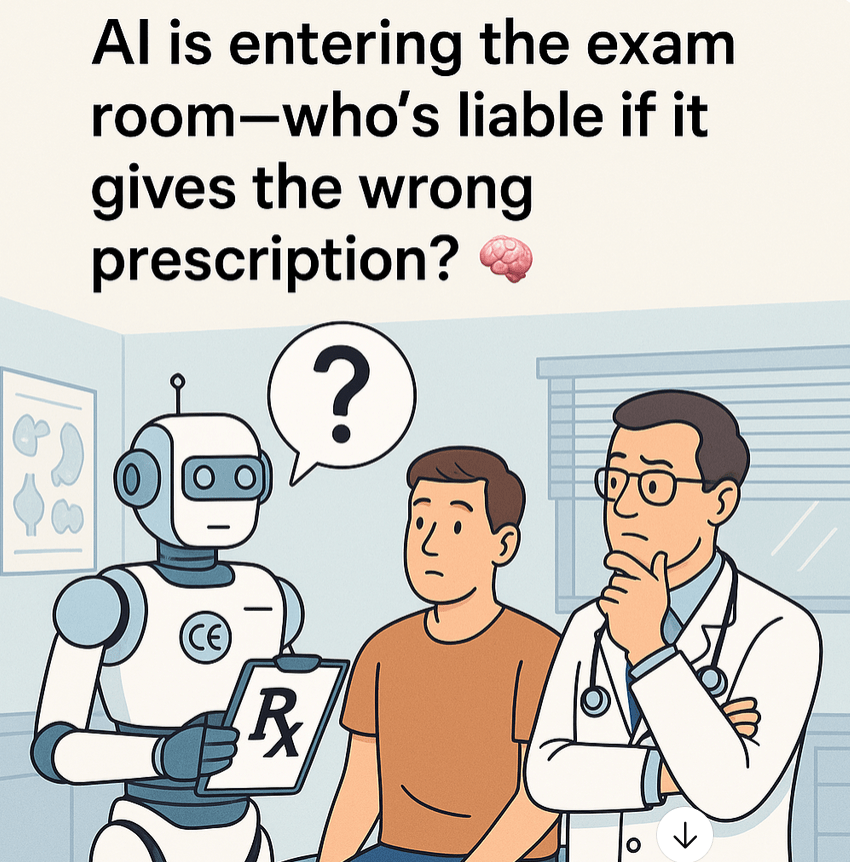
In this must-read piece, Solaiman & Malik (2024) dissect the evolving EU legal landscape for algorithmic care, where the Artificial Intelligence Act meets real-world clinical complexity. Doctors are no longer the only ones with decision-making power—AI systems are being trained, deployed, and (occasionally) hallucinate diagnoses with remarkable confidence.
But when the AI makes a mistake… who takes the fall? The doctor? The developer? The data itself?
This paper explores how regulatory frameworks are shifting the traditional doctor–patient model, nudging us into a new triangle: doctor–patient–algorithm. Spoiler alert: Only one of them has a CE marking.
The EU’s AI Act is more than just red tape—it’s an attempt to ensure transparency, accountability, and safety in algorithmic care. And if you’re in healthcare or med ed, this isn’t just legalese—it’s your future.
Favourite quote? “AI’s growing sophistication presents unique challenges that threaten to erode the autonomy gained by disempowering patients and doctors alike and shifting controls to external market forces. Although AI’s potential to enhance diagnostic accuracy and support informed decision-making seems promising, it risks over-reliance by doctors, diminished personal interaction with patients, and raises concerns about data privacy, opacity, and accountability.”
Doctors may need to add “algorithm whisperer” to their CVs.
Scientists have just achieved something extraordinary—and ethically unsettling. In a landmark study, researchers successfully grew human heart tissue inside a pig embryo, opening the door to generating entire human-compatible organs in animals.
While the potential to alleviate organ shortages is real and urgent, this raises deep questions:
1. Where do we draw the line between species and identity? 2. What does consent mean in this context—when neither human cells nor pigs have a say? 3. Could this create new forms of vulnerability—biological chimeras caught between categories?
Imagine a new Charlotte’s Web for the genomic age—not about saving Wilbur from the slaughterhouse, but about a pig whose heart is no longer just its own.
As we advance synthetic biology, AI, and xenotransplantation, we must bring ethics, empathy, and the public voice to the table—before the barn doors are fully open.
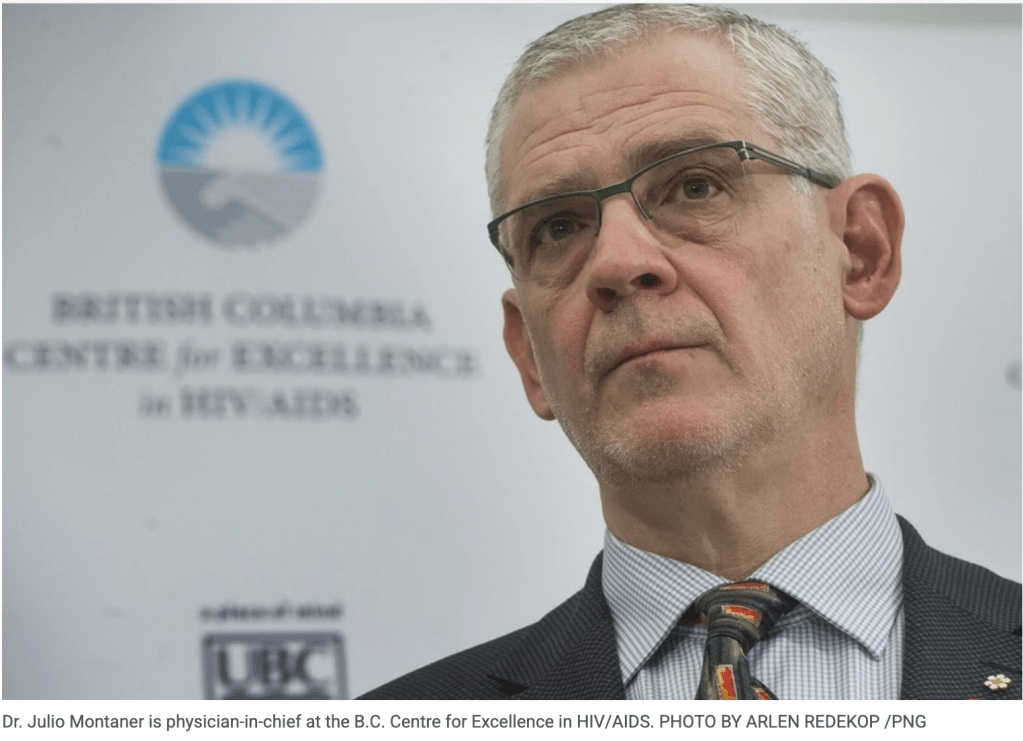
“HIV does not respect borders. We have seen an increase in the number of HIV cases in British Columbia, and more than two-thirds of those cases are cases that come into the province with HIV from other jurisdictions.” – Dr. Julio Montaner, executive director of the BC Centre for Excellence in HIV/AIDS,
Two troubling trends are converging in the rise in HIV cases here in BC and abroad.
In one corner: Rising HIV Incidence in B.C. & Canada at Large At the BC Centre for Excellence’s national HIV summit (June 6, 2025), experts sounded the alarm on a 35 % jump in HIV cases in Canada from 2022 to 2023, with rates continuing upward in 2024 and 2025. They emphasized that cuts in global HIV funding—particularly U.S. support through PEPFAR and USAID—are threatening domestic progress, jeopardizing Prevention-as-Treatment (TasP®) and PrEP strategies.
In the other corner: U.S. Aid Destruction: Millions in HIV Drugs & Contraceptives Left to Waste
Reports indicate USAID stockpiled roughly $12 million worth of HIV‑prevention drugs and contraceptives destined for developing countries—but under a recent executive order, they’ve been stranded in U.S. warehouses since January 2025. With expiration dates looming, these vital supplies risk being sold off or destroyed. Former USAID leadership is urging the administration to release or donate rather than destroy—warning that bureaucratic paralysis now threatens hundreds of thousands of lives.
Why These Trends Connect — and Why You Should Care 1. Lost U.S. donations means fewer drugs reaching communities in need internationally—and a lost opportunity to repurpose that stock locally or support Canada. 2. Rising HIV in Canada is a wake-up call: even with progressive domestic policies, we’re vulnerable—especially when global systems falter. 3. Global solidarity matters: U.S. aid cuts ripple globally; local healthcare programs rely on international collaboration to fill gaps.




 Family Medicine Residency Site: Abbotsford-Mission