

Cue the Jeopardy theme song.
“What is….”
Click here to answer.
#TheLancet #PictureQuiz
“Researchers at the University of Alberta have developed a virus-killing salt coating that’s designed to improve the effectiveness of the common surgical masks often used to prevent the spread of pathogens like influenza or the new coronavirus.
The sodium chloride coating applied to the surface of the surgical mask is designed to kill any virus particles which can otherwise survive for up to a week — a risk researchers say the average person isn’t aware of.
…
The salt coating, which has been under development since 2015, essentially works to kill any particles of the virus it comes into contact with.
‘When virus-carrying water droplets sit on the surface, the salt dissolves and water begins to evaporate,’ he explained. ‘During the evaporation process the salt crystals begins to grow and a very sharp edge of the crystal basically destroys the virus.'”
More on A salt-coated mask that kills viruses? Alberta researchers working on it via CTVNews.
Fifth Annual Women’s Health Research Symposium
Wednesday, March 4, 2020
Robert H. Lee Alumni Centre
www.whri.org
The Fifth Annual Women’s Health Research Symposium is to be held on Wednesday, March 4, 2020 at the Robert H. Lee Alumni Centre at the University of British Columbia.
The Symposium is being hosted by the Women’s Health Research Institute and will be an opportunity to showcase some of the amazing women’s health research taking place in BC and beyond. The theme of this year’s event focuses on digital and virtual health and how this emerging field is catalyzing women’s health research.
More information on the program and speakers can be found here: https://ubccpd.ca/course/WHRI2020
To register for the symposium, please click the following link: https://events.eply.com/WHRI2020
We very much look forward to seeing you at the Symposium!
‘China has a record of getting things done fast even for monumental projects like this,’ Yanzhong Huang, a senior fellow for global health at the Council on Foreign Relations, told the BBC.
‘This authoritarian country relies on this top down mobilisation approach. They can overcome bureaucratic nature and financial constraints and are able to mobilise all of the resources.'”
More on China building 1,000-bed hospital in 10 days to treat coronavirus via Dezeen.
#Coronavirus
“When compared with our international peers, Canada ranked last on the amount we spent on social programs in 2017. Canada needs to invest in, and evaluate, new social programs such as a guaranteed annual income. The arbitrary silos between health and social services must be reconsidered, with an emphasis on health and well-being in addition to conventional metrics such as gross domestic product growth. Our policy-makers might look to New Zealand, where earlier this year its government released a “well-being budget” with substantial investments in mental health, Indigenous Peoples and poverty reduction. Iceland and Scotland have articulated an interest in similar policies. Even the United States recently proposed a national interagency council on the social determinants of health. The effects of these strategies are not yet known, but if specific components are carefully evaluated, Canada can learn from them.”
More on the The mirage of universality: Canada’s failure to act on social policy and health care (2020) via CMAJ.
Thank you Dr. Liu for sharing!
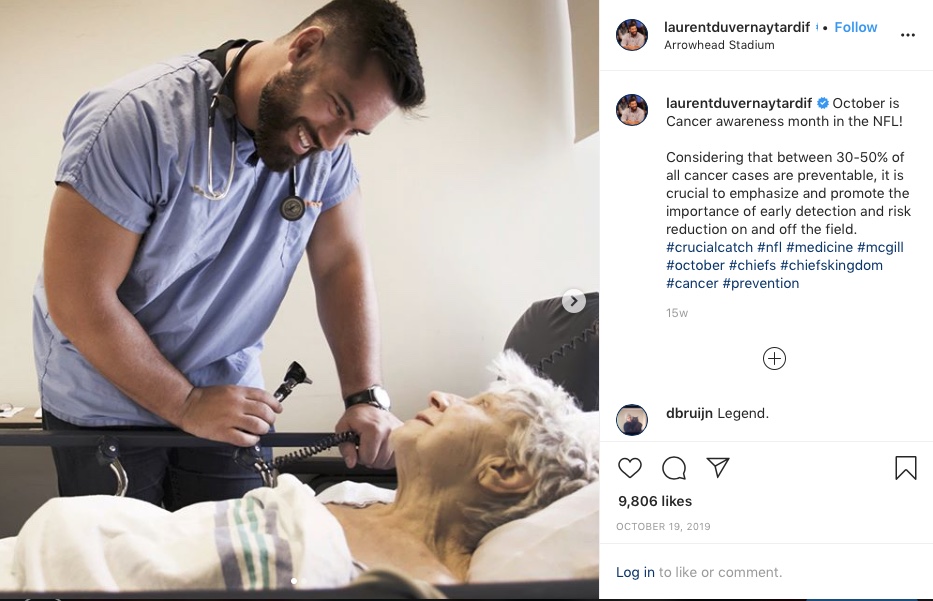
“The discipline required to study medicine — the long hours, the note taking, the attention to detail — definitely made my transition to the NFL easier. Even just having a better understanding of how to take care of my body with nutrition and hydration has been helpful. But beyond that, playing in the NFL has taught me how to deal with failure in a way I’ve never experienced before. You can practice really hard and be at the very top of your art, but sometimes that’s still not enough to win a game.
By nature I’m a very competitive person, and playing football at this level has instilled in me a certain sense of resilience that has definitely helped me in my pursuit in medicine. Just like you can’t win every game, you won’t always have a successful outcome with every patient. What is in your control is how you deal with loss and disappointment. Learning how to keep a clear mind so that I can take lessons from every experience, regardless of the outcome, has definitely made me a better physician, as well as a better football player.”
Congratulations to Canadian Dr. Laurent D. Tardif. He is the first physician to play in the Super Bowl!
More on Le Docteur by Laurent Duvernay-Tardif via The Players’ Tribune.
“Unmet needs relating to physician wellness patterned into organizational, community- and individual-level themes, detailed below. Institutional infrastructure, in the form of dedicated space, such as a physicians’ lounge for self-care, and an identified, internally supported dedicated time for physician processing, was highlighted as an unmet need. The disconnect between individuals’ desire to deliver care that met their own standards and their inability to deliver such care due to system-level barriers was a frequent source of distress, frustration, and demoralization. Please see Fig. 1 for an overview of themes and potential approaches for addressing the challenges described.”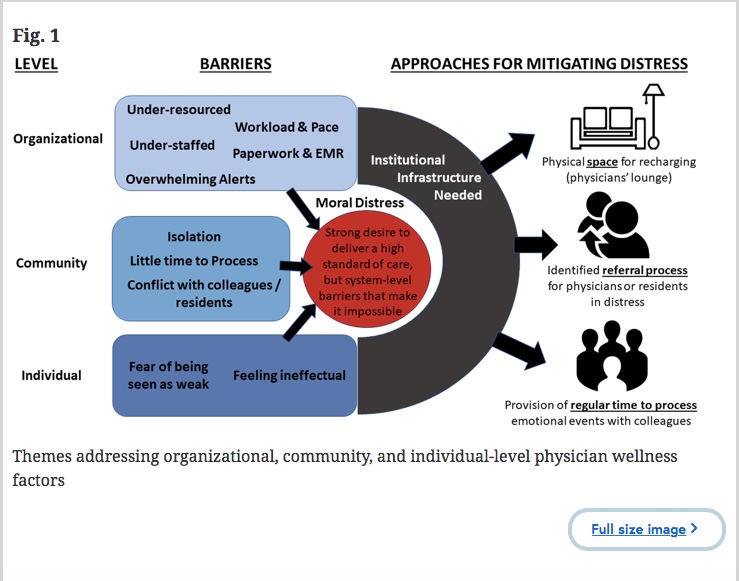
More on Developing institutional infrastructure for physician wellness: Qualitative insights from VA physicians (2020) by Schwartz et al. via BMC.
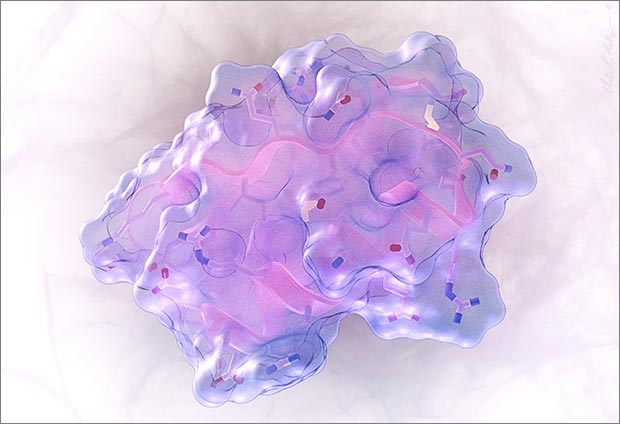
“Some common life-saving medicines, such as insulin, are made of proteins so large and fragile that they need to be injected instead of ingested as pills. But a new generation of medicine — made from smaller, more durable proteins known as peptides — is on its way. In a quick, informative talk, molecular engineer and TED Fellow Christopher Bahl explains how he’s using computational design to create powerful peptides that could one day neutralize the flu, protect against botulism poisoning and even stop cancer cells from growing.”
Learn more here at A new type of medicine, custom-made with tiny proteins by Christopher Bahl via TED2019.

“When it comes to determining how women and men store fat differently, it turns out fruit flies may hold the key.
People and fruit flies are astonishingly alike genetically. In fact, nearly 75 per cent of disease-causing genes in humans can be found in the fly in a similar form.
In a new study, recently published in PLOS Biology, researchers from UBC’s faculty of medicine used fruit flies to make a fundamental genetic discovery about differences between how males and females store and metabolize fat.”
Learn more here on How do men and women store fat differently? Ask the fruit fly via UBC News.

 Family Medicine Residency Site: Abbotsford-Mission