Health Professions Education Grants

CAME submissions for Health Professions Education Grants are now open!
Letters of Intent Due: September 16, 2020 at 1700 EST

Opportunities for peer-reviewed grant support in Health Professions Education are limited. Learners and faculty at all stages, who have new projects, can face challenges in obtaining support.

The CAME Foundation Health Professions Education Grants support new and innovative scholarly projects in Health Professions Education that are not part of larger, formalized and funded education research programs.

Award amount
The maximum available funds per application are $5000, which can be spread over 12 months of support. There is a maximum of $20,000 in funds across the four grants. Funding will be awarded to one or more applicants at the discretion of the CAME Grants Committee.

More information here.
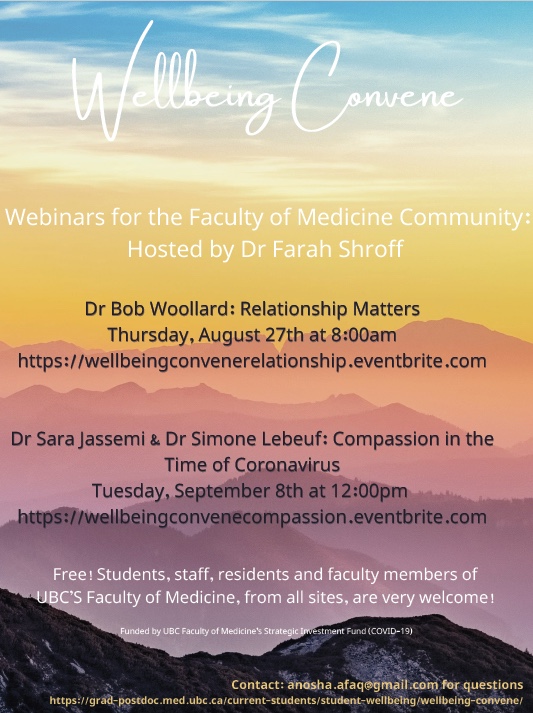
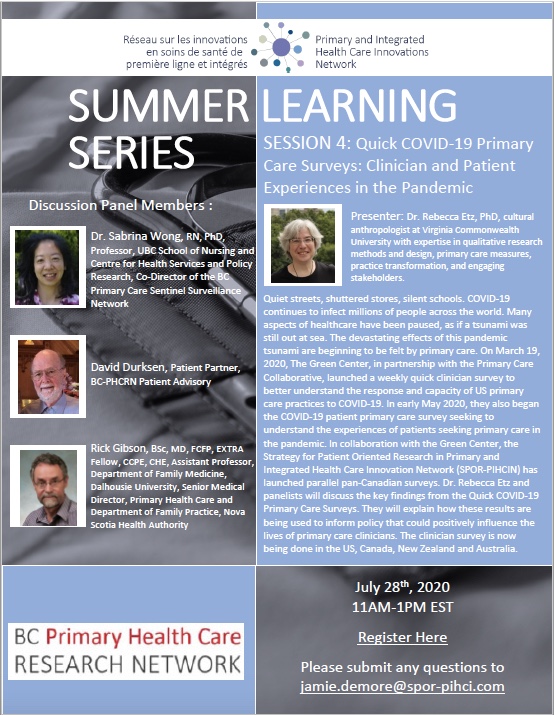
Wellbeing Convene

Relationship Matters with Dr. Bob Woollard
Thursday, August 27th at 8:00 am
 
Compassion in the Time of Coronavirus: The “Essential” Rounds with Dr. Sara Jassemi & Dr. Simone Lebeuf
Tuesday, September 8th at 12:00 pm 
 
These webinars are for students, staff, residents, and faculty members of UBC’s Faculty of Medicine, from all sites, and they are free of charge! Please distribute widely to all your networks. We will be most appreciative of your help during this promotion! Attached to this email is our promotional poster. 
 
Warm wishes,
Anosha AfaqProgram Director
Wellbeing Convene Webinars 
e: anosha.afaq@gmail.com

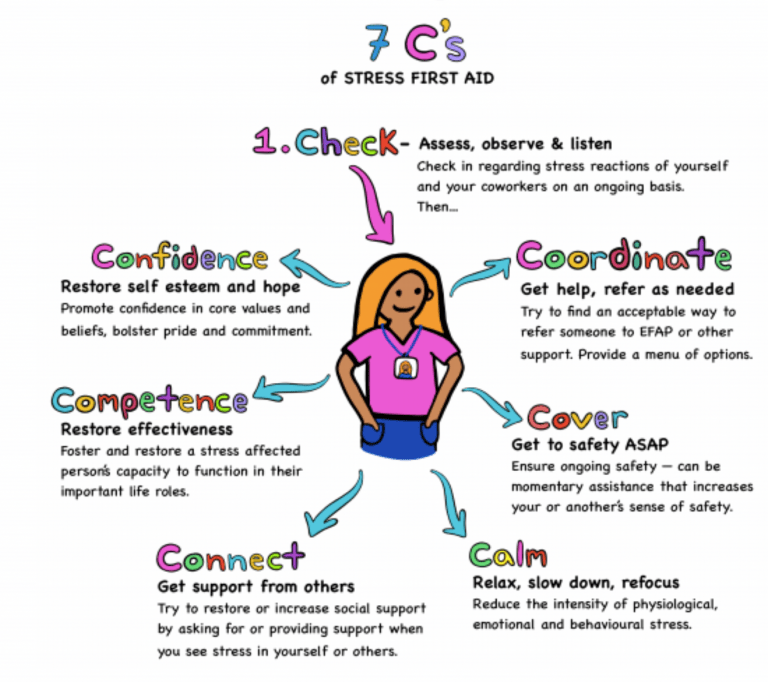
Stress First Aid as a form of Peer Support

7C-stress-first-aid-768x682.png
Image created by Caroline Dance, UBC Medical Student.

“This model is not linear — we don’t need to work through all the steps. The key is to ask, ‘What is needed right now?’  For example, I observe that my colleague is anxious. Perhaps I can ask how they could feel more safe, calm, and competent to manage the distress.

It’s not easy to train in new skills to support our mental health when the race has already begun.  We are all going to cycle out of the green zone many times, regardless of our practice of self-care.  We need each other right now to provide peer support to help each of us notice when we’re moving to the right of the stress continuum and pause or pace ourselves so we can complete this marathon together.”

Learn more here on Stress First Aid as a form of Peer Support (This Changed My Practice) by UBC’s Dr. Joanna Creek.

CHES 2020 Celebration of Scholarship

CHES

The Centre for Health Education Scholarship will host the 10th Annual CHES Celebration of Scholarship virtually on Wednesday, October 7, 2020! Join us as we adapt to the changing environment and bring opportunities for the CHES community to showcase and share their work in a virtual format! This event will continue to celebrate the many accomplishments of the health professions education scholarship community.

As we move the Celebration of Scholarship virtually, we look forward to offering you the same vibrant programming, impactful networking, and opportunities to reflect and connect over the emerging and prominent topics in our field. The virtual-version of our conference will include our regular offerings, including: Plenary Sessions, Oral and Poster Presentations, and time for networking and community building.

Register here.

Understanding the Role of Racism in Disease Treatment

d-arcy-island.jpg
D’Arcy Island, as seen by its west side by kayak. (Ebklassen/WikiCommons)

“‘We’ve heard many racial slurs from President Trump but also we’ve seen rises in anti-Asian violence, and anti-Asian racism in Canada, the U.S., and globally.’

When a disease is racialized, Mawani says, it can have a profound impact on how people are treated or cared for. In fact, a disproportionate number of COVID-related complications and deaths have affected Indigenous, Black and other communities of colour.

She says the history of the island can help us understand how racism continues to affect the way we treat disease.

‘We’re encouraged to believe that we’re all in this together, but we’re not.'”

More here on How a small B.C. island can help us understand the role of racism in disease treatment via CBC.

Good Times Guide

long.jpeg

“Good times have been linked to community outbreaks of COVID-19 in BC. People in their 20s to 40s have spread the virus to friends, families, and strangers at house parties, bars, restaurants, and more. Let’s help stop the spread.

We all love good times. Follow Dr. Bonnie Henry’s guide, and we can keep each other safe and healthy. Don’t get stuck in self-isolation for 14 days, or worse – get sick, because you shared beers at a party or made out with someone with COVID-19.

Have a good time – safely.”

View the Guide here and visit COVID-19 & Sex for more information on reducing the transmission of the virus.

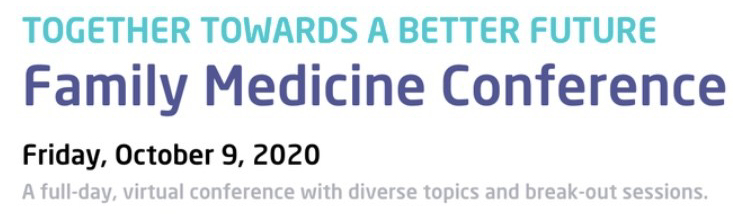
Family Medicine Conference 2020

family

The conference will include plenary sessions on a diverse range of topics in family medicine. Virtual breakout groups will provide opportunities to focus learning in areas of interest and specialization. Attendees will leave with a new sense of how to care for themselves as well as for their patients.

This one-credit-per-hour Group Learning program has been certified by the College of Family Physicians of Canada and the BC Chapter for up to 5.25 Mainpro+® credits.

The BCCFP Annual General Meeting will also take place as part of the conference.

Learn more and register here.

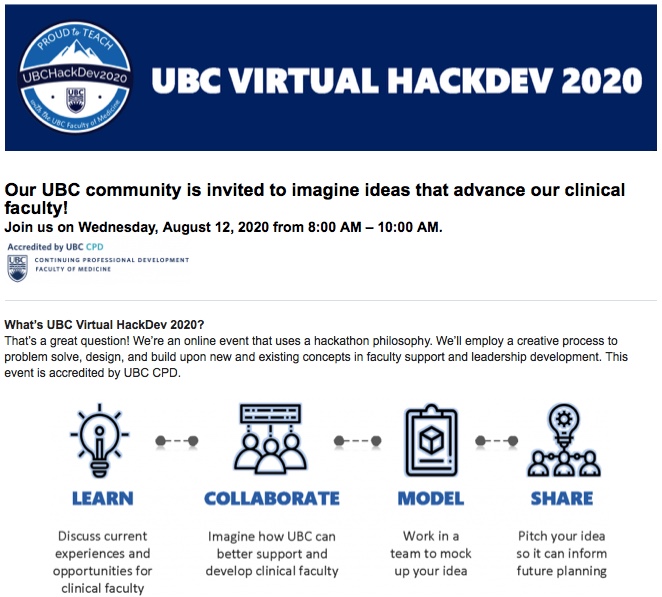
UBC Virtual HackDev 2020: Mental Health & Wellbeing

ubcvirtualhack

THEME: MENTAL HEALTH AND WELLBEING
For this hackathon, we are focusing on the theme of mental health and wellbeing. We are encouraged when we hear about efforts and initiatives designed to reduce the stigma of mental health and promote a culture of wellness among our faculty. Unfortunately, we also hear that sometimes the degree of wellness required for participation in these initiatives poses a barrier to the faculty who are more significantly impacted by mental health conditions. Therefore, in order to more broadly support and develop all of our clinical faculty members, this hack will focus on the tools, resources, or approaches that UBC can develop or build upon in order to support the mental health and wellbeing of all our clinical faculty, particularly and including those who struggle in significant ways.

Learn more & join us here!