“Coronaviruses are a large family of viruses. Some coronaviruses cause cold-like illnesses in people, while others cause illness in certain types of animals, such as cattle, camels, and bats. Some coronaviruses, such as canine and feline coronaviruses, infect only animals and do not infect humans.
Some coronaviruses that infect animals can be spread to humans and then spread between people, but this is rare. This is what happened with SARS-CoV-2, which likely originated in bats. The first reported infections were linked to a live animal market, but the virus is now spreading from person to person.
SARS-CoV-2 spreads mainly from person to person through respiratory droplets from coughing, sneezing, and talking. At this time, there is no evidence that animals play a significant role in spreading the virus that causes COVID-19. Based on the limited information available to date, the risk of animals spreading COVID-19 to people is considered to be low. More studies are needed to understand if and how different animals could be affected by COVID-19.”
Learn more about COVID-19 and Animals via the CDC.
This week, Dr. Mary Ellen Turpel-Lafond released her report, In Plain Sight, which was commissioned by Hon. Adrian Dix to review Indigenous racism in BC’s health care system following allegations about racism experienced by Indigenous peoples in some BC emergency rooms in June 2020. The review examined data through an Indigenous Peoples’ Survey to collect the experiences of Indigenous people using the health care system, and a Health Workers’ Survey to examine experiences of health care workers regarding Indigenous-specific acts of racism in their work. There was also a website, email, and phone number for anyone to share their experiences. Dr. Turpel-Lafond interviewed First Nations and Métis leaders and health advocates as well as healthcare leaders. In total, the review examined the experiences of almost 9,000 people and 185,000 pieces of health sector data.
The full report details the stories and experiences of extensive racism which are extremely upsetting to read. Tying together the countless stories of racism were five key findings: (1) extensive Indigenous-specific racism in BC healthcare; (2) racism limits Indigenous people’s access to medical care which further compounds their health and wellness; (3) Indigenous women and girls are disproportionately impacted by such racism; (4) current public health emergencies, such as COVID-19 and the overdose crisis, disproportionately impact Indigenous peoples; and (5) racism is also experienced by Indigenous health care workers. The review also found that although there are well-intentioned efforts to address and stop these acts of Indigenous-specific racism, those efforts have not translated into real and sustainable change.
A total of 24 recommendations were made by the review team. Importantly, the first one asked that the BC government apologize for Indigenous specific racism, and that apology came on November 30 by BC’s Health Minister, Adrian Dix which you can read about here.
I, our teams, and our leadership at the Women’s Health Research Institute unequivocally denounce Indigenous-specific racism, and racism in all of its forms to all people. We will be giving deliberate attention to how we can enact the recommendations of In Plain Sight. Our actions must include respectful planning and partnership with Indigenous peoples.
To all of our members, staff, and trainees in the WHRI, I urge you to take the time to read the full report here and a summary of the recommendations here. It is time for us to think deeply about our own participation in and witnessing of such acts of racism in the context of our research, and to take action to eliminate it.
Sincerely, Lori A Brotto PhD, R Psych Executive Director, WHRI Professor | Department of OBGYN, UBC Canada Research Chair | Women’s Sexual Health
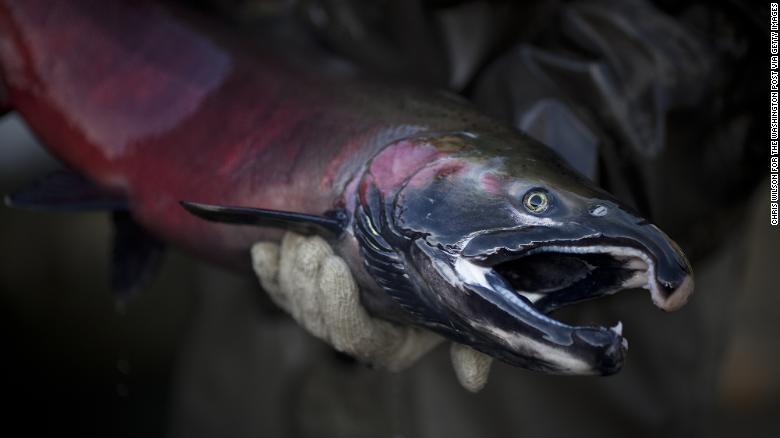
PORT ANGELES, WA – NOVEMBER 29:
A coho salmon is tagged and measured by Mike McHenry, the Fisheries Habitat Manager, and the Lower Elwha Klallam Tribe hatchery, at a Washington state hatchery, west of Port Angeles, Wash. on the state’s Olympic Peninsula on November 28, 2012. About 60 coho salmon were tagged, with their DNA and data collected to better track their movements and reproduction. Afterwards, they were released into Indian Creek, a tributary of the Elwha River that was unaffected by the dam removal and an optimal place for salmon reproduction.
(Photo by Chris Wilson For The Washington Post via Getty Images)
“For decades, scientists say something alarming has been happening in the streams and rivers where coho salmon return from the Pacific Ocean to spawn along the West Coast. After heavy rain events each fall, the fish have been turning up dead in huge numbers before they spawn, a mysterious phenomenon that has been the subject of intense research for years. Now, scientists think they have found a key piece to this morbid puzzle — and according to a new study, it’s strewn all over North America’s roadways. It starts with a chemical antioxidant known as 6PPD, used in tires around the world to make them last longer. …. Roughly 3.1 billion tires for the planet’s more than 1.4 billion vehicles are produced annually, the study said, and this chemical appears to be used in nearly all of them. Previous studies have found that tire abrasion is one of the most significant sources globally of microplastics in aquatic ecosystems, and it’s responsible for an estimated 30% of all the microplastic particles in our oceans. Better treatment and management of runoff before it enters coastal streams is part of the solution, the study authors said, but source control and the development of “green” chemical substitutes for 6PPD in tires is also needed.”
More on “Salmon have been dying mysteriously on the West Coast for years. Scientists think a chemical in tires may be responsible” via CNN.
“The climate crisis has already been solved. We already have all the facts and solutions. All we have to do is to wake up and change.” ~ Greta Thunberg
Hot off the press:
“The 2020 report of The Lancet Countdown on health and climate change: responding to converging crises” via Lancet.
“Climate change is resulting in profound, immediate and worsening health impacts” via The Conversation.
“Climate change harms our health – But let’s remember wider influences” via Psychology Today.
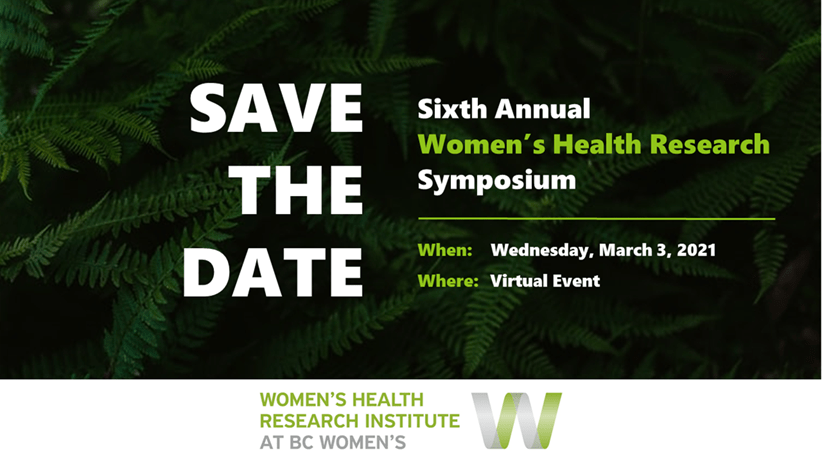
Save the date for the Sixth Annual Women’s Health Research Symposium! The event will be held virtually this year (via an online conference platform) and will be an opportunity to showcase the amazing women’s health research taking place across the province. The symposium is geared toward researchers, trainees, and other research and healthcare stakeholders. Please share this event with your networks.








 Family Medicine Residency Site: Abbotsford-Mission