
Each year, we gather to celebrate the outstanding achievements, compassion, and commitment of our residents, faculty, and preceptors across the Family Practice Residency Program. The 2025 Postgraduate Awards honour individuals who exemplify excellence in clinical care, teaching, leadership, and advocacy. These awards reflect the heart of family medicine—dedication to patients, communities, and lifelong learning. Congratulations to all of this year’s nominees and recipients. Your contributions continue to shape the future of family practice in remarkable ways. Big shout out to Abbotsford-Mission Residents & Preceptors:
Peter Grantham Award for Teaching Excellence Nominee: Dr. Jeff Kornelsen
Residency Site Teaching Awards (Resident Selected): Dr. Michael Lamb & Dr. Shawna Vickerman
Residency Site Medical Education Awards (Peer Selected): Dr. Jeff Kornselsen & Dr. Trevor Hartl
Robotic Heart Transplant

HOUSTON — Surgeons at Baylor St. Luke’s Medical Center in Houston successfully performed the first fully robotic heart transplant in the United States.
Using a robot, lead surgeon Dr. Kenneth Liao and his team conducted the operation without opening the chest or breaking the breastbone. Instead, the team used small incisions to remove the diseased heart and implant the new one, avoiding a chest incision entirely.
Innovation at its best. Read more here.
Liability
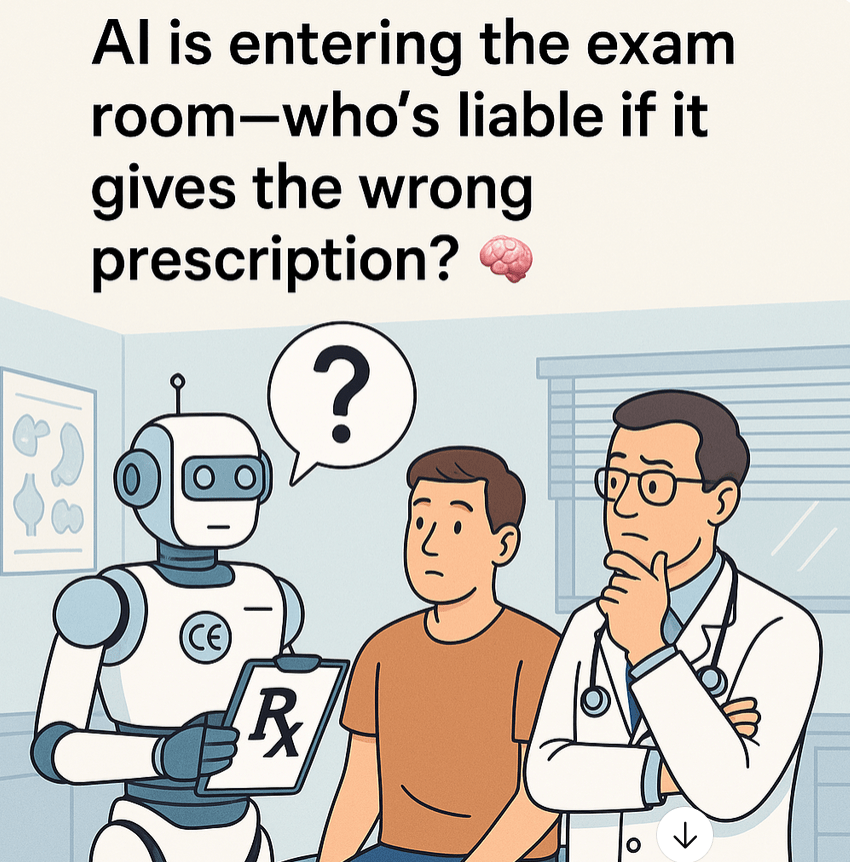
In this must-read piece, Solaiman & Malik (2024) dissect the evolving EU legal landscape for algorithmic care, where the Artificial Intelligence Act meets real-world clinical complexity. Doctors are no longer the only ones with decision-making power—AI systems are being trained, deployed, and (occasionally) hallucinate diagnoses with remarkable confidence.
But when the AI makes a mistake… who takes the fall? The doctor? The developer? The data itself?
This paper explores how regulatory frameworks are shifting the traditional doctor–patient model, nudging us into a new triangle: doctor–patient–algorithm. Spoiler alert: Only one of them has a CE marking.
The EU’s AI Act is more than just red tape—it’s an attempt to ensure transparency, accountability, and safety in algorithmic care. And if you’re in healthcare or med ed, this isn’t just legalese—it’s your future.
Favourite quote?
“AI’s growing sophistication presents unique challenges that threaten to erode the autonomy gained by disempowering patients and doctors alike and shifting controls to external market forces. Although AI’s potential to enhance diagnostic accuracy and support informed decision-making seems promising, it risks over-reliance by doctors, diminished personal interaction with patients, and raises concerns about data privacy, opacity, and accountability.”
Doctors may need to add “algorithm whisperer” to their CVs.
Read the full article here: https://academic.oup.com/medlaw/article/33/1/fwae033/7754853?login=false
A New Chapter of Charlotte’s Web? Human Hearts and Hybrid Pigs

Scientists have just achieved something extraordinary—and ethically unsettling. In a landmark study, researchers successfully grew human heart tissue inside a pig embryo, opening the door to generating entire human-compatible organs in animals.
While the potential to alleviate organ shortages is real and urgent, this raises deep questions:
1. Where do we draw the line between species and identity?
2. What does consent mean in this context—when neither human cells nor pigs have a say?
3. Could this create new forms of vulnerability—biological chimeras caught between categories?
Imagine a new Charlotte’s Web for the genomic age—not about saving Wilbur from the slaughterhouse, but about a pig whose heart is no longer just its own.
As we advance synthetic biology, AI, and xenotransplantation, we must bring ethics, empathy, and the public voice to the table—before the barn doors are fully open.
Learn more here.
HIV on the Rise
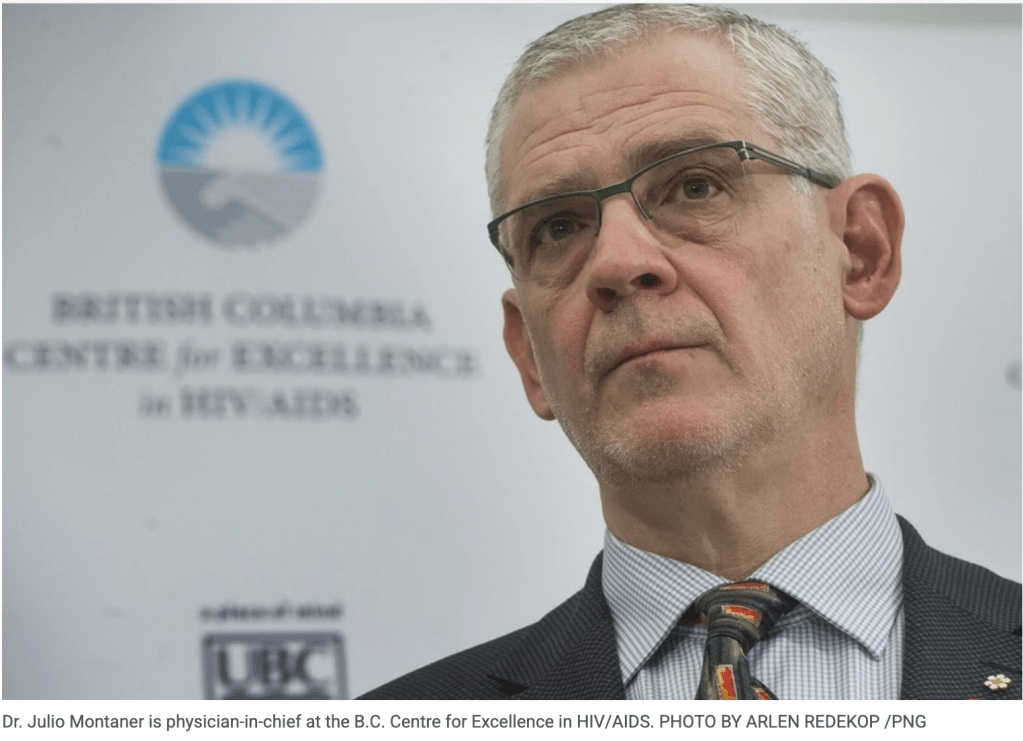
“HIV does not respect borders. We have seen an increase in the number of HIV cases in British Columbia, and more than two-thirds of those cases are cases that come into the province with HIV from other jurisdictions.”
– Dr. Julio Montaner, executive director of the BC Centre for Excellence in HIV/AIDS,
Two troubling trends are converging in the rise in HIV cases here in BC and abroad.
In one corner: Rising HIV Incidence in B.C. & Canada at Large
At the BC Centre for Excellence’s national HIV summit (June 6, 2025), experts sounded the alarm on a 35 % jump in HIV cases in Canada from 2022 to 2023, with rates continuing upward in 2024 and 2025. They emphasized that cuts in global HIV funding—particularly U.S. support through PEPFAR and USAID—are threatening domestic progress, jeopardizing Prevention-as-Treatment (TasP®) and PrEP strategies.
In the other corner: U.S. Aid Destruction: Millions in HIV Drugs & Contraceptives Left to Waste
Reports indicate USAID stockpiled roughly $12 million worth of HIV‑prevention drugs and contraceptives destined for developing countries—but under a recent executive order, they’ve been stranded in U.S. warehouses since January 2025. With expiration dates looming, these vital supplies risk being sold off or destroyed. Former USAID leadership is urging the administration to release or donate rather than destroy—warning that bureaucratic paralysis now threatens hundreds of thousands of lives.
Why These Trends Connect — and Why You Should Care
1. Lost U.S. donations means fewer drugs reaching communities in need internationally—and a lost opportunity to repurpose that stock locally or support Canada.
2. Rising HIV in Canada is a wake-up call: even with progressive domestic policies, we’re vulnerable—especially when global systems falter.
3. Global solidarity matters: U.S. aid cuts ripple globally; local healthcare programs rely on international collaboration to fill gaps.
This is a time when we need to work together.
Read more here on B.C. experts sound the alarm over rising number of HIV cases: https://vancouversun.com/news/bc-experts-alarm-rising-hiv
Read more at Trump administration to destroy vital HIV meds and contraceptives worth $12 million following closure of USAID: https://economictimes.indiatimes.com/news/international/us/trump-admin-set-to-destroy-vital-hiv-meds-and-contraceptives-worth-12-million-following-closure-of-usaid/articleshow/121786727.cms?from=mdr
Grand Rounds: AI Development
BC Virtual Health Grand Rounds: Bridging the Gap between AI Development and Implementation in Healthcare
July 29 (Tue) | 8–9 a.m. PT | Webinar
Audience: rural health professionals, administrators and IT colleagues.
Overview: This quarterly provincial rounds series explores technology-enabled health-care delivery, focusing on the risks, benefits and key considerations of adopting technology to support patient-centred care. This session features Dr. Hashim Kareemi.
Up to 1.0 Mainpro+/MOC Section 1 credit
Learn more and register here.
Community-Based Model of Education

“A new graduate medical education program in family medicine is urgently needed now. We propose an innovative plan to develop community-based, community-owned family medicine residency programs. The plan is founded on five guiding principles in which residencies will (1) transition to independent, community-owned organizations; (2) sustain comprehensiveness and generalism; (3) emphasize collaborative learning and interprofessional education; (4) develop local educators with national guidance; and (5) share resources, responsibilities, and learning. We describe actionable steps to begin the process of transforming residencies and strengthening primary care. As community-based and locally-run organizations, residencies will gain self-determination in how time is allocated, budgets are spent, and teams function. Building on the momentum of the National Academy of Medicine’s 2021 primary care implementation plan and recommendations by family medicine organization leaders, we propose a Decade of Family Medicine Residency Transformation. We encourage individuals and organizations spanning disciplines, health care systems, and communities, to join forces to reimagine and recreate the preparation of outstanding personal physicians dedicated to individual and community health and well-being.”
Learn more on The Time Is Now: A Plan to Redesign Family Medicine Residency Education via Family Medicine.
New Models of Care
“In a related analysis, Abdel-Rahman and colleagues1 discuss how the marked improvement in quantity and quality of life experienced by some people with cancer who receive novel therapies is great news for patients, yet presents a challenge for oncologists and Canada’s health care systems.
Determining which patients will benefit from the many and rapidly increasing number of molecularly targeted therapies and immunotherapies for cancer requires substantial expertise, as does managing the complexity of the treatments and their adverse effects. Moreover, the increased length of time patients are on active treatment means that those being treated for cancer today need many more outpatient visits to an oncologist than they did 10 years ago. Add to this the rising number of people in Canada living with cancer and the decrease in hours that oncologists (like other physicians) are prepared to work, and the result is that Canada is facing a critical shortage of oncologists and other health care personnel who provide care for people with cancer. Patients who experience adverse effects from novel treatments often present to the emergency department and may be admitted to hospital, where they are usually cared for by hospitalists, which places additional stress on hospitals where nurse and physician burnout is already high. Urgent action must be taken to avoid a crisis in cancer care.”
Read more on New models of care needed to address Canada’s shortage of medical specialists via CMAJ.
SAFE AI

We’re entering a new era in healthcare and medical education—one where AI is increasingly integrated into tasks such as clinical reasoning and decision support. To support clinicians and educators in using AI responsibly, we developed the SAFE approach:
S: Set Boundaries: Define what AI can and cannot do in your clinical context.
1. No final diagnoses, prescriptions, or critical decisions.
2. Use for drafts, brainstorming, summaries, or language simplification.
3. Establish clinical red lines where human judgment is non-negotiable.
A: Add Friction: Prevent blind reliance with built-in checks.
1. Label all AI-generated text: “Machine-generated. Verify before use.”
2. Require human review before integrating into EMRs.
3. Add pop-up reminders or checklists before clinical use.
F: Foster Reflection: Create space for metacognition.
1. Debrief as a team: “Where did AI help us? Where did it overreach?”
2. Reflect not just on workflow, but on thinking habits.
3. Make critical thinking part of every AI-assisted task.
E: Educate Clinicians: Build AI literacy as a core clinical skill.
1. Explain how language models work—and where they fail.
2. Share real stories of hallucinations, bias, and misfires.
3. Use vignettes to spark ethical reflection and dialogue.
As this technology evolves, it’s crucial to recognize that AI is less about being “artificial” or “intelligent,” and more about automation and translation. It does not replace human judgment—it requires it.
Canfield Distinguished Scholar in Patient Partnerships
Applications are now open for the position of Canfield Distinguished Scholar in Patient Partnerships at UBC. This part-time honorific position for UBC faculty is an opportunity to support research, teaching, and outreach initiatives in patient partnerships in health professional education. It has been enabled through a partnership between the Patient and Community Partnership for Education in the Office of UBC Health and the Centre for Health Education Scholarship.
This position was established thanks to the generous donation of Carolyn Canfield, with the intention of augmenting UBC’s leadership and furthering the understanding of how patients interacting with students early in their careers can support more compassionate, high-quality care.
For a copy of the full job posting and more information about the application process, please go to our website here. The awarding of this Distinguished Scholar is subject to the usual University approvals.
Applications can be submitted to:
Michelle Huebert, CHES Administrative Manager
Email: ches.manager@abbotsfordfamilymed
Subject Line: Canfield Distinguished Scholar in Patient Partnerships
Review of applications will begin on July 2, 2025, and will continue until the position is filled.
Please share this announcement within your networks and anyone who may be interested in applying.
 Family Medicine Residency Site: Abbotsford-Mission