The Labor of Story Telling

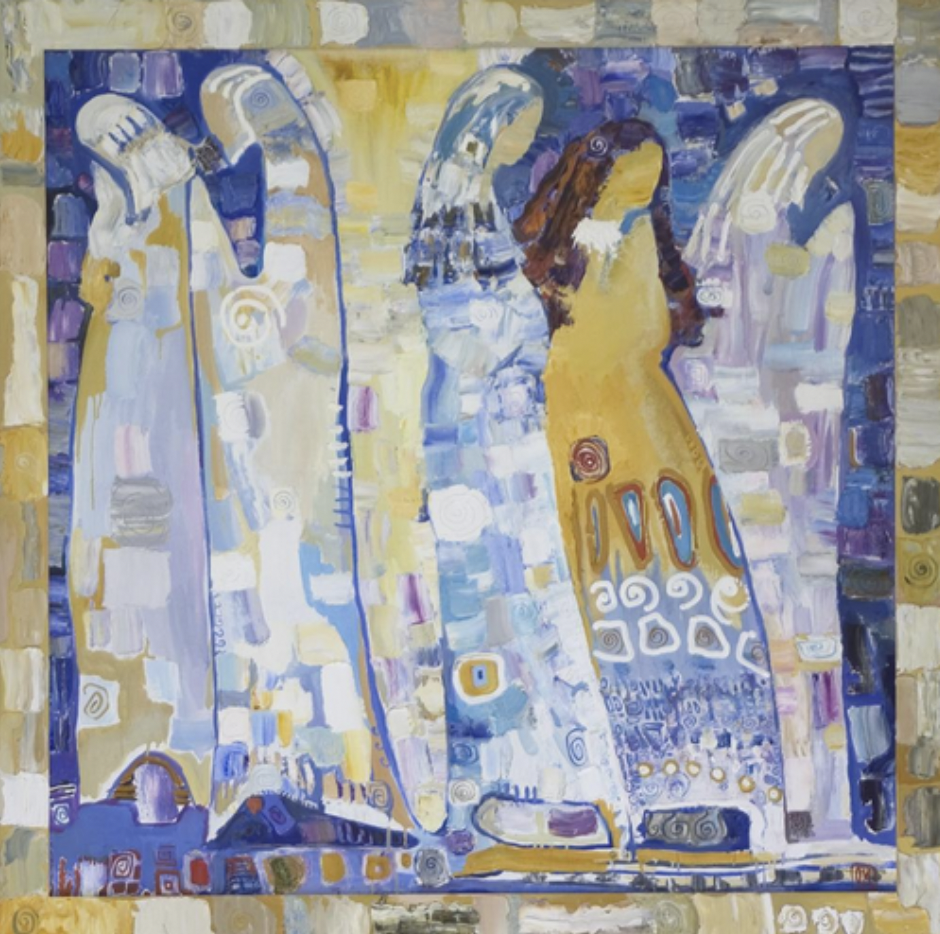
Illumination, 2005 Ukrainian Artist: Katerina Omelchuk

“When my father was a young physician, around my age, he experienced a tragic event that changed the trajectory of his life. Many years later, he wrote about the experience. He told the story of a pregnant patient under his care who experienced an ‘anesthesia catastrophe’ during a cesarean delivery. He had been her family medicine physician and was present as first assistant for the procedure. The patient had a cardiac arrest that resulted in severe brain injury and, several days later, was removed from life support and died. Her infant survived but had severe neurological injury.

‘Everyone who’d been involved left the hospital,’ my father wrote. ‘You’re the family doctor,’ he recalled being told, ‘it’s best if you speak to them.’ He remembered breaking the news, alone, to the patient’s family. ‘I assumed my career was over,’ he said. My father described being in a kind of ’emotional shock’ after this. He reported feeling abandoned by his colleagues and targeted by the news media. Although a malpractice suit was filed, my father was not named in it. He wondered if this was because he was the only one who talked to the family.

In reflecting on this event, my father described the personal and professional cost as ‘incalculable.’ At the same time, he said he became a more conscientious physician because of it, sometimes catching mistakes by less attentive colleagues over the ensuing years. He hoped that his own reflections on the event would encourage discussion of medical errors more openly, including the emotional toll they can have on clinicians. He also described a profound sadness that he continued to feel decades after this loss. For him, it was ‘a sadness that doesn’t go away.’

Although I’ll never know for sure, I suspect this sadness played a role in my father’s premature death. In many ways, it has also played a substantial role in my life. While it may not have been the inheritance I hoped for, the sorrow and grief that flowed into my life through my father’s death has shaped me in important ways. During medical school, I grew interested in the field of palliative medicine, drawn by the opportunity to help patients through grief and loss and to be a steward of opioid medications. In palliative medicine, I have found kindred spirits and a feeling of being at home in my work. I have also found a community where stories of loss—stories like my own and my father’s—can be acknowledged, held with compassion, and allowed to move and to heal in their own time.

The labor and art of story telling has the power to transform our lives. In sharing and receiving stories, we connect more deeply to one another: We become more real, more fully human. We feel less alone. The labor of story telling is not necessarily easy, though. It requires honesty, vulnerability, and the courage to contact the wounded places within ourselves. Sadly, these are not things that most of us are taught to do as physicians. Instead, we learn early on in medical training that it is risky to be our authentic selves, to acknowledge our imperfections, and to share our struggles. I am convinced that this has contributed to the epidemic of burnout, depression, and suicide among physicians.”

Read more on The Labor of Story Telling by Megan Ann Brandeland, MD. via JAMA.
Comic Strips & Health Care

“Comics creator Sam Hester is part of a growing movement within health care: graphic medicine. In short, literally drawing attention to a patient’s needs and goals with pictures to foster better and more accessible caretaking. Hester shares how illustrating small details of her mother’s medical story as she struggled with mysterious symptoms alongside her Parkinson’s and dementia led to more empathy, understanding, communication and peace of mind.” via TED.

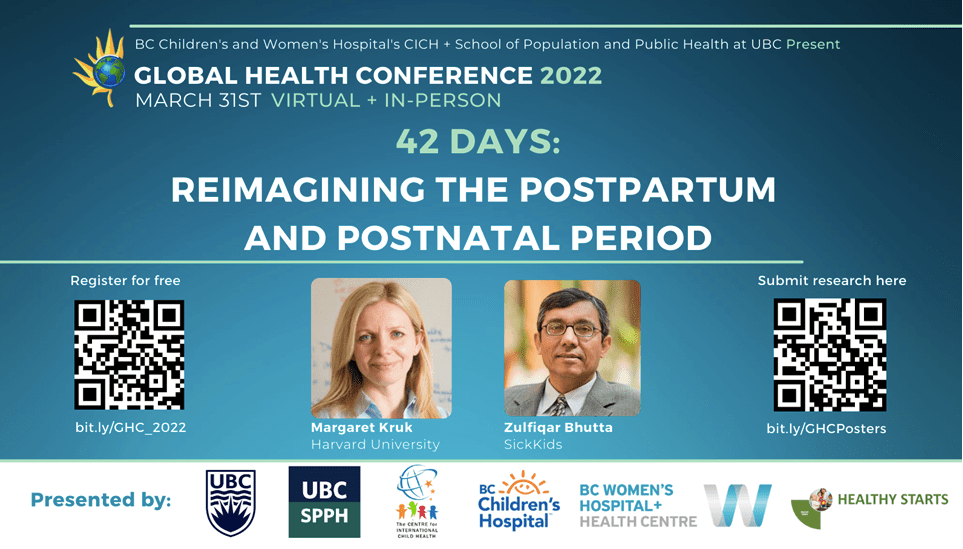
Global Health Conference 2022

On behalf of the Centre for International and Child Health (CICH) at BC Children’s and Women’s Hospital and the School of Population and Public Health at the University of British Columbia, we present to you the 4th Annual Global Health Conference.

As promoted at the 7th Annual Women’s Health Research Symposium, the 2022 Global Health Conference is an event for global health researchers, students, and organizations to come together and explore the reimagining the postpartum and postnatal period.

Please note that this is a hybrid conference. Based on provincial health restrictions in British Columbia, they will offer in-person attendance at the Chan Centre for Family Health Education at BC Children’s Hospital.

Attendance for this conference is FREE and open to everyone. Attendees must register via Eventbrite.

Registration is now open: https://www.eventbrite.com/e/246737086267

Responding to the Opioid Crisis in North America

“The Stanford–Lancet Commission on the North American Opioid Crisis was formed in response to soaring opioid-related morbidity and mortality in the USA and Canada over the past 25 years. The Commission is supported by Stanford University and brings together diverse Stanford scholars and other leading experts across the USA and Canada, with the goals of understanding the opioid crisis, proposing solutions to the crisis domestically, and attempting to stop its spread internationally. Unlike some other Lancet Commissions, this one focuses on a long-entrenched problem that has already been well characterised, including in several reviews by the National Academies of Sciences, Engineering, and Medicine. This Commission therefore focused on developing a coherent, empirically grounded analysis of the causes of, and solutions, to the opioid crisis.

Since 1999 more than 600,000 people in the USA and Canada have died from opioid overdose and a staggering 1.2 million more are estimated to die due to overdose by 2029. The Stanford-Lancet Commission  was formed in response to the soaring opioid-related morbidity and mortality that the USA and Canada have experienced by analyzing the state of the opioid crisis and proposing solutions to it domestically while attempting to stop its spread internationally. The Commissions identifies where renewed commitment to reform and progress must be made, including regulation, healthcare and treatment, the criminal justice system, prevention, innovation to the opioid response, and curtailing the global spread of the epidemic.”

More on Responding to the opioid crisis in North America and beyond: recommendations of the Stanford–Lancet Commission via The Lancet.

Medical Neutrality & Conflict

“People who practise modern medicine are governed by a set of ethical rules both at times of peace and times of war. We are to treat all our patients equally and without prejudice. A physician’s ethical responsibility during a time of war is identical to that during a time of peace.

Medical neutrality refers to a principle of non-interference with medical services in times of armed conflict and civil unrest: physicians must be allowed to care for the sick and wounded, and soldiers must receive care regardless of their political affiliations. It is a fragile thing to maintain, as it requires opposing sides of a conflict to uphold the agreed principles. Medical staff are not permitted to discriminate against patients based on factors like politics or race, and in exchange, conflicting parties allow medical care to continue unimpeded.

As Dr Joanne Liu, former president of Doctors Without Borders (Medecins Sans Frontieres, or MSF), stated in 2016 in reference to attacks in Aleppo, Syria on medical neutrality, ‘We say loud and clear: The doctor of your enemy is not your enemy.’ These principles allow medical professionals to treat the sick and wounded from either side of a conflict, the idea being they, themselves, will not be targeted as a result while they do this. In times of war, medical care and field hospitals are essential and it is important that they remain safe.”

More on Is Russia committing war crimes by bombing hospitals in Ukraine? And what happens when the principle of medical neutrality is abandoned during times of conflict? via Doctor’s Note.

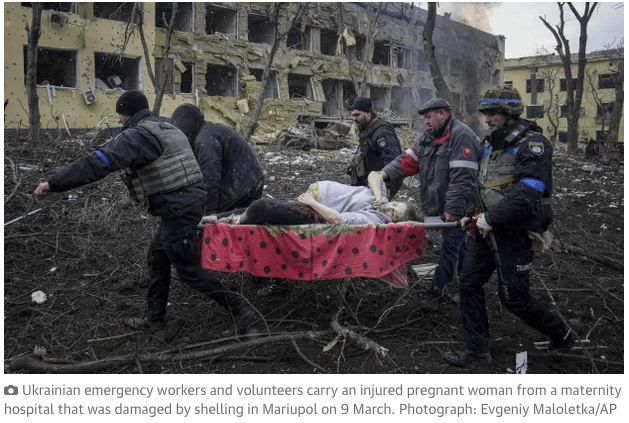
Pregnant woman and baby die after attack on hospital in Mariupol: Woman was taken to another hospital in city in south-east Ukraine where medics could not save her or her child via The Guardian.

The Power of Collective Action

Figure 1 distinguishes between two interior conditions that we as human beings can choose to operate from. One is based on opening the mind, heart, and will — a.k.a. curiosity, compassion, and courage — and the other one is based on closing the mind, heart, and will — ignorance, hate, and fear. The upper half of figure 1 briefly summarizes the collective cognitive dynamics that have led us to Putin’s war in Ukraine. The freezing and closing of the mind, heart, and will have resulted in six debilitating social and cognitive practices.

“‘The world will never be the same.’ These are, according to New York Times columnist Tom Friedman, the seven most dangerous words in journalism. It’s not only Friedman who has used them to make sense of our current moment. Many of us are doing the same. Watching Putin’s invasion of Ukraine happen in real-time since February 24 makes most of us feel stuck and paralyzed by the horrific acts that are unfolding in front of us.

It feels as if we are crossing a threshold into a new period. This new period has been likened to the cold war era that ended in 1989. Some suggest that Vladimir Putin is trying to turn back the clock by at least 30 years in his effort to make Russia ‘great again.’ I believe, though, that we are in a quite different situation today. The cold war was a conflict between two opposing social and economic systems on the basis of a shared military logic that experts refer to as mutually assured destruction — or MAD, a rather fitting acronym. The MAD ‘operating system’ worked because it relied on a shared logic. It was grounded in a shared set of assumptions, and a shared sense of reality on both sides of the geopolitical divide.”

More on Putin and the Power of Collective Action from Shared Awareness: A 12-Point Meditation on Our Current Moment via Otto Scharmer, MIT Lecturer & Co-founder of the Presencing Institute.

Legal Rights of Transgender Youth

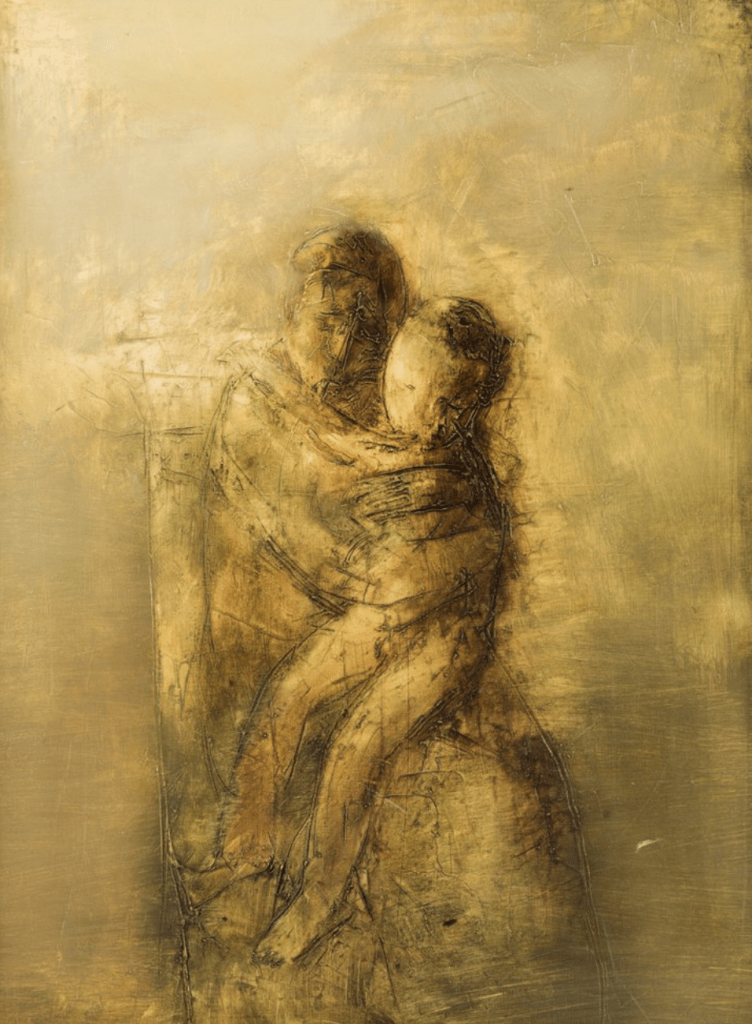
Mother and Child, 2007 by Ukrainian artist Matvey Vaisberg.

“Medical care providers have specific legal duties in relation to youth: to respect their human rights and to assess their capacity to consent to treatment. In AB v CD (2020), the BC Court of Appeal clarified the responsibilities of health care providers when their patient is under 19 years of age,[1] addressed how the Infants Act[2] and Family Law Act[3] apply in situations where youth and parents disagree about medical treatment.[4] The Court confirmed that under the law, health care providers, not parents, are responsible for two things: assessing the capacity of a minor patient to consent to a treatment and determining whether a treatment is in the best interest of that patient. Where a health care provider assesses a young person to be capable and concludes that the treatment is in their best interests, the young person alone has authority to consent to or refuse treatment. In providing health care to a youth, providers’ responsibilities are subject to the scrutiny of their professional bodies and human rights tribunals.”

Learn more on Legal rights of transgender youth seeking medical care via BCMJ.

Thinking is an Exercise

“Visible Thinking is a flexible and systematic research-based conceptual framework, which aims to integrate the development of students’ thinking with content learning across subject matters.

Visible Thinking began as an initiative to develop a research-based approach to teaching thinking dispositions. The approach emphasized three core practices: thinking routines, the documentation of student thinking, and reflective professional practice. It was originally developed at Lemshaga Akademi in Sweden as part of the Innovating with Intelligence project, and focused on developing students’ thinking dispositions in such areas as truth-seeking, understanding, fairness, and imagination. It has since expanded its focus to include an emphasis on thinking through art and the role of cultural forces and has informed the development of other Project Zero Visible Thinking initiatives, including Artful Thinking, and Cultures of Thinking.”

More at Harvard’s Graduate School of Education Project Zero.

Approaching a Sensitive Conversation

Ukrainian Madonna. Ukrainian family. Artist Valentina Samoilik-Artyuschenko, Ukraine


“There’s a conversation you’re avoiding. It feels important, the stakes are high, there are strong feelings involved and you are putting it off: ‘The time isn’t right’; ‘I can’t find the words’; ‘I don’t want to get emotional’.

But delaying doesn’t solve anything and anticipation is often far more uncomfortable than the conversation itself. Getting started might involve some awkward moments, but, after that, the situation is open for discussion and exploration.

Tried and tested approaches can help to smooth the way. Here are 10 useful tips from my experience as a psychotherapist and, developed while working in some of the highest-stakes discussions – the tender conversations taking place as people face the end of life. These principles apply whether you are chatting in person, over the phone or during a video call. You can even use them in text message conversations.

Instead of ‘difficult’ conversations, I call them ‘tender’ – and that attitude can make all the difference.”

Read the 10 tips via How to Say the Unsayable: 10 Ways to Approach a Sensitive, Daunting Conversation.