CAR T-cell Therapy in Cancer

“Chimeric antigen receptor (CAR) T-cell therapy is a novel therapeutic T-cell engineering option, where T-cells obtained from a patient’s blood are engineered ex vivo to express specific tumour antigen receptors. The highly selective nature of CAR T-cell therapy has led to a revolution in cancer treatment. The use of CAR T-cell therapy has been successful in treating haematological malignancies and there is also a growing interest in using CAR T-cell therapy to target solid tumours. However, there are notable challenges with CAR T-cell therapy, including non-sustained responses, antigen escape, and life-threatening adverse effects. Studies are underway to improve the safety of CAR T-cell therapy by limiting their expression, producing switchable CAR T-cells, and producing genetically engineered T-cells that are equipped with genes to reduce adverse effects.”

More on Opportunities and challenges for CAR T-cell therapy in cancer via Cambridge Medical Journal.

Ableism in Medical Education

The Capability Imperative: Revealing Ableism in Medical Education:
“The movement to diversify medical education recognizes that various perspectives and life experiences enrich medical training, practice, and patient care. However, students with disabilities remain underrepresented in medical education and face barriers in structure, culture, and climate. Efforts to remedy exclusion have focused on bettering accommodation policy and practice.

This presentation draws from a constructivist grounded theory of four U.S. medical schools that asked: how is disability inclusion enacted in medical education? Amongst other things, the study shows that inclusion was informed by the capability imperative, a context-specific manifestation of ableism that upholds a cultural logic of compulsory hyper-ablebodiedness and mindedness. I describe this logic and argue that it renders disabled students’ misfits in medical education. Their inclusion is constrained, always exceptional. To be truly inclusive of diverse bodyminds, the capability imperative must be interrogated and dismantled.”

Learn more on The Capability Imperative: Revealing Ableism in Medical Education here.

Practice Patterns & Family Physicians

The Early Career Primary Care (ECPC) study is exploring changing practice patterns among family physicians, as well as practice intentions and choices among family medicine residents and early career physicians.

In this seminar on April 13, 2022 at noon PSTDr. Ruth Lavergne and Dr. Ian Scott will share findings that call into question common narratives about changing practice patterns and generational differences in primary care, and point to the need for different approaches to ensure access to quality primary care in Canada.

For more information and updates, check out the Department of Family Practice Website.

The Labor of Story Telling

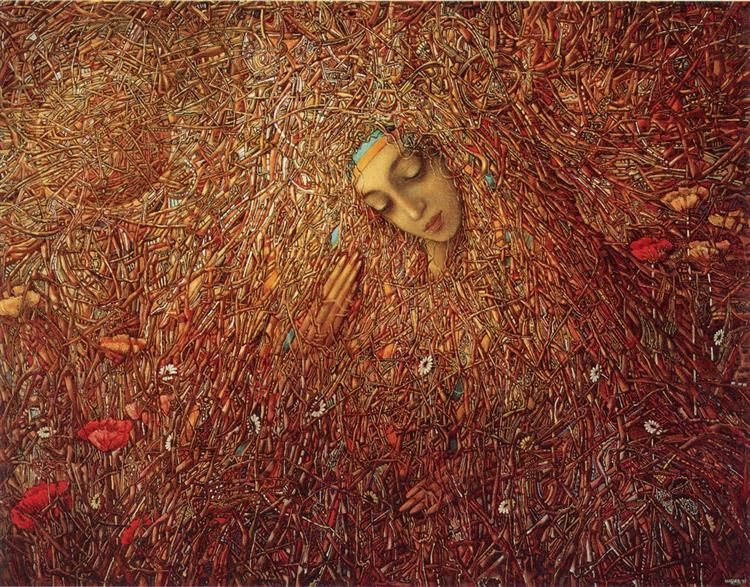
Illumination, 2005 Ukrainian Artist: Katerina Omelchuk

“When my father was a young physician, around my age, he experienced a tragic event that changed the trajectory of his life. Many years later, he wrote about the experience. He told the story of a pregnant patient under his care who experienced an ‘anesthesia catastrophe’ during a cesarean delivery. He had been her family medicine physician and was present as first assistant for the procedure. The patient had a cardiac arrest that resulted in severe brain injury and, several days later, was removed from life support and died. Her infant survived but had severe neurological injury.

‘Everyone who’d been involved left the hospital,’ my father wrote. ‘You’re the family doctor,’ he recalled being told, ‘it’s best if you speak to them.’ He remembered breaking the news, alone, to the patient’s family. ‘I assumed my career was over,’ he said. My father described being in a kind of ’emotional shock’ after this. He reported feeling abandoned by his colleagues and targeted by the news media. Although a malpractice suit was filed, my father was not named in it. He wondered if this was because he was the only one who talked to the family.

In reflecting on this event, my father described the personal and professional cost as ‘incalculable.’ At the same time, he said he became a more conscientious physician because of it, sometimes catching mistakes by less attentive colleagues over the ensuing years. He hoped that his own reflections on the event would encourage discussion of medical errors more openly, including the emotional toll they can have on clinicians. He also described a profound sadness that he continued to feel decades after this loss. For him, it was ‘a sadness that doesn’t go away.’

Although I’ll never know for sure, I suspect this sadness played a role in my father’s premature death. In many ways, it has also played a substantial role in my life. While it may not have been the inheritance I hoped for, the sorrow and grief that flowed into my life through my father’s death has shaped me in important ways. During medical school, I grew interested in the field of palliative medicine, drawn by the opportunity to help patients through grief and loss and to be a steward of opioid medications. In palliative medicine, I have found kindred spirits and a feeling of being at home in my work. I have also found a community where stories of loss—stories like my own and my father’s—can be acknowledged, held with compassion, and allowed to move and to heal in their own time.

The labor and art of story telling has the power to transform our lives. In sharing and receiving stories, we connect more deeply to one another: We become more real, more fully human. We feel less alone. The labor of story telling is not necessarily easy, though. It requires honesty, vulnerability, and the courage to contact the wounded places within ourselves. Sadly, these are not things that most of us are taught to do as physicians. Instead, we learn early on in medical training that it is risky to be our authentic selves, to acknowledge our imperfections, and to share our struggles. I am convinced that this has contributed to the epidemic of burnout, depression, and suicide among physicians.”

Read more on The Labor of Story Telling by Megan Ann Brandeland, MD. via JAMA.

Comic Strips & Health Care

“Comics creator Sam Hester is part of a growing movement within health care: graphic medicine. In short, literally drawing attention to a patient’s needs and goals with pictures to foster better and more accessible caretaking. Hester shares how illustrating small details of her mother’s medical story as she struggled with mysterious symptoms alongside her Parkinson’s and dementia led to more empathy, understanding, communication and peace of mind.” via TED.

Global Health Conference 2022

On behalf of the Centre for International and Child Health (CICH) at BC Children’s and Women’s Hospital and the School of Population and Public Health at the University of British Columbia, we present to you the 4th Annual Global Health Conference.

As promoted at the 7th Annual Women’s Health Research Symposium, the 2022 Global Health Conference is an event for global health researchers, students, and organizations to come together and explore the reimagining the postpartum and postnatal period.

Please note that this is a hybrid conference. Based on provincial health restrictions in British Columbia, they will offer in-person attendance at the Chan Centre for Family Health Education at BC Children’s Hospital.

Attendance for this conference is FREE and open to everyone. Attendees must register via Eventbrite.

Registration is now open: https://www.eventbrite.com/e/246737086267

Responding to the Opioid Crisis in North America

“The Stanford–Lancet Commission on the North American Opioid Crisis was formed in response to soaring opioid-related morbidity and mortality in the USA and Canada over the past 25 years. The Commission is supported by Stanford University and brings together diverse Stanford scholars and other leading experts across the USA and Canada, with the goals of understanding the opioid crisis, proposing solutions to the crisis domestically, and attempting to stop its spread internationally. Unlike some other Lancet Commissions, this one focuses on a long-entrenched problem that has already been well characterised, including in several reviews by the National Academies of Sciences, Engineering, and Medicine. This Commission therefore focused on developing a coherent, empirically grounded analysis of the causes of, and solutions, to the opioid crisis.

Since 1999 more than 600,000 people in the USA and Canada have died from opioid overdose and a staggering 1.2 million more are estimated to die due to overdose by 2029. The Stanford-Lancet Commission  was formed in response to the soaring opioid-related morbidity and mortality that the USA and Canada have experienced by analyzing the state of the opioid crisis and proposing solutions to it domestically while attempting to stop its spread internationally. The Commissions identifies where renewed commitment to reform and progress must be made, including regulation, healthcare and treatment, the criminal justice system, prevention, innovation to the opioid response, and curtailing the global spread of the epidemic.”

More on Responding to the opioid crisis in North America and beyond: recommendations of the Stanford–Lancet Commission via The Lancet.

Medical Neutrality & Conflict

“People who practise modern medicine are governed by a set of ethical rules both at times of peace and times of war. We are to treat all our patients equally and without prejudice. A physician’s ethical responsibility during a time of war is identical to that during a time of peace.

Medical neutrality refers to a principle of non-interference with medical services in times of armed conflict and civil unrest: physicians must be allowed to care for the sick and wounded, and soldiers must receive care regardless of their political affiliations. It is a fragile thing to maintain, as it requires opposing sides of a conflict to uphold the agreed principles. Medical staff are not permitted to discriminate against patients based on factors like politics or race, and in exchange, conflicting parties allow medical care to continue unimpeded.

As Dr Joanne Liu, former president of Doctors Without Borders (Medecins Sans Frontieres, or MSF), stated in 2016 in reference to attacks in Aleppo, Syria on medical neutrality, ‘We say loud and clear: The doctor of your enemy is not your enemy.’ These principles allow medical professionals to treat the sick and wounded from either side of a conflict, the idea being they, themselves, will not be targeted as a result while they do this. In times of war, medical care and field hospitals are essential and it is important that they remain safe.”

More on Is Russia committing war crimes by bombing hospitals in Ukraine? And what happens when the principle of medical neutrality is abandoned during times of conflict? via Doctor’s Note.

Pregnant woman and baby die after attack on hospital in Mariupol: Woman was taken to another hospital in city in south-east Ukraine where medics could not save her or her child via The Guardian.