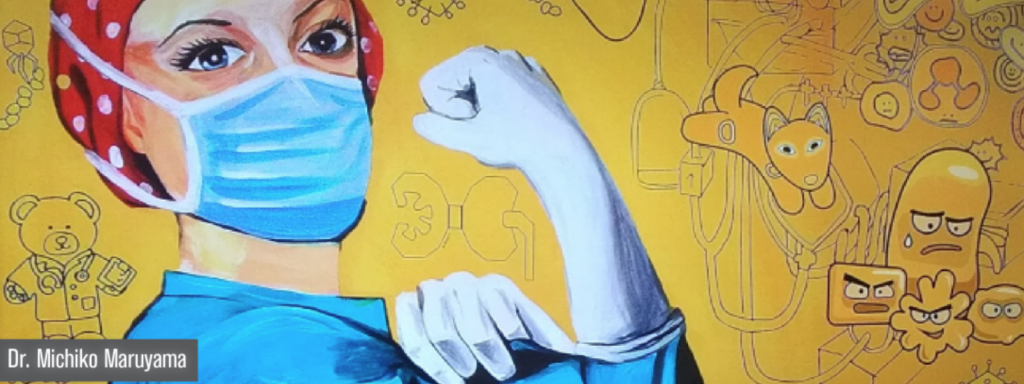
The Body Electric was launched at ICRE 2014. An inspiring selection of visual art, in a range of media – photography, drawing, painting, sculpture and film – explored the conference theme of medical technology from new critical and artistic angles.
This year, The Body Electric jury is looking for visual art submissions on the theme Art as Coping, Art as Community in Healthcare, to reflect the ICRE 2022 theme, Together Again: A Community Redefining Residency Education.
You are invited to approach the theme broadly to consider these themes from various experiential and critical perspectives, such as:
Art as coping
Art and community
Art and compassion
Visual art can be submitted in any medium; but will be represented digitally.
ARTISTS WHOSE WORK IS INCLUDED IN THE BODY ELECTRIC WILL RECEIVE $100.00 FOR EXHIBITING THEIR WORK
Registration is now open for the newest Rural POCUS Rounds webinar series: Ultrasound for Shock. Over the next six months, we invite you to join us as we discuss five topics specific to the application of ultrasound for shock. Each session will include a presentation on the topic, relevant case studies and a Q&A session.
Jun–Nov 2022 (Fridays) | 1200–1300 PT Audience: health-care providers working in and supporting rural communities. Overview: Rural POCUS Rounds is a monthly, interactive Zoom series aimed at providing rural health-care providers with up-to-date and relevant POCUS education. Join us on the last Friday of every month! Up to 1.0 Mainpro+/MOC Section 1 credits per session Free — thanks to funding from the JSC
“‘PS,’ an 83-year-old woman, was diagnosed in June 2009 with advanced, metastatic inflammatory breast cancer. At the same time, she began chemo-therapy with Taxol and Herceptin, she also began taking capsules of turkey tail mushroom daily. The dose was 4 g twice daily (Host Defense Turkey Tail capsules, Fungi Perfecti Laboratories, Kamilche Point, Washington). The turkey tail capsules consist of activated, freeze-dried, organic mushroom mycelium, containing polysaccharides (beta-glucans, arabinoxylane, glucose, xylose, galactose, mannose, glycoproteins, ergosterols, triterpenoids, and other myconutrients). In December 2009, when the patient’s chemotherapy regimen was completed and she began Herceptin maintenance therapy every 3 weeks, she continued to take 4 g daily of turkey tail mushrooms and added a combination mushroom formula (Host Defense MyCommunity capsules, Fungi Perfecti, Laboratories). This preparation consisted of 17 species of activated, freeze-dried, organic mushroom mycelium, containing polysaccharides (beta-glucans, arabinoxylane, glucose, xylose, galactose, cordycepic acid, glycoproteins, ergosterols, triterpenoids, and other myconutrients).
Turkey tail mushrooms grow in a woodland environment worldwide and have been reported to stimulate immune function in women with breast cancer. They are called bracket fungi because they form thin structures in concentric circles and grow almost everywhere trees are found. This species of mushrooms has a history of use in Asia as a nonspecific immune modulator, and in breast cancer patients, they have been shown to interact with the CR3 membrane receptors for beta-glucans.1 Immune modulation is believed to be the primary mechanism of action of turkey tail mushrooms.2 The University of Minnesota and Bastyr University (Kenmore, Washington) recently completed a phase 1 dose-escalation trial and found that up to 9 g/day of a T versicolor preparation is safe and tolerable in women with breast cancer who had undergone chemotherapy.3 Perhaps the most intriguing part of this study was the finding that 6 g of T versicolor appeared to lead to faster immune recovery after radiotherapy. This should be studied in additional clinical trials on the potential primary and secondary effects of mushroom therapy in patients with cancer and, more specifically, cancers with altered CR3 membrane receptors.”
Learn more on Trametes versicolor (Turkey Tail Mushrooms) and the Treatment of Breast Cancer via Glob Adv Health Med.
Question Does the addition of metformin to standard breast cancer treatment improve invasive disease–free survival?
Findings This randomized clinical trial included 3649 patients with high-risk operable breast cancer without diabetes. Treatment with metformin vs placebo resulted in a hazard ratio for an invasive disease–free survival event of 1.01; this was not statistically significant.
Meaning Addition of metformin to standard breast cancer treatment did not significantly improve invasive disease–free survival.
Effect of Metformin vs Placebo on Invasive Disease–Free Survival in Patients With Breast Cancer: The MA.32 Randomized Clinical Trial via JAMA.
Just a reminder that tomorrow we have our curriculum mapping workshop. Dr. Thanh Luu & I will be facilitating the process. Please see the documents linked below that we’ll be referencing throughout the session.
“The first HVIP, Caught in the Crossfire, was launched in 1993 in Oakland, Calif., to offer wraparound mentoring, legal, employment and mental health supports to young people who are in the hospital recovering from a gun injury. Researchers from the University of San Francisco Medical Center evaluated the program and found that participants were 70 percent less likely to be arrested for any offense and 60 percent less likely to be involved in any criminal activity, compared to a control group who did not receive the program’s services. Participants in another gun violence intervention program at the University of Maryland Medical Center were far less likely to be shot again; only 5 percent of those in the program were reinjured, compared to 36 percent who were not in the program.
Over 90 percent of adults who live in homes with guns say they have never discussed firearm safety with a clinician; in an effort to lower that figure, Northwell is conducting a first-of-its-kind National Institutes of Health–funded study. We are currently piloting a universal screening protocol where we ask our patients questions about their exposure to firearms to better understand their risk of being on one end of gun violence or the other.
For the pilot, providers in our health system talk to patients who comes into three of our hospitals about how to avoid gun injuries—the same way we talk to them about sugar intake, exercise, or motor vehicle safety. Previously, there was no standardized procedure for when and how clinicians should have these conversations. We now talk to patients who have access to firearms about safe storage, provide them with gun locks and connect those at risk of gun violence with appropriate intervention services—like peer mentors, mental health support, job training programs, and more.”
Learn more on Gun Violence Is an Epidemic; Health Systems Must Step Up via Scientific American.
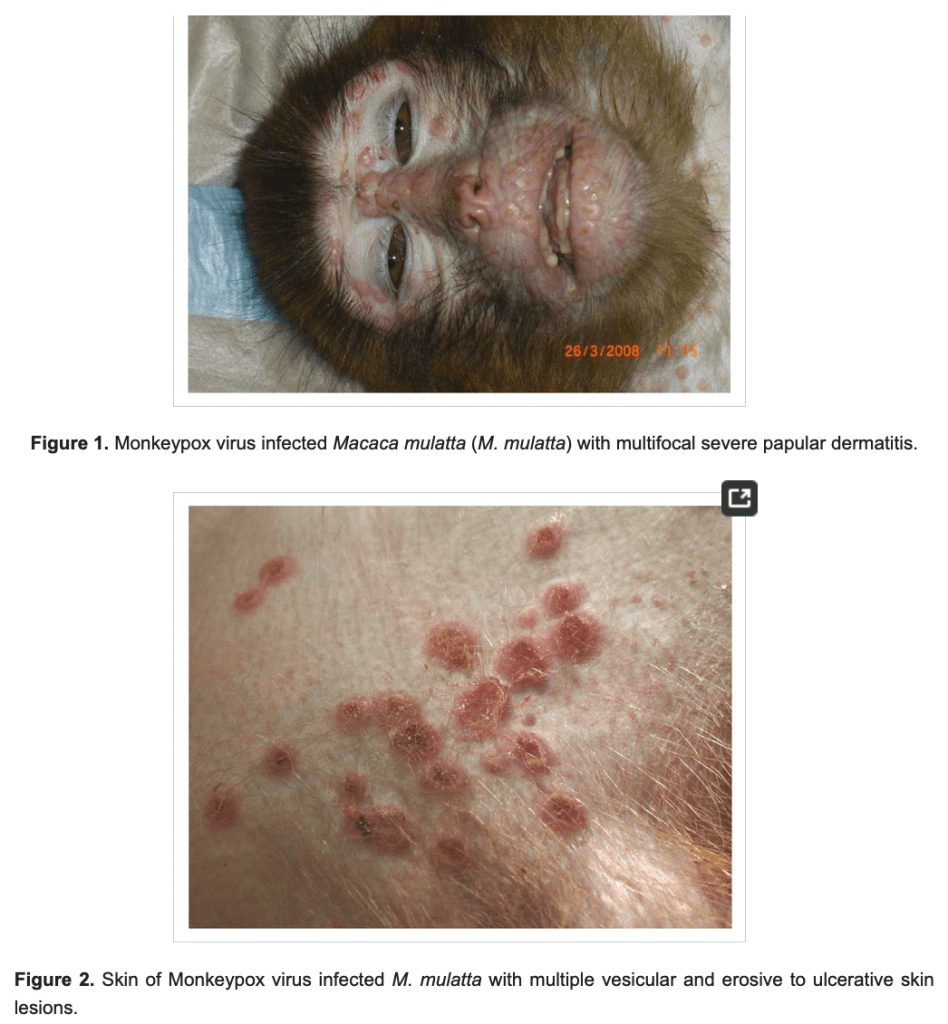
Image via Non-Human Primate Models of Orthopoxvirus Infections via Veterinary Sciences.
Vaccine Effectiveness “Because monkeypox virus is closely related to the virus that causes smallpox, the smallpox vaccine can protect people from getting monkeypox. Past data from Africa suggests that the smallpox vaccine is at least 85% effective in preventing monkeypox. The effectiveness of JYNNEOSTM against monkeypox was concluded from a clinical study on the immunogenicity of JYNNEOS and efficacy data from animal studies.
Smallpox and monkeypox vaccines are effective at protecting people against monkeypox when given before exposure to monkeypox. Experts also believe that vaccination after a monkeypox exposure may help prevent the disease or make it less severe.”
More on Monkeypox and Smallpox Vaccine Guidance via the CDC.
Quality Improvement in Family Medicine Education – Plan It, Do It, Teach It! A collaboration between the Section of Teachers and Section of Researchers
May 24, 2022 12:00 p.m. – 1:00 p.m. (ET)
Join your fellow teachers, preceptors, and educational leaders for a conversation about incorporating quality improvement (QI) in your family medicine teaching role. This webinar is an opportunity to consider how QI can better inform and support your teaching practice. Our panelists will share their experiences, challenges, and expertise implementing QI in diverse education and practice settings. We hope the webinar will be of broad interest, and particularly for those who are developing QI teaching capacity. No pre-registration is required, simply join us via YouTube.
“Mercury (Hg) and arsenic (As) contamination of fish can be toxic and limit safe human consumption, whereas selenium (Se) can potentially protect fish and consumers from the adverse effects of Hg and As. We assembled datasets of the above-mentioned elements in Canadian freshwater fish and compare them with risk assessment thresholds.
We further assessed linkages between the elemental concentrations and anthropogenic activities and ecozones. Mercury concentrations exceeded the retail fish Canadian threshold (0.5 µg/g wet weight) in 31% of all Walleye; this proportion rose to 64% in reservoirs. Reservoirs and lakes impacted by logging and urbanization had higher fish [Hg] than other types of impacted systems. Se and As concentrations exceeded Canadian guidelines in 5% (aquatic life) and 0.2% of all fish, respectively. In mining areas, fish [Hg] were low and negatively correlated with [Se], and fish [Se] were positively correlated with [As].
In all areas, we observed an important overall and previously unpublished negative relationship between mean fish [As] and [Hg], suggesting an inverse consumption risk for these two elements. The ratio Se/Hg was lower than the protective value of 1 for 14% of all fish and was negatively correlated with fish length. However, the benefit-risk value (BRV) threshold, which accounts for the Se intake from other food products, did not suggest any fish consumption limitations, except for few very contaminated top predators (> 2 µg/g ww). More studies need to assess the role of Se against Hg toxicity and adjust fish consumption guidelines accordingly.”
More on Mercury, selenium and arsenic concentrations in Canadian freshwater fish and a perspective on human consumption intake and risk via Journal of Hazardous Materials Advances.
“Direct oral anticoagulants (DOACs) have fewer drug interactions than warfarin, but interactions do occur. In a large series involving nearly 100,000 individuals receiving a DOAC, individuals receiving apixaban plus fluconazole, a moderate inhibitor of the P450 cytochrome CYP3A4, had a 3.5-fold increased risk of bleeding compared with periods when they were receiving apixaban without fluconazole [1]. The increase was greatest in gastrointestinal bleeding requiring hospitalization. The risk was only seen with systemic fluconazole plus apixaban; it did not occur with topical fluconazole plus apixaban or systemic fluconazole plus another DOAC.



 Family Medicine Residency Site: Abbotsford-Mission