Pancreatic Cancer: Early Detection

“Internationally acclaimed violinist Geoff Nuttall, a founding member of Canadian premier chamber ensemble the St. Lawrence String Quartet, passed away this week of cancer at the age of 56. Mr. Nuttall was deeply connected to The Royal Conservatory of Music, as a musician, teacher, and artist.”

“Currently, no screening tests exist that can catch pancreatic cancer early, before symptoms develop. NCI is now funding several large research projects that are working to develop such an early-detection tool. 

One known risk factor for developing pancreatic cancer is a new diagnosis of diabetes, sometimes called new-onset diabetes. About 1 in 100 people with new onset diabetes are diagnosed with pancreatic cancer within 3 years after learning they have diabetes. And 1 in 4 people who get pancreatic cancer had already been diagnosed with diabetes.

The NCI-funded New Onset Diabetes (NOD) Study, which is scheduled to run through 2025, is currently enrolling 10,000 people with new-onset diabetes or hyperglycemia (also known as prediabetes). The NOD researchers hope to develop a blood test that can identify the few individuals with a new diabetes diagnosis who may need further testing for pancreatic cancer.

Other NCI-funded teams, coordinated through the Pancreatic Cancer Detection Consortium (PCDC), are trying to create a blood test that could pick up early pancreatic cancer in the general population. PCDC researchers are also working to improve imaging of the pancreas, by developing methods that may be able to pick up tiny deposits of tumor cells.”

Learn more here.

Resident-Led Movember Fundraiser!

“Since 2004, the Movember Foundation charity has run Movember events to raise awareness and funds for men’s health issues, such as prostate cancer and depression, in Australia and New Zealand. In 2007, events were launched in Ireland, Canada, Czech Republic, Denmark, El Salvador, Spain, the United Kingdom, Israel, South Africa, Taiwan and the United States. As of 2011, Canadians were the largest contributors to the Movember charities of any nation.

How to get involved: Sign up using the link below, and invite your preceptors to do the same. Then, throughout the month of November, commit to moving (“Move”mber) by walking or running 60km over the month. As another option, you can commit to growing a moustache for the 30 days of November. The idea behind the increase in physical activity and/or the moustache is that they provide opportunities to engage in important conversations about men’s health with those around you, and thus help you raise funds!”

Abbotsford-Mission Movember team page here.

Thank you for your time,

Dr. Justin Dhinsa
Abbotsford-Mission Family Practice Residency Program

Architect of Your Future Self


“‘You are constantly becoming a new person,’ says journalist Shankar Vendantam. In a talk full of beautiful storytelling, he explains the profound impact of something he calls the ‘illusion of continuity’ — the belief that our future selves will share the same views, perspectives and hopes as our current selves — and shows how we can more proactively craft the people we are to become.” via TED

Jazz & the ‘Art’ of Medicine

Doreen Ketchens plays “When The Saints Go Marching In”.


“Improvisation is an important aspect of patient-physician communication. It is also a defining feature of jazz music performance. This essay uses examples from jazz to illustrate principles of improvisation that relate to an individual communication act (ie, building space into one’s communication), a physician’s communicative style (i.e., developing one’s voice), and the communicative process of the medical encounter (i.e., achieving ensemble). At all 3 levels, the traditions of jazz improvisation can inform efforts to research and teach medical interviewing by fostering a contextualized view of patient-physician communication.”

Jazz and the ‘Art’ of Medicine: Improvisation in the Medical Encounter via Annals of Family Medicine.

September 30, 2022: Orange Shirt Day | National Day for Truth and Reconciliation

Every child matters. On September 30th, people across Canada wear orange and participate in Orange Shirt Day events to recognize and raise awareness about the history and legacies of the residential school system in Canada.

The Canadian government designated September 30 National Day for Truth and Reconciliation, beginning in 2021. This responds to Truth and Reconciliation Call to Action 80, which states that the federal government will work with Indigenous people to establish a statutory day to “honour Survivors, their families, and communities, and ensure that public commemoration of the history and legacy of residential schools remains a vital component of the reconciliation process”. 

Orange Shirt Day originates from the story of Phyllis Webstad from the Stswecem’c Xgat’tem First Nation. In 1973, on her first day at St. Joseph’s Residential School in Williams Lake, BC, Phyllis’s shiny new orange shirt was stripped from her, never to be seen again. 

40 years later, on September 30th, 2013, Phyllis spoke publicly for the first time about her experience, and thus began the Orange Shirt Day movement.

Artwork by Musqueam artist Darryl Blyth

Learn more here.

Health Care and Medical Education to Promote Women’s Health in Iran

Cut It Out 2022 Artist: Marco Melgrati @Melgratillustr

Background: The aim of this paper is to present a synthesis of solutions for post-graduate medical education (PGME) and the health-care system in addressing challenges in relation to women’s health.

Methods: A critical review was conducted within three themes: women’s health status, women’s preferences for female physicians, and women in surgery. The study was conducted in two phases that consisted of an analysis of the trends of Iranian women’s health and women’s participation in PGME since 1979 followed by a thematic analysis to assess the current challenges and their implications on medical education.

Results: Our analysis revealed important trends and challenges. Since 1979, life expectancy has increased by 29% in Iranian women, while female adult mortality rate has decreased by 78%, and maternal mortality rate has decreased by 80%. The number of female medical specialists has increased by 933% , while the number of female subspecialists has increased by 1700%. According to our review, ten major challenges regarding women’s health were identified: 1) Increase in chronic disease; 2) Increase in cancer cases; 3) Preference for same-gender physicians in sensitive procedures; 4) Delayed care-seeking due to lack of female surgeons; 5) Lack of gender-concordance in clinical settings; 6) Underestimating female surgeons’ capabilities; 7) Female physicians’ work-family conflicts; 8) Male-dominancy in surgical departments; 9) Women’s under-representation in higher rank positions; and 10) Lack of women in academic leadership.

Conclusion: We identified different solutions to bridge these gaps. Community-based education, Gender- concordant considerations, and empowering women in surgical departments could help medical education policy makers to address the challenges.

Learn more: Health Care and Medical Education to Promote Women’s Health in Iran; Four Decades Efforts, Challenges and Recommendations via Arch Iran Med.

The Business of Public Health

Njide Ndili, Country Director for PharmAccess Foundation

“Njide Ndili is the Country Director for PharmAccess Foundation, an international NGO dedicated to facilitating affordable access to quality health care in Africa by stimulating investments in the healthcare industry through partnerships with the private sector and government institutions.

She has oversight of activities that support demand side financing through insurance, supply side quality improvement using our ISQua accredited SafeCare© Methodology, access to finance for healthcare SMEs through our Medical Credit Fund. Njide has an MSc in Health Economics, Policy and Management from London School of Economics, an AMP from INSEAD Business School, France, an MBA from the University of Houston, a Post Graduate Diploma in Finance and a B. Sc. in Computer Science from the University of Nigeria.

She is an EXCO member of Healthcare Federation of Nigeria, a Trustee and sponsor of the Healthcare Excellence Award and remains on the Board of the Society for Quality in Healthcare in Nigeria. Njide Ndili is the Country Director for PharmAccess Foundation, an international NGO dedicated to facilitating affordable access to quality health care in Africa by stimulating investments in the healthcare industry through partnerships with the private sector and government institutions.

She has oversight of activities that support demand side financing through insurance, supply side quality improvement using our ISQua accredited SafeCare© Methodology, access to finance for healthcare SMEs through our Medical Credit Fund. Njide has an MSc in Health Economics, Policy and Management from London School of Economics, an AMP from INSEAD Business School, France, an MBA from the University of Houston, a Post Graduate Diploma in Finance and a B. Sc. in Computer Science from the University of Nigeria. She is an EXCO member of Healthcare Federation of Nigeria, a Trustee and sponsor of the Healthcare Excellence Award and remains on the Board of the Society for Quality in Healthcare in Nigeria.”

This talk was given at a TEDx event using the TED conference format but independently organized by a local community. Learn more at https://www.ted.com/tedx

Statement regarding the escalating situation in Iran

September 27, 2022

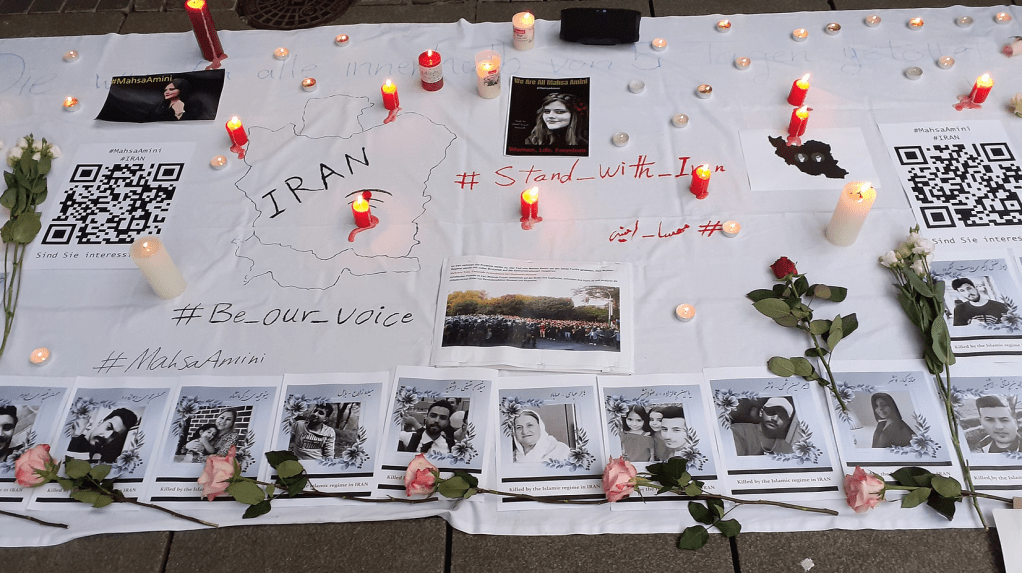
On behalf of the University of British Columbia, we wish to express our concern about the unfolding situation in Iran in response to the tragic death of Mahsa Amini.

UBC stands with the courageous women of Iran, and all who seek to protect their human rights and freedoms and stand up against repression and discrimination. We acknowledge the trauma and distress that members of our community may be experiencing in response to the situation in Iran, and would like to emphasize the UBC supports available to anyone who may be impacted.

For faculty and staff, all mental health resources can be found on the HR website: https://hr.ubc.ca/health-and-wellbeing/mental-health. This provides access to UBC’s Extended Health Benefits Plan, and our Employee and Family Assistance Program, which is a confidential and voluntary resource providing professional and emergency counselling services and additional support via phone, video, web or mobile app.

For students, our UBC Students Assistance Program is a free, 24/7 confidential wellness resource, including crisis, grief, and trauma counseling:

UBC Vancouver Students Assistance Program
UBC Okanagan Students Assistance Program

A variety of health and wellbeing resources, services and programming is also available to UBC Vancouver students at https://students.ubc.ca/health and to UBC Okanagan students at https://students.ok.ubc.ca/health-wellness/.

Peaceful protests are at the heart of advocating for human rights and freedoms, and UBC echoes the message of bringing an end to violence against women.

Gage Averill
Provost and Vice-President, Academic, pro tem, UBC Vancouver

Rehan Sadiq
Provost and Vice-President, Academic, pro tem, UBC Okanagan

Marcia Buchholz
Vice-President, Human Resources

Commemorative event for the National Day for Truth and Reconciliation 2022

Dermot Kelleher, Dean, Faculty of Medicine and Vice-President, Health
invites you to join a virtual event today
Tuesday, September 27, 2022
10:00–11:30 am PT
Given the discussion topic, this event may go beyond 11:30 am

Please join us in coming together in a concerted effort to reflect on the purpose of National Day for Truth and Reconciliation, also known as Orange Shirt Day.

Download the calendar event. Learn more about the event and speakers, as well as the Faculty of Medicine’s 2021 Apology and Response to the TRC Calls to Action.

We gratefully acknowledge that the UBC Faculty of Medicine and its distributed medical programs, which includes four university academic campuses, are located on traditional, ancestral, and unceded territories of Indigenous peoples around the province.

The UBC Vancouver-Point Grey academic campus is located on the traditional, ancestral, unceded territory of the xʷməθkʷəy̓əm (Musqueam), and UBC operations in Vancouver more generally are also on the territories of the Skwxwú7mesh (Squamish) and səlil̓ilw̓ətaʔɬ (Tsleil-Waututh) peoples.

The UBC Okanagan academic campus is located on the traditional, ancestral, unceded territory of the Syilx Okanagan Nation.

The University of Northern BC Prince George campus is located on the traditional territory of the Lheidli T’enneh, who are part of the Dakelh First Nations.

The University of Victoria is located on the traditional territory of the lək̓ʷəŋən-speaking peoples — the Songhees and the Esquimalt, and the W̱SÁNEĆ peoples.